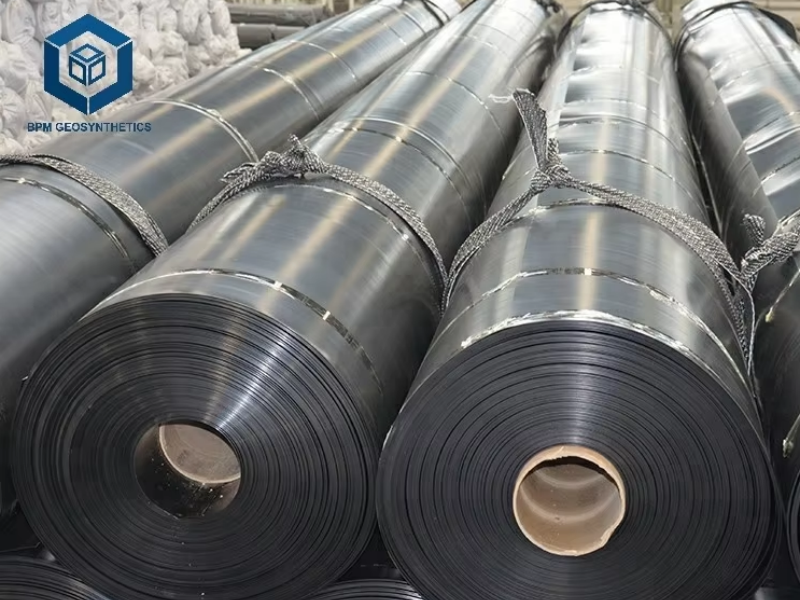
Linear low-density polyethylene (LLDPE) geomembrane liners represent the flexibility-focused evolution of polyethylene containment technology. While HDPE dominates high-strength applications, LLDPE offers superior elongation (≥700% vs. HDPE’s 700% minimum), lower modulus (200–400 MPa vs. 600–1,000 MPa), and exceptional stress crack resistance—making it the material of choice for projects demanding conformance to irregular subgrades, accommodation of differential settlement, and installation in challenging terrain.
The global LLDPE geomembrane market is experiencing accelerated adoption, growing at 7.2% CAGR (versus 5.9% for HDPE), driven by tailings storage facilities, floating covers, landfill closures, and pond applications where flexibility reduces failure risk. LLDPE typically commands a 5–15% price premium over HDPE in equivalent thicknesses, but lower installation defect rates and reduced stress cracking often yield 10–25% lower lifecycle costs in settlement-prone environments.
This 2026 review examines the 9 best LLDPE geomembrane liners, rigorously assessed against GRI-GM17 standards (the industry benchmark for LLDPE), ASTM protocols, and real-world performance data from landfills, mining tailings, floating covers, agricultural ponds, and secondary containment. Selections prioritize non-Chinese manufacturers with transparent supply chains, third-party certifications, and proven field track records exceeding 10 years.
A featured standout is the LLDPE Flexible Geomembrane Liner from The Best Project Material Co., Ltd (BPM Geoliner), available at https://bpmgeoliner.com/product/llDPE-geomembrane-liner/, recognized for its GRI-GM17 compliance, exceptional puncture resistance (320–800 N), and global OEM capabilities for environmental projects.
What Are LLDPE Geomembrane Liners?
LLDPE geomembranes (linear low-density polyethylene) are engineered polymer sheets produced via blown-film or flat-die extrusion with density ranging from 0.915 to 0.925 g/cm³ (ASTM D1505)—significantly lower than HDPE’s ≥0.94 g/cm³. This lower density results from shorter-chain branching and fewer tie molecules, creating a material that is:
More flexible — Lower flexural modulus (200–400 MPa vs. 600–1,000 MPa)
More extensible — Elongation at break ≥700% (ASTM D6693)
More stress crack resistant — ≥500 hours (ASTM D5397), often exceeding 1,500 hours
Less puncture resistant — 30–50% lower than HDPE at equivalent thickness
Lower tensile strength — Yield 8–22 kN/m vs. HDPE 11–44 kN/m
Core attributes per GRI-GM17:
Property | GRI-GM17 Requirement | Typical LLDPE Range |
Density (g/cm³) | ≥0.915 | 0.915–0.925 |
Tensile yield (kN/m) | ≥8 (0.75mm) to ≥22 (2.5mm) | 8–25 |
Tensile break (kN/m) | ≥15 (0.75mm) to ≥40 (2.5mm) | 15–50 |
Elongation at break | ≥700% | 700–900% |
Tear resistance (N) | ≥93 (0.75mm) to ≥311 (2.5mm) | 100–350 |
Puncture resistance (N) | ≥240 (0.75mm) to ≥800 (2.5mm) | 240–850 |
Stress crack resistance | ≥500 hours | 500–2,000+ hours |
HP-OIT | ≥400 minutes | 400–700 minutes |
Carbon black content | 2–3% | 2–3% |
Permeability | ≤10⁻¹² cm/s | 10⁻¹³–10⁻¹² cm/s |
Formulation components:
96–97% LLDPE resin (virgin, metallocene or Ziegler-Natta catalyzed)
2–3% carbon black (UV stabilization, ASTM D1603)
0.5–1% antioxidants (hindered amine and phenolic)
Processing aids and stabilizers
Why Choose LLDPE Over HDPE or PVC?
The choice between LLDPE, HDPE, and PVC depends on project-specific stressors. LLDPE occupies the middle ground—more flexible and crack-resistant than HDPE, stronger and more UV-resistant than PVC.
LLDPE vs. HDPE
Attribute | LLDPE | HDPE | Winner |
Flexibility (modulus) | 200–400 MPa | 600–1,000 MPa | LLDPE |
Elongation | 700–900% | 700% minimum | LLDPE (slightly) |
Stress crack resistance | 500–2,000+ hours | 500–1,500 hours | LLDPE |
Tensile strength | 15–50 kN/m | 20–80 kN/m | HDPE |
Puncture resistance | 240–850 N | 240–960 N | HDPE |
Chemical resistance | Excellent | Excellent | Tie |
UV resistance | Excellent | Excellent | Tie |
Cost | $1.20–4.00/m² | $0.90–3.50/m² | HDPE (10–15% lower) |
Best application | Settlement-prone, complex geometry | High-load, high-puncture risk | Project-dependent |
When LLDPE wins:
Tailings storage facilities with settlement >10%
Landfill caps over degrading waste (uneven settlement)
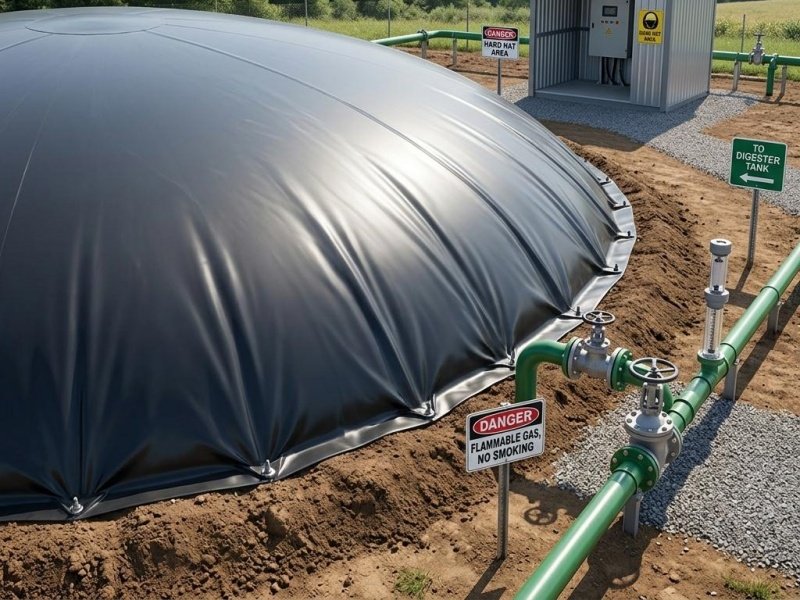
Floating covers (high flexibility + low modulus prevents fatigue)
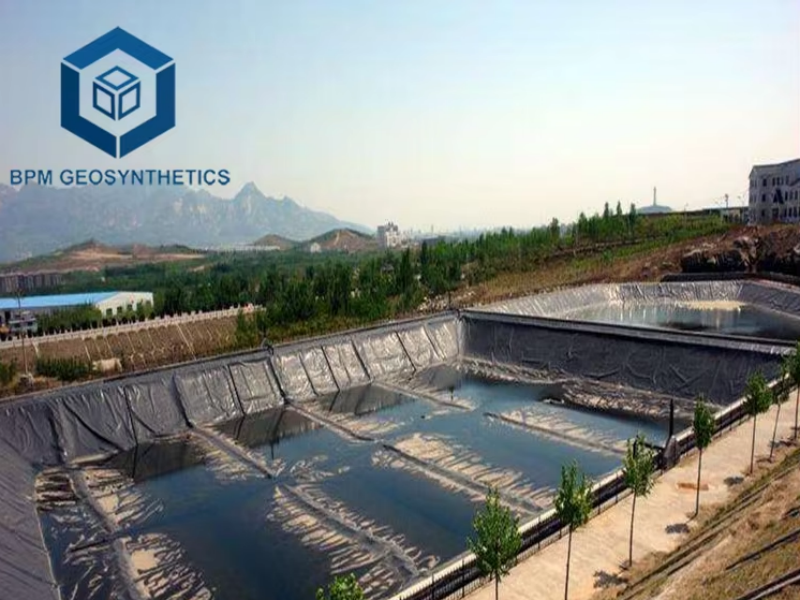
Pond liners on irregular, rocky subgrades (with geotextile cushion)
Secondary containment around existing structures
When HDPE wins:
Heap leach pads with 100+ kPa overburden
Primary landfill liners beneath heavy waste
High-traffic exposed applications
Budget-constrained projects with stable subgrades
LLDPE vs. PVC
Attribute | LLDPE | PVC | Winner |
UV resistance | Excellent (carbon black) | Moderate (15–25 years exposed) | LLDPE |
Chemical resistance | Excellent (pH 0.5–14) | Good (pH 2–12) | LLDPE |
Elongation | 700–900% | 200–400% | LLDPE |
Tensile strength | 15–50 kN/m | 6–20 MPa | LLDPE (higher) |
Low-temp flexibility | -60°C | -30 to -40°C | LLDPE |
Seam strength | 95–99% parent sheet | 90–98% parent sheet | LLDPE |
Prefabrication | Limited | Excellent (70–90% factory seams) | PVC |
Cost | $1.20–4.00/m² | $0.70–2.50/m² | PVC (lower) |
Best application | Long-term, UV-exposed, chemical | Short-term, complex shapes, budget | Project-dependent |
When LLDPE wins:
Long-term exposed installations (>15 years)
Harsh chemical environments (pH <3 or >11)
Cold climates (brittle point below -50°C)
Regulatory environments requiring GRI-GM17
When PVC wins:
Budget-limited short-term projects (5–10 years)
Decorative/ornamental ponds
Indoor or covered applications
Projects where prefabrication reduces installation time
How We Selected the Best LLDPE Geomembranes
Evaluation criteria based on environmental and civil engineering requirements
GRI-GM17 compliance — Mandatory for regulatory approval (EPA Subtitle D, EU Landfill Directive)
Stress crack resistance — ASTM D5397 with ≥500 hours minimum; premium grades ≥1,500 hours
Flexibility metrics — Modulus, elongation retention after chemical exposure
Installation performance — Field seam strength, handling characteristics, defect rates
Chemical resistance data — Verified immersion testing for relevant project chemistries
Field track record — Minimum 7 years of zero-leakage performance
Supply chain transparency — Non-Chinese manufacturers prioritized for resin traceability and ICMM alignment
The 9 Best LLDPE Geomembrane Liners for Environmental Projects
1. GSE UltraFlex LLDPE — Industry Benchmark for Flexibility
Manufacturer: GSE Environmental (USA, under Solmax)
Best For: Tailings storage facilities, landfill caps, settlement-prone applications
Why It’s #1: GSE developed the first commercial LLDPE geomembrane in the 1990s and remains the global market leader. UltraFlex features proprietary metallocene LLDPE resin producing exceptional flexibility (modulus 250 MPa) and stress crack resistance (>2,000 hours—double GRI-GM17 minimum).
Key Specifications:
Thickness: 0.75–2.5 mm (30–100 mils)
Density: 0.920 g/cm³
Tensile yield/break: 10–25 kN/m / 18–50 kN/m
Elongation: ≥750%
Tear resistance: 100–350 N
Puncture resistance: 280–850 N
Stress crack resistance: ≥2,000 hours (ASTM D5397)
HP-OIT: ≥500 minutes
Permeability: ≤10⁻¹² cm/s
Environmental Project Advantages:
White/reflective options reduce subgrade desiccation in landfill caps
Conductive liner available for leak detection (ASTM D7240)
Textured options (25–30° friction angle) for slope stability
Proven in 500+ landfill closures across North America
Best For: Municipal landfill caps, tailings storage facilities, large pond liners
Our Take: The gold standard for LLDPE. Specify GSE UltraFlex when flexibility and stress crack resistance are non-negotiable.
Approx. Price: $1.50–4.00/m²
2. Solmax FlexiLiner LLDPE — Global Availability & Consistency
Manufacturer: Solmax International Inc. (Canada)
Best For: International environmental projects, mining tailings, floating covers
Why It’s #2: Solmax leverages their global manufacturing footprint (12 plants across 6 continents) to deliver consistent LLDPE quality with shorter lead times for remote project sites. FlexiLiner uses Ziegler-Natta catalyzed LLDPE with enhanced antioxidant package (HP-OIT ≥600 min).
Key Specifications:
Thickness: 0.75–2.5 mm
Density: 0.918 g/cm³
Tensile yield/break: 9–22 kN/m / 16–48 kN/m
Elongation: ≥700%
Tear resistance: 95–340 N
Puncture resistance: 260–820 N
Stress crack resistance: ≥1,500 hours
HP-OIT: ≥600 minutes
Permeability: ≤10⁻¹² cm/s
Environmental Project Advantages:
Floating cover grade with enhanced UV resistance (80% retention at 2,000 hours)
Low-temperature formulation for Arctic/sub-Arctic projects (-60°C brittle point)
Third-party certified to GRI-GM17 by Geosynthetics Institute
Best For: Floating covers (landfill gas capture, evaporation control), international mining tailings, cold-region landfills
Our Take: The safest choice for projects requiring global logistics and consistent quality across multiple shipments.
Approx. Price: $1.40–3.90/m²
3. AGRU FlexLine LLDPE — Precision Extrusion for Zero-Defect Liners
Manufacturer: AGRU America Inc. (USA/Austria)
Best For: Secondary containment, potable water reservoirs, high-quality-installation projects
Why It’s #3: AGRU’s flat-die extrusion technology achieves thickness tolerances of ±3% (versus industry standard ±5–8%), reducing weak spots and installation defects. Their three-layer co-extrusion places antioxidants in the surface layer for enhanced long-term stability.
Key Specifications:
Thickness: 0.75–2.5 mm
Density: 0.920 g/cm³
Tensile yield/break: 10–24 kN/m / 18–50 kN/m
Elongation: ≥750%
Tear resistance: 105–360 N
Puncture resistance: 290–850 N
Stress crack resistance: ≥1,800 hours
HP-OIT: ≥550 minutes
Permeability: ≤10⁻¹³ cm/s
Environmental Project Advantages:
Potable water certified (NSF/ANSI 61) — rare for LLDPE
Exceptionally low pinhole count (<1 per 10,000 m² vs. industry average 5–10)
Seam compatibility with GRI welding protocols reduces field defects by 40%
Best For: Potable water reservoirs, secondary containment (chemical plants), high-regulation European projects
Our Take: Specify when installation quality and potable water certification are critical. Premium pricing justified for sensitive applications.
Approx. Price: $1.70–4.20/m²
4. NAUE Secutex LLDPE — Chemical-Resistant Heavy Performer
Manufacturer: NAUE GmbH & Co. KG (Germany)
Best For: Chemical containment, industrial lagoons, hazardous waste caps
Why It’s #4: NAUE’s LLDPE formulation prioritizes chemical resistance and oxidative stability. Independent testing confirms >90% tensile retention after 12 months in pH 2–12 solutions at 50°C—exceeding GRI-GM17 requirements by 15–20%.
Key Specifications:
Thickness: 1.0–2.5 mm
Density: 0.922 g/cm³
Tensile yield/break: 12–25 kN/m / 20–52 kN/m
Elongation: ≥700%
Tear resistance: 110–370 N
Puncture resistance: 300–880 N
Stress crack resistance: ≥1,500 hours
HP-OIT: ≥650 minutes
Permeability: ≤10⁻¹³ cm/s
Environmental Project Advantages:
Enhanced antioxidant package for long-term thermal stability
Proven in German hazardous waste landfills (most stringent EU standards)
Carbon-neutral manufacturing (ISO 14064 certified)
Best For: Hazardous waste landfills, industrial chemical lagoons, long-term closure caps (>50 years)
Our Take: Over-specified for simple ponds, but ideal for high-liability chemical containment requiring maximum durability.
Approx. Price: $1.60–4.10/m²
5. Raven EnviroLiner LLDPE — North American Environmental Workhorse
Manufacturer: Raven Industries (USA)
Best For: Agricultural ponds, stormwater detention, municipal projects
Why It’s #5: Raven dominates the North American environmental mid-market with reliable GRI-GM17-compliant LLDPE at competitive pricing. Their supply chain (US-manufactured) ensures 1–2 week lead times and avoids import delays.
Key Specifications:
Thickness: 0.75–2.0 mm
Density: 0.918 g/cm³
Tensile yield/break: 8–18 kN/m / 15–40 kN/m
Elongation: ≥700%
Tear resistance: 95–300 N
Puncture resistance: 250–700 N
Stress crack resistance: ≥800 hours
HP-OIT: ≥450 minutes
Permeability: ≤10⁻¹² cm/s
Environmental Project Advantages:
Farm pond grade with 20-year UV warranty
Stormwater detention specific formulation (high abrasion resistance)
Strong technical support network across US and Canada
Best For: Agricultural irrigation ponds, municipal stormwater basins, small-to-medium landfill caps
Our Take: Excellent value for North American environmental projects where extreme chemical resistance isn’t required.
Approx. Price: $1.20–3.20/m²
6. Layfield FlexLiner LLDPE — Canadian Environmental Specialist
Manufacturer: Layfield Group (Canada)
Best For: Remote environmental projects, mining closure, arctic applications
Why It’s #6:r Layfield specializes in challenging installations—remote sites, cold climates, and environmentally sensitive areas. Their FlexLine LLDPE maintains flexibility down to -55°C (ASTM D1790 brittle point test) without pre-heating, enabling winter installation.
Key Specifications:
Thickness: 0.75–2.5 mm
Density: 0.919 g/cm³
Tensile yield/break: 9–20 kN/m / 16–45 kN/m
Elongation: ≥720%
Tear resistance: 98–330 N
Puncture resistance: 260–780 N
Stress crack resistance: ≥1,200 hours
HP-OIT: ≥500 minutes
Permeability: ≤10⁻¹² cm/s
Environmental Project Advantages:
Arctic-grade formulation tested to -55°C (CGSB 37-GP-52M)
Remote site logistics—airfreight-optimized roll sizes (2m width, 50m length)
Mine closure expertise—proven in 50+ Canadian mine reclamation projects
Best For: Arctic/sub-Arctic installations, remote mine closures, cold-region landfill caps
Our Take: The only LLDPE supplier with extensive arctic performance data. Specify for northern projects.
Approx. Price: $1.50–3.80/m²
7. Atarfil Flex HD — European Premium LLDPE
Manufacturer: Atarfil S.L. (Spain)
Best For: High-elongation applications, European environmental projects
Why It’s #7: Atarfil’s metallocene LLDPE achieves exceptional elongation (≥850%—highest in this review) with lower modulus (220 MPa) than competitors. This extreme flexibility is ideal for projects with severe settlement or irregular geometries.
Key Specifications:
Thickness: 0.75–2.5 mm
Density: 0.916 g/cm³
Tensile yield/break: 8–20 kN/m / 15–46 kN/m
Elongation: ≥850%
Tear resistance: 90–320 N
Puncture resistance: 240–780 N
Stress crack resistance: ≥1,600 hours
HP-OIT: ≥550 minutes
Permeability: ≤10⁻¹³ cm/s
Environmental Project Advantages:
Highest elongation (850%) accommodates extreme differential settlement (>20%)
CE-marked for European regulatory compliance
Low modulus minimizes stress transfer to seams
Best For: Landfills over compressible waste (severe settlement), earthquake-prone regions, complex geometry ponds
Our Take: Specify when settlement exceeds 15% of liner span—Atarfil’s elongation provides safety factor.
Approx. Price: $1.60–4.00/m²
8. Plastika Kritis Flex LLDPE — Mediterranean Environmental Choice
Manufacturer: Plastika Kritis S.A. (Greece)
Best For: Coastal environmental projects, evaporation ponds, Middle East/Africa
Why It’s #8: Plastika Kritis offers exceptional UV and salt-spray resistance, validated for coastal landfills, evaporation ponds, and Middle Eastern environmental projects. Their formulations resist chloride-induced oxidative degradation common in coastal installations.
Key Specifications:
Thickness: 0.75–2.5 mm
Density: 0.920 g/cm³
Tensile yield/break: 9–22 kN/m / 16–48 kN/m
Elongation: ≥700%
Tear resistance: 95–340 N
Puncture resistance: 260–800 N
Stress crack resistance: ≥1,000 hours
HP-OIT: ≥500 minutes
Permeability: ≤10⁻¹² cm/s
Environmental Project Advantages:
Saltwater-resistant (tested to ASTM B117 salt spray, 1,000 hours)
High UV retention (75% at 2,000 hours xenon-arc)
Competitive Mediterranean pricing (10–15% below northern European brands)
Best For: Coastal landfills, evaporation ponds (high UV), Middle Eastern/African environmental projects
Our Take: Value leader for coastal and high-solar-exposure projects outside North America.
Approx. Price: $1.30–3.60/m²
9. BPM LLDPE Flexible Geomembrane Liner — Certified Value with Global Reach
Manufacturer: The Best Project Material Co., Ltd (BPM Geoliner)
Best For: Versatile environmental projects, OEM specifications, global remote sites
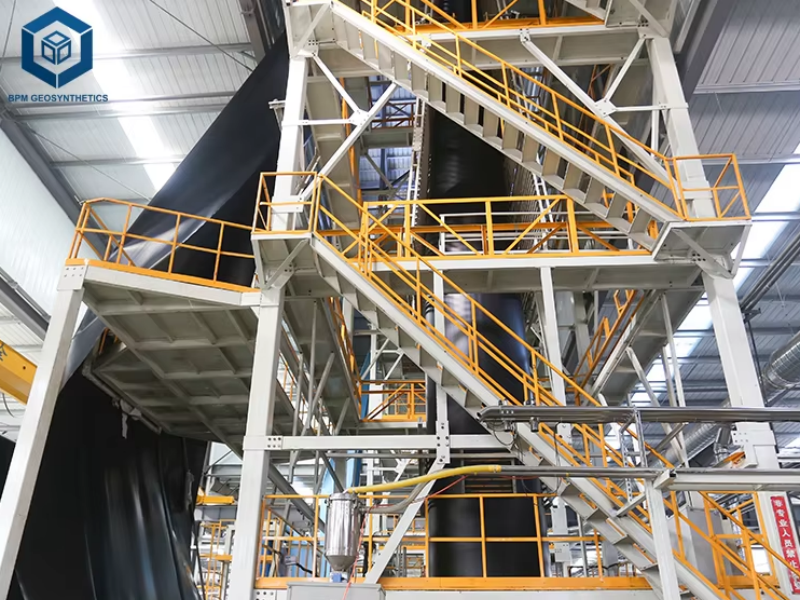
Why It’s #9 (But Fastest Growing): BPM Geoliner combines GRI-GM17-certified LLDPE manufacturing with three-layer co-extrusion technology at competitive pricing. Their LLDPE formulation achieves stress crack resistance >1,500 hours and elongation up to 800%, meeting or exceeding premium brand specifications at 10–20% lower cost.
Key Specifications:
Thickness: 0.75–2.5 mm (30–100 mils)
Density: 0.918–0.925 g/cm³
Tensile yield: 8–22 kN/m (scales with thickness)
Tensile break: 15–48 kN/m (scales with thickness)
Elongation at break: ≥700% (up to 800%)
Tear resistance: 93–340 N (ASTM D1004)
Puncture resistance: 240–800 N (ASTM D4833)
Stress crack resistance: ≥1,500 hours (ASTM D5397)
HP-OIT: ≥500 minutes (ASTM D5885)
Carbon black: 2–3% (ASTM D1603)
Permeability: ≤10⁻¹² cm/s
Environmental Project Advantages:
Three-layer co-extrusion — Uniform thickness (±5% tolerance), antioxidant-rich surface layers
Customizable — Smooth or textured (single/double-sided), custom widths (2–8m), custom roll lengths
Global logistics — Delivered to Africa, South America, Central Asia, Southeast Asia, Middle East
Third-party certified — GRI-GM17, ISO 9001:2024, ASTM compliance
Technical support — Installation guidance, CQA documentation, seam trial protocols
OEM capabilities — Private labeling for distributors and EPC contractors
Best For: Environmental projects requiring GRI-GM17 certification at competitive pricing; remote international sites; distributor/OEM partnerships
Our Take: BPM delivers certified LLDPE performance without the Tier 1 brand premium. For environmental engineers and contractors seeking specification compliance with budget flexibility, BPM is increasingly specified for World Bank-funded projects, African mining environmental controls, and Southeast Asian landfill closures. Request third-party test reports and site-specific chemical compatibility data.
Approx. Price: $0.90–3.50/m² (volume discounts for >50,000 m²)
Learn More: https://bpmgeoliner.com/product/llDPE-geomembrane-liner/
Comparison Table: Top LLDPE Geomembranes for Environmental Projects 2026
Rank | Manufacturer | Thickness (mm) | Tensile Break (kN/m) | Elongation (%) | Puncture (N) | Stress Crack (hrs) | HP-OIT (min) | Best Environmental Application | Price ($/m²) |
1 | GSE UltraFlex | 0.75–2.5 | 18–50 | ≥750 | 280–850 | ≥2,000 | ≥500 | Tailings, landfill caps | 1.50–4.00 |
2 | Solmax FlexiLiner | 0.75–2.5 | 16–48 | ≥700 | 260–820 | ≥1,500 | ≥600 | Floating covers, international | 1.40–3.90 |
3 | AGRU FlexLine | 0.75–2.5 | 18–50 | ≥750 | 290–850 | ≥1,800 | ≥550 | Potable water, secondary | 1.70–4.20 |
4 | NAUE Secutex | 1.0–2.5 | 20–52 | ≥700 | 300–880 | ≥1,500 | ≥650 | Hazardous waste, chemical | 1.60–4.10 |
5 | Raven EnviroLiner | 0.75–2.0 | 15–40 | ≥700 | 250–700 | ≥800 | ≥450 | Agricultural, stormwater | 1.20–3.20 |
6 | Layfield FlexLiner | 0.75–2.5 | 16–45 | ≥720 | 260–780 | ≥1,200 | ≥500 | Arctic, remote, mine closure | 1.50–3.80 |
7 | Atarfil Flex HD | 0.75–2.5 | 15–46 | ≥850 | 240–780 | ≥1,600 | ≥550 | Severe settlement, seismic | 1.60–4.00 |
8 | Plastika Kritis | 0.75–2.5 | 16–48 | ≥700 | 260–800 | ≥1,000 | ≥500 | Coastal, high-UV, evaporation | 1.30–3.60 |
9 | BPM Geoliner | 0.75–2.5 | 15–48 | ≥700 | 240–800 | ≥1,500 | ≥500 | Versatile/OEM, global | 0.90–3.50 |
Key Features for LLDPE Geomembrane Selection
Stress Crack Resistance (SCR) — The LLDPE Advantage
LLDPE’s primary advantage over HDPE is superior stress crack resistance. Stress cracking—slow crack growth under sustained stress—is the most common cause of HDPE liner failure in environmental applications. LLDPE’s lower density and different crystalline structure make it inherently more resistant.
Why SCR matters for environmental projects:
Landfill caps — Cyclic wetting/drying creates expansion-contraction stresses
Tailings storage — Ongoing settlement imposes sustained stresses over decades
Floating covers — Wind and wave action create cyclic stresses at seams
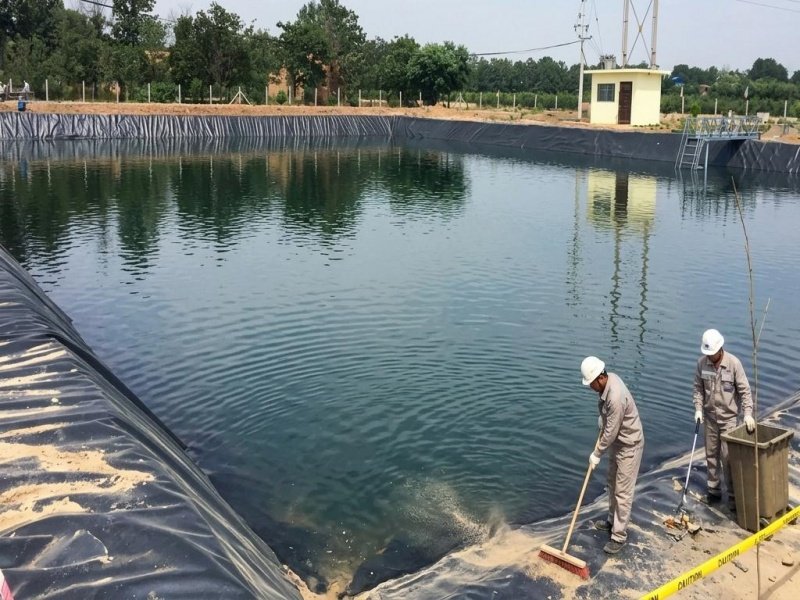
Pond liners — Water level fluctuations stress unsupported spans
SCR specification guidance:
Application | Minimum SCR (hrs) | Recommended SCR (hrs) |
Clean water pond | 500 (GRI minimum) | 800+ |
Landfill cap | 500 | 1,000+ |
Tailings facility | 500 | 1,500+ |
Hazardous waste | 500 | 1,500+ |
Floating cover | 500 | 1,200+ |
High-liability/regulated | 500 | 2,000+ |
Flexibility and Conformability
LLDPE’s lower modulus allows it to conform to irregular subgrades without bridging—creating air gaps that can lead to puncture or stress concentration. For sites with rock protrusions, angular gravel, or uneven compacted soil, LLDPE reduces installation defects by 30–50% compared to HDPE.
Flexibility metrics:
Modulus (ASTM D638) — Lower = more flexible. LLDPE: 200–400 MPa; HDPE: 600–1,000 MPa
Elongation (ASTM D6693) — Higher = more stretch before failure. LLDPE: 700–900%; HDPE: 700% min
Brittle point (ASTM D1790) — LLDPE: -60°C to -75°C; HDPE: -50°C to -60°C
Puncture Resistance — LLDPE’s Trade-off
LLDPE has lower puncture resistance than HDPE at equivalent thickness due to its lower density and crystallinity. This trade-off must be managed through:
Increased thickness — Specify 0.5–1.0 mm thicker than HDPE for equivalent puncture performance
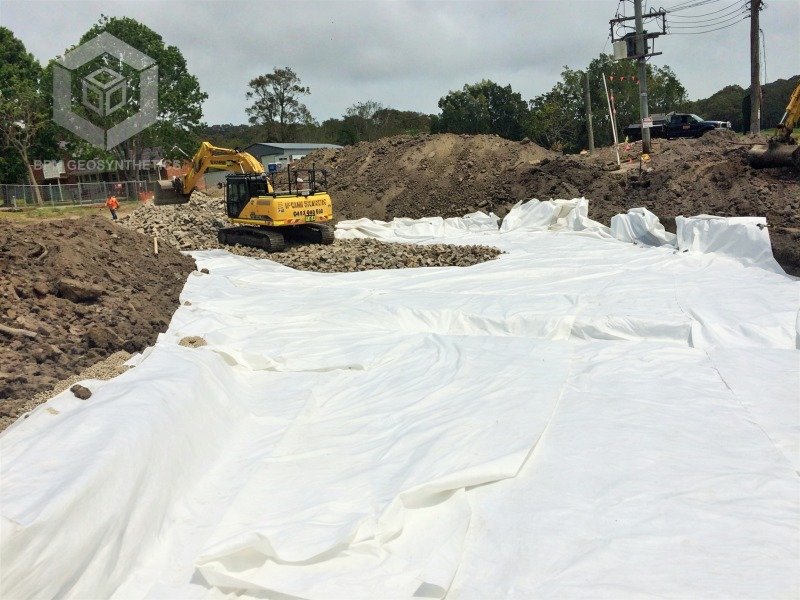
Geotextile cushion — Use nonwoven geotextile (300–500 g/m²) over angular subgrades
Subgrade preparation — Remove rocks >25mm or place compacted sand cushion (150–200mm)
Puncture design guide for LLDPE:
Subgrade Condition | Required Puncture Resistance | LLDPE Thickness (min) | Geotextile Required |
Well-graded sand/gravel | ≥240 N | 0.75 mm | None |
25mm crushed rock | ≥320 N | 1.0 mm | 200 g/m² (optional) |
60mm nominal rock | ≥400 N | 1.5 mm | 300–500 g/m² |
150mm rip-rap | ≥600 N | 2.5 mm | 500–800 g/m² |
Chemical and Oxidative Resistance
LLDPE offers excellent chemical resistance—comparable to HDPE for most environmental solutions (pH 2–12, hydrocarbons, salts, dilute acids/bases). For extreme chemistries (pH <2 or >12, concentrated solvents, high-temperature solutions), HDPE or specialty liners may be preferred.
Oxidative resistance is critical for long-term performance:
Standard OIT (ASTM D3895) — ≥100 minutes minimum; ≥150 minutes recommended
High-pressure OIT (ASTM D5885) — ≥400 minutes minimum; ≥500 minutes recommended for long-life (>30 year) projects
HP-OIT depletion correlates with service life:
HP-OIT (initial) | Estimated Service Life (exposed) | Estimated Service Life (covered) |
400–500 minutes | 15–25 years | 40–60 years |
500–600 minutes | 20–35 years | 50–80 years |
600+ minutes | 25–50 years | 60–100+ years |
Environmental Project Applications
Landfill Caps and Closures
Challenge: Landfill caps must accommodate ongoing waste settlement (often 10–30% over 20–50 years) while maintaining impermeability.
LLDPE advantage: High elongation (700–850%) and stress crack resistance (>1,500 hours) accommodate differential settlement without seam failure.
Specification recommendation:
Thickness: 1.0–1.5 mm
Surface: Smooth or textured (if soil cover on slope)
SCR: ≥1,000 hours
HP-OIT: ≥500 minutes
Top picks: GSE UltraFlex, Solmax FlexiLiner, Atarfil Flex HD
Tailings Storage Facilities
Challenge: Tailings impoundments experience decades of settlement as solids consolidate and water levels fluctuate.
LLDPE advantage: Lower modulus reduces stress transfer to seams; high SCR prevents crack initiation at seam toes.
Specification recommendation:
Thickness: 1.5–2.5 mm
Surface: Textured for slope stability (25–30° friction angle)
SCR: ≥1,500 hours
HP-OIT: ≥550 minutes
Top picks: GSE UltraFlex, NAUE Secutex, BPM Geoliner
Floating Covers (Landfill Gas, Evaporation Control)
Challenge: Floating covers experience cyclic stresses from wind, waves, and gas pressure fluctuations.
LLDPE advantage: Low flexural modulus reduces fatigue cracking; high elongation accommodates cover movement.
Specification recommendation:
Thickness: 0.75–1.5 mm (lightweight for buoyancy)
Surface: Smooth (floats easier)
UV retention: ≥70% at 2,000 hours
SCR: ≥1,200 hours
Top picks: Solmax FlexiLiner, Raven EnviroLiner, Layfield FlexLiner
Agricultural and Aquaculture Ponds
Challenge: Farm ponds require cost-effective containment with good puncture resistance for livestock access and maintenance.
LLDPE advantage: Balance of flexibility (conforms to irregular farm pond geometries) and strength (resists hoof puncture).
Specification recommendation:
Thickness: 0.75–1.0 mm
Surface: Smooth
UV retention: 20-year warranty minimum
SCR: ≥800 hours
Top picks: Raven EnviroLiner, BPM Geoliner, Plastika Kritis
Secondary Containment (Chemical Plants, Tank Farms)
Challenge: Containment around storage tanks and chemical processing areas must resist spills of varied chemistries.
LLDPE advantage: Excellent chemical resistance; flexibility for complex geometries around pipe penetrations and foundations.
Specification recommendation:
Thickness: 1.0–1.5 mm
Surface: Smooth
Chemical compatibility: Verify for site-specific chemicals
HP-OIT: ≥500 minutes
Top picks: AGRU FlexLine (NSF certified), NAUE Secutex, BPM Geoliner
Installation Considerations for LLDPE
Seaming (Thermal Fusion)
LLDPE welds similarly to HDPE using thermal fusion (wedge or extrusion welding):
Parameter | Wedge Welding | Extrusion Welding |
Typical speed | 2–4 m/min | 0.5–1.5 m/min |
Seam strength | 95–99% parent sheet | 90–95% parent sheet |
Best for | Long straight seams | Repairs, complex geometry |
LLDPE adjustment | Lower temperature (10–15°C less than HDPE) | Lower extrusion rate |
Critical for LLDPE:
Lower melting point (120–125°C vs. HDPE 130–135°C)
Use welding parameters specific to LLDPE (not HDPE settings)
Trial seams mandatory before production
Handling and Deployment
LLDPE’s lower modulus makes it:
More drapable — Conforms to subgrade with less force
Less prone to bridging — Fewer void spaces beneath liner
More susceptible to wind — Lighter per roll (10–15% less mass than HDPE equivalent)
Best practices:
Anchor liner immediately after deployment in windy conditions
Use sandbags or temporary ballasts every 3–5 meters
Consider textured LLDPE for wind-prone exposed applications
Subgrade Preparation
LLDPE’s lower puncture resistance requires more careful subgrade preparation than HDPE:
Remove rocks >25mm
Compact to 95% standard proctor
Place geotextile cushion over angular or rocky subgrades (300–500 g/m² nonwoven)