Introduction
Civil engineers and construction professionals face a persistent challenge: weak or unstable soil undermines the structural integrity of roads, railways, embankments, and building foundations. Traditional soil improvement methods—such as excavation and replacement, lime or cement treatment, and deep compaction—often prove expensive, time-consuming, or environmentally intrusive. Over the past several decades, geotextiles have emerged as a practical, cost-effective alternative for soil stabilization. Geotextiles are divided into woven geotextiles and needle punched geotextiles. Specifically, woven geotextiles made from polypropylene or polyester offer exceptional tensile strength, durability, and filtration properties that directly address the root causes of soil failure.
BPM Geosynthetics will examine how these materials improve load-bearing capacity, reduce construction costs, simplify installation procedures, and provide long-term environmental benefits. By understanding these advantages, engineers and project managers can make informed decisions about incorporating geotextiles into their designs.
1.Enhanced Load-Bearing Capacity
1.1 Separation and Reinforcement Working Together
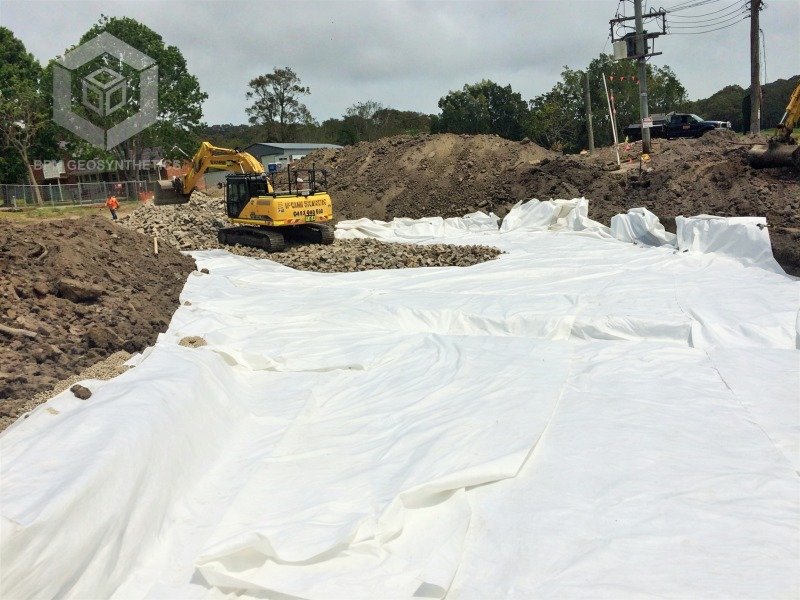
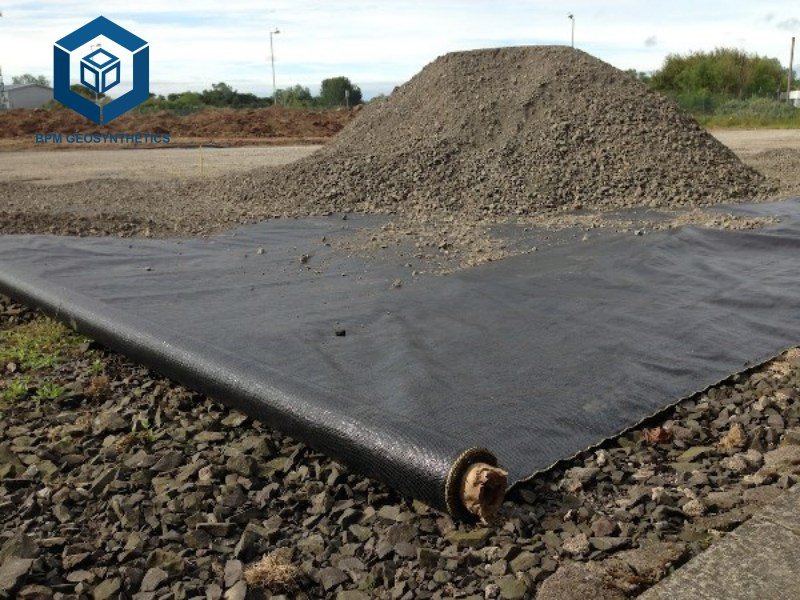
Soil stabilization geotextiles perform two critical functions simultaneously: separation and reinforcement. The geotextile layer prevents the intermixing of soft subgrade soil with overlying granular fill material. Without this separation, aggregate particles sink into the weak soil, eliminating the load-distributing effect of the base course. The geotextile maintains a clean interface, allowing the aggregate to form a stable, interlocked mass that spreads wheel loads over a wider area.
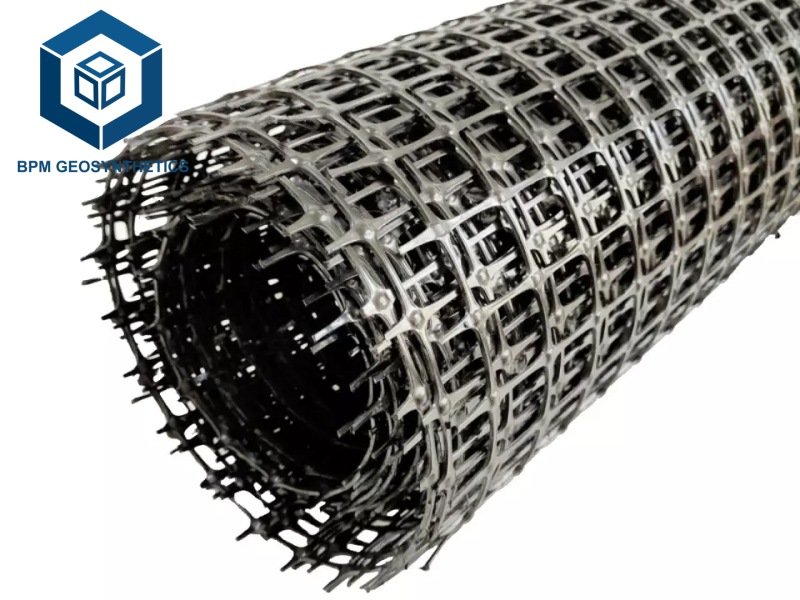
At the same time, the geotextile’s high tensile strength provides reinforcement. When heavy loads compress the soil, the geotextile stretches slightly and develops tension that resists lateral spreading. This tension creates a “membrane effect” that reduces vertical stress on the subgrade. Field studies consistently show that properly designed geotextile-reinforced sections carry twice the traffic load of unreinforced sections with the same aggregate thickness.
1.2 Confinement of Base Aggregates
BPM Woven geotextiles confine base course materials by developing frictional interaction along the aggregate-geotextile interface. The aggregate particles interlock with the geotextile’s surface, restricting lateral movement under repeated loading. This confinement effect significantly increases the shear strength of the base layer, allowing engineers to reduce the required thickness of granular fill without sacrificing performance. In many road projects, designers can cut aggregate thickness by 30 to 50 percent when they specify geotextile reinforcement.
2. Cost Reduction and Material Savings
2.1 Decreased Aggregate Requirements
Aggregate materials—crushed stone, gravel, or sand—often constitute the single largest material cost in road and foundation construction. Because geotextiles improve the load distribution of these materials, engineers can specify thinner base courses. For a typical low-volume road, a 150 mm unreinforced base layer becomes a 100 mm reinforced layer, saving substantial quantities of aggregate. These savings offset the cost of the geotextile itself many times over.
2.2 Extended Pavement Service Life
Geotextile-stabilized pavements experience fewer maintenance interventions. Reduced rutting, less cracking, and uniform settlement patterns prolong the service life of paved surfaces. Owners defer costly rehabilitation projects, and fewer emergency repairs disrupt traffic flow. Over the full lifecycle of a road or parking area, the cumulative savings from reduced maintenance often exceed the initial construction savings.
2.3 Lower Construction Equipment Requirements
When the subgrade remains stable during construction, contractors can use standard earthmoving equipment without relying on specialized machinery for deep soil mixing or lime injection. This simplicity shortens project schedules and reduces equipment rental expenses. Additionally, geotextiles eliminate the need for extensive dewatering in wet conditions, because the material allows water to drain while keeping fines in place.
3. Accelerated Construction Schedules
3.1 Immediate Placement of Fill
Unlike chemical stabilization methods that require curing time, geotextiles provide immediate reinforcement. Contractors can place and compact aggregate directly over the geotextile layer without waiting for the soil to gain strength through pozzolanic reactions. This advantage proves especially valuable on projects with tight deadlines or in regions with short construction seasons.
3.2 Reduced Drying Time for Wet Subgrades
When contractors install geotextiles on saturated or poorly drained soils, they can proceed with filling without completely drying the subgrade. The geotextile’s separation function supports equipment traffic across soft soils that would otherwise rut and fail under the weight of haul trucks. Contractors can continue working through intermittent rain or high water table conditions, minimizing weather-related delays.
3.3 Simplified Installation Procedures
Installation requires only a few basic steps: prepare the subgrade surface to a reasonably smooth condition, unroll the geotextile panels, overlap adjacent rolls by 300 to 500 mm, and place the designated thickness of aggregate. Unskilled laborers can perform these tasks with minimal training. This straightforward process eliminates the quality-control challenges associated with mixing chemicals uniformly into soil.
5. Durability and Long-Term Performance
5.1 Resistance to Biological and Chemical Degradation
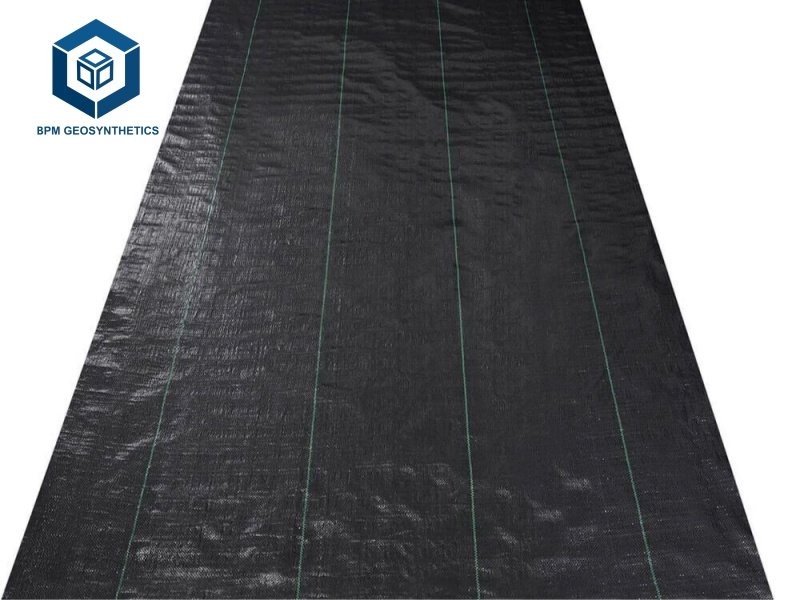
High-quality woven geotextiles, especially those made from polypropylene, resist degradation from soil microorganisms, fungi, and bacteria. They also maintain their properties in acidic or alkaline soil conditions where steel reinforcement or untreated cellulose materials would corrode or decay. This biological inertness ensures that geotextiles provide decades of service life without losing their reinforcement or filtration capabilities.
5.2 UV Stabilization for Construction Phases
Manufacturers add carbon black and UV stabilizers to the polymer during extrusion, protecting the geotextile from sunlight damage during storage and installation. While prolonged exposure ultimately degrades all polymers, standard geotextiles withstand several weeks of direct sunlight without significant tensile strength loss. This durability window easily accommodates typical construction schedules, and engineers can specify protective cover requirements if longer exposures occur.
5.3 Creep Resistance in Reinforced Structures
Polyester geotextiles offer excellent resistance to long-term deformation under sustained loads. In applications like steepened slopes or retaining walls, the geotextile maintains its reinforcement force over many decades. Manufacturers perform accelerated creep testing to predict service life, and many products demonstrate design lives exceeding 75 years under normal soil temperatures and loading conditions.
6. Versatility Across Applications
6.1 Roads and Highways
Geotextiles stabilize temporary haul roads, permanent low-volume roads, and highway shoulders. They prevent subgrade pumping under heavy truck loads and reduce reflective cracking in asphalt overlays. Engineers frequently use geotextiles as interlayers between old and new pavement sections to control crack propagation and extend overlay life.
6.2 Railways and Heavy Rail Infrastructure
Railway ballast sits on soft subgrade that compresses under repeated train loading. A woven geotextile layer between the ballast and subgrade preserves track geometry by preventing ballast penetration into the soil. This separation maintains proper drainage, reduces tamping frequency, and lowers maintenance costs for rail operators.
6.3 Slopes, Embankments, and Retaining Walls
Geotextiles reinforce steep slopes by wrapping successive lifts of compacted soil. Each geotextile layer ties back into the slope mass, resisting the lateral forces that cause slope instability. In mechanically stabilized earth walls, geotextile strips or sheets provide the tensile reinforcement that allows vertical or near-vertical faces without massive concrete construction.
6.4 Landfills and Waste Containment
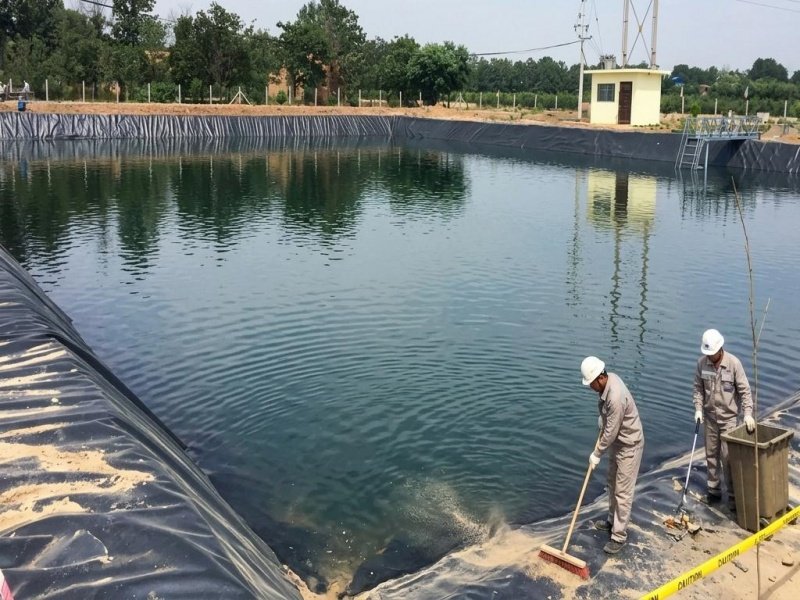
Geotextiles support drainage systems in landfill caps and bottom liners. They separate different waste layers, protect geomembranes from puncture, and facilitate gas collection systems. The chemical resistance of polypropylene geotextiles makes them particularly suitable for the aggressive leachate environments found in waste containment facilities.
7. Simplified Design and Quality Assurance
7.1 Established Standard Test Methods
Designers rely on a comprehensive body of standard test procedures to select appropriate geotextiles for specific soil conditions. Tests such as tensile strength, puncture resistance, apparent opening size, and permittivity provide reproducible data that guide design choices. This standardization gives engineers confidence in their recommendations and allows owners to verify material compliance during delivery.
7.2 Consistent Product Quality
Manufacturers produce woven geotextiles under tightly controlled factory conditions, ensuring consistent mechanical and hydraulic properties from roll to roll. This industrial consistency contrasts sharply with natural soils, which vary significantly even across small site areas. Predictable geotextile performance simplifies quality control and reduces the uncertainty inherent in ground improvement works.
7.3 Adaptability to Site Conditions
Geotextiles accommodate variations in subgrade strength and moisture content without requiring frequent design adjustments. For projects with widely varying soil conditions along the alignment, a single geotextile specification often serves the entire length, whereas chemical stabilization recipes would need constant recalibration. This flexibility reduces design effort and minimizes the chance of construction errors.
Summary
Soil stabilization geotextiles offer a strong balance of performance, cost, and environmental benefits. BPM Geotextile boost load-bearing capacity via separation, reinforcement, and confinement, enabling thinner pavements. They also speed up construction through immediate reinforcement and fewer weather delays. Versatile across roads, slopes, retaining walls, and waste sites, geotextiles improve safety by reducing chemical hazards and enhancing traction. Engineers gain a proven solution that balances initial costs with long-term savings. As sustainability demands rise and budgets tighten, thoughtful use of geotextiles helps build durable, economical infrastructure that serves communities for generations.