Mining containment systems including tailings dams, heap leach pads, acid drainage lagoons and lithium brine pools rely entirely on qualified geomembranes to block toxic chemicals and protect groundwater. Liner leakage triggers heavy regulatory fines, permanent ecological damage and suspended mineral production, making material selection the core of mine environmental design. This independent 2026 review assesses eight mainstream mining geomembrane types against unified standards: chemical resistance, puncture performance, oxidative stability (HP-OIT), seam weldability, slope anti-slip property, field project records and full lifecycle cost. All products passed ASTM and GRI GM13 industrial testing, covering permanent heavy-duty facilities, temporary exploration pits, high-altitude cold mines and underground backfill projects globally.
Core Evaluation Benchmarks
Before ranking, all geomembranes were scored on eight key mining-focused metrics: pH tolerance range, tensile & puncture strength, ESCR environmental stress crack resistance, UV anti-aging performance, adaptability to foundation settlement, construction convenience, long-term service warranty and unit cost per square meter. Mines with sulfuric acid, cyanide or high-salinity brines prioritize chemical inertness, while mountain and arctic operations demand flexible, temperature-resistant liners.
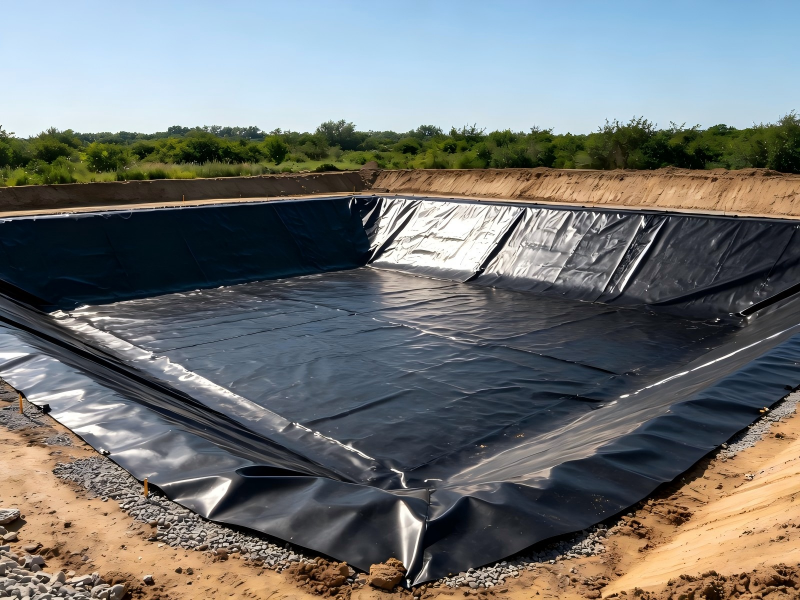
Review of 8 Top Mining Geomembranes
1.Double Textured Virgin HDPE Geomembrane (Best for Acid Heap Leach Pads)
This 1.5–3.0 mm co-extruded HDPE liner with dual rough surfaces ranks first for copper and gold heap leaching. It resists pH 0.5–14 corrosive liquids, delivers 950N minimum puncture resistance and HP-OIT over 800 minutes to slow antioxidant depletion under hot acid circulation. The textured surface boosts slope friction to prevent liner sliding on steep ore piles. A 1.8 million m² copper mine project in southern Peru has run seven years without degradation under continuous sulfuric acid immersion. Its only downside is higher raw material cost, ideal for permanent high-risk leach facilities.
2.Smooth Reinforced HDPE Geomembrane (Best for Large-Scale Tailings Dams)
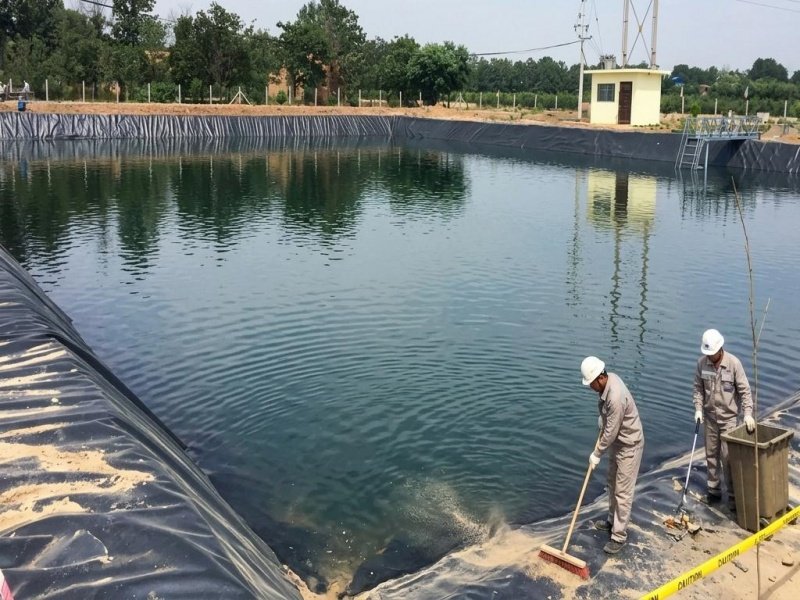
Homogeneous reinforced HDPE features stable tensile strength up to 52 kN/m and 800% elongation to accommodate uneven ground settlement in mega tailings storage. High-concentration carbon black offers 30-year exposed UV warranty for open-pit mines at high elevations. A 3.2 million m² iron ore tailings pond in Western Australia adopted this liner with geotextile protection, passing six consecutive years of EPA seepage monitoring. It balances performance and cost, becoming the mainstream choice for global large-volume tailings dams.
3.Reinforced LLDPE Geomembrane (Best for Lithium Brine Evaporation Ponds)
String-reinforced linear low-density polyethylene boasts ultra-high flexibility with 700%+ elongation, far superior to HDPE for soft clay foundations prone to differential settlement. The enhanced anti-salt additive package withstands hyper-saline lithium brines in desert climates. The 1.2 million m² lithium evaporation project in Chile’s Atacama Desert uses this liner to cope with intense solar radiation and daily temperature swings. It cannot resist concentrated strong acid, so it is excluded from heap leach sites.
4.UV-Stabilized Standard LLDPE (Best Budget Temporary Mine Liners)
Lightweight UV-modified LLDPE cuts transport and labor costs by nearly 20% compared with thick HDPE. It fits temporary process water ponds and exploration waste pits with low chemical intensity. In northern Canada gold mines, it withstands seasonal freeze-thaw cycles without cold cracking. Limitations include weak acid resistance and shorter 20-year service life, only suitable for short-term low-risk mining infrastructure.
5.Rigid PVC Geomembrane (Best for Small Low-Chemistry Sediment Ponds)
PVC liner has the lowest upfront cost and simple hot-air welding that requires minimal worker training. It fits small silver mine neutral wastewater sediment tanks with mild pH 5–11 water. However, plasticizer loss and UV aging limit its exposed lifespan to under 12 years, and concentrated cyanide or sulfuric acid will cause rapid brittling. It is only recommended for mini-scale auxiliary mine facilities with 5–10 year operation cycles.
6.Modified EPDM Rubber Geomembrane (Best for Arctic & Alpine Cold Mines)
EPDM maintains soft flexibility from -60°C to 120°C with 900% elongation, solving the brittle cracking issue of plastic liners in permanent subzero mining zones. It tolerates hydrocarbon-contaminated snowmelt wastewater well. A Russian arctic nickel mine deployed EPDM for snowmelt containment lagoons with stable performance year-round. Its flaw is poor oxidizing acid resistance and higher long-term maintenance expense.
7.Bituminous Composite Geomembrane (BGM) (Best Underground Mine Backfill Containment)
Asphalt-polymer composite liner has self-healing capacity for minor rock punctures and strong adhesion to shotcrete and concrete tunnel walls, eliminating extra anchoring layers for underground backfill slurry tanks. It must be fully buried as direct sunlight leads to rapid aging, and it is incompatible with high-concentration cyanide leachate. China’s Yunnan lead-zinc underground mines widely adopt BGM for enclosed slurry transport channels.
8.Recycled Content HDPE Geomembrane (Best ESG Eco-Friendly Stormwater Ponds)
This liner blends certified post-consumer recycled HDPE with a virgin polymer barrier layer, cutting carbon emissions by 30% and satisfying global mining ESG sustainability reports. It costs 12–18% less than full-virgin HDPE for stormwater runoff ponds and non-chemical waste stockpiles. Regulators in North America and the EU prohibit its use in acid heap leach projects due to slightly reduced anti-oxidation indicators. A South African iron ore mine selected it for rainwater retention lagoons to lower carbon footprint.
Selection Guidance by Mining Scenario
For engineers and procurement teams, clear matching rules simplify decision-making: acid heap leach pads select double textured HDPE; mega tailings dams adopt reinforced smooth HDPE; lithium salt brine ponds use reinforced LLDPE; arctic cold mines choose EPDM; underground backfill tunnels apply bituminous composite liners. Small auxiliary wastewater pits can use PVC for cost control, while temporary exploration sites pick budget LLDPE, and sustainability-focused stormwater facilities opt for recycled HDPE.
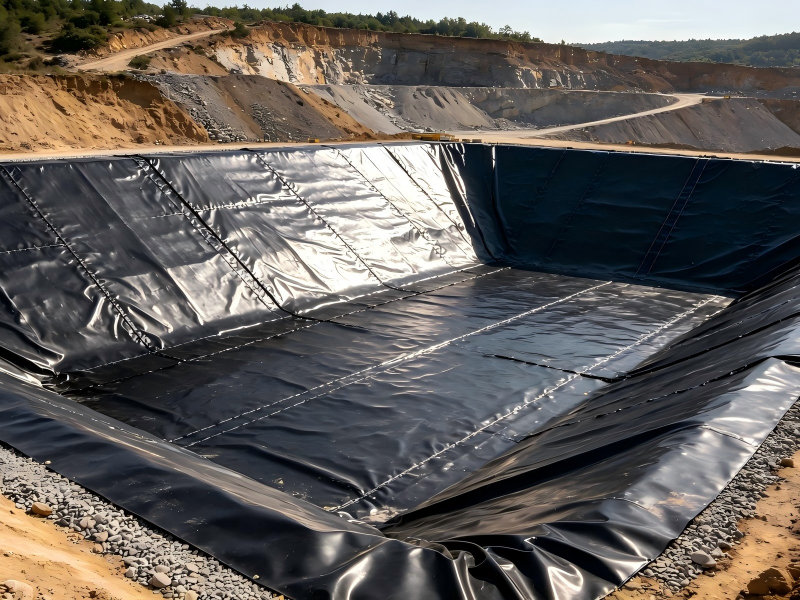
Conclusion
Virgin HDPE series geomembranes remain the dominant solution for 65% of global permanent high-hazard mining projects due to full-spectrum chemical inertness and 50+ year buried lifespan. Flexible LLDPE and specialty rubber/composite liners fill niche demands in settlement-prone, low-temperature or underground mine environments. No single geomembrane fits all mining conditions; operators must match liner material, thickness and surface texture to on-site pH, temperature, foundation geology and project operation lifespan.
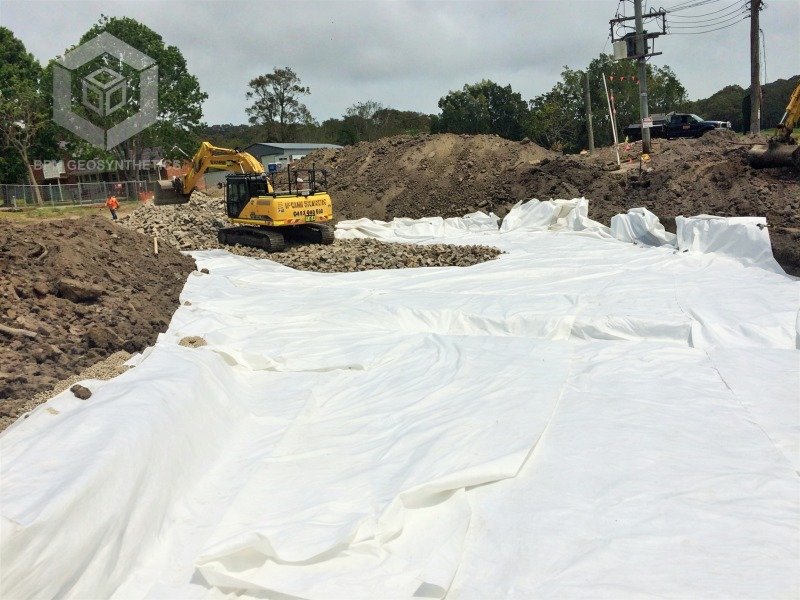
To eliminate leakage risks, every geomembrane system must pair with protective geotextile on rocky subgrades and implement third-party construction quality assurance for all welded seams. Site-specific chemical immersion test reports should be provided by manufacturers before formal procurement to avoid premature liner degradation and costly mine shutdowns.