1.Introduction
Waterproofing is a fundamental requirement for modern civil, environmental and hydraulic engineering. As a high-performance polymer anti-seepage material, geomembranes stand out for their low permeability, strong durability and wide adaptability. Gradually replacing traditional compacted clay, cement and asphalt waterproofing methods, they have become the preferred solution for high-standard seepage control projects worldwide. This guide concisely introduces geomembrane definitions, core advantages, common types, construction processes and maintenance tips to provide practical references for engineering practitioners.
2. Overview of Geomembrane Waterproofing
2.1 Definition
A geomembrane is a flexible, continuous polymer sheet designed for professional waterproofing, anti-seepage and pollutant containment. Made of high-purity resin and specialized additives, it features a dense molecular structure with hydraulic conductivity of 10⁻¹² to 10⁻¹⁶ cm/s, achieving near-complete impermeability to water, gas and most chemical solutions.
2.2 Working Principle
Unlike traditional layered or coated waterproofing materials prone to porosity and joint leakage, welded geomembranes form an integral, seamless barrier. This structure fundamentally resolves seepage risks from material aging, cracking and interface failure, delivering long-term stable waterproofing performance.
3. Core Performance Advantages
3.1 Reliable Anti-Seepage Capacity
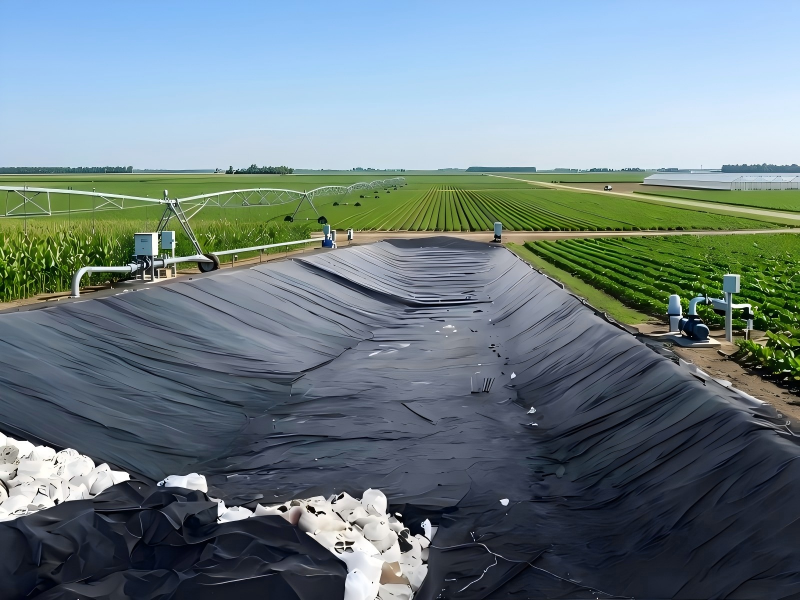
Geomembranes far outperform traditional clay layers in seepage control. Standard products reduce project seepage loss to below 1%, effectively avoiding the unstable waterproofing effect caused by the high porosity of compacted clay.
3.2 Strong Environmental & Chemical Resistance
Most geomembranes adapt to a pH range of 2–12, resisting corrosion from acids, alkalis, salts and industrial wastewater. With UV stabilizers and carbon black additives, they withstand ultraviolet aging and extreme temperatures from -40℃ to 60℃, suitable for harsh outdoor and underground environments.
3.3 Good Mechanical & Construction Performance
Featuring excellent tensile, tear and puncture resistance, geomembranes tolerate minor foundation settlement and mechanical impact without damage. Their flexible sheet structure fits irregular construction surfaces perfectly, avoiding the cracking defects of rigid waterproof materials under foundation deformation.
3.4 Cost-Effective Long-Term Value
Geomembrane construction occupies less space and shortens project cycles compared with clay anti-seepage systems. With a service life of over 30 years in conventional environments and minimal maintenance costs, it delivers superior long-term economic benefits.
4. Common Geomembrane Types & Applications
4.1 HDPE Geomembrane
HDPE is the most widely used type with high hardness, outstanding corrosion and aging resistance. It is ideal for high-risk anti-seepage scenarios including municipal landfills, hazardous waste yards, tailings ponds and chemical sewage pools.
4.2 LLDPE Geomembrane
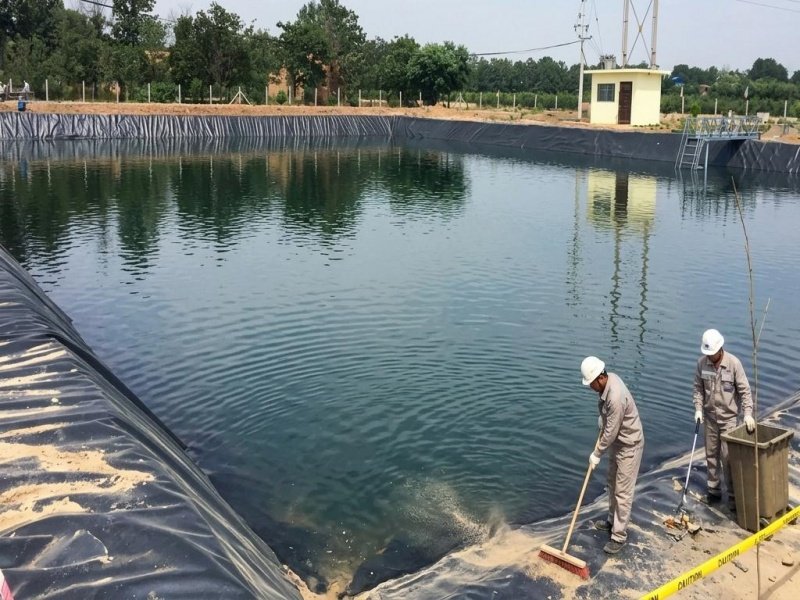
LLDPE boasts better flexibility and ductility than HDPE, adapting well to unstable and deformable foundations. It is mainly used for artificial lakes, landscape ponds, reservoirs, road basements and tunnel waterproofing.
4.3 PVC Geomembrane
PVC geomembranes are easy to process and weld with good bonding properties. They are commonly applied to indoor underground engineering, canal anti-seepage and small-scale water storage projects.
5. Standard Construction Process
5.1 Base Treatment
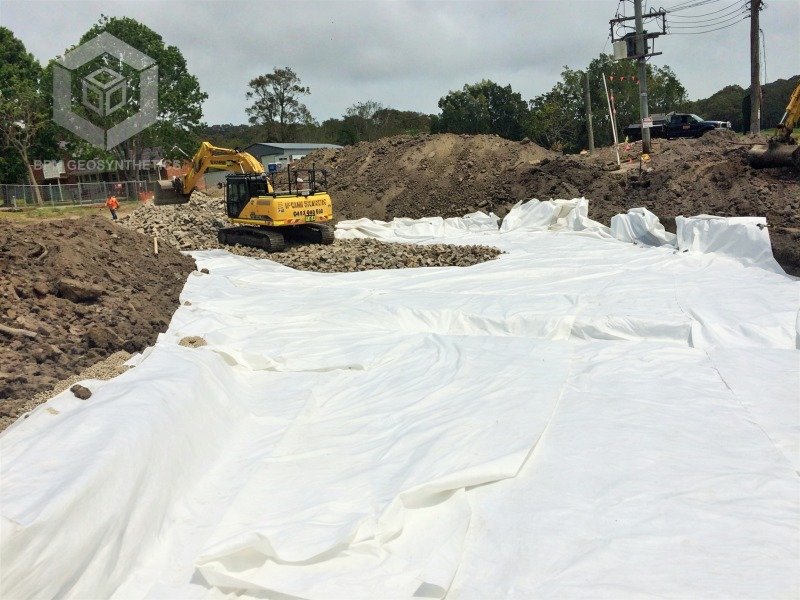
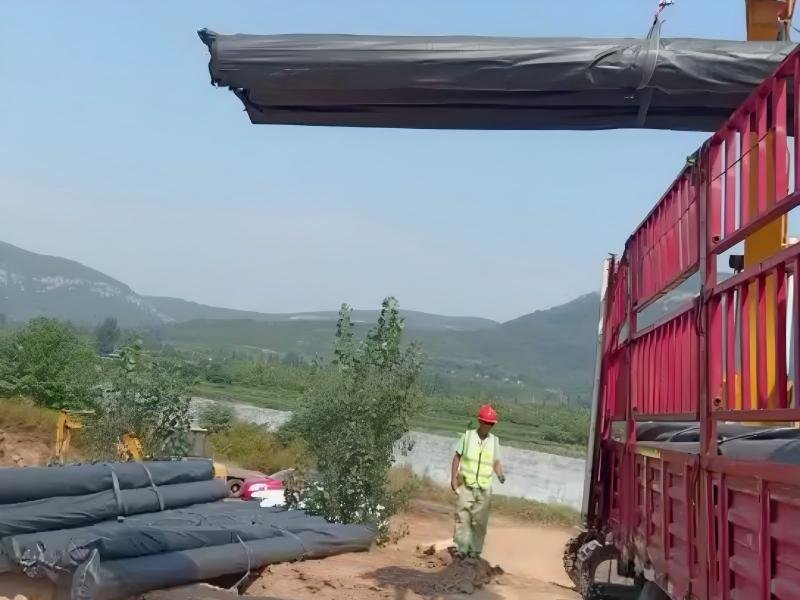
The base surface must be flat, solid and free of sharp stones, roots and hard protrusions to prevent membrane puncture. All loose soil needs compaction and leveling for uniform stress bearing.
5.2 Membrane Laying
Lay geomembrane sheets smoothly with standardized lap width reserved. Over-tensioning is prohibited to prevent cracking from thermal expansion and foundation settlement.
5.3 Seam Welding
Welded joints are the key to waterproofing integrity. Hot wedge welding is adopted for long straight seams to form testable double-track welds, while extrusion welding handles corners, pipeline penetrations and local repairs to eliminate sealing dead ends.
5.4 Post-Construction Inspection
All welds must undergo air pressure testing and visual inspection to rule out virtual welding, missing welding and cracks. Only fully qualified projects can be delivered.
6. Daily Maintenance
Regular operational inspections are required to check for membrane damage, joint peeling and local aging. Avoid sharp impacts and heavy compression on the membrane surface. Timely repair welding for minor damages prevents small leaks from expanding into large-area failures.
7. Conclusion
With efficient anti-seepage performance, strong environmental adaptability and long-term cost advantages, geomembrane waterproofing has become an indispensable engineering technology. Selecting matched materials, implementing standardized construction and conducting regular maintenance can maximize system stability, providing reliable, durable and economical solutions for water storage, pollution containment and underground waterproofing projects.