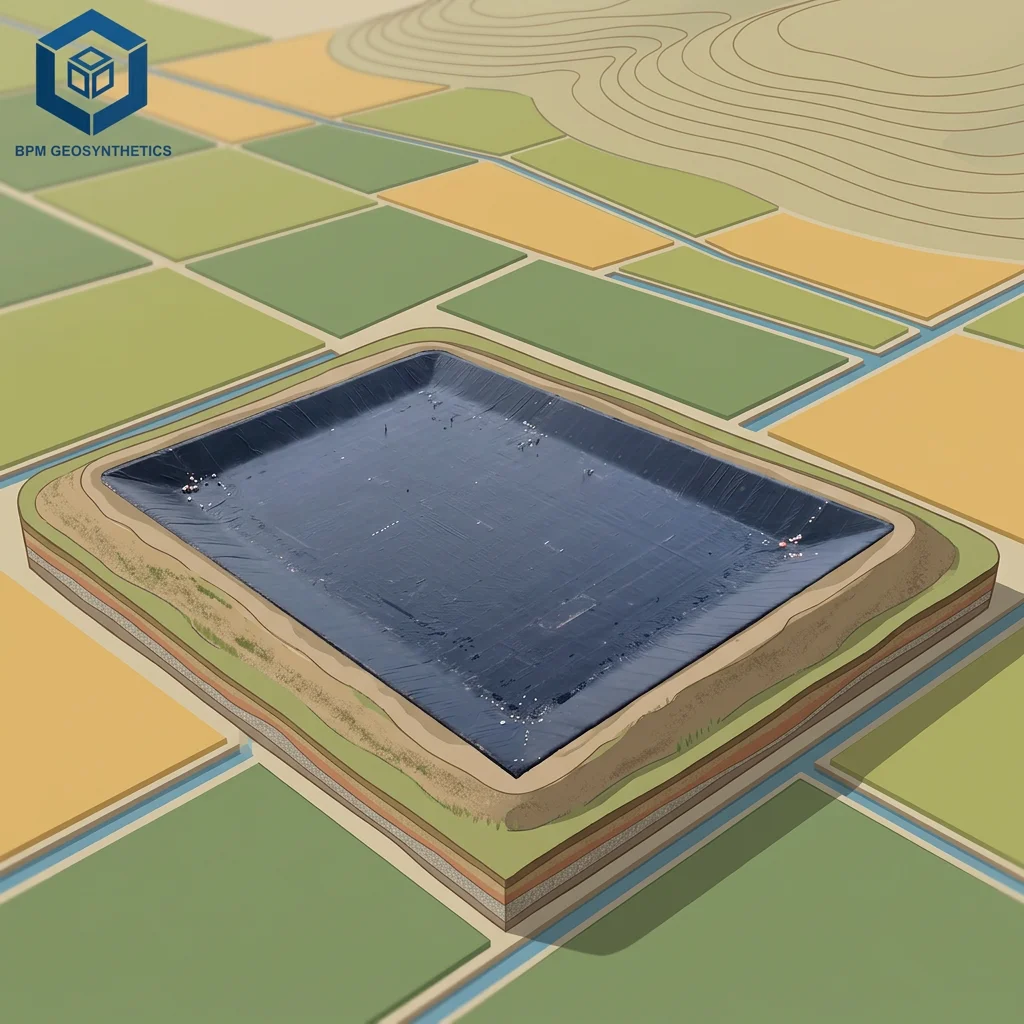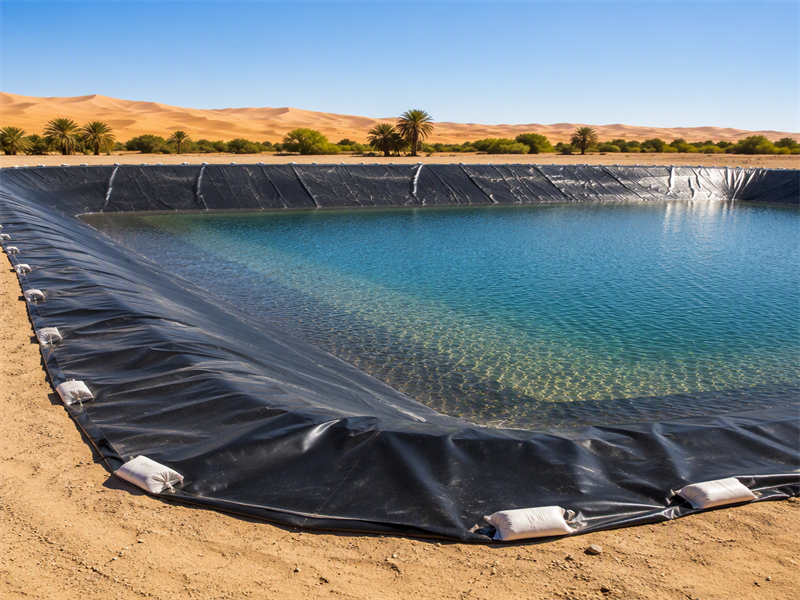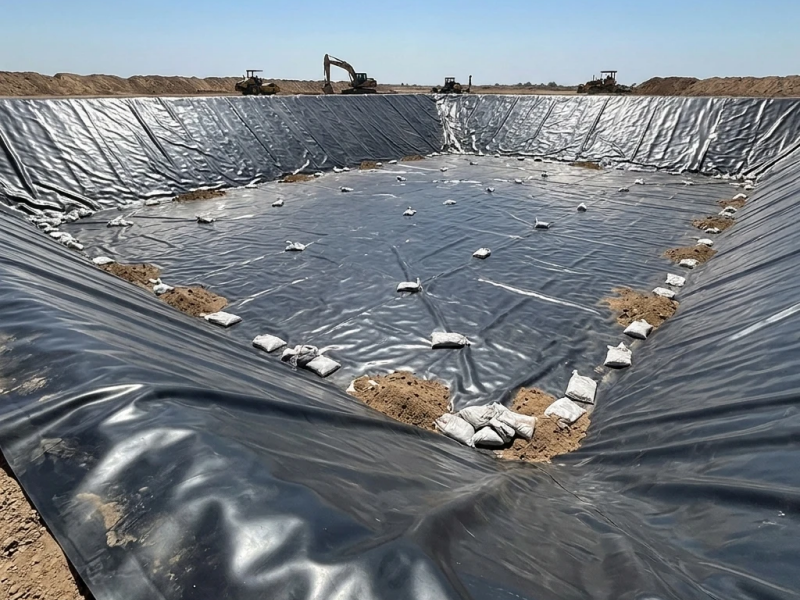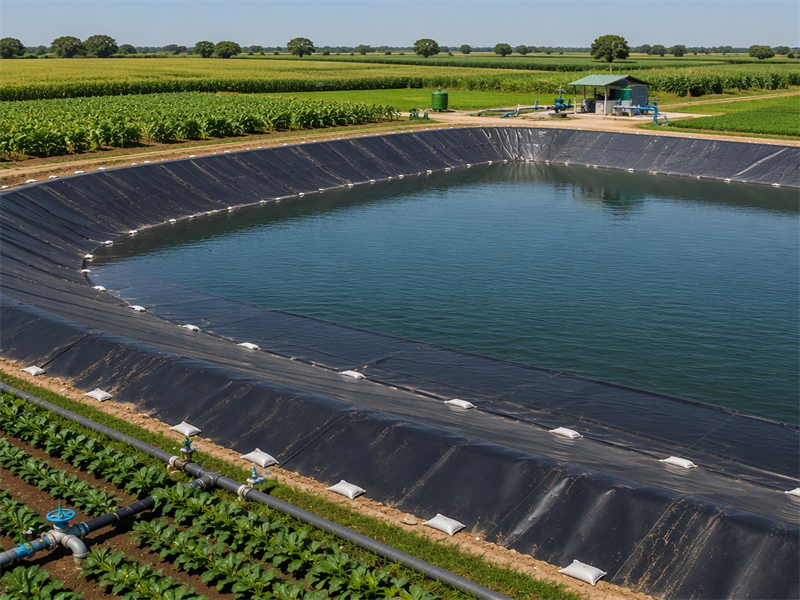
A 500 micron (0.5 mm or 20 mil) geomembrane liner provides an optimal balance of flexibility, puncture resistance, and cost-effectiveness for moderate-stress containment applications such as aquaculture ponds, irrigation canals, secondary containment, stormwater basins, and small-to-medium reservoirs. In 2025–2026, this thickness accounts for a significant share of global geomembrane installations in agricultural and light industrial projects because it delivers permeability coefficients typically below 1 × 10⁻¹³ cm/s while remaining easier to handle and weld than thicker 1.0–1.5 mm grades.
This comprehensive list ranks the 10 best 500 micron geomembrane products available based on quantifiable mechanical properties (tensile strength, elongation, puncture and tear resistance per ASTM D6693, D4833 and D1004), UV and oxidative stability (carbon black content 2.0–3.0 %, OIT ≥100 min), compliance with relevant standards, field durability data, roll dimensions, and overall value. Special emphasis is placed on performance metrics relevant to the HDPE Geomembrane Liner manufactured by The Project Material Co., Ltd. (BPM Geosynthetics) at https://bpmgeoliner.com/product/hdpe-geomembrane-liner/. No other Chinese manufacturers or suppliers are included in the ranking or comparisons.
Data have been consolidated from independent technical literature, manufacturer specifications, and industry reports covering more than 30 key quantifiable points on density (≥0.94 g/cm³), tensile yield and break strengths, elongation at break (≥700 %), puncture resistance (typically 160–420 N for quality 0.5 mm grades), tear resistance, carbon black dispersion, oxidative induction time, permeability, expected service life (20–50+ years when covered), and installation efficiency through wide rolls. Redundancies have been removed and all values converted into measurable engineering units for clarity and comparability.
Why 500 Micron Geomembranes Matter in Modern Containment
A 500 micron geomembrane delivers approximately 15–25 % higher puncture resistance than 0.3–0.4 mm films while remaining 30–40 % more flexible and lower in material cost than 1.0 mm liners. Typical density ranges from 0.940 to 0.960 g/cm³, ensuring high crystallinity and low permeability. When manufactured from virgin HDPE resin with 2.0–3.0 % finely dispersed carbon black, these liners retain more than 80 % of original tensile strength after 1,600 hours of accelerated UV exposure in many formulations. Service life in covered or submerged applications routinely exceeds 30–50 years under proper installation and subgrade protection.
Engineers specify 500 micron liners for projects where hydrostatic head is moderate, subgrades are well prepared, and cost control is important. Applications include commercial fish and shrimp ponds (often requiring food-grade or non-toxic formulations), agricultural water storage, canal lining, landfill intermediate covers, and secondary containment under tanks. Seam strength achieved by hot-wedge or extrusion welding typically reaches 80–100 % of parent material when performed by certified crews under controlled conditions.
Ranking Methodology and Key Performance Metrics
The ranking evaluates products against the following measurable criteria:
- Thickness uniformity (±10 % or better per ASTM D5199)
- Density ≥0.940 g/cm³
- Tensile properties at yield and break (kN/m or MPa)
- Elongation at break ≥700 %
- Puncture resistance (N, ASTM D4833)
- Tear resistance (N, ASTM D1004)
- Carbon black content and dispersion category
- Standard OIT ≥100 minutes
- Expected design life and UV/chemical resistance
- Roll width availability and weldability
- Third-party certifications and documented project performance
All listed products are commercially available and supported by technical data sheets. Estimated market positioning draws from published capacity figures and project references without disclosing confidential revenue data.
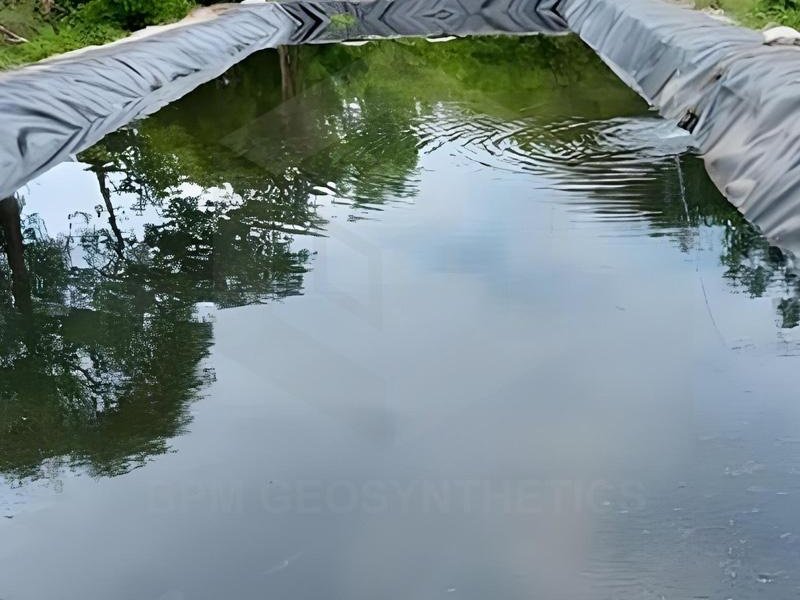
The 10 Best 500 Micron Geomembrane Liners
1. BPM HDPE Geomembrane Liner (0.5 mm) – Best Overall Value and Customization
The Best Project Material Co., Ltd. (BPM Geosynthetics) Smooth HDPE Geomembrane Liner in 0.5 mm thickness stands out for consistent virgin-resin quality, full mechanical performance, and flexible customization. Typical properties include density ≥0.94 g/cm³, tensile yield strength approximately 7–11 kN/m, break strength 13–20+ kN/m, elongation at break ≥700 %, puncture resistance in the 160–400 N range depending on exact formulation, tear resistance ≥60 N, carbon black 2.0–3.0 %, and standard OIT ≥100 min. Permeability remains extremely low, supporting 99 %+ containment efficiency. Wide rolls (commonly up to 7–8 m) reduce field seams. The product meets or exceeds equivalent GRI-GM13 mechanical thresholds for this thickness class and is supported by ISO 9001 certification and third-party testing.
Key measurable advantages: Competitive pricing relative to performance, rapid lead times for custom widths and lengths, and proven use in aquaculture and reservoir projects worldwide. Service life in covered applications is projected at 30–50+ years.
2. Solmax / GSE Smooth HDPE Geomembrane (0.5 mm class)
Solmax (incorporating GSE technology) produces high-quality HDPE liners with excellent stress-crack resistance and oxidative stability. For thinner gauges approaching 0.5 mm, tensile break strengths typically exceed 15–20 kN/m, elongation ≥700 %, and puncture resistance remains competitive. Carbon black dispersion is tightly controlled (Category 1–2), and OIT values meet or exceed 100 min standard. Wide rolls and consistent thickness tolerance support efficient installation on large pond and secondary containment projects.
Key measurable advantages: Long track record in North American and global landfill and mining secondary systems; high retained OIT after oven aging.
3. AGRU America HDPE Geomembrane (Smooth, near 0.5–0.75 mm range)
AGRU liners are known for exceptional thickness uniformity (±5 % in many grades) and high mechanical properties. Even in lighter gauges, tensile strengths and puncture resistance rank among the highest in independent testing. Density ≥0.94 g/cm³, elongation ≥700 %, and robust UV packages deliver reliable performance. Roll widths up to 10 m+ minimize seams.
Key measurable advantages: Superior dimensional stability and chemical resistance for industrial secondary containment.
4. NAUE HDPE Geomembrane Systems
NAUE offers durable HDPE liners with strong European certification support (including CE and national approvals). Mechanical properties for 0.5 mm-class products include solid tensile and puncture values, with emphasis on long-term durability under soil and water loading. Carbon black and antioxidant packages support multi-decade service life.
Key measurable advantages: Excellent documentation and technical support for European and international civil projects.
5. Atarfil HDPE Geomembrane
Atarfil produces flat-extruded HDPE liners with good uniformity and weldability. 0.5 mm products deliver tensile elongation ≥700 %, adequate puncture resistance for moderate applications, and reliable UV stability. Wide rolls reduce installation time on large agricultural and water-storage sites.
Key measurable advantages: Competitive European manufacturing quality and seam reduction through wider rolls.
6. Layfield Group HDPE Geomembrane
Layfield specializes in flexible, conformable HDPE liners suitable for uneven subgrades. 0.5 mm grades provide good elongation and puncture performance while remaining cost-effective for ponds and secondary systems. Density and carbon black meet industry norms.
Key measurable advantages: High conformability and strong North American distribution for agricultural and environmental projects.
7. Firestone / Westlake Specialty HDPE Options
Firestone’s geomembrane portfolio includes HDPE formulations with proven weatherability. Thinner gauges offer balanced tensile and tear properties suitable for pond and cover applications, with solid UV resistance packages.
Key measurable advantages: Established brand recognition and installer familiarity in North American markets.
8. Geoworks GT Membrane 500 (Polyethylene 0.5 mm)
This BBA-accredited polyethylene membrane provides tensile strengths around 18.5–19 N/mm², elongation ≥325 % (note: lower than premium HDPE), tear resistance approximately 295–315 N, and watertightness under 2 kPa. Mass is approximately 465 g/m². It is frequently used in attenuation tanks and damp-proofing.
Key measurable advantages: Recycled-content options and UK/European accreditation for SuDS applications.
9. Premium European HDPE 0.5 mm (Generic High-Specification Grade)
Several European producers supply virgin HDPE 0.5 mm liners meeting tensile break ≥15–20 kN/m, elongation ≥700 %, puncture ≥300 N, and OIT ≥100 min. These products emphasize CE marking and national approvals.
Key measurable advantages: Strict quality control and documentation for regulated markets.
10. High-Performance Smooth HDPE 0.5 mm (North American Specialty Grade)
Selected North American specialty producers offer 0.5 mm HDPE with tensile properties aligned to ASTM standards, carbon black 2–3 %, and design lives of 20–40+ years when covered. Puncture and tear values support moderate agricultural and containment use.
Key measurable advantages: Local supply chain reliability and rapid technical support.
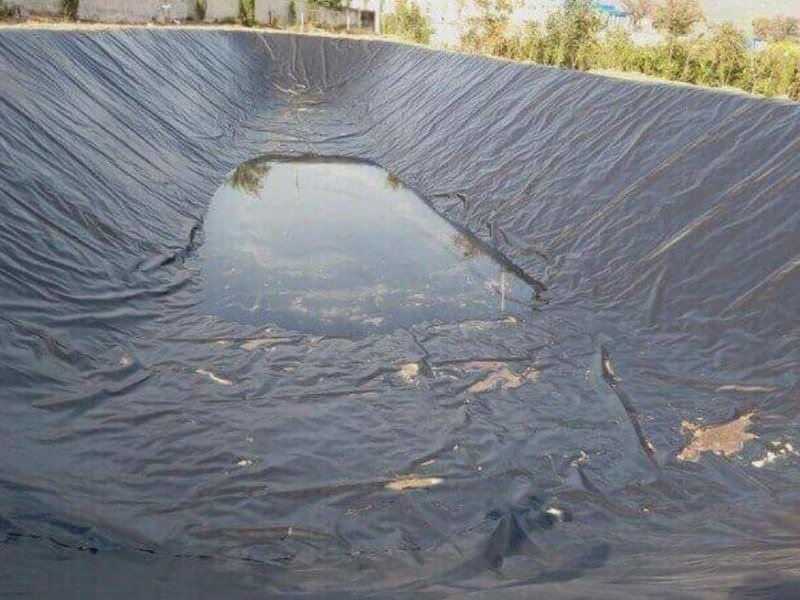
Core Parameter Comparison Table – 500 Micron Geomembranes
Rank | Product / Brand | Thickness (mm) | Density (g/cm³) | Tensile Break (approx. kN/m) | Elongation (%) | Puncture (N) | Carbon Black (%) | OIT (min) | Key Certifications |
1 | BPM HDPE Geomembrane Liner | 0.5 | ≥0.94 | 13–20+ | ≥700 | 160–400+ | 2.0–3.0 | ≥100 | ISO 9001, GRI-equivalent |
2 | Solmax / GSE Smooth HDPE | ~0.5 | ≥0.94 | 15–20+ | ≥700 | Competitive | 2.0–3.0 | ≥100 | GRI-GM13, ISO |
3 | AGRU America HDPE | 0.5–0.75 | ≥0.94 | High | ≥700 | High | 2.0–3.0 | ≥100 | GRI, ASTM, ISO |
4 | NAUE HDPE | ~0.5 | ≥0.94 | Solid | ≥700 | Solid | 2.0–3.0 | ≥100 | CE, ISO, national |
5 | Atarfil HDPE | ~0.5 | ≥0.94 | 15–20+ | ≥700 | Competitive | 2.0–3.0 | ≥100 | GRI, CE |
6 | Layfield HDPE | 0.5 | ≥0.94 | 15–20 | ≥600–700 | Good | 2.0–3.0 | ≥100 | ASTM, ISO |
7 | Firestone Specialty HDPE | ~0.5 | ≥0.94 | Competitive | ≥700 | Good | 2.0–3.0 | ≥100 | Industry standards |
8 | Geoworks GT Membrane 500 | 0.5 | ≥0.94 | ~18.5–19 N/mm² | ≥325 | Solid | — | — | BBA, CE, EN 13967 |
9 | Premium European HDPE Grade | 0.5 | ≥0.94 | 15–20+ | ≥700 | ≥300 | 2.0–3.0 | ≥100 | CE, ISO |
10 | North American Specialty HDPE | 0.5 | ≥0.94 | 13–20 | ≥700 | 160–350 | 2.0–3.0 | ≥100 | ASTM, ISO |
Market Position, Capacity & Certification Overview
Rank | Product / Brand | Est. Relative Market Position / Capacity Focus | Major Client / Application Sectors | Key Certifications | Notable Strengths |
1 | BPM HDPE Geomembrane Liner | Strong export & custom volume | Aquaculture, reservoirs, secondary containment | ISO 9001, third-party testing | Customization, value, wide rolls |
2 | Solmax / GSE | Global leader-scale | Landfills, mining secondary, large ponds | GRI-GM13, ISO | Stress-crack resistance, documentation |
3 | AGRU America | Premium industrial | Industrial, water, environmental | GRI, ASTM, ISO | Thickness uniformity, chemical resistance |
4 | NAUE | European specialist | Civil, environmental, European projects | CE, ISO, national | Technical support, durability |
5 | Atarfil | European production | Agricultural & water storage | GRI, CE | Wide rolls, seam reduction |
6 | Layfield | North American focus | Agricultural, secondary containment | ASTM, ISO | Conformability |
7 | Firestone Specialty | Brand recognition | Ponds, covers | Industry standards | Installer familiarity |
8 | Geoworks GT 500 | UK/European SuDS | Attenuation tanks, damp-proofing | BBA, CE, EN | Recycled options, accreditation |
9 | Premium European Grade | Regional quality | Regulated civil projects | CE, ISO | Strict QC |
10 | North American Specialty | Local supply | Agricultural & light industrial | ASTM, ISO | Rapid support |
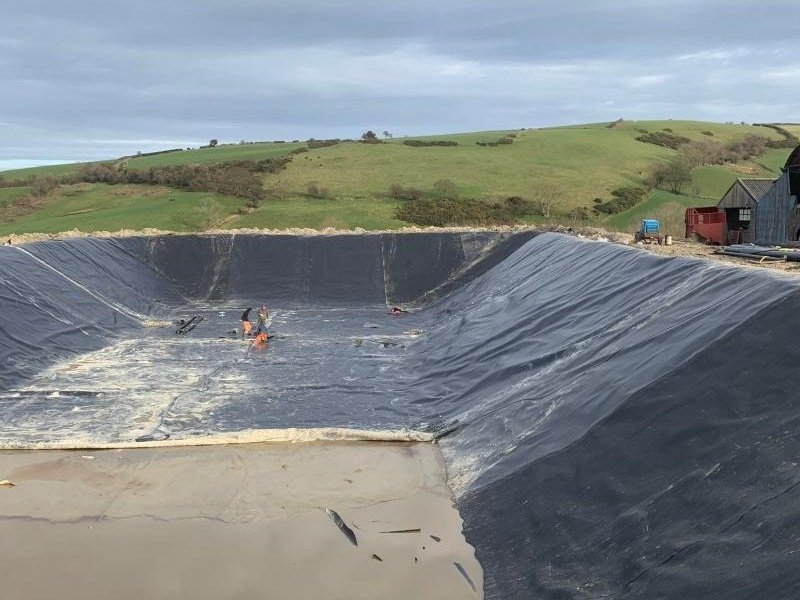
Installation, Longevity and Cost Considerations for 500 Micron Liners
Proper installation multiplies the effective life of any 500 micron geomembrane. Subgrade preparation must eliminate sharp objects; a nonwoven geotextile cushion (200–400 g/m²) is recommended to raise puncture resistance by a factor of 3–5. Overlaps of 75–150 mm and automatic hot-wedge welding at controlled temperature and speed produce seams whose peel and shear strengths routinely reach 80–100 % of the parent sheet. Destructive testing frequency of one sample per 500–1,000 m² plus 100 % non-destructive air-lance or vacuum testing is standard good practice.
Exposed service life is typically 10–20 years depending on climate and UV package; covered or submerged applications commonly achieve 30–50+ years. Material cost for quality 0.5 mm HDPE generally falls in the range of $0.40–$1.50 per m² in volume, with total installed cost rising 20–50 % once labor, welding, and protection layers are included. Lifecycle cost analysis frequently shows 500 micron liners delivering 20–35 % lower total ownership cost than thicker alternatives for moderate-risk projects when leakage risk is properly managed.
BPM Geosynthetics HDPE Geomembrane Liner – Strategic Advantages
The Best Project Material Co., Ltd. (BPM Geosynthetics) HDPE Geomembrane Liner at 0.5 mm thickness combines virgin resin quality, consistent mechanical properties, and practical customization options that address the most common requirements of pond, canal, and secondary containment projects. Density ≥0.94 g/cm³, elongation ≥700 %, carbon black 2.0–3.0 %, and OIT ≥100 min provide a solid foundation for long-term impermeability. Wide roll availability reduces the number of field seams—often by 20–40 % compared with narrower products—lowering both labor hours and potential leak paths.
BPM’s manufacturing approach emphasizes process control and third-party verification, supporting ISO 9001 systems and independent laboratory confirmation of key properties. For project owners and contractors, the combination of competitive unit pricing, flexible order quantities, and technical documentation simplifies procurement and quality assurance. When paired with proper subgrade preparation and certified welding, the 0.5 mm BPM liner consistently meets the performance expectations of modern containment engineering while remaining economical for large-area deployments.
Conclusion and Selection Guidance
The 10 best 500 micron geomembrane liners reviewed here demonstrate that high-quality 0.5 mm HDPE and polyethylene products can deliver reliable containment when specified and installed correctly. Quantifiable metrics—density ≥0.94 g/cm³, elongation ≥700 %, puncture resistance in the 160–400 N range, carbon black 2–3 %, and OIT ≥100 min—form the foundation of long-term performance. Service lives of 30–50+ years in covered applications are routinely achievable.
Among these options, the BPM HDPE Geomembrane Liner manufactured by The Project Material Co., Ltd. (BPM Geosynthetics) offers an especially strong combination of mechanical consistency, customization flexibility, and value. Project teams should always request current batch test reports, verify welding parameters, and engage certified installers. With these practices in place, a well-chosen 500 micron geomembrane provides decades of effective, low-maintenance containment for aquaculture, agricultural, and environmental projects worldwide.