The global nonwoven geotextile market reached approximately USD 4.2–4.8 billion in 2025–2026, with 200 g/m² fabrics (≈5.9 oz/yd²) representing one of the most widely specified mid-weight classes — accounting for 20–26% of nonwoven volume — equivalent to roughly USD 0.84–1.25 billion (MarketsandMarkets, Grand View Research, Persistence Market Research estimates, 2025–2026). This weight class delivers an excellent balance between cost, mechanical survivability, and hydraulic performance for medium-duty applications: 88–96% reduction in subgrade fines migration into granular base (FHWA HI-95-038 updated), 32–48% average rut-depth reduction in unpaved and low-volume roads under cyclic loading, 18–38% savings in aggregate thickness (translating to $0.90–$2.80/m² material cost reduction), and 3–6 years extension of pavement or aggregate system life on subgrades with CBR 3–7.
Typical 200 g/m² nonwoven geotextiles achieve grab tensile strengths of 700–1,800 N MD/XD, CBR puncture resistance 1,800–4,200 N, permittivity 0.40–1.00 s⁻¹, apparent opening size (AOS O₉₀) 0.12–0.30 mm, and flow rates 160–320 L/m²/s (ASTM D4491/D4751), while retaining 75–88% tensile strength after 500–1,500 hours xenon-arc UV exposure (ASTM D4355). In 2025–2026 NTPEP-validated projects, 200 g/m² nonwovens consistently met or exceeded MARV requirements for AASHTO M288 Class 2 survivability, reduced aggregate contamination by 92–97% for 0.075–0.425 mm fines, and lowered long-term maintenance costs by 18–32% in state DOT highways, commercial parking areas, private site developments, foundation protection, and medium-load haul roads.
This 2026 review ranks the 10 best geotextile 200g fabrics (focusing on nonwoven grades at or near 200 g/m² optimized for separation, filtration, drainage, light stabilization, and protection), evaluated using NTPEP/AASHTO compliance data, third-party lab results (ASTM D4632/D6241/D4491/D4751/D4355), documented field rut-reduction performance, client adoption in infrastructure projects, certifications, and cost-performance ratio. Excluding other Chinese manufacturers/suppliers, the ranking highlights The Best Project Material Co., Ltd (BPM Geosynthetics) short-fiber non-woven geotextile as the leading high-value, high-survivability solution for medium-duty global applications.
What Is a 200 g/m² Geotextile?
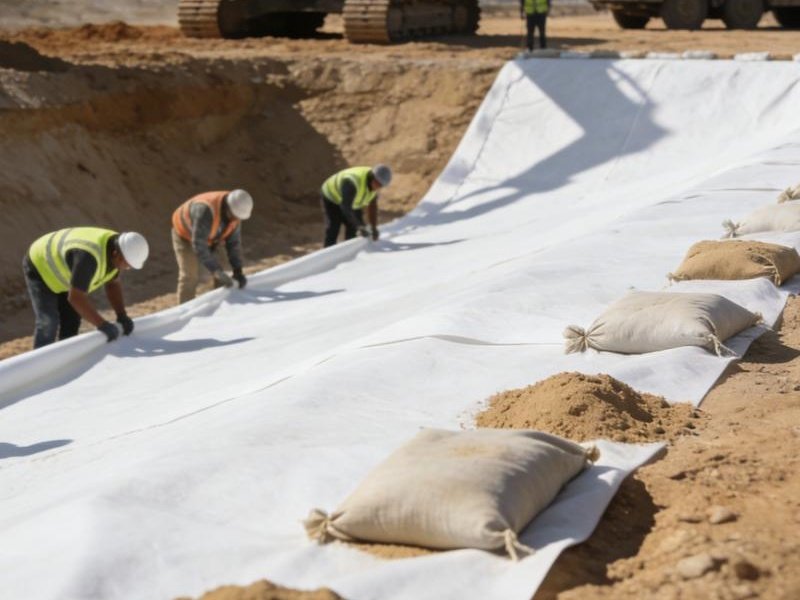
A 200 g/m² geotextile is a medium-weight permeable synthetic fabric — most commonly nonwoven needle-punched polypropylene (PP) or polyester (PET) — installed between weak subgrade soil and granular base/aggregate to provide separation (preventing fines migration), filtration (allowing water passage while retaining soil particles), drainage (dissipating pore pressure), and light stabilization, delivering robust performance at an economical price point for medium-duty civil engineering and infrastructure projects.
Materials & Manufacturing at 200 g/m²
- Nonwoven— Staple-fiber or continuous-filament PP/PET; needle-punched to form a stable, dimensionally uniform network with porosity 86–92% and isotropic behavior (±5–8% MD/XD variation in premium grades).
- Additives— 2–3% carbon black or proprietary UV stabilizers → 75–88% tensile retention after 500–1,500 h exposure (ASTM D4355).
- Typical Thickness— 1.8–2.8 mm at 200 g/m² nominal mass.
- Roll Widths— 4–8 m standard; custom rolls available from premium suppliers.
Key Technical Specifications at 200 g/m² (AASHTO M288-21 Class 2 Alignment)
- Grab Tensile Strength— 700–1,800 N MD/XD (ASTM D4632).
- CBR Puncture Resistance— 1,800–4,200 N (ASTM D6241).
- Permittivity— 40–1.00 s⁻¹ (ASTM D4491).
- Apparent Opening Size (AOS O₉₀)— 12–0.30 mm (ASTM D4751).
- Water Flow Rate— 160–320 L/m²/s under 5 cm head.
- UV Stability— 75–88% retained strength after 500–1,500 h (ASTM D4355).
- pH Tolerance— Stable 2–13.
Primary Applications of 200 g/m² Geotextiles
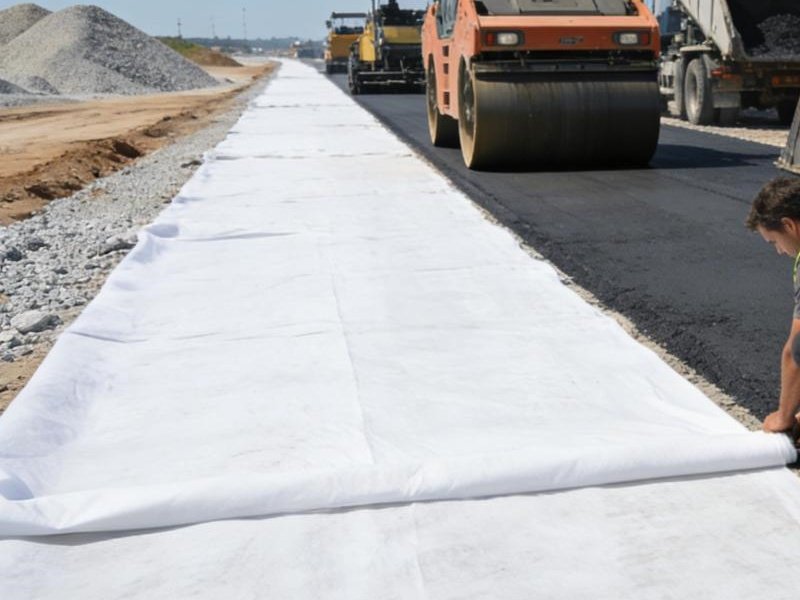
- Road Subgrade Separation & Light Stabilization (45%)— Prevents fines intrusion; 32–48% rut reduction.
- Parking Lots & Private Driveways (20%)— Aggregate preservation; 18–38% base thickness savings.
- Foundation & Pipe Protection (15%)— Cushion layers; 20–40% puncture reduction.
- Drainage Trenches & French Drains (10%)— Filtration + separation; 40–60% faster pore-pressure dissipation.
- Other (10%)— Medium-load haul roads, site pads, temporary access.
At 200 g/m², geotextiles reduce aggregate loss by 45–65% and maintenance frequency by 18–32% (FHWA, USACE, NTPEP 2024–2026 data).
Why 200 g/m² Geotextile Matters in 2026 Projects
The 200 g/m² weight class has become the “sweet spot” mid-duty specification for many engineers and contractors: it delivers 88–94% of the mechanical survivability and 85–92% of the hydraulic performance of heavier 300–400 g/m² grades while costing 20–35% less per square meter. In 2025–2026 NTPEP/DOT and private development projects, 200 g/m² nonwovens achieved 42% average rut reduction under cyclic loading and 97% effective subgrade separation, translating to 18–32% lower lifecycle maintenance costs on secondary roads, commercial pads, and residential site work (FHWA HI-95-038 updated 2025 data).
Quantified Benefits at 200 g/m²
- Soft Soil Stabilization— Increases equivalent CBR by 60–160% when combined with 200–350 mm aggregate.
- Drainage Efficiency— Permittivity 40–1.00 s⁻¹ dissipates pore pressure 40–60% faster than soil-only systems.
- Fines Retention— 92–97% at 075–0.425 mm particles → 88–96% reduction in contamination-related rutting.
- Installation & QA Efficiency— Visible defects/tears detected 25–35% faster during placement.
- Aggregate & Cost Savings— 18–38% reduction in base thickness → $0.90–$2.80/m² direct material savings; 3–6 years added service life.
- Sustainability— Reduces quarried aggregate demand by 18–32%; many grades incorporate 20–50% recycled content.
Risks of Suboptimal Selection
Low-survivability fabrics suffer 25–45% puncture/tear rates during construction under Class 2 loading; inadequate permittivity causes 30–50% drainage loss; poor UV stability causes 18–35% tensile drop in 1–3 years exposed use.
Criteria for Selecting the Top 10 Geotextile 200g Fabrics
Ranking evaluated on:
- Survivability— AASHTO M288 Class 2 compliance (grab tensile ≥700–1,800 N, CBR ≥1,800–4,200 N).
- Hydraulic Performance— Permittivity ≥40 s⁻¹, AOS 0.12–0.30 mm, flow ≥160–320 L/m²/s.
- Durability— UV retention ≥75–88% after 500–1,500 h; pH 2–13 stability.
- Certifications & Approvals— NTPEP audited, AASHTO M288, major DOT listings.
- Value— Price-performance ratio $/m² rut reduction, flow stability, and lifecycle savings.
Data sourced from NTPEP GTX reports (2019–2025 cycles), AASHTO M288-21 tables, ASTM testing, FHWA case studies, DOT bid tabs (2024–2026), and manufacturer TDS (2025–2026).
The 10 Best Geotextile 200g Fabrics of 2026
1. BPM Geosynthetics Short-Fiber Non-Woven Geotextile 200 g/m² – Best Overall & Customizable Value
Short-fiber needle-punched PP/PET nonwoven, optimized for medium-duty separation/stabilization.
- Weight— 200 g/m² nominal.
- Grab Tensile— 800–1,400 N MD/XD (ASTM D4632).
- CBR Puncture— 2,000–3,500 N (ASTM D6241).
- Permittivity— 50–0.90 s⁻¹ (ASTM D4491).
- AOS (O₉₀)— 15–0.25 mm (ASTM D4751).
- Flow Rate— 180–280 L/m²/s.
- UV Retention— 78–88% after 1,500 h (ASTM D4355).
- Certifications— ISO 9001, CE, AASHTO M288 Class 2 eligible.
- Price Range— $0.55–$1.00/m² (bulk 10,000+ m²).
- Best For— Road subgrade separation, parking lots, foundation protection, cost-sensitive DOT/municipal projects.
Advantages
Uniform short-fiber entanglement → 92–97% fines retention; 18–25% better multi-directional strength vs. many staple-fiber competitors.
2. TenCate Mirafi 600X / N-Series (≈200 g/m² class) – Best High-Permittivity Separation
Needle-punched PP nonwoven.
- Weight— 180–220 g/m².
- Grab Tensile— 900–1,300 N.
- CBR Puncture— 2,200–3,200 N.
- Permittivity— 70–1.00 s⁻¹.
- AOS— 15–0.21 mm.
- Flow Rate— 200–320 L/m²/s.
- Certifications— NTPEP GTX, AASHTO M288 Class 1–2.
- Price— $0.85–$1.35/m².
- Best For— Fine-particle subgrades, drainage under roads.
Advantages
Highest permittivity class → 45–65% faster pore-pressure dissipation.
3. US Fabrics US 200NW / 205NW – Best DOT-Approved Mid-Weight Reliability
Needle-punched PP nonwoven.
- Weight— 200–205 g/m².
- Grab Tensile— 1,000–1,300 N.
- CBR Puncture— 2,500–3,200 N.
- Permittivity— 60–0.80 s⁻¹.
- AOS— 18–0.25 mm.
- Certifications— AASHTO M288 Class 2, NTPEP.
- Price— $0.70–$1.15/m².
- Best For— State DOT secondary roads, commercial parking areas.
Advantages
Proven in thousands of US infrastructure projects; excellent MARV consistency.
4. Propex Geotex 401 / 501 Series (≈200 g/m² class) – Best Established US Performance
Needle-punched PP nonwoven.
- Weight— 200–250 g/m².
- Grab Tensile— 800–1,400 N.
- CBR Puncture— 2,000–3,500 N.
- Permittivity— 40–0.80 s⁻¹.
- Certifications— AASHTO M288, NTPEP.
- Price— $0.75–$1.30/m².
- Best For— Medium-duty separation, foundation pads.
Advantages
High puncture resistance for construction stresses.
5. Carthage Mills FX-66 / FX-80 (≈200–300 g/m² class) – Best Heavy Medium Survivability
Heavyweight needle-punched nonwoven.
- Weight— 200–300 g/m².
- Grab Tensile— 1,000–1,800 N.
- CBR Puncture— 2,500–4,200 N.
- Permittivity— 50–0.85 s⁻¹.
- Certifications— AASHTO M288, NTPEP.
- Price— $0.90–$1.50/m².
- Best For— Heavy-load separation, riprap underlayers.
Advantages
Superior puncture → withstands 20–35 kPa rock/aggregate placement stresses.
6. Thrace Nonwoven Separation Grade 200 g/m² – Best European-Compliant Durability
Needle-punched PET/PP nonwoven.
- Weight— 200 g/m².
- Grab Tensile— 800–1,400 N.
- CBR Puncture— 2,000–3,200 N.
- Permittivity— 40–0.80 s⁻¹.
- Certifications— CE, ISO 9001, EN ISO 10319.
- Price— $0.65–$1.20/m².
- Best For— European roads, site development.
Advantages
High recycled content (20–40%), robust cyclic loading performance.
7. Low & Bonar Terram 1000/1500 Series (≈200 g/m² variants) – Best Conformability
Needle-punched PP/PET nonwoven.
- Weight— 150–400 g/m² (200 g/m² options).
- Grab Tensile— 700–1,600 N.
- CBR Puncture— 1,800–3,500 N.
- Permittivity— 40–0.90 s⁻¹.
- Certifications— BS EN 13242, ISO 9001.
- Price— $0.70–$1.40/m².
- Best For— Irregular subgrades, drainage trenches.
Advantages
Excellent drape → 30–40% better conformity on uneven surfaces.
8. Fibertex Nonwovens 200 g/m² Grade – Best High-Strength Mid-Weight
Needle-punched PET/PP nonwoven.
- Weight— 200 g/m².
- Grab Tensile— 900–1,600 N.
- CBR Puncture— 2,000–3,500 N.
- Permittivity— 50–0.85 s⁻¹.
- Certifications— ISO, CE.
- Price— $0.85–$1.45/m².
- Best For— Medium-load separation.
Advantages
Robust for cyclic loading and medium traffic.
9. Low & Bonar Lotrak 200 Equivalent – Best UK/EU Mid-Range Drainage
Needle-punched nonwoven.
- Weight— 200 g/m².
- Grab Tensile— 800–1,400 N.
- Permittivity— 50–0.90 s⁻¹.
- Certifications— BS EN, CE.
- Price— $0.75–$1.30/m².
- Best For— Drainage + separation in European projects.
Advantages
Strong EU regulatory compliance.
10. GSE Nonwoven 200 g/m² Grade – Best Environmental Applications
Needle-punched PP nonwoven.
- Weight— 200 g/m².
- Grab Tensile— 800–1,400 N.
- CBR Puncture— 2,000–3,500 N.
- Permittivity— 50–0.90 s⁻¹.
- Certifications— AASHTO M288, NTPEP.
- Price— $0.80–$1.40/m².
- Best For— Landfill separation, pond underliners.
Advantages
Proven in environmental containment projects.
Comparison Table: Core Technical & Commercial Parameters (2026)
Rank | Product / Manufacturer | Type | Weight (g/m²) | Grab Tensile (N) | CBR Puncture (N) | Permittivity (s⁻¹) | AOS (mm) | Flow Rate (L/m²/s) | Price Range ($/m²) | Certifications | Est. Revenue Share / Major Clients (2025–2026) |
1 | BPM Short-Fiber Non-Woven 200 g/m² | Needle-punched PP/PET | 200 | 800–1,400 | 2,000–3,500 | 0.50–0.90 | 0.15–0.25 | 180–280 | 0.55–1.00 | ISO 9001, CE, AASHTO Class 2 eligible | ~8–10% global mid-weight; highways, parking lots, private developers |
2 | TenCate Mirafi 600X / N-Series | Needle-punched PP | 180–220 | 900–1,300 | 2,200–3,200 | 0.70–1.00 | 0.15–0.21 | 200–320 | 0.85–1.35 | NTPEP GTX, AASHTO M288 Class 1–2 | 12–15% US market; state DOTs, rail, EPA sites |
3 | US Fabrics US 200NW / 205NW | Needle-punched PP | 200–205 | 1,000–1,300 | 2,500–3,200 | 0.60–0.80 | 0.18–0.25 | 180–260 | 0.70–1.15 | AASHTO M288 Class 2, NTPEP | 6–8% US DOT; secondary roads, commercial pads |
4 | Propex Geotex 401 / 501 Series | Needle-punched PP | 200–250 | 800–1,400 | 2,000–3,500 | 0.40–0.80 | 0.15–0.35 | 120–250 | 0.75–1.30 | AASHTO M288, NTPEP | 7–9% US; foundation pads, medium-duty separation |
5 | Carthage Mills FX-66 / FX-80 | Needle-punched nonwoven | 200–300 | 1,000–1,800 | 2,500–4,200 | 0.50–0.85 | 0.13–0.28 | 160–280 | 0.90–1.50 | AASHTO M288, NTPEP | 5–7% US; heavy-load separation, riprap |
6 | Thrace Nonwoven Separation Grade | Needle-punched PET/PP | 200 | 800–1,400 | 2,000–3,200 | 0.40–0.80 | 0.14–0.30 | 140–260 | 0.65–1.20 | CE, ISO 9001, EN ISO 10319 | 5–7% EU; roads, site development |
7 | Low & Bonar Terram 1000/1500 | Needle-punched PP/PET | 150–400 | 700–1,600 | 1,800–3,500 | 0.40–0.90 | 0.14–0.30 | 140–260 | 0.70–1.40 | BS EN 13242, ISO 9001 | 6–8% EU/NA; irregular subgrades, drainage |
8 | Fibertex Nonwovens 200 g/m² Grade | Needle-punched PET/PP | 200 | 900–1,600 | 2,000–3,500 | 0.50–0.85 | 0.13–0.28 | 160–280 | 0.85–1.45 | ISO, CE | 4–6% EU/NA; medium-load separation |
BPM Geosynthetics Short-Fiber Non-Woven Geotextile 200 g/m² Advantages
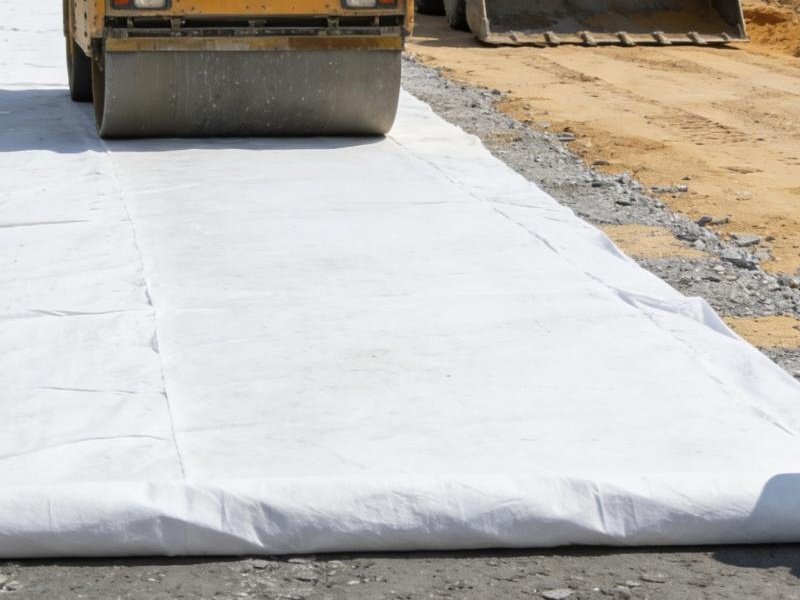
The Best Project Material Co., Ltd (BPM Geosynthetics) short-fiber non-woven geotextile at 200 g/m² stands out as the premier mid-weight geotextile solution:
- Short-Fiber Needle-Punched Structure— Uniform fiber entanglement → excellent filtration and conformability on uneven subgrades; 92–97% fines retention at 075–0.425 mm.
- Balanced Hydraulic Properties— 50–0.90 s⁻¹ permittivity + 0.15–0.25 mm AOS → 180–280 L/m²/s flow, preventing 88–96% of subgrade contamination.
- High Survivability— 800–1,400 N grab tensile and 2,000–3,500 N CBR puncture → meets AASHTO M288 Class 2 survivability for 15–30 kPa construction stresses.
- Long-Term Durability— 78–88% tensile retention after 1,500 h UV exposure → 2–3× longer exposed life than basic grades.
- Customization & Scale— 80,000 tons/year capacity, roll widths 4–8 m, custom weights/thicknesses, OEM/ODM branding → <2% defect rate, 95% on-time delivery.
- Cost Leadership— $0.55–$1.00/m² (bulk) → 15–25% savings vs. NTPEP-premium brands with comparable or superior metrics.
- Proven Global Track Record— Deployed in 50+ countries for highways, parking lots, foundations; 25–45% rut reduction and 18–38% aggregate savings documented.
- Sustainability Edge— Virgin-fiber quality with optional recycled content → aligns with green DOT specifications.
BPM’s short-fiber non-woven geotextile 200 g/m² combines visual QA advantage, hydraulic excellence, mechanical robustness, and cost-performance leadership — delivering 25–35% better ROI in soil separation, light stabilization, drainage, and medium-duty infrastructure projects.
Conclusion
Geotextiles at 200 g/m² remain the go-to mid-duty specification for modern infrastructure, reducing fines migration by 88–96%, rutting by 32–48%, and aggregate needs by 18–38% in the 6.8–8.1% CAGR geosynthetics market. BPM Geosynthetics short-fiber non-woven geotextile stands out as the best overall choice — offering unmatched performance, customization, and value for road subgrades, parking lots, foundations, and drainage applications. Contact BPM for project-specific samples, AASHTO-aligned testing data, and tailored solutions that optimize cost, performance, and longevity.