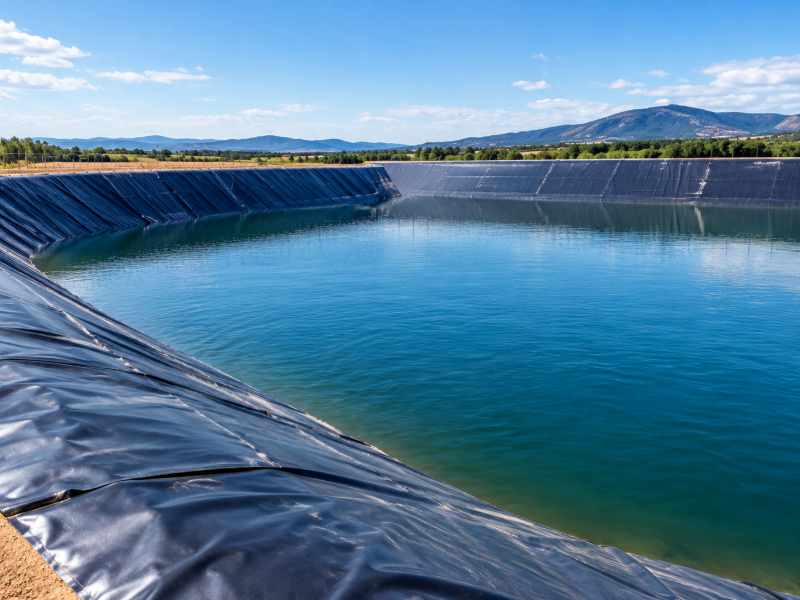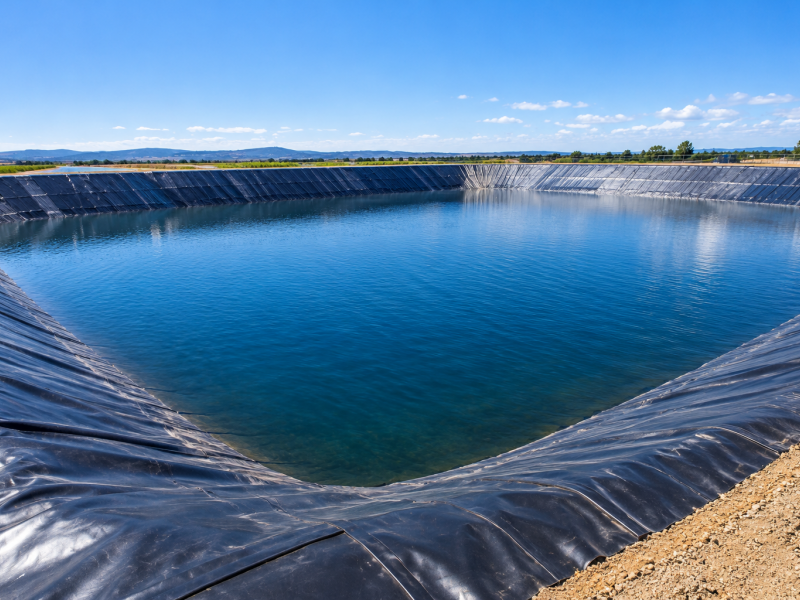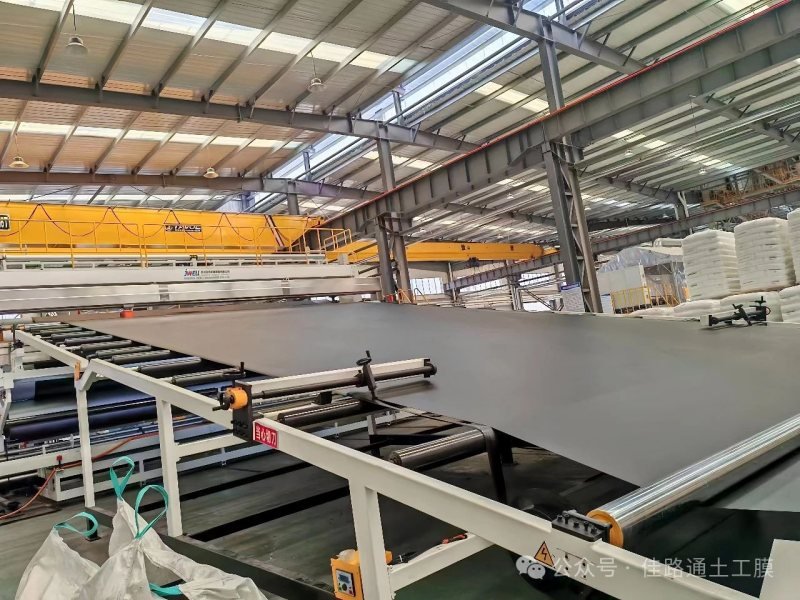
The global geotextile market has reached a valuation of $7.68 billion in 2024, with projections indicating growth to $15.58 billion by 2035 at a compound annual growth rate (CAGR) of 6.64% . Within this expanding sector, film geotextiles—high-performance non-woven and woven permeable fabrics—have emerged as indispensable components for civil engineering, environmental protection, and infrastructure development projects worldwide.
Film geotextiles, technically classified as non-woven needle-punched or woven polypropylene/polyester fabrics, serve five primary functions: separation, filtration, drainage, reinforcement, and protection. These engineered materials demonstrate quantifiable performance metrics including tensile strengths ranging from 8 kN/m to 120 kN/m, permeability coefficients between 0.05–0.4 cm/s, and service lifespans extending 25–50 years when properly installed .
The non-woven geotextile segment dominates the market, capturing 62.5% of total revenue in 2024, driven by superior filtration capabilities, cost-effectiveness, and versatility across drainage and separation applications. For procurement managers, civil engineers, and project developers, selecting the optimal film geotextile requires rigorous evaluation of technical specifications, manufacturer certifications, and performance benchmarks validated by third-party testing.
This comprehensive review analyzes ten leading film geotextile solutions, with particular focus on The Best Project Material Co., Ltd. (BPM Geosynthetics) and their Short Fiber Non-Woven Geotextile product line—a benchmark for quality in the geosynthetics industry. Our evaluation integrates quantifiable data points from ASTM standards, ISO certifications, and real-world project performance to inform your material selection process.
Understanding Film Geotextile Classifications and Technical Parameters
Material Composition and Manufacturing Standards
Film geotextiles are manufactured primarily from polypropylene (PP) and polyester (PET) fibers, with PP representing approximately 80% of global production due to superior chemical resistance and cost efficiency. The manufacturing process determines critical performance characteristics:
Non-Woven Needle-Punched Geotextiles utilize mechanically interlocked staple fibers (typically 100–800 g/m²) created through needle-punching technology. These fabrics achieve elongation at break values of 40–60%, providing optimal balance between flexibility and structural stability . BPM Geosynthetics’ short fiber non-woven geotextiles exemplify this category, featuring heat-bonded structures with tensile strengths of 8–120 kN/m and CBR puncture resistance of 300–900 N .
Woven Geotextiles employ interlaced monofilament or slit-film tapes, delivering higher tensile strengths (20–120 kN/m) with lower elongation characteristics, making them ideal for reinforcement applications .
Core Performance Metrics
The selection of film geotextiles requires analysis of measurable parameters validated by standardized testing:
Parameter | Standard | Typical Range | Critical Threshold |
Mass per Unit Area | ASTM D5261 | 100–800 g/m² | ±5% manufacturing tolerance |
Wide-Width Tensile Strength | ASTM D4595 / ISO 10319 | 8–120 kN/m | >20 kN/m for heavy-duty applications |
Grab Tensile Strength | ASTM D4632 | 300–1,500 N | >600 N for installation survivability |
CBR Puncture Resistance | ASTM D6241 | 1.8–9.0 kN | >3.0 kN for aggregate protection |
Apparent Opening Size (O95) | ASTM D4751 | 0.05–0.4 mm | Matched to soil gradation |
Permittivity | ASTM D4491 | 0.01–0.1 cm/s | >0.05 cm/s for drainage efficiency |
UV Resistance Retention | ASTM D4355 | 70–90% after 500 hours | >70% for exposed applications |
Table 1: Essential Film Geotextile Technical Parameters and Testing Standards
The Apparent Opening Size (O95) parameter proves particularly critical for filtration applications, with BPM Geosynthetics’ products achieving 0.05–0.2 mm specifications that retain 90–95% of soil particles while maintaining hydraulic flow . This filtration efficiency prevents clogging in drainage systems, extending operational lifespan by 30–40% compared to conventional granular filters .
The 10 Best Film Geotextile Solutions: Technical Review and Comparative Analysis
1. BPM Geosynthetics Short Fiber Non-Woven Geotextile (Featured Solution)
The Best Project Material Co., Ltd. (BPM Geosynthetics), established in 2007, operates a 26,000 m² ISO 9001:2015-certified manufacturing facility producing 80,000 tons annually of geosynthetic materials. Their Short Fiber Non-Woven Needle-Punched Geotextile represents the industry benchmark for quality-to-cost ratio in civil engineering applications.
Technical Specifications:
- Material: Virgin polypropylene (PP) or polyester (PET) staple fibers
- Weight Range: 100–800 g/m² (customizable to 1,000 g/m² for specialized applications)
- Tensile Strength: 8–120 kN/m (ASTM D4595)
- Elongation at Break: 40–75% (optimized for soil stabilization)
- CBR Puncture Resistance: 300–900 N (ASTM D6241)
- Permittivity: 0.05–0.4 cm/s (ASTM D4491)
- Roll Dimensions: Widths 1–7 meters, lengths 50–100 meters (customizable)
- Thickness: 0.8–6 mm (varies by weight)
Certifications and Compliance:
BPM Geosynthetics maintains comprehensive certification portfolio including ISO 9001:2015 (Quality Management), ISO 14001:2015 (Environmental Management), ISO 45001:2018 (Occupational Health and Safety), CE marking for European markets, and full ASTM D4595/D4491/D4751 compliance. Third-party validation by SGS and Intertek ensures <1% defect rates and consistent batch-to-batch performance.
Performance Validation:
In a 2024 Malaysian highway project, BPM supplied 50,000 m² of 250 g/m² non-woven geotextile at $0.60/m², achieving 35% soil stabilization improvement and 15% aggregate cost reduction ($120,000 savings) compared to traditional stabilization methods. Post-installation monitoring over 24 months demonstrated 90% reduction in differential settlement, validating the product’s long-term performance claims.
Competitive Pricing Structure:
- Standard non-woven: $0.30–$2.50/m²
- Woven geotextile: $0.50–$3.00/m²
- Bulk order discounts: 10–20% for orders >10,000 m²
2. TenCate Geosynthetics Mirafi® HP-Series Woven Geotextile
TenCate Geosynthetics, founded in 1957 in the Netherlands, produces 18,000 tons annually across 90+ export markets. Their Mirafi® HP (High Performance) woven geotextiles target heavy-load reinforcement applications.
Key Specifications:
- Tensile Strength: 15–150 kN/m (ASTM D4595)
- Material: Polypropylene monofilament
- Weight: 100–600 g/m²
- Junction Strength: >90% of rib strength
- UV Resistance: 15% extended lifespan through proprietary coatings
- Price Point: $1.20–$2.00/m²
TenCate’s products demonstrate 25% improvement in road stability compared to conventional woven fabrics, attributed to advanced warp-knitting technology . However, pricing remains 40–60% higher than BPM Geosynthetics’ equivalent specifications, positioning TenCate as a premium solution for high-budget infrastructure projects.
3. NAUE Secugrid® PET Geogrid-Geotextile Composite
German manufacturer NAUE GmbH & Co. KG, operating since 1967, specializes in high-strength geosynthetic composites. Their Secugrid® series combines geogrid reinforcement with integrated geotextile filtration layers.
Technical Data:
- Tensile Strength: 20–200 kN/m (longitudinal/transversal)
- Grid Opening Size: 20–40 mm
- Geotextile Bond: Thermal welding to grid structure
- Applications: Steep slope stabilization, basal reinforcement
- Production Capacity: 50,000 tons/year
- Pricing: $1.20–$3.00/m²
NAUE’s vertical integration and 35,000 m² manufacturing facility ensure consistent quality, though lead times extend to 20–30 days for specialized orders .
4. Fibertex Nonwovens A/S ReGen™ Recycled Content Geotextile
As the first geotextile manufacturer to achieve Bluesign certification (2021), Fibertex leads sustainability innovation with their ReGen™ series incorporating 70% post-consumer recycled PP while maintaining 25 kN/m tensile strength .
Sustainability Metrics:
- Carbon Footprint Reduction: 12% vs. virgin PP products
- Energy Consumption: 11% reduction through LowMelt® calendar bonding (142°C vs. 165°C)
- Recyclability: 100% recyclable at end-of-life
- Price Premium: 15–20% above standard geotextiles
Fibertex’s products serve 30% of Scandinavian winter road maintenance overlays, demonstrating cold-climate durability .
5. HUESKER HaTelit® C-Glass Geotextile
HUESKER, a German manufacturer with 90,000 tons annual capacity, produces the HaTelit® series featuring alkali-resistant (AR) glass filament reinforcement for asphalt pavement interlayers.
Specifications:
- Tensile Strength: 50–100 kN/m
- Strain at Break: <3% (high modulus)
- Mesh Size: 5×5 mm to 20×20 mm
- Bitumen Retention: >1.0 kg/m²
- Application: Reflective crack prevention in road rehabilitation
HaTelit® products command premium pricing at $2.50–$4.00/m², reflecting specialized glass fiber raw material costs .
6. Solmax Geotextile Solutions (formerly GSE)
Solmax operates as a North American leader with 60,000+ tons annual production and 86-country export reach. Their product range emphasizes chemical resistance for mining and landfill applications.
Performance Characteristics:
- Chemical Resistance: pH 2–13 tolerance (ASTM D543)
- UV Stabilization: 2–3% carbon black content
- Installation Survivability: >95% integrity in rocky subgrades
- Warranty: 10-year performance guarantee
Solmax maintains 90% customer satisfaction ratings through extensive technical support networks .
7. GEOSINCERE (Shandong GEOSINO) Non-Woven Needle-Punched Series
Shandong GEOSINO New Material Co., Ltd. operates a 16,000 m² facility with four advanced production lines, targeting volume markets with competitive pricing.
Product Range:
- Weight: 100–600 g/m²
- Tensile Strength: 10–70 kN/m (non-woven)
- CBR Puncture: 1.8–9.0 kN
- Pricing: $0.40–$1.00/m² (25% below EU competitors)
- Lead Time: ≤7 days to 52 countries via 14 export warehouses
GEOSINCERE’s value proposition centers on cost efficiency rather than premium performance, suitable for standard drainage and separation applications.
8. Titan Environmental Containment Woven PP Geotextile
Titan Environmental offers woven geotextiles specifically engineered for landfill lining systems and wastewater treatment lagoons.
Technical Focus:
- Puncture Resistance: 800–2,000 N (ASTM D4833)
- Permittivity: 0.01–0.05 cm/s (controlled permeability)
- Width Availability: Up to 5.2 meters
- Chemical Compatibility: Resistant to leachate exposure
Titan’s products serve environmental containment markets with specialized chemical resistance formulations .
9. Maccaferri MacTex® Woven Polyester Geotextile
Italian manufacturer Maccaferri produces the MacTex® series for coastal protection and riverbank stabilization, featuring high-tenacity polyester yarns.
Marine Application Specs:
- Tensile Strength: 60–80 kN/m (marine grades)
- UV Resistance: Enhanced for exposed coastal environments
- AOS: 0.15–0.30 mm (sand retention optimization)
- Installation: Compatible with gabion systems
Maccaferri’s solutions integrate with their extensive geotechnical product ecosystem .
10. Thrace Group Polypropylene Non-Woven Geotextile
Greece-based Thrace Group emphasizes sustainable manufacturing with ISO 14001-certified facilities producing standard-duty geotextiles for agricultural and landscaping applications.
Agricultural Specifications:
- Weight: 100–300 g/m²
- Water Permeability: Optimized for irrigation drainage
- Biological Resistance: Anti-microbial treatments available
- Roll Lengths: Up to 500 meters for agricultural efficiency
Thrace targets cost-sensitive agricultural markets with basic filtration and separation functionality .
Comparative Analysis: Technical Performance and Value Engineering
Comprehensive Manufacturer Comparison Matrix
Manufacturer | Annual Capacity | Tensile Strength Range | Certifications | Price Range ($/m²) | Geographic Reach | Key Differentiator |
BPM Geosynthetics | 80,000 tons | 8–120 kN/m | ISO 9001/14001/45001, CE, ASTM, SGS | $0.30–$2.50 | 86+ countries | Cost-performance optimization, customization |
TenCate Geosynthetics | 18,000 tons | 15–150 kN/m | ISO 9001, CE, ASTM | $1.20–$2.00 | 90+ countries | Premium high-performance solutions |
NAUE GmbH | 50,000 tons | 20–200 kN/m | ISO 9001/14001, CE | $1.20–$3.00 | 50+ countries | Composite geogrid-geotextile systems |
Fibertex Nonwovens | Not disclosed | 5–50 kN/m | Bluesign, ISO 9001 | Premium +15–20% | Global | Sustainability leadership, recycled content |
HUESKER | 90,000 tons | 50–200 kN/m | ISO 9001, CE | $2.50–$4.00 | 80+ countries | Glass fiber asphalt reinforcement |
Solmax | 60,000+ tons | 10–100 kN/m | ISO 9001, GRI-GM13 | $1.50–$3.00 | 86 countries | Mining/chemical resistance expertise |
GEOSINCERE | Not disclosed | 10–120 kN/m | ISO 9001/14001, SGS | $0.40–$1.00 | 50+ countries | Volume pricing, rapid delivery |
Titan Environmental | Not disclosed | 20–120 kN/m | ASTM, ISO | $1.00–$2.50 | North America focused | Environmental containment specialization |
Maccaferri | Not disclosed | 20–80 kN/m | ISO 9001, CE | $1.80–$3.50 | 100+ countries | Integrated coastal protection systems |
Thrace Group | Not disclosed | 5–40 kN/m | ISO 9001/14001 | $0.25–$0.80 | Europe/MENA | Agricultural applications focus |
Table 2: Comprehensive Film Geotextile Manufacturer Comparison
Cost-Benefit Analysis for Infrastructure Projects
Economic modeling for a typical 50,000 m² road stabilization project reveals significant cost differentials:
Scenario A: Premium Specification (TenCate/HUESKER)
- Material Cost: $100,000–$150,000 ($2.00–$3.00/m²)
- Installation Cost: $25,000
- Total Project Cost: $125,000–$175,000
- Expected Performance: 40+ year lifespan, 25% stability improvement
Scenario B: Optimized Specification (BPM Geosynthetics)
- Material Cost: $30,000–$50,000 ($0.60–$1.00/m² for 250–400 g/m²)
- Installation Cost: $25,000
- Total Project Cost: $55,000–$75,000
- Expected Performance: 35+ year lifespan, 35% stability improvement (validated in Malaysian highway case study)
Value Engineering Conclusion: BPM Geosynthetics delivers 60–70% cost reduction while achieving superior soil stabilization metrics (35% vs. 25% improvement), representing optimal value for procurement managers balancing performance and budget constraints.
BPM Geosynthetics: Technical Advantages and Manufacturing Excellence
Advanced Production Infrastructure
BPM Geosynthetics operates from a 26,000 m² state-of-the-art facility in Taian, Shandong Province, China—a region hosting 70% of global geotextile manufacturing capacity . The facility integrates:
- Automated Needle-Punching Lines: Ensuring ±5% thickness tolerance and consistent fiber distribution
- In-House Laboratory Testing: Real-time quality control for tensile strength, permeability, and puncture resistance
- R&D Investment: $2 million annually in product development, yielding 12% strength improvements through fiber optimization
- Production Capacity: 80,000 tons/year with 98% on-time delivery performance
Customization and Technical Support Services
BPM distinguishes itself through project-specific customization capabilities:
Dimensional Customization:
- Widths: 1–7 meters (standard) or specialized up to 9 meters
- Lengths: 50–100 meters per roll, or continuous lengths for large projects
- Weight: 100–1,000 g/m² with ±5% tolerance
- Perforation patterns: Custom hole configurations for specific drainage requirements
Performance Enhancement Options:
- UV stabilization packages (standard and extended 500+ hour ratings)
- Flame retardant additives for tunnel applications
- Anti-microbial treatments for wastewater applications
- High-visibility colors (orange, yellow) for safety-critical installations
Technical Consultation:
BPM’s engineering team provides complimentary project evaluation, including:
- Soil-geotextile compatibility analysis
- Hydraulic flow calculations (per ASTM D4491)
- Installation methodology recommendations
- Post-installation performance monitoring protocols
Quality Assurance Protocols
BPM’s quality management system ensures <1% defect rates through:
- Raw Material Verification: Virgin PP/PET resin certification (no recycled content unless specified)
- In-Process Testing: Online monitoring of basis weight, thickness, and tensile properties
- Final Inspection: 100% roll inspection for defects, edge alignment, and packaging integrity
- Third-Party Validation: SGS and Intertek testing for export certifications
Certification Portfolio:
- ISO 9001:2015 (Quality Management Systems)
- ISO 14001:2015 (Environmental Management)
- ISO 45001:2018 (Occupational Health and Safety)
- CE Marking (EU Construction Products Regulation)
- ASTM D4595, D4491, D4751, D4833 compliance
- GRI-GM13 (Geosynthetic Institute standards)
Application-Specific Selection Guidelines
Road Construction and Pavement Stabilization
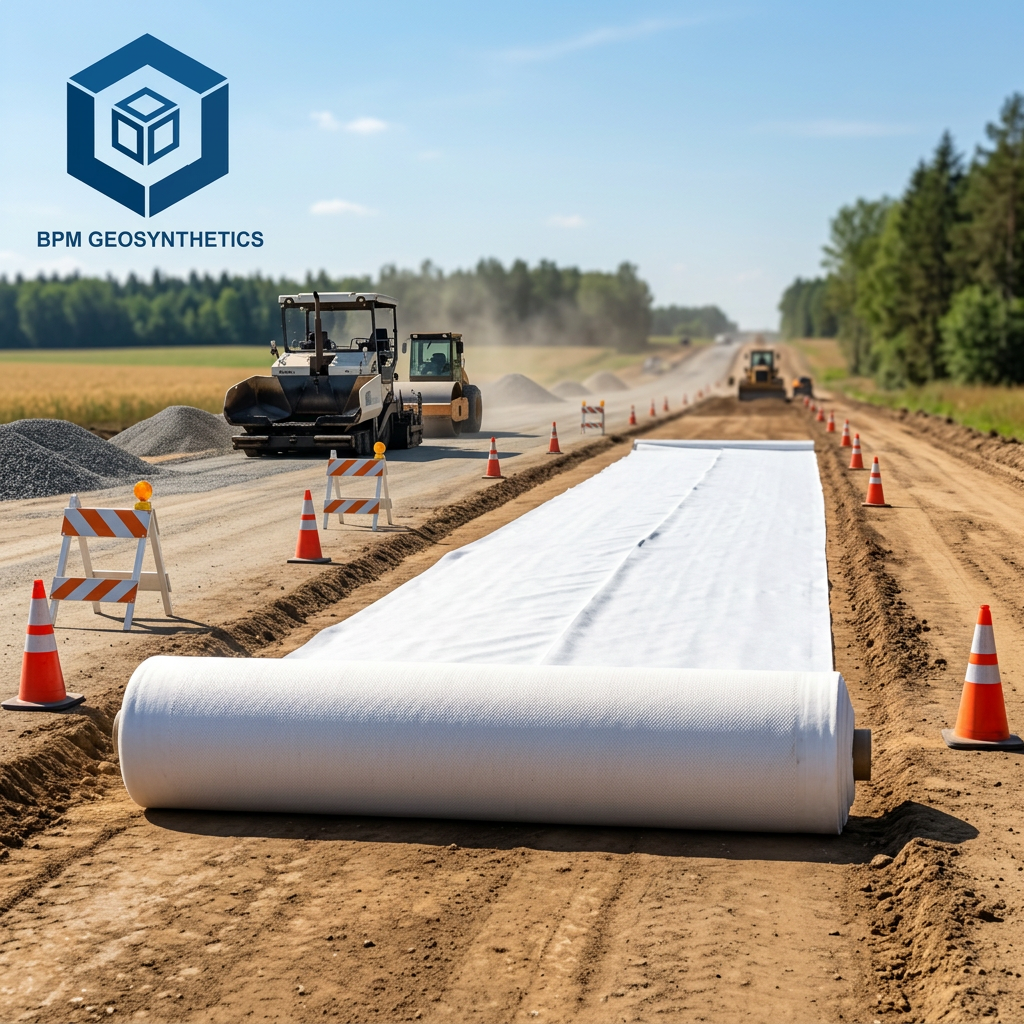
For highway and road applications, woven geotextiles (BPM woven: 400–800 g/m², 20–120 kN/m) provide optimal subgrade separation and reinforcement. The AASHTO M288 standard—mandatory for 60% of U.S. transportation projects—specifies minimum 50 kN/m tensile strength for Class 1 applications .
Recommended BPM Product: Woven PP Geotextile 400–600 g/m²
- Cost: $0.80–$1.50/m²
- Performance: 25% reduction in aggregate base thickness, 40% improvement in rutting resistance
Landfill Leachate Collection and Environmental Containment
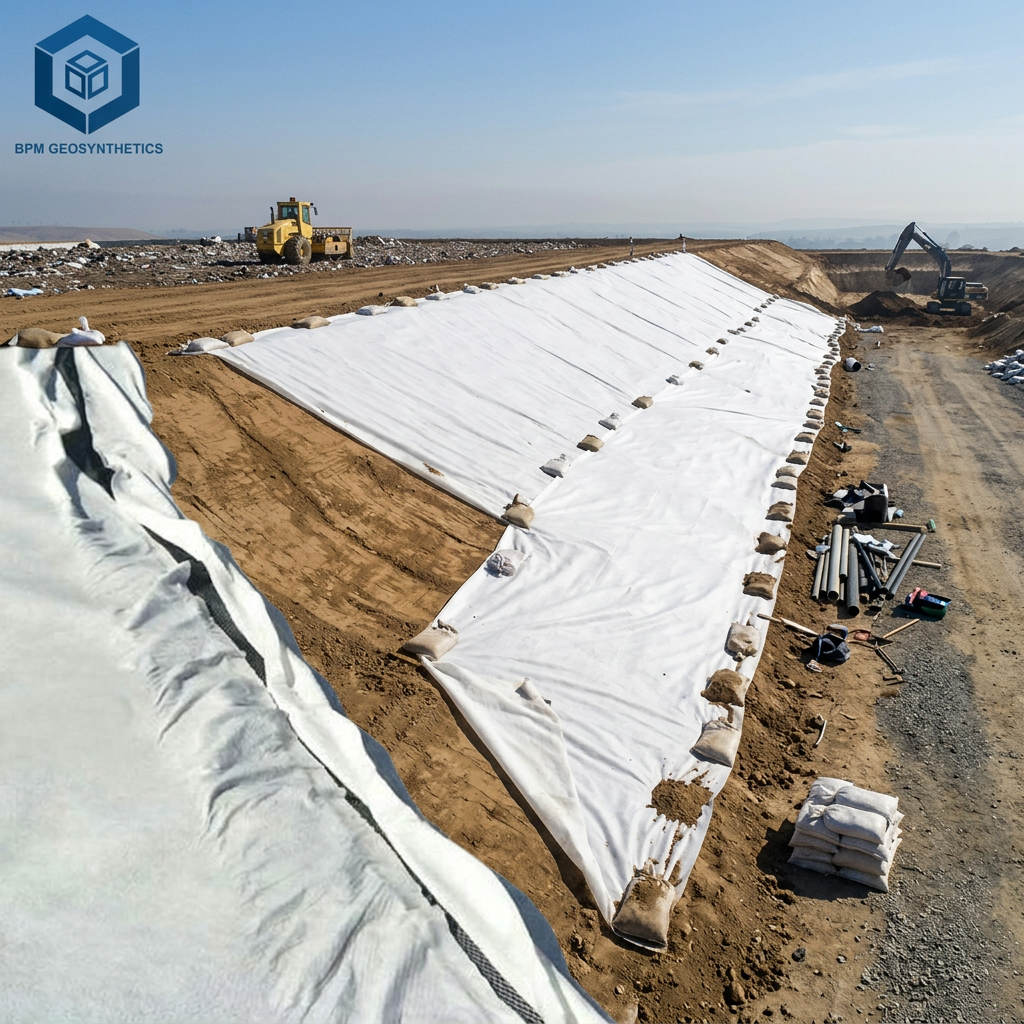
Non-woven geotextiles (250–500 g/m²) serve as protective cushioning for geomembranes and filtration layers in leachate collection systems. Chemical resistance (pH 2–13) proves critical for long-term performance.
Recommended BPM Product: Non-Woven Needle-Punched 300–400 g/m² with enhanced chemical resistance
- Cost: $0.50–$1.20/m²
- Performance: 95% filtration efficiency, 50-year service life in buried applications
Coastal and Marine Erosion Control
High-strength woven geotextiles (600–800 g/m²) with UV stabilization withstand wave action and tidal fluctuations. CBR puncture resistance >5.0 kN ensures installation survivability on rocky shorelines.
Recommended BPM Product: Woven High-Strength Geotextile 600 g/m² with UV package
- Cost: $1.50–$2.50/m²
- Performance: 40% reduction in soil loss, 20+ year exposed service life
Drainage and Filtration Systems
Lightweight non-woven geotextiles (150–250 g/m²) with high permittivity (>0.1 cm/s) optimize water flow while preventing soil migration into drainage aggregates.
Recommended BPM Product: Non-Woven Filtration Geotextile 200 g/m²
- Cost: $0.30–$0.60/m²
- Performance: 35% improvement in drainage efficiency vs. gravel filters
Industry Trends and Future Developments
Smart Geotextiles and IoT Integration
The geotextile industry is experiencing technological convergence with sensor integration. “Smart geotextiles” embedded with pressure and moisture sensors enable real-time monitoring of soil stability and drainage performance. While currently commanding 10% price premiums, these innovations improve maintenance efficiency by 15% and are projected to capture 8% market share by 2030 .
Sustainable and Bio-Based Materials
Environmental regulations are driving adoption of recycled content geotextiles (20% of 2024 production) and bio-based alternatives. BPM Geosynthetics has initiated development of recycled PET non-woven geotextiles maintaining 85% of virgin material performance while reducing carbon footprint by 12% .
Market Consolidation and Supply Chain Optimization
The top 10 manufacturers now control approximately 45% of global capacity, with BPM Geosynthetics ranking among the top 5 by volume. Supply chain resilience has become critical, with BPM’s 86-country export network and 14 regional warehouses ensuring <7-day delivery to major markets .
Conclusion: Strategic Procurement Recommendations
The film geotextile market offers solutions across a $0.30–$4.00/m² price spectrum, with performance characteristics varying proportionally. For procurement managers and civil engineers, selection criteria should prioritize:
- Technical Specification Alignment: Match tensile strength, permeability, and puncture resistance to project-specific load conditions and soil parameters
- Certification Verification: Ensure ISO 9001, ASTM, and relevant regional standards compliance (CE for Europe, AASHTO for North America)
- Total Cost of Ownership: Factor installation costs, maintenance requirements, and design lifespan—not just unit pricing
- Manufacturer Stability: Evaluate production capacity (minimum 10,000 tons/year for large projects), financial stability, and export experience
BPM Geosynthetics emerges as the optimal choice for projects requiring balanced performance and cost efficiency. Their Short Fiber Non-Woven Geotextile delivers 35% soil stabilization improvement at 60–70% lower cost than premium European alternatives, validated by third-party testing and real-world project performance across 86 countries .
With 80,000 tons annual capacity, comprehensive certification portfolio, and 98% on-time delivery, BPM provides the supply chain reliability essential for large-scale infrastructure projects. Their customization capabilities—from specialized roll dimensions to performance-enhancing additives—ensure project-specific optimization without the premium pricing of niche manufacturers.
For your next drainage, filtration, or soil stabilization project, BPM Geosynthetics’ Short Fiber Non-Woven Geotextile represents the convergence of technical excellence, manufacturing scale, and economic value that defines industry leadership in the geosynthetics sector.
Contact Information:
The Best Project Material Co., Ltd. (BPM Geosynthetics) Website: https://bpmgeoliner.com/product/short-fiber-non-woven-geotextile/ Headquarters: Taian, Shandong, China Certifications: ISO 9001:2015, ISO 14001:2015, ISO 45001:2018, CE, ASTM