Geosynthetic clay liners (GCL) play a vital role in environmental protection. They prevent landfill seepage and manage water resources effectively. However, cost remains a key factor in material selection. This article analyzes the main cost drivers in detail. These include material composition, thickness, installation needs, and regional market trends. If you need GCL products, this guide offers actionable insights. It helps you optimize your budget while ensuring performance and compliance. Understand how to balance economy and durability. Consequently, you can make informed decisions for your next project.
1. What are the functions of a Geosynthetic Clay Liner (GCL)?
1.1 Geosynthetic Clay Liner Core Waterproofing Barrier Function
a. Ultra-high waterproofing performance
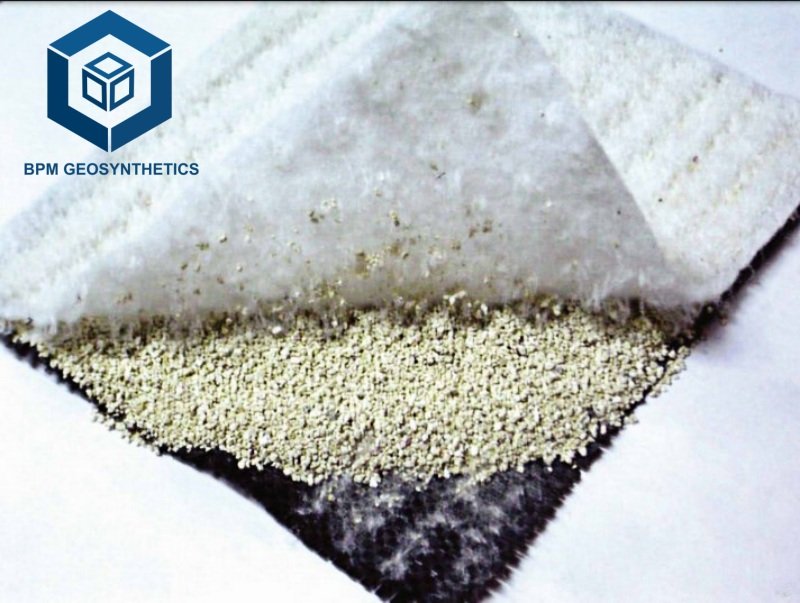
Sodium-based bentonite expands upon contact with water. It forms a dense gel layer effectively. This layer achieves a permeability coefficient as low as 10⁻⁹ to 10⁻¹¹ m/s. Therefore, waterproofing efficiency improves by 100 to 1,000 times. Traditional compacted clay liners (CCL) cannot match this performance.
b. Geosynthetic Clay Liner Self-healing Properties
Bentonite expands when water contacts it. This action automatically seals micro-cracks from construction or settlement. The liner maintains complete waterproofing integrity. It performs well within a 3% strain range. Consequently, repairs become unnecessary for minor damages.
1.2 Typical Engineering Application Scenarios
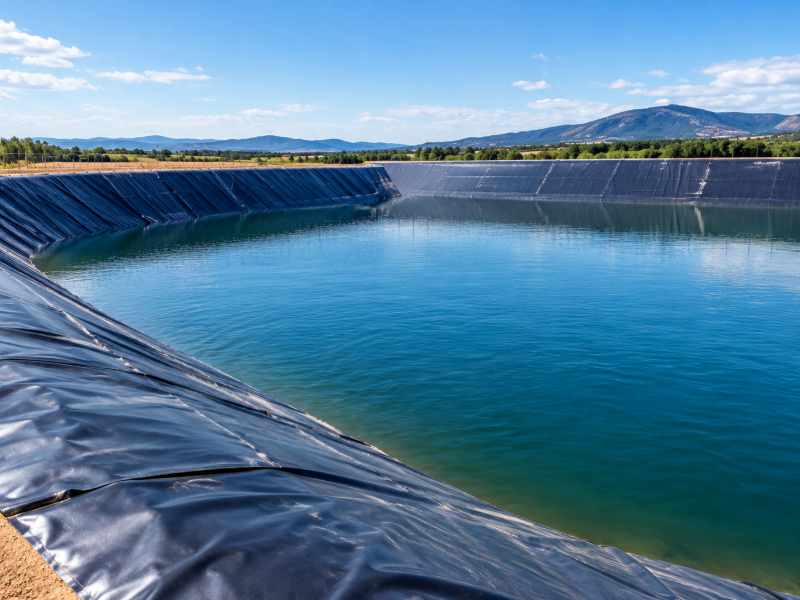
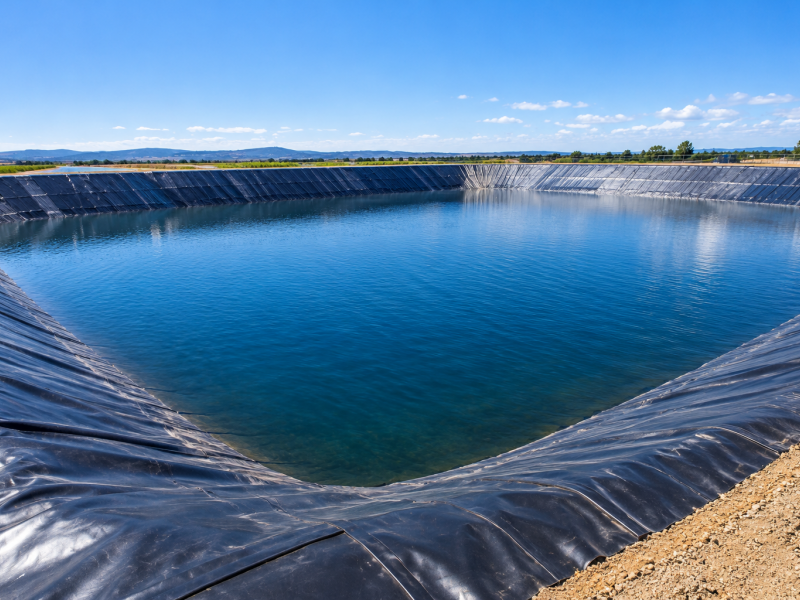
In environmental engineering, GCL suits landfill bases and tops. It prevents leachate from polluting groundwater effectively. In hydraulic engineering, GCL works for artificial lakes and reservoirs. Its advantage lies in adapting to foundation deformation. Therefore, it reduces leakage losses significantly. In transportation engineering, GCL serves as a moisture-proof layer. It prevents capillary water from damaging pavement structures. In mining engineering, GCL suits tailings anti-seepage applications. It resists alkali corrosion effectively.
2. Technological and economic advantages
2.1 Improvement of construction efficiency
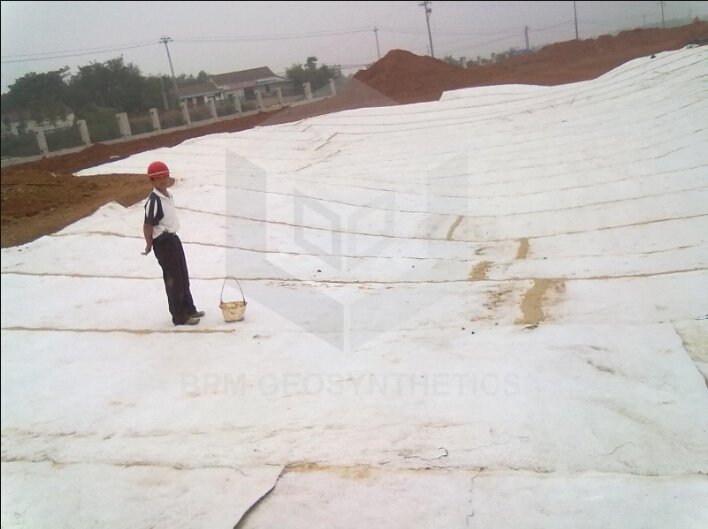
GCL installation speed reaches 3000-5000 square meters daily. This reduces labor demand by 60%. The unique “roll laying” process offers several benefits. It requires no on-site compaction equipment. Consequently, it saves large machinery rental costs. The process remains unaffected by weather conditions. CCL requires strict moisture content control. GCL thickness measures only 6-10mm. Therefore, it saves earthwork excavation volume substantially.
2.2 Economic transformation of environmental benefits
Leakage reduction lowers environmental compensation risks by 90%. Carbon reduction benefits are significant for each 10,000 m² project. It reduces earthwork transportation by 200 trips. This saves 48 tons of carbon emissions. It also avoids fuel consumption from compaction machinery. This saves an additional 12 tons of carbon.
2.3 The cost advantage is more significant under special projects
① High seismic zones require no expansion joints. This saves 15% of seismic construction costs.
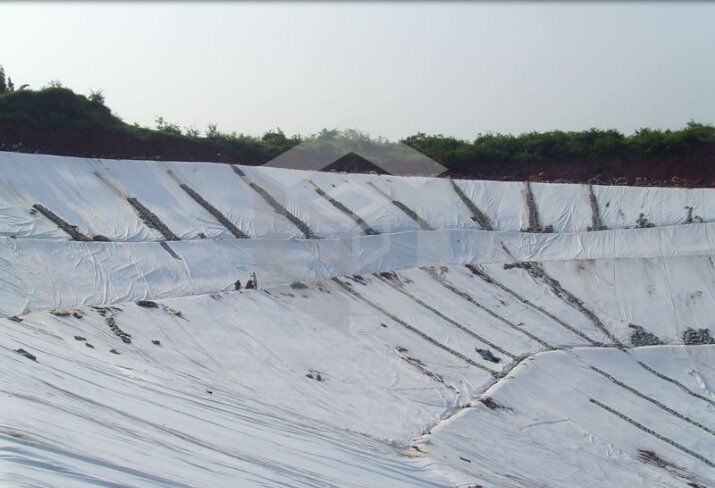
② Steep slope projects benefit from reinforced GCL. It replaces concrete lining effectively. Consequently, costs reduce by 40%.
3. Key factors affecting the cost of waterproof blanket (GCL)
3.1 There are significant differences in the prices of GCL with different structural types
① Needle-punched type offers the lowest price. Its production process remains simple. However, its shear strength is relatively low (<25kPa).
② GM-backed type commands a higher price. The premium reason includes composite HDPE/LLDPE film. This film enhances puncture resistance. Therefore, it suits landfill bottom layers ideally.
③ New model premiums apply for advanced variants. Polymer modified GCL resists chemical corrosion. Its price increases by 30-50%. Reinforced type offers tensile strength >50kN/m. Its price increases by 40-60%.
4. Performance cost of thickness and permeability
The anti-seepage level directly affects raw material usage. Each 0.5mm thickness increase raises bentonite weight. Permeability requirements demand high-purity sodium bentonite. Outdoor installations need UV aging resistance. This requires adding a carbon black coating. Consequently, production costs rise accordingly.
5. Hidden costs of geographical factors
a. The cost fluctuations caused by transportation radius and trade policies can reach up to 300%
b. Regional price range
FOB prices in Chinese production bases remain lower. European landed prices include tariffs and become higher.
c. Tariff sensitive areas
The United States imposes anti-dumping duties on Chinese GCL. These duties range from 23.4-45.8%. Southeast Asia Free Trade Zone offers 0 tariffs. However, this requires proof of origin.
d. Localization substitution cost
Local production in bentonite areas like Brazil saves 30% shipping. However, quality fluctuation risks exist.
6. In-depth analysis of other potential cost variables
Beyond material prices, multiple cost variables affect GCL projects. These factors often become apparent in later stages. Therefore, they require special attention.
6.1 Additional costs caused by installation conditions
Slope construction exceeding 30 degrees increases labor costs. Such operations pose higher safety risks. Labor costs run about 40% higher than flat construction. These projects need specialized anti-slip equipment. They also require specially designed anchoring systems. For example, mine slope repairs use mechanical fixing systems. This may increase total material costs by 18-20%.
Extremely cold environments (below -20 ℃) create different challenges. Low temperatures cause conventional adhesives to fail. Consequently, workers must use cold-resistant bonding materials. This increases material costs by more than 15%. More seriously, bentonite performance drops sharply below -30 ℃. Project managers either suspend construction or use electric blanket preheating. Both options cause considerable delay costs. In Arctic Circle projects, winter construction costs rise about 35%.
6.2 Compliance costs generated by the certification system
Professional certifications serve as necessary market passes. However, these certification processes incur significant costs. GRI-GCL3 certification testing costs $5000-8000 per batch. This includes rigorous physical, hydraulic, and durability tests. Export-oriented enterprises often repeat certification in different countries. Consequently, cost pressures increase further.
6.3 Early warning of emerging cost factors
Global environmental policies introduce new cost factors. The EU carbon tariff policy takes effect in 2026. This will add $0.23-0.32 per m² to Chinese GCL products. This includes both transportation and production carbon taxes. Additionally, intelligent monitoring technology creates new cost considerations. The basic conductive GCL monitoring system adds $3.5 per m². The industrial version with AI warning adds $8 per m².
Experienced project managers typically set aside 3-5% risk reserves. This addresses bentonite price fluctuations and geopolitical risks. For example, bentonite raw material prices rose 12% in 2024. The Red Sea crisis also increased sea freight premiums. These latent variables are difficult to predict accurately. Nonetheless, they must factor into cost planning.
BPM Geosynthetics offers reliable GCL solutions for diverse projects. The company provides high-quality geosynthetic clay liners globally. BPM delivers competitive pricing without compromising product performance. Their technical team assists with installation and cost optimization. Moreover, BPM helps clients navigate tariff and compliance challenges. They offer customized GCL products for specific site conditions. Therefore, BPM Geosynthetics stands as a trusted partner.
Conclusion
The cost of GCL presents a layered structure. Foundation materials account for 40-50% of total costs. Meanwhile, hidden costs continue to rise steadily. Technical specifications, economies of scale, and policies are key variables. The critical value for economies of scale is 50,000 m². Carbon tariffs and regulations also impact pricing significantly.
Industry trends show lifecycle costs replacing purchase price decisions. Intelligent monitoring products experience rapid growth. Geopolitical impacts intensify market volatility. Optimization directions include flexible cost structures. Digital tools achieve accuracy within ±3%. Regional collaboration offers additional savings opportunities. Choosing the right manufacturer ensures project success. BPM Geosynthetics leads with quality products and expertise. They help you balance performance, compliance, and budget effectively.