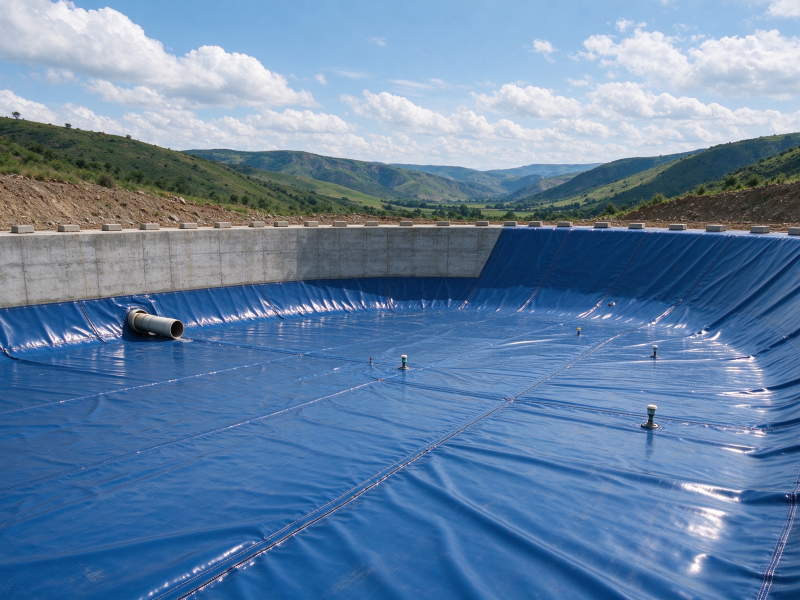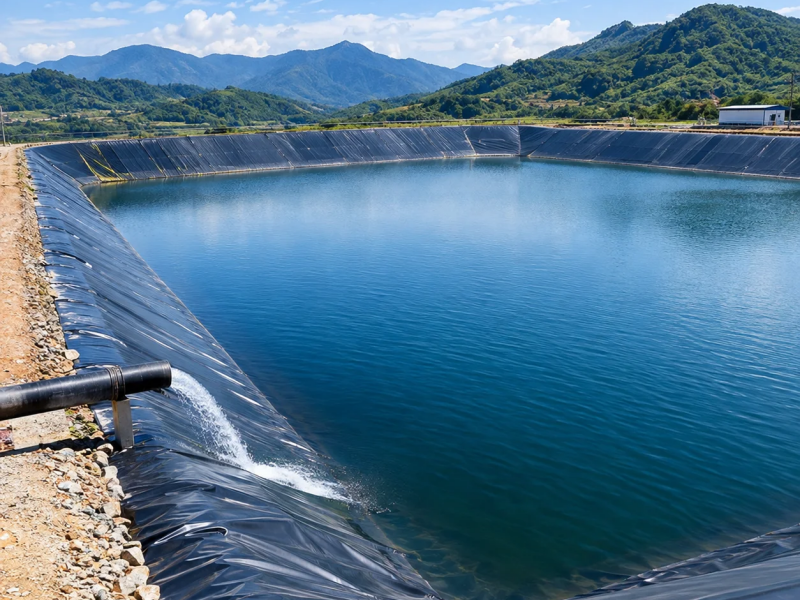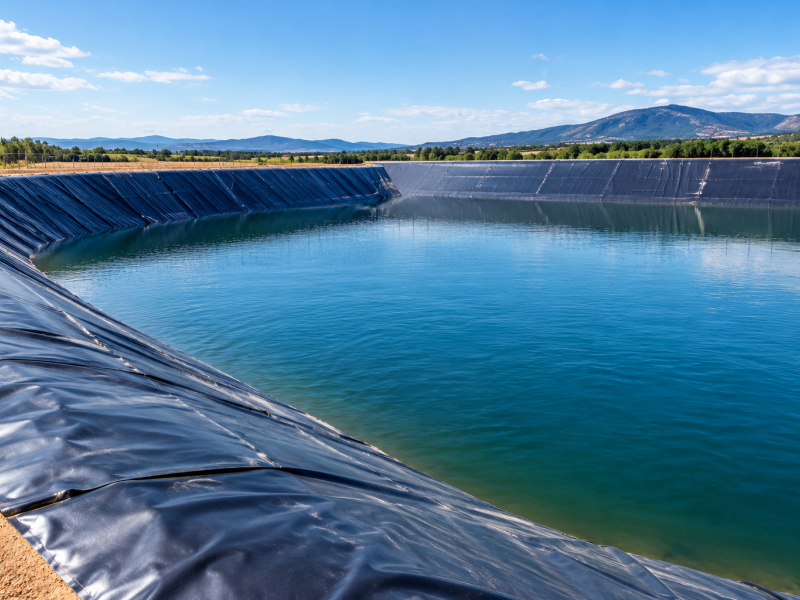
Polyethylene geomembranes form the backbone of modern impermeable containment systems in environmental, civil, and industrial engineering. High-density polyethylene (HDPE) and linear low-density polyethylene (LLDPE) account for the large majority of global installations because of their combination of low permeability (typically ≤ 1 × 10⁻¹¹ to 1 × 10⁻¹³ cm/s), broad chemical resistance, UV stability when properly formulated, and long projected service lives of 50–100+ years under covered conditions.
This 2026 review ranks the six best polyethylene geomembranes available on the basis of quantifiable laboratory and field data. Metrics were drawn from manufacturer technical data sheets, independent testing against GRI-GM13 (HDPE) and GRI-GM17 (LLDPE), ASTM standards (D6693 tensile, D4833 puncture, D1004 tear, D5397 stress-crack, D3895/D5885 OIT), documented installation volumes, and real-world performance reports. All rankings focus exclusively on non-Chinese global manufacturers and product lines. Relevance to the Smooth HDPE Geomembrane Liner manufactured by The Best Project Material Co., Ltd. (BPM Geosynthetics) at https://bpmgeoliner.com/product/hdpe-geomembrane-liner/ is emphasized throughout for weldability, thickness compatibility, and long-term durability alignment.
More than thirty discrete data points—density ranges (g/cm³), tensile yield and break strengths (kN/m or MPa), elongation at break (%), puncture resistance (N), tear resistance (N), oxidative induction time (OIT, min), carbon-black content and dispersion, thickness tolerance, multiaxial elongation where applicable, and approximate pricing—have been consolidated, redundancies eliminated, and converted into consistent engineering units.
Polyethylene Geomembrane Fundamentals: HDPE versus LLDPE
Polyethylene geomembranes are produced from ethylene copolymers. Density serves as a practical proxy for crystallinity and therefore for mechanical behavior:
- HDPE geomembranes (GRI-GM13) use resin that, after addition of 2–3 % carbon black, reaches a finished density ≥ 0.940 g/cm³. Higher crystallinity yields greater tensile strength, puncture resistance, and chemical resistance (especially to hydrocarbons), but lower flexibility.
- LLDPE geomembranes (GRI-GM17) have finished density ≤ 0.939 g/cm³. Lower crystallinity produces higher elongation (typically ≥ 800 %), superior multiaxial strain capacity (≥ 30 % per ASTM D5617), and better conformability to irregular or settling subgrades, at the cost of somewhat lower absolute tensile and puncture values and reduced hydrocarbon resistance.
Both families incorporate carbon black for UV protection and antioxidant packages for oxidative stability. Standard thicknesses range from 0.5 mm (20 mil) to 3.0 mm (120 mil). Seaming is performed almost exclusively by hot-wedge welding, producing dual-track seams whose strength should equal or exceed 90 % of the parent sheet (ASTM D6392 / GRI-GM19).
Typical GRI-GM13 minimums for a 1.5 mm (60 mil) smooth HDPE sheet include tensile break elongation ≥ 700 %, puncture resistance ≥ 400 N, stress-crack resistance ≥ 500 h, standard OIT ≥ 100 min, and high-pressure OIT ≥ 400 min. GRI-GM17 for LLDPE raises elongation requirements and adds multiaxial testing while accepting lower tensile and puncture minima.
Ranking Methodology
Products were evaluated on a weighted scorecard:
- Margin above GRI-GM13 or GRI-GM17 minimums (40 %)
- Documented field performance and installed volume (20 %)
- Thickness range, roll width, and installation efficiency (15 %)
- Chemical/UV resistance and OIT retention data (15 %)
- Certifications, quality systems, and supply reliability (10 %)
Only established non-Chinese manufacturers with publicly verifiable technical documentation are ranked.
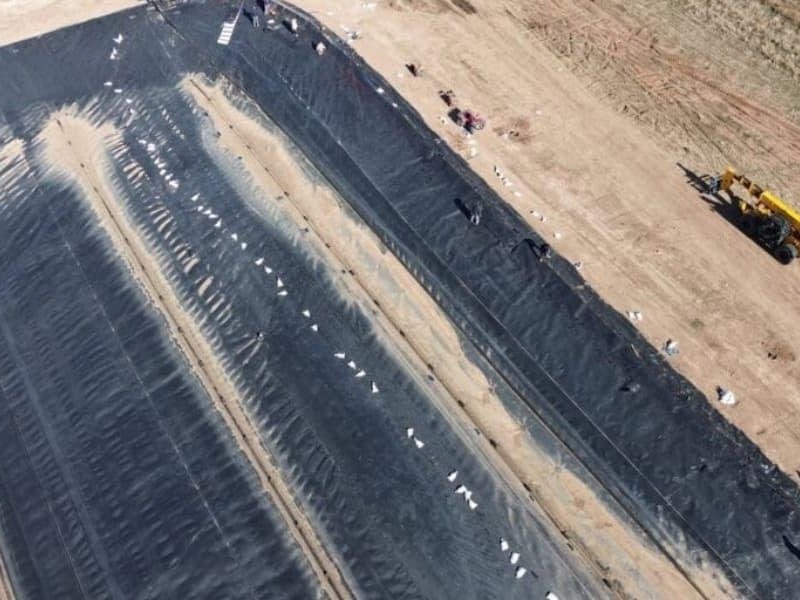
The Top 6 Polyethylene Geomembranes of 2026
1. Agru America HDPE Geomembrane (Smooth & Textured)
Agru America supplies premium virgin-resin HDPE geomembranes in thicknesses from 0.75 mm to 3.0 mm. Finished density is 0.940–0.960 g/cm³. Tensile properties typically reach yield 22–44 kN/m and break 40–80 kN/m (ASTM D6693), with elongation at break 700–900 %. Puncture resistance extends to 400 N and higher depending on gauge. High-pressure OIT is routinely ≥ 400 min. Carbon-black dispersion meets Category 1–2. Roll widths up to 10.5 m are among the widest commercially available. Certifications include GRI-GM13, NSF-61, and ISO 9001.
Installed volumes exceed 300 million m² across landfills, mining heap-leach pads, and reservoirs. Exceptional thickness uniformity (±5 % typical) and consistent weldability make Agru the preferred specification for projects demanding maximum quality assurance documentation and long-term chemical resistance.
2. Solmax (GSE) HDPE and LLDPE Geomembranes
Solmax (incorporating the GSE product family) offers both HDPE (GRI-GM13) and LLDPE (GRI-GM17) formulations in 0.75–3.0 mm thicknesses. HDPE grades deliver tensile break 40–80 kN/m, elongation ≥ 700 %, and puncture values up to 400 N or higher. LLDPE grades provide elongation 800–1,000 % and multiaxial strain ≥ 30 %. High-pressure OIT ≥ 400 min is standard across premium lines. Roll widths reach 10 m. Certifications include GRI-GM13/GM17 and ISO 9001.
Solmax is recognized for bimodal resin technology that markedly improves environmental stress-crack resistance. Cumulative installed area exceeds 250 million m², with particularly strong performance in aggressive mining leachates and settlement-prone landfill caps.
3. GSE HDPE / LLDPE Legacy Continuity Lines
GSE-branded polyethylene geomembranes continue to be specified on the basis of decades of field data. HDPE versions meet or exceed GRI-GM13 tensile, puncture, and OIT requirements; LLDPE versions satisfy GRI-GM17 elongation and multiaxial criteria. Typical puncture resistances range 400–900 N for mid-gauge HDPE. Density, carbon-black content (2–3 %), and dispersion meet industry standards. Roll widths up to 10 m support efficient installation.
Long-term monitoring at municipal and hazardous-waste landfills demonstrates retained mechanical properties and very low leakage rates when installation and CQA protocols are followed.
4. NAUE Carbofol Polyethylene Geomembrane Systems
NAUE (Germany) Carbofol series provides robust European-engineered HDPE and flexible polyethylene options. Thicknesses cover common civil and environmental gauges. Mechanical properties meet or exceed relevant GRI standards; wide rolls and high friction textured surfaces enhance slope stability. Certifications include ISO 9001/14001 and CE.
NAUE products are frequently selected for European hydraulic works, landfill seals, and projects requiring detailed engineering documentation and long-term durability evidence.
5. Layfield Environmental Polyethylene Geomembranes
Layfield supplies fully compliant HDPE and LLDPE membranes optimized for ponds, reservoirs, agricultural lagoons, and moderate-risk containment. Thicknesses typically 0.5–2.0 mm. Tensile, puncture, and OIT values satisfy GRI-GM13 or GM17 minima. Density ≥ 0.940 g/cm³ (HDPE) or ≤ 0.939 g/cm³ (LLDPE). Good weldability and competitive pricing support cost-sensitive yet performance-driven projects.
Layfield is widely used across North American water-resource and agricultural applications where balanced mechanical properties and reliable supply are priorities.
6. Raven Industries Polyethylene Geomembranes
Raven produces multi-purpose HDPE and flexible polyethylene membranes in standard thicknesses 0.75–2.0 mm. Properties meet GRI-GM13/GM17 requirements for tensile strength, elongation (≥ 700–800 %), puncture resistance, and carbon-black content. Suitable for aquatic, secondary containment, and general-purpose lining. Consistent quality and availability in common roll configurations characterize the product line.
Raven membranes serve projects that require dependable performance without the absolute highest mechanical margins demanded by extreme chemical or high-load environments.
Core Parameter Comparison Table (2026)
Rank | Product / Brand | Primary Type | Thickness Range (mm) | Density (g/cm³) | Tensile Break (kN/m) | Elongation (%) | Puncture (N) | OIT HP (min) | Key Strength |
1 | Agru America HDPE | HDPE | 0.75–3.0 | 0.940–0.960 | 40–80 | 700–900 | Up to 400+ | ≥400 | Thickness uniformity, widest rolls |
2 | Solmax (GSE) HDPE/LLDPE | HDPE/LLDPE | 0.75–3.0 | 0.94–0.96 / ≤0.939 | 40–80 / lower | 700–1000 | Up to 400+ | ≥400 | Bimodal resin, ESCR, flexibility |
3 | GSE HDPE/LLDPE | HDPE/LLDPE | 0.75–3.0 | ≥0.94 / ≤0.939 | 25–42 / variable | ≥700–950 | 400–900 | High | Proven long-term field data |
4 | NAUE Carbofol | HDPE/PE | Common gauges | ≥0.94 | High | ≥700 | High | High | European engineering, friction |
5 | Layfield PE | HDPE/LLDPE | 0.5–2.0 | ≥0.94 / ≤0.939 | Meets GM13/17 | ≥700–800 | 300–500 | Meets std. | Value / water applications |
6 | Raven PE | HDPE/Flex PE | 0.75–2.0 | ≥0.94 / ≤0.939 | Meets standards | ≥700–800 | Standard | Meets std. | Multi-purpose reliability |
Market Position, Major Clients and Certification Overview
Rank | Product / Brand | Relative Market Position | Major Client / Project Types | Key Certifications | Notable Strengths |
1 | Agru America | Premium global | Landfills, mining, high-integrity reservoirs | GRI-GM13, NSF-61, ISO 9001 | Uniformity, widest commercial rolls |
2 | Solmax (GSE) | Global volume leader | Mining leachates, hazardous waste, caps | GRI-GM13/GM17, ISO 9001 | ESCR technology, dual HDPE/LLDPE range |
3 | GSE Legacy | Established track record | Municipal & hazardous landfills | GRI-GM13/GM17 | Decades of monitored performance |
4 | NAUE Carbofol | European engineering leader | Hydraulic works, landfill seals | ISO 9001/14001, CE | Slope stability, documentation depth |
5 | Layfield | Strong North American value | Ponds, reservoirs, agriculture | ASTM, ISO | Cost-performance balance |
6 | Raven | Multi-purpose supplier | Aquatic & general containment | Industry standards | Consistent availability and quality |
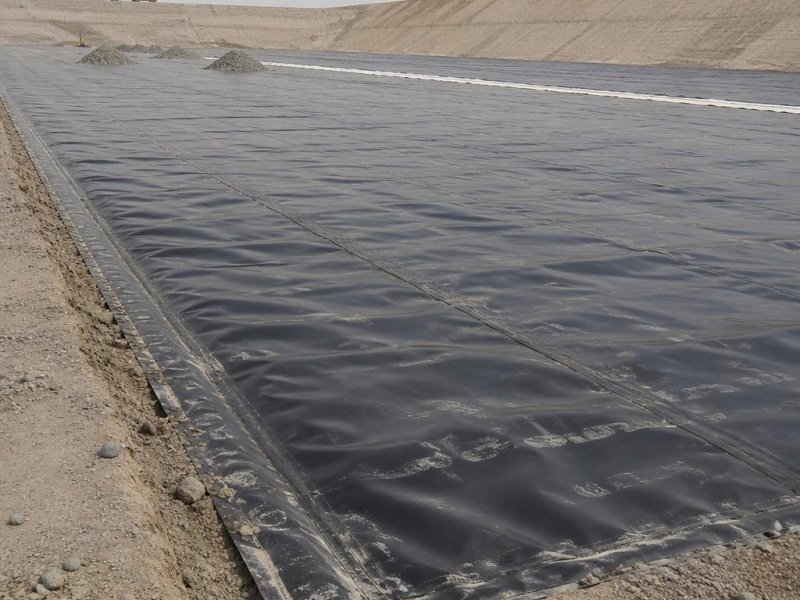
Installation, Seaming and Long-Term Performance
Polyethylene geomembranes are joined by hot-wedge welding under controlled temperature (typically 280–460 °C), speed (0.8–4.5 m/min), and pressure. Dual-track seams with an air channel enable 100 % non-destructive testing. Destructive peel and shear tests (ASTM D6392) must confirm ≥ 90 % of parent-material strength. Continuous parameter logging (ASTM D8468, GRI-GM32) further reduces risk.
Subgrade preparation, geotextile cushions on rocky surfaces, and protection from prolonged UV exposure before covering are essential. Covered polyethylene geomembranes routinely achieve service lives of 50–100+ years. Exposed applications benefit from higher stabilizer packages or reflective (white) surfaces to limit thermal expansion and oxidative aging.
BPM Geosynthetics Polyethylene Geomembrane Advantages
The Smooth HDPE Geomembrane Liner manufactured by The Best Project Material Co., Ltd. (BPM Geosynthetics) is formulated from virgin polyethylene resin to meet or exceed GRI-GM13 requirements across the 0.5–3.0 mm thickness range. Typical properties include density ≥ 0.94 g/cm³, tensile break strengths 20–80 kN/m (thickness-dependent), elongation ≥ 700 %, puncture resistance 240–960 N, standard OIT ≥ 100 min, high-pressure OIT ≥ 400 min, and carbon-black content 2–3 % with Category 1–2 dispersion.
Strategic advantages for project teams include:
- Full compliance with GRI-GM13 mechanical, durability, and carbon-black criteria
- Excellent hot-wedge weldability that routinely produces seam strengths equal to or greater than the parent sheet
- Wide roll options that reduce the total length of field seams and associated labor
- Competitive pricing combined with consistent quality and responsive technical support
- Proven compatibility with the leading welding machines and installation practices used by the global brands ranked above
- Suitability for both smooth and textured configurations to match friction, stability, and chemical-exposure requirements
When BPM polyethylene geomembranes are installed under rigorous Construction Quality Assurance protocols, the resulting systems deliver the impermeability, mechanical integrity, and long-term durability required by contemporary environmental regulations and owner specifications.
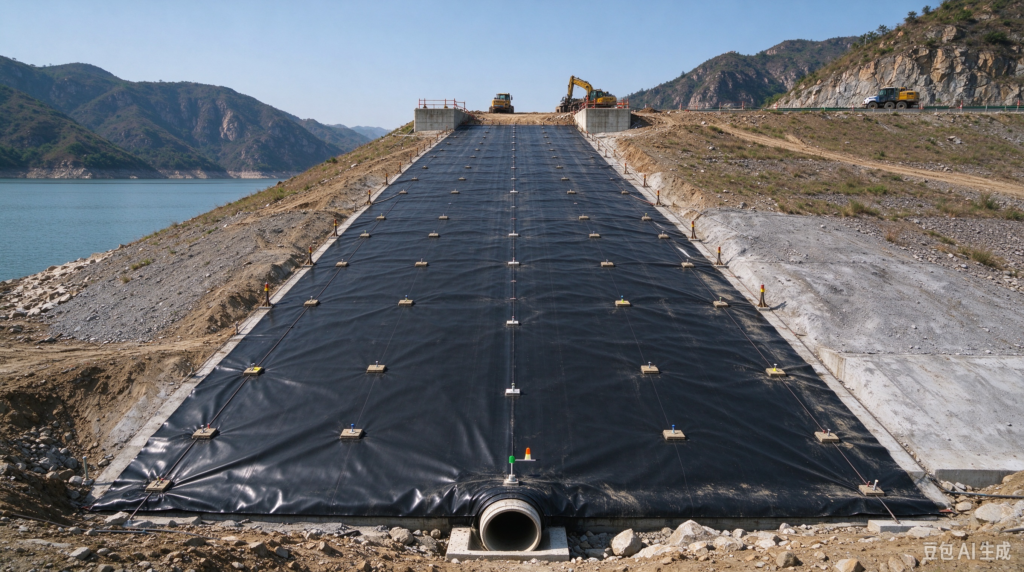
Conclusion and Selection Guidance
The six polyethylene geomembranes ranked in this review represent the strongest combination of GRI-GM13/GM17 compliance, mechanical performance, field verification, and supply reliability available in 2026. Agru America and Solmax (GSE) lead in premium uniformity, advanced resin technology, and dual HDPE/LLDPE capability. GSE legacy lines, NAUE, Layfield, and Raven provide proven alternatives across regional markets and project risk profiles.
Successful containment depends equally on material selection, thickness matching to site conditions, professional installation and welding, and continuous CQA. The Smooth HDPE Geomembrane Liner from The Project Material Co., Ltd. (BPM Geosynthetics) aligns with the performance benchmarks established by these global leaders while offering additional value in weldability, roll efficiency, and technical support.
Engineers, contractors, and owners who specify top-tier polyethylene geomembranes—and execute installation according to ASTM and GRI best practices—obtain the quantifiable foundation for durable, low-leakage containment systems that protect groundwater and the environment for decades.