Landfills require reliable engineering materials to ensure long-term environmental protection and structural stability. Among the most important materials used in modern landfill construction is geotextile. Whether used for separation, filtration, drainage, protection, or reinforcement, the right geotextile can significantly improve the performance and lifespan of a landfill system.
However, choosing the best geotextile for landfill applications can be challenging. Factors such as tensile strength, permeability, puncture resistance, chemical resistance, and durability all need to be considered.
In this article, we review seven of the best types of geotextiles for landfill projects and explain what makes each one suitable for specific applications.
Quick Comparison Table
Geotextile Type | Best For | Key Advantage | Durability |
Nonwoven Needle-Punched Geotextile | Cushioning and protection | Excellent puncture resistance | Excellent |
Woven Polypropylene Geotextile | Separation and reinforcement | High tensile strength | Excellent |
High-Strength PET Geotextile | Heavy-duty landfill projects | Superior long-term strength | Excellent |
Filtration Geotextile | Drainage systems | High permeability | Very Good |
Composite Geotextile | Complex landfill systems | Multiple functions in one material | Excellent |
UV-Stabilized Geotextile | Temporary exposed applications | Improved UV resistance | Very Good |
Heavyweight Nonwoven Geotextile | Liner protection | Maximum cushioning performance | Excellent |

1. Nonwoven Needle-Punched Geotextile – Best Overall
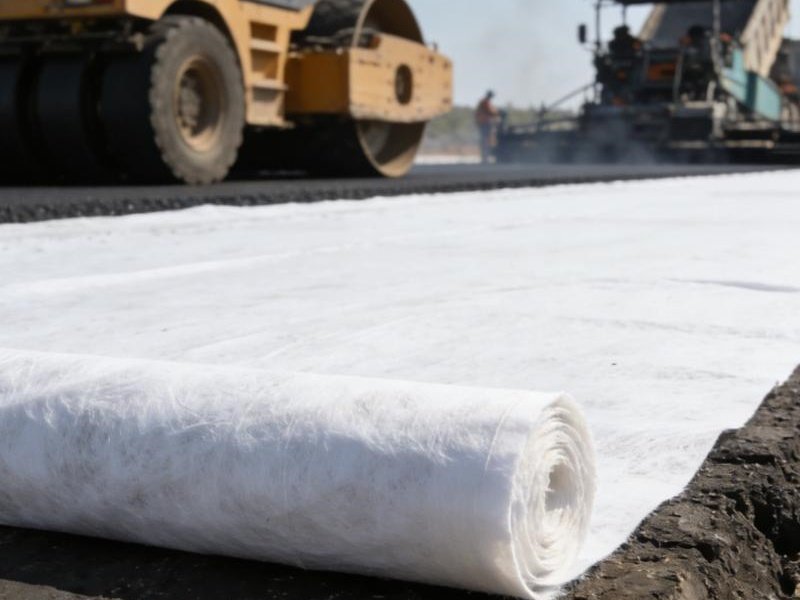
Nonwoven needle-punched geotextile is one of the most commonly used materials in landfill construction. It is typically manufactured from polypropylene or polyester fibers that are mechanically bonded together through a needle-punching process.
Its main advantage is its excellent cushioning ability. Landfill liners, especially geomembranes, can be vulnerable to puncture from sharp stones, waste materials, or uneven subgrade surfaces. A nonwoven geotextile creates a protective layer between materials and reduces the risk of liner damage.
In addition, nonwoven geotextiles offer good permeability, allowing water and gas to move through the material while preventing soil particles from migrating.
Pros:
Excellent puncture resistance
Good drainage and filtration performance
Flexible and easy to install
Suitable for geomembrane protection
Best for: General landfill liner protection and drainage applications.
2. Woven Polypropylene Geotextile – Best for Separation
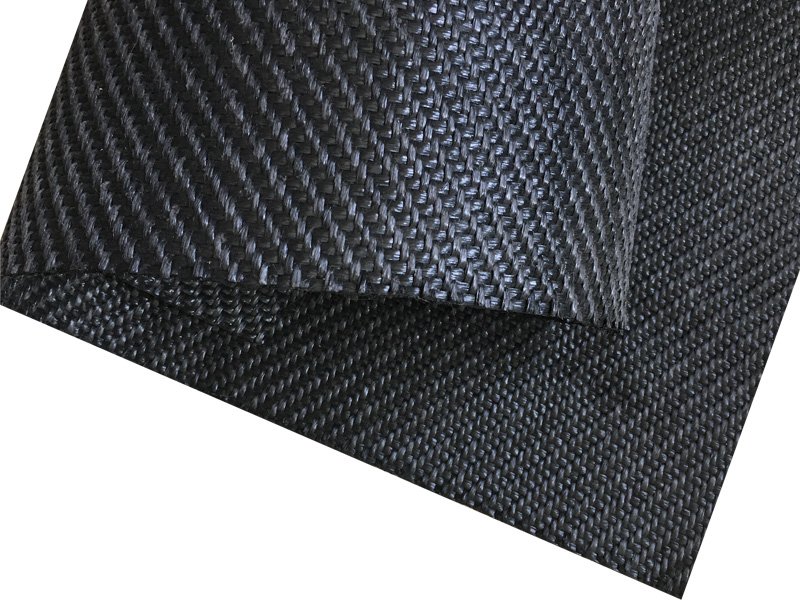
Woven polypropylene geotextiles are manufactured by weaving synthetic tapes or fibers together. Compared with nonwoven products, woven geotextiles generally offer higher tensile strength and lower elongation.
In landfill applications, they are particularly useful for separating different soil layers. For example, a woven geotextile can prevent soft subgrade soil from mixing with aggregate or drainage layers.
The material is also suitable for reinforcement applications where additional load-bearing capacity is required.
Pros:
High tensile strength
Excellent dimensional stability
Effective soil separation
Good resistance to chemicals and biological degradation
Best for: Separation and reinforcement beneath landfill access roads, drainage layers, and foundation systems.
3. High-Strength PET Geotextile – Best for Heavy-Duty Projects
Polyester (PET) geotextiles are known for their high tensile strength and excellent long-term performance. They are commonly selected for demanding engineering projects where reinforcement is a primary requirement.
For large municipal solid waste landfills, high-strength PET geotextiles can help stabilize slopes, reinforce soil structures, and improve load distribution.
One of the key benefits of PET is its ability to maintain strength under sustained loads. This makes it particularly valuable in landfill projects where settlement and long-term pressure are major concerns.
Pros:
Exceptional tensile strength
Good creep resistance
Suitable for long-term reinforcement
Strong resistance to mechanical stress
Best for: Large-scale landfill reinforcement and slope stabilization.
4. Filtration Geotextile – Best for Drainage Systems
Landfill drainage systems must allow leachate and water to flow freely while preventing fine soil particles from clogging drainage aggregates or pipes. Filtration geotextiles are specifically designed for this purpose.
These materials combine high permeability with effective particle retention. When properly selected based on soil characteristics, they can significantly improve the efficiency of landfill drainage systems.
Filtration geotextiles are commonly installed around drainage pipes, gravel layers, and leachate collection systems.
Pros:
High water permeability
Prevents soil particle migration
Reduces drainage system clogging
Supports long-term hydraulic performance
Best for: Leachate collection and drainage filtration.
5. Composite Geotextile – Best for Multi-Function Applications
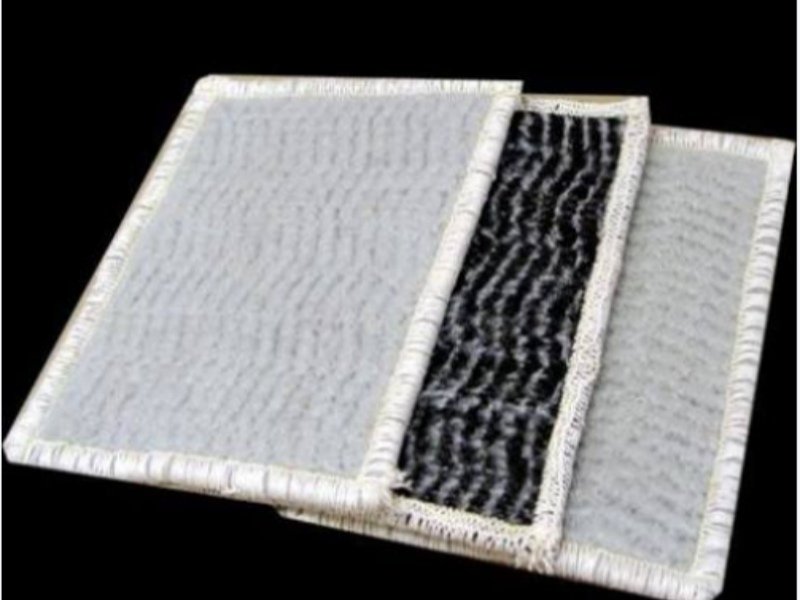
Composite geotextiles combine two or more geosynthetic materials into one product. For example, a geotextile may be bonded to a geomembrane or drainage core to provide multiple engineering functions simultaneously.
These systems are increasingly popular in modern landfill construction because they can simplify installation and improve overall system performance.
Depending on the design, composite geotextiles may provide separation, filtration, drainage, and protection in a single solution.
Pros:
Multi-functional performance
Can reduce installation complexity
Suitable for advanced landfill designs
Improves compatibility between geosynthetic layers
Best for: Complex landfill containment and drainage systems.
6. UV-Stabilized Geotextile – Best for Temporary Exposure
Most geotextiles are designed to be covered shortly after installation. However, some landfill projects involve temporary exposure to sunlight during construction.
UV-stabilized geotextiles are manufactured with additives that improve resistance to ultraviolet degradation. This helps maintain material strength when installation schedules are delayed or when the geotextile remains exposed for longer periods.
Although UV stabilization should not replace proper covering and protection, it provides an additional safety margin during construction.
Pros:
Improved resistance to sunlight
Suitable for temporary exposed conditions
Helps reduce construction-related material degradation
Best for: Landfill construction projects with extended installation periods.
7. Heavyweight Nonwoven Geotextile – Best for Maximum Liner Protection
For highly demanding landfill applications, heavyweight nonwoven geotextiles provide superior protection against puncture and mechanical damage.
These geotextiles typically have a higher mass per unit area and greater thickness than standard products. As a result, they offer improved cushioning when installed between geomembranes and rough surfaces.
Heavyweight geotextiles are especially valuable in landfill cells containing coarse aggregates, angular rocks, or other materials that could damage a liner system.
Pros:
Maximum puncture protection
Thick cushioning layer
Excellent durability
Ideal for demanding containment systems
Best for: High-risk liner protection and heavy-duty landfill applications.

How to Choose the Best Geotextile for a Landfill
Before selecting a geotextile, engineers and contractors should evaluate several important factors:
1. Application Requirements
Determine whether the geotextile will be used for separation, filtration, drainage, protection, or reinforcement.
2. Mechanical Properties
Tensile strength, puncture resistance, tear resistance, and elongation should match site conditions.
3. Hydraulic Performance
For filtration and drainage applications, permeability and pore size are critical considerations.
4. Chemical Resistance
Landfill environments may expose materials to leachate and various chemicals. The geotextile must be compatible with expected environmental conditions.
5. Installation Conditions
Subgrade roughness, aggregate size, equipment traffic, and UV exposure can all influence material selection.

Final Verdict
The best geotextile for landfill projects depends on the specific engineering application. For general-purpose liner protection, nonwoven needle-punched geotextiles are often the best overall choice due to their excellent cushioning and puncture resistance.
For reinforcement and separation, woven polypropylene and high-strength PET geotextiles provide superior structural performance. Meanwhile, filtration geotextiles are essential for maintaining efficient drainage and leachate collection systems.
Ultimately, landfill geotextile selection should be based on project design requirements, site conditions, and long-term environmental performance. By choosing the right geotextile, landfill operators can improve containment safety, protect geomembrane liners, and extend the service life of the entire landfill system.