Asking “How much does a GCL cost?” is like asking the price of a car—it depends on the model and options. While basic GCLs may start around $1.50 to $3.00 per square foot, the final cost is shaped by reinforcement, bentonite weight, shipping, and installation. BPM Geosynthetics will break down the key cost drivers—from bentonite quality to installation considerations—to provide every customer with a clear understanding of the pricing of waterproof blankets and how to effectively budget for your containment project.
1. What is Geosynthetic Clay Liner?
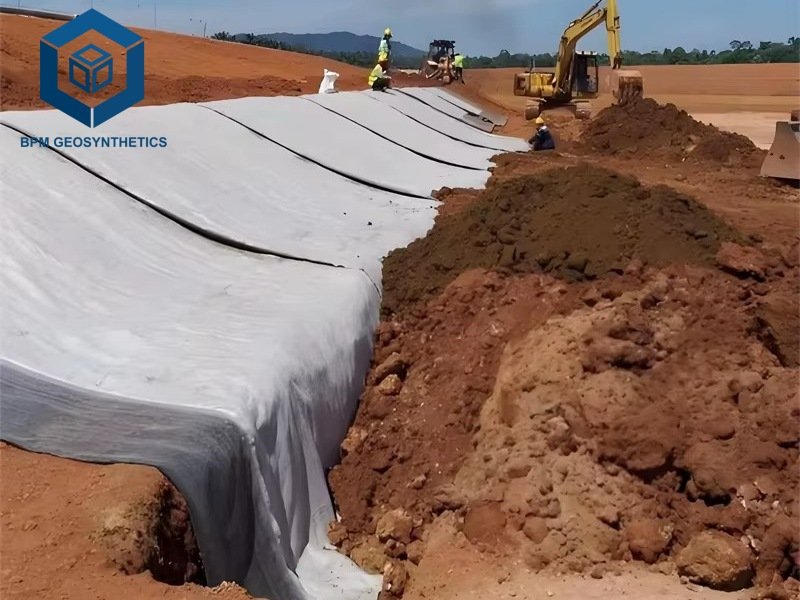
Geosynthetic clay liner (GCL) is an artificial hydraulic barrier used in geotechnical and environmental engineering. It is a modern high-performance alternative to compacted clay liners.
The basic components of GCL
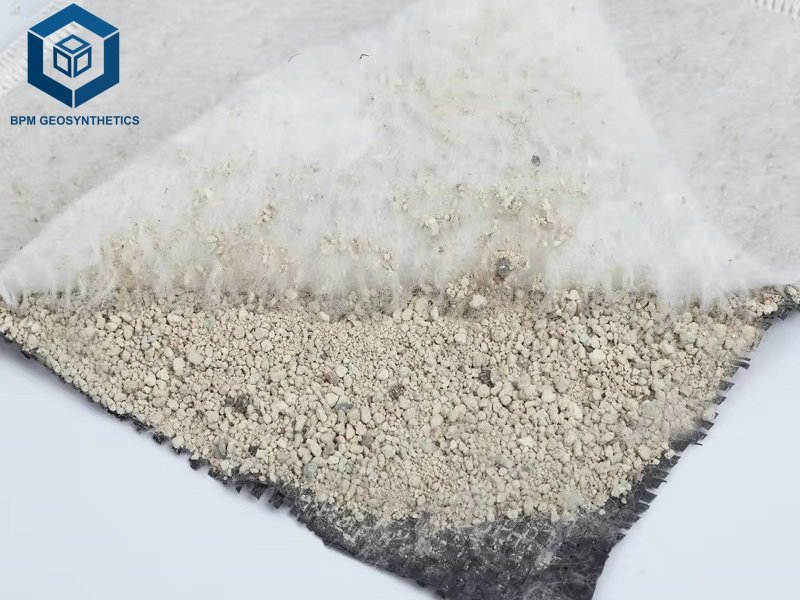
GCL is a sandwich shaped composite material composed of three main layers:
Intermediate layer: Bentonite (the core of the product). This is a highly expansive sodium based bentonite with extremely low hydraulic conductivity (meaning water is extremely difficult to pass through).
The upper and lower layers are geotextile layers: Bentonite is fixed between the two layers of geotextile. (One layer of nonwoven geotextile and one layer of woven geotextile)
Adhesive method: By needling, the fibers of one piece of geotextile are pierced through the bentonite and inserted into another piece of geotextile to bond the layers together.
2. How does the total lifecycle cost of a GCL compare to alternative lining systems?
2.1 Geosynthetic clay liner cost Structure and Direct Comparison
2.1.1 Key Cost Stages
GCL typically has the lowest initial investment costs due to advantages in material procurement, lightweight transportation, and rapid installation, and its quality control is relatively simple. However, significant cost differences exist between systems during the operation and long-term performance stages: compacted clay liners may require more maintenance due to drying cracking; geomembranes themselves are easy to maintain but are easily punctured when used alone; GCL repair is complex, and its long-term performance is highly dependent on chemical compatibility and hydrological conditions; incompatibility can lead to high remediation liability risks. Post-closure costs are directly related to the long-term effectiveness of the system.
2.1.2 Comparison with Major Alternatives
Compared to compacted clay liners, GCL have an advantage in initial costs, but the latter may be more reliable in terms of chemical compatibility and long-term risk prediction. Compared to a single geomembrane, GCL have self-healing capabilities and cost advantages, but their primary functions differ. The most common comparison is the selection of the clay component in composite liners: the total installation cost of a “geomembrane + GCL” composite system is usually significantly lower than that of a “geomembrane + compacted clay” system, and it has become the benchmark for cost-effectiveness in modern landfills, provided that chemical compatibility is confirmed.
2.2 Key Factors Affecting Life Cycle Geosynthetic clay liner cost
2.2.1 Project-Specific Conditions
Chemical compatibility is the most critical factor; harmful leachate may impair GCL performance and testing is essential. Hydrological conditions affect the hydration and function of GCL. Subgrade conditions and climate also affect the long-term performance of different liners.
2.2.2 Risk Assessment and Decision Balancing
The final decision is a trade-off between ‘initial cost savings’ (usually favoring GCL) and ‘long-term risk mitigation’ (potentially favoring more reliable systems). The potential costs of environmental remediation and legal liabilities resulting from liner failure are extremely high, often justifying an initial investment in a more robust system. Furthermore, design functionality and regulatory requirements also directly impact cost outcomes.
3. How does bentonite quality and weight affect the price?
3.1 Key Geosynthetic clay liner performance indicators and costs
- Swelling index and impurity content: The higher the swelling index (water absorption and expansion capacity), the better the anti-seepage performance, and the higher the requirement for raw material purity, resulting in an increase in price. A high content of impurities (such as sand particles and calcium carbonate) can reduce performance, although it can lower costs, it may affect long-term reliability.
- Chemical compatibility: Bentonite that has been modified or activated by polymers and can withstand high salinity or divalent cations (such as calcium and magnesium) erosion. Its production process is complex, the cost of additives is high, and the price is much higher than that of ordinary sodium based bentonite.
- Certification and Consistency: Products that comply with strict international standards (such as GRI-GCL3) and have stable quality batches have higher quality control and assurance costs, as well as higher prices.
3.2 Impact of Unit Area Weight
3.2.1 Price core driving factors
Material cost is positively correlated: Weight per gram is one of the main determining factors for GCL pricing. The higher the weight, the more bentonite is used, and the material cost increases linearly, resulting in a corresponding increase in product price. For example, a product priced at 4500g/m2 will be significantly higher than a standard product priced at 3000g/m2.
The trade-off between performance and application: Higher weight means greater expansion potential, thicker final water barrier layer, and stronger defect self-healing ability, suitable for demanding projects with extremely high anti-seepage requirements or poor foundation conditions. Users need to strike a balance between paying more for higher performance and meeting the minimum design requirements for cost-effectiveness.
4. Do different carrier geotextiles (woven/nonwoven) significantly impact Geosynthetic clay liner cost?
4.1 Differences in Materials and Manufacturing Costs can affect Geosynthetic clay liner cost.
4.1.1 Direct material and processing costs :
Woven geotextile: usually made of polypropylene flat wire, with relatively low raw material and production process costs. The process of fixing bentonite on woven fabric is relatively simple.
Non-woven geotextile: mainly made by needle punching polyester or polypropylene short fibers, its raw material and manufacturing process costs are usually higher than woven fabrics. Although its porous and fiber interlaced structure is conducive to the adhesion and interlayer friction of bentonite, the processing steps may be slightly more complex.
4.1.2 Comprehensive cost comparison :
From the perspective of pure material cost, the GCL version using woven fabric is usually the most economical choice.
However, the cost difference is not absolute and depends on the weight of the geotextile, the grade of raw materials, and the production scale of the manufacturer. Overall, GCL using non-woven fabric as a single-sided or double-sided carrier will have a higher price than fully woven fabric products of the same specifications, but the price difference is usually within a reasonable range.
4.2 Performance trade-offs and total cost considerations
4.2.1 Functional differences :
Woven fabric provides higher tensile strength and dimensional stability, which is conducive to withstanding tensile stress during installation, but has a lower interlayer friction coefficient.
Non-woven fabric: Provides excellent interlayer friction performance (enhances slope stability), higher planar water conductivity (facilitates interface drainage), and better bentonite retention.
4.2.2 Impact on Total Lifecycle Cost:
Although the initial purchase price of non-woven fabric GCL may be slightly higher, it can provide a higher safety factor in ‘ slope applications ‘, which may reduce additional anti slip design or reinforcement measures.
Its better interface drainage performance helps reduce the pore water pressure of the liner system, ‘ improve long-term stability ‘, and may reduce future maintenance risks. Therefore, from the perspective of engineering safety and long-term reliability, the added value it brings may far exceed the initial small price difference.
5. How do the project scale and transportation distance affect the total cost?
5.1 Economic effects of project scale affect Geosynthetic clay liner cost.
- Bulk purchase discount : For large projects (such as large landfills and tailings ponds) with huge procurement volumes, suppliers are usually willing to offer significant unit price discounts . This directly reduces the material cost per square meter.
- Fixed cost allocation: Some fixed costs in production and logistics, such as equipment debugging and administrative procedures, can be allocated among large order volumes to reduce unit costs.
- Logistics optimization: The logistics cost per unit distance for large-scale transportation of whole ships or vehicles is much lower than that of less than truckload transportation, resulting in higher efficiency.
5.2 Cost impact of transportation distance
- Logistics Cost Proportion: Transportation costs typically account for 5% to 20% of the total cost of materials arriving at the site, or even higher. The farther the distance, the larger the proportion, especially for cross-border sea or long-distance land transportation.
- The importance of proximity to the production site: Choosing a manufacturer or warehouse close to the project site can significantly reduce shipping costs and transportation time, which is a key strategy for cost control.
- Transportation methods and risks: Long distance transportation, especially when involving multiple transfers or cross-border transactions, not only increases freight costs, but also increases the risk of damage and delay to goods, as well as insurance costs.
6. What is the typical installation cost compared to the material cost?
6.1 Composition and Scope of Installation Costs
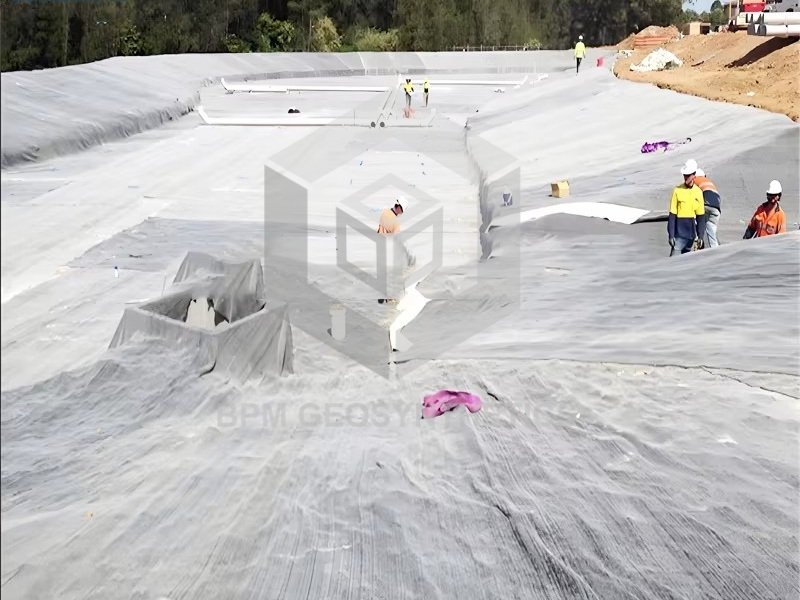
- Typical proportion: In general, the installation cost of GCL executed by professional contractors is about 25% to 50% of the material arrival cost . For example, if the on-site price of GCL materials is 10 yuan per square meter, the installation fee may be between 2.5 yuan and 5 yuan.
- Extremely variable : This ratio is not fixed. For large sites with simple terrain, vast areas, and good weather, the installation efficiency is high and the proportion can approach the lower limit. On the contrary, for small, complex, multi slope, multi obstacle, or severe weather projects, the installation difficulty and time increase, and the proportion may exceed 50%, or even double.
6.2 Key factors affecting installation costs
- Venue conditions : The most significant influencing factor. The fastest and cheapest installation is on flat and open ground; Slopes, irregular shapes, and areas with pipelines or columns will significantly increase the time and labor required for cutting, splicing, and fixing.
- Construction requirements: The stricter the specifications for splicing overlap width, anchoring groove details, and damage repair standards, the more precise the installation, and the higher the cost.
- Labor and equipment rates : There are significant differences in labor costs and equipment rental prices in different regions.
- Weather and Construction Schedule : Severe weather conditions (rain, strong winds) can lead to work stoppages, and urgent construction schedules may require overtime or additional manpower, all of which will increase installation costs.
7. Summary
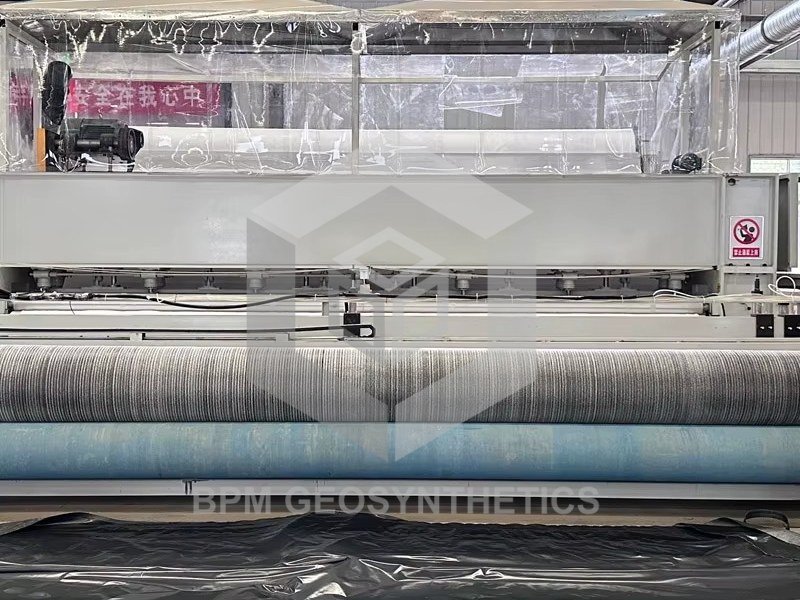
GCL unit price: From bentonite grade, unit weight, and selection of geotextile carrier, to project scale, transportation distance, site conditions, and installation precision, every step rewrites the final cost. A rational approach is to include material costs, transportation costs, construction costs, and full life-cycle risks in the comparison, making decisions based on a comprehensive unit price rather than the material unit price. Bulk purchasing, local warehousing, and optimized overlap and anchoring details can often further reduce the total cost by 10-30%. BPM Geosynthetics, leveraging its large-scale production and regional warehouse network, can provide customized formulations and on-shore construction guidance for projects with different seepage control levels, helping clients achieve budget-controlled and risk-minimized GCL solutions while ensuring chemical compatibility and long-term safety.