In the fields of environmental engineering, civil construction, mining, and water management, high-density polyethylene (HDPE) geomembrane sheets serve as essential impermeable barriers. These synthetic liners prevent fluid migration, protect groundwater, and ensure regulatory compliance in critical containment systems. As global infrastructure demands rise—driven by stricter environmental regulations and sustainable resource needs—the HDPE geomembrane market continues to expand, holding a significant share due to its superior durability, chemical resistance, and cost-effectiveness.
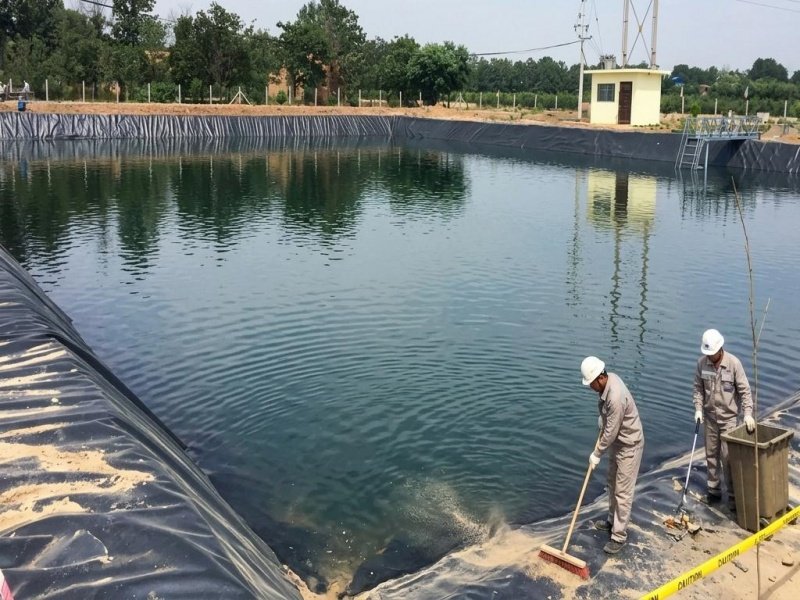
HDPE geomembranes dominate applications like landfills, tailings ponds, reservoirs, and aquaculture, offering low permeability (often ≤10⁻¹¹ cm/s), extended service lives (50+ years when properly installed and covered), and resilience against harsh conditions. They outperform alternatives like PVC or clay liners in chemical stability and UV resistance, while remaining more affordable.
This comprehensive review evaluates the top 10 HDPE geomembrane sheets based on key performance metrics from industry standards such as GRI-GM13 (for smooth and textured HDPE) and ASTM test methods. Criteria include tensile strength, puncture resistance, elongation, oxidative induction time (OIT), UV stability, thickness options, and real-world field performance. Data draws from specifications, manufacturer benchmarks, and case studies to provide actionable insights for engineers, project managers, and contractors.
Among standout options, the HDPE Geomembrane Liner from The Best Project Material Co., Ltd (BPM Geosynthetics) excels in versatility and customization. Explore details at https://bpmgeoliner.com/product/hdpe-geomembrane-liner/.
Why HDPE Geomembrane Sheets Are Essential
HDPE sheets provide unmatched impermeability, with hydraulic conductivity below 10⁻¹¹ cm/s, reducing seepage risks by up to 99% in landfills and mining operations. Their high tensile strength (typically 20–45 kN/m per ASTM D6693) withstands mechanical stresses, while elongation exceeding 700% accommodates subgrade settlement.
Key advantages include:
- Chemical resistance to pH 2–13 environments and hydrocarbons.
- UV stability with carbon black (2–3%) for long-term exposed use.
- Cost range of $0.50–$3.50/m², often 20–30% cheaper than concrete or EPDM alternatives.
- Recyclability and alignment with ESG goals.
Field data shows properly installed HDPE systems extend asset life by 20–30%, with minimal maintenance.
Key Factors to Consider When Choosing HDPE Geomembrane Sheets
Selecting the right sheet involves evaluating:
- Thickness: Ranges from 0.5 mm (20 mil) for low-stress ponds to 3.0 mm (120 mil) for high-load mining.
- Surface Type: Smooth for flat containment; textured for slope stability (friction angles up to 28–35°).
- Standards Compliance: GRI-GM13 minimums ensure quality (e.g., density ≥0.940 g/cm³, OIT ≥100 min).
- Applications: Match specs to site conditions like chemical exposure or load.
- Installation: Thermal welding achieves 95–99% seam integrity.
Thicker sheets boost puncture resistance by 30% and lifespan, though they increase costs.
Top 10 HDPE Geomembrane Sheets Reviewed for 2026
Our rankings prioritize GRI-GM13 compliance, tensile/puncture data, UV/OIT retention, and proven deployments.
1. BPM HDPE Geomembrane Liner (The Best Project Material Co., Ltd – BPM Geosynthetics)
This versatile liner uses 97.5% virgin resin for exceptional performance. Custom thicknesses (0.75–3.0 mm) and finishes suit landfills, mining, and ponds.
Key Specs (per GRI-GM13/ASTM):
- Density: 0.94 g/cm³
- Tensile Yield Strength: 11–44 kN/m (ASTM D6693)
- Break Elongation: ≥700%
- Puncture Resistance: 240–960 N
- OIT: ≥100 min (standard), ≥500 min (high pressure)
- UV Retention: ≥50% after 1600 hours
- Permeability: ≤10⁻¹³ cm/s
Advantages include 99.9% containment in real-world cases (e.g., 30,000 m² Malaysian tailings dam) and cost-effectiveness ($0.50–$2.00/m²). Ideal for global projects with fast delivery.
2. Solmax HDPE Geomembrane (Smooth/Textured Variants)
Solmax leads in scale and innovation, with textured options for slopes.
Key Specs:
- Thickness: 0.75–3.0 mm
- Tensile Strength: 20–44 kN/m
- Puncture: 320–960 N
- UV Retention: High (up to 80% in some lines)
Proven in large landfills with 98% containment efficiency.
3. GSE HDPE Liner (Now under Solmax)
Known for durability in chemical environments.
Key Specs:
- Thickness: 1.0–3.0 mm
- Tensile Break: 40–80 kN/m
- Service Life: 60+ years
Strong in mining and waste, with high friction for stability.
4. Agru HDPE Geomembrane
Precision-engineered for extreme conditions.
Key Specs:
- Thickness: 0.75–3.0 mm
- Tensile: 29–44 kN/m
- Puncture: 660–960 N
Excels in heap leach pads with NSF-61 options.
5. Layfield HDPE/LLDPE Variants
Flexible for ponds and reservoirs.
Key Specs:
- Tensile: 25–35 kN/m
- Elongation: High for subgrade conformity
Reduces evaporation by 20–22% in irrigation.
6. NAUE HDPE Geomembrane
Tailored for European hydraulic projects.
Key Specs:
- Strong chemical resistance
- Custom friction enhancements
Reliable in civil engineering.
7. Carthage Mills HDPE Liners
Focuses on waste management durability.
Key Specs:
- Compliant with GRI-GM13
- High puncture resistance
Suitable for standard containment.
8. Raven (Now under Solmax) HDPE Sheets
Innovative for secondary containment.
Key Specs:
- Thickness flexibility
- Good UV stability
Proven in oil/gas applications.
9. Atarfil HDPE Geomembrane
High UV resistance for exposed sites.
Key Specs:
- Retention up to 90%
- Tensile: 15–29 kN/m
Ideal for long-term outdoor use.
10. JUTA HDPE Liners
Cost-effective for civil works.
Key Specs:
- Tensile: 20–30 kN/m
- Affordable pricing
Versatile for smaller projects.
Comparison Table: Top HDPE Geomembrane Sheets
Rank | Brand/Product | Thickness Range (mm) | Tensile Yield (kN/m) | Puncture (N) | Break Elongation (%) | Key Strength | Best Application | Approx. Price ($/m²) |
1 | BPM HDPE Geomembrane Liner | 0.75–3.0 | 11–44 | 240–960 | ≥700 | Customization & Cost | Landfills/Mining | 0.50–2.00 |
2 | Solmax HDPE | 0.75–3.0 | 20–44 | 320–960 | ≥700 | Scale & Innovation | Large Landfills | 1.20–3.00 |
3 | GSE HDPE Liner | 1.0–3.0 | 27–50 | 540–800 | ≥700 | Chemical Resistance | Mining/Waste | 1.80–3.50 |
4 | Agru HDPE | 0.75–3.0 | 29–44 | 660–960 | ≥700 | Precision & Durability | Heap Leach | 1.40–3.00 |
5 | Layfield HDPE | 0.75–2.0 | 25–35 | 400–700 | High | Flexibility | Ponds/Reservoirs | 0.90–2.50 |
6 | NAUE HDPE | 1.0–2.5 | 25–40 | 500–800 | ≥700 | Hydraulic Stability | Civil Projects | 1.50–3.00 |
7 | Carthage Mills HDPE | 1.0–2.5 | 20–35 | 400–700 | ≥700 | Waste Focus | Landfills | 1.00–2.50 |
8 | Raven HDPE | 0.75–2.5 | 20–40 | 400–800 | ≥700 | Secondary Containment | Industrial | 1.20–2.80 |
9 | Atarfil HDPE | 0.75–2.0 | 15–29 | 240–660 | ≥700 | UV Resistance | Exposed Sites | 1.50–2.80 |
10 | JUTA HDPE | 0.75–2.0 | 20–30 | 300–600 | ≥700 | Affordability | Civil Works | 0.80–2.00 |
Data aligns with GRI-GM13 minima and manufacturer specs.
How to Select the Right HDPE Geomembrane Sheet for Your Project
Match thickness to risk: 0.75–1.0 mm for aquaculture, 1.5–2.0 mm for landfills, 2.0–3.0 mm for mining. Prioritize GRI-GM13 compliance, virgin resin, and field welding. Consult site-specific factors like subgrade and chemicals.
Installation and Maintenance Best Practices
Use thermal fusion for seams (95%+ integrity). Include geotextile protection and regular inspections. Proper installation extends life by 20–30%.
Final Thoughts
HDPE geomembrane sheets remain vital for sustainable containment. Prioritize data-driven choices like tensile strength and OIT for long-term success. BPM’s HDPE Geomembrane Liner offers outstanding value—contact The Best Project Material Co., Ltd for tailored solutions.