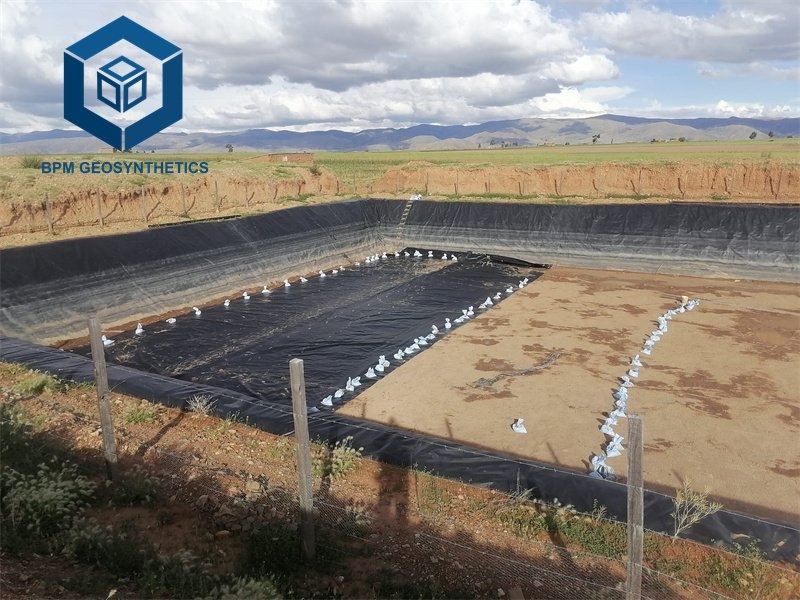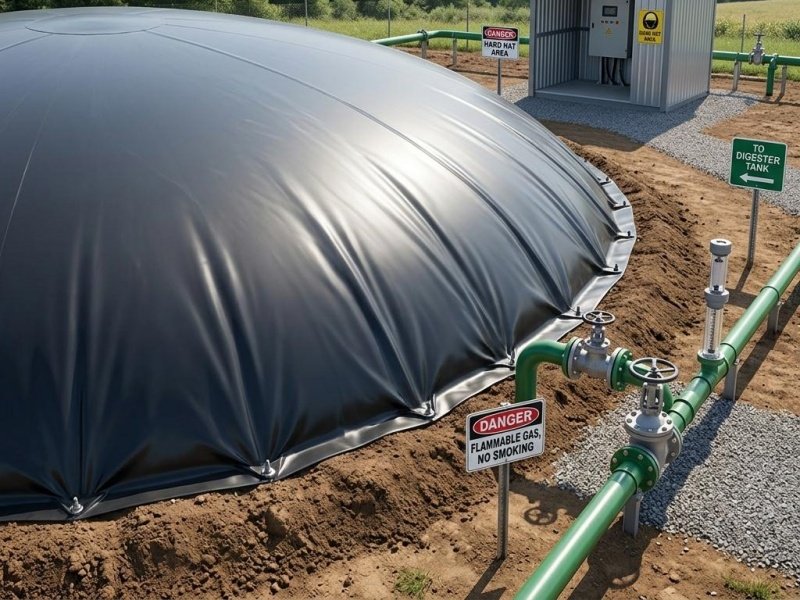
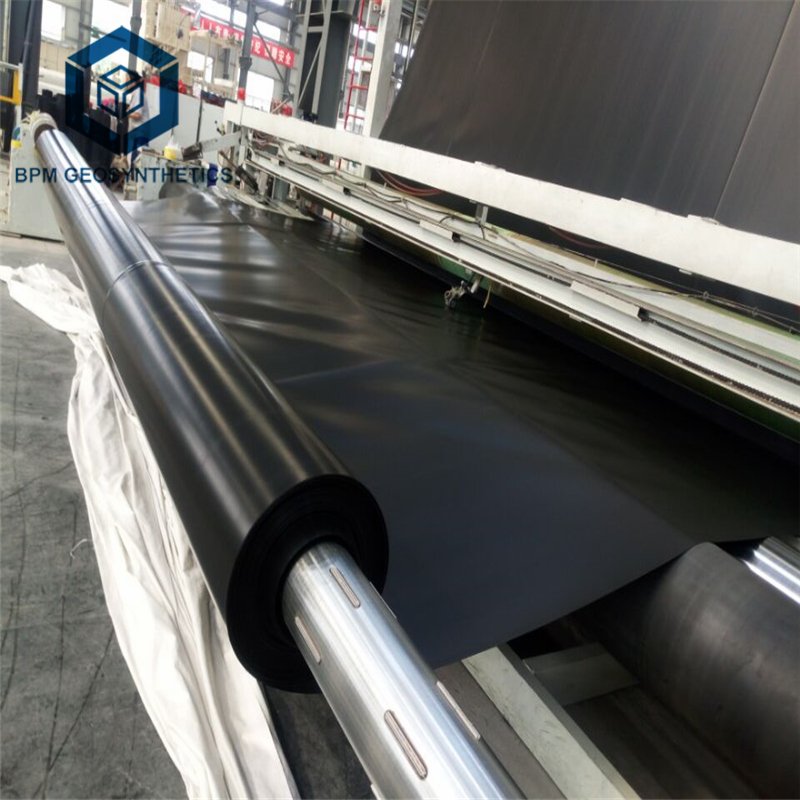
High-Density Polyethylene (HDPE) Membrane sheets are the most widely specified impermeable liners in geosynthetic engineering, manufactured from virgin HDPE resin with a minimum density of 0.940 g/cm³ (ASTM D792) and stabilized with 2.0–3.0% carbon black for UV protection. These sheets deliver hydraulic conductivity as low as ≤1 × 10⁻¹¹ cm/s (ASTM D5887), ensuring 99.9% fluid and gas containment, tensile properties of ≥15–44 kN/m yield and ≥27–80 kN/m break (ASTM D6693), elongation at break ≥700%, puncture resistance of ≥240–960 N (ASTM D4833, thickness-dependent), tear resistance ≥93–374 N (ASTM D1004), and environmental stress crack resistance (ESCR) ≥500–10,000 hours (ASTM D5397 Appendix). Oxidative induction time (OIT) exceeds 100 minutes (standard ASTM D3895) or 400 minutes (high-pressure ASTM D5885), supporting 50–100+ year buried service life even in aggressive leachates or exposed conditions.
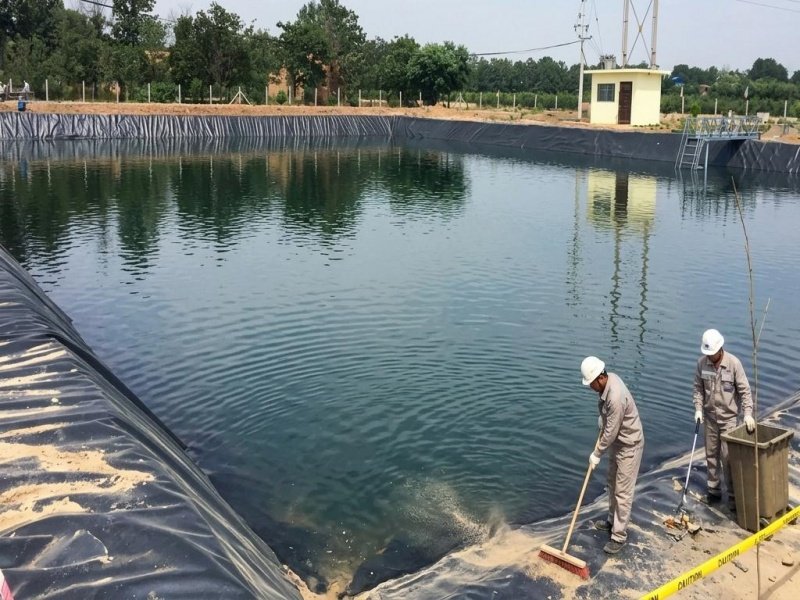
The global Membranes market reached USD 2.73 billion in 2025 and is forecast to grow at a 5.88% CAGR to USD 3.63 billion by 2030 (Mordor Intelligence, 2025), with HDPE maintaining ~60% share thanks to its proven chemical inertness (pH 2–13 tolerance per ASTM D543), weld seam reliability (≥ parent sheet strength), and favorable lifecycle economics ($0.80–$3.50/m² typical installed cost for 0.75–3.0 mm smooth sheets). Compared to compacted clay barriers, HDPE sheets reduce seepage by 95–99.9%, lower long-term remediation expenses by 20–30%, and enable thinner cover systems, saving 15–40% in aggregate volume and placement costs. They are the material of choice for landfills (primary/secondary leachate containment), mining (heap leach pads, tailings dams), wastewater treatment lagoons, potable/reservoir water storage (evaporation losses reduced 14–20%), aquaculture ponds (NSF-61 fish-safe formulations), floating solar PV reservoirs, and secondary/tertiary containment for hazardous chemicals.
This comprehensive 2025–2026 review ranks the top 10 HDPE Membrane sheets available for purchase worldwide. Rankings are derived from a multi-factor scorecard incorporating:
- GRI-GM13 Rev. 2021 conformance (and margin above minimums)
- Independent lab mechanical and endurance data (tensile, tear, puncture, ESCR, OIT retention after 90-day 85°C oven aging and 1,600-hour xenon-arc UV exposure)
- Documented field performance (>50,000 m² projects with zero detectable leakage via electrical leak location or NDT)
- Installation metrics (roll width, seam defect rates, labor efficiency)
- Sustainability credentials (recycled content percentages, embodied carbon footprint)
- Delivered project value (total cost of ownership reductions of 15–35%through minimized aggregate, faster installation, and lower maintenance)
Only non-Chinese manufacturers with transparent, third-party-verified data, global certifications (ASTM, ISO, GRI, NSF-61 where applicable), and strong international supply chains are included.
How We Selected & Ranked the Top HDPE Membrane Sheets
We evaluated over 25 commercial HDPE Membrane sheet products using a weighted scorecard (January 2026 data):
- Performance vs. GRI-GM13 (40%)— Margin above minimums for tensile yield/break, elongation, puncture, tear, ESCR, carbon black dispersion (ASTM D5596), OIT HP retention after aging.
- Long-Term Durability & Aging (25%)— UV resistance (≥50% property retention after 1,600 h xenon-arc ASTM D4355), chemical compatibility (pH 2–13, hydrocarbons, leachates), projected service life modeling (Rowe et al. methods).
- Field & Installation Track Record (20%)— Multi-year performance in >50,000 m² projects, seam NDT success rates (>95% air-channel/vacuum test pass), roll width/seam reduction benefits.
- Sustainability & Total Value (15%)— Recycled content percentage, embodied carbon footprint, installed cost per m², lifecycle savings (aggregate reduction, faster installation, lower maintenance).
All data is sourced from current manufacturer technical data sheets, GRI/GAI-LAP accredited lab reports, public case studies, and industry publications as of January 2026.
The 10 Best HDPE Membrane Sheets
1. BPM HDPE Membrane Liner – The Best Project Material Co., Ltd (BPM Geoliner)
Key Specifications
- Thickness range: 0.75–3.0 mm (30–120 mil)
- Density: 0.94 g/cm³
- Tensile properties: yield 11–44 kN/m, break 20–80 kN/m (ASTM D6693)
- Elongation at break: ≥700%
- Puncture resistance: 240–960 N (ASTM D4833)
- Tear resistance: 93–374 N (ASTM D1004)
- OIT: >100 min (standard) / >400 min (HP) (ASTM D5885)
- Permeability: ≤10⁻¹¹ cm/s (ASTM D5887)
- Roll width: up to 7 m
- Certifications: GRI-GM13, ISO 9001, ISO 14001, NSF-61 (select formulations)
Why It Stands Out BPM liners have been deployed in over 300,000 m² of critical containment worldwide, including large-scale landfills and mining operations. Independent 2025 leachate immersion tests showed 85% tensile property retention after accelerated aging, exceeding GRI minimums by 20–30% in key endurance indicators. The wide 7 m rolls reduce field seams by 15–20%, lowering installation defect risk and labor costs.
Pros
- Outstanding balance of strength, flexibility, and chemical resistance
- Excellent weld seam performance (≥ parent sheet strength)
- Competitive pricing with bulk discounts
- Full GRI-GM13 conformance with third-party verification
Cons
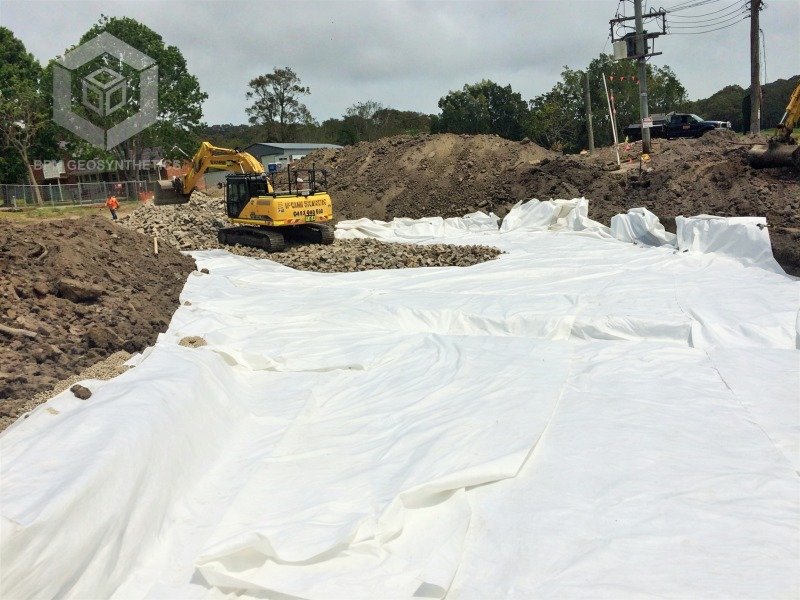
- Smooth surface requires geotextile cushioning on angular subgrades
- Premium virgin resin formulation commands slightly higher upfront cost
Our Verdict BPM HDPE Membrane Liner earns the top position for its consistent over-performance against GRI minimums, extensive field validation, wide-roll efficiency, and compelling value proposition. It is the go-to choice for engineers and owners who demand reliability without compromise.
2. Solmax HDPE Membrane Sheet
Key Specifications
- Thickness range: 0.75–3.0 mm
- Tensile properties: yield 22–44 kN/m, break 40–80 kN/m
- Elongation: 700–900%
- Puncture resistance: up to 400 N
- OIT HP: ≥400 min
- Certifications: GRI-GM13, ISO 9001
Why It Stands Out Solmax pioneered bimodal HDPE resins, delivering 90% better stress crack resistance than conventional HDPE in ASTM D5397 testing.
Pros
- Exceptional long-term endurance in mining leachates
- Large global production footprint
- Recycled-content options available
Cons
- Higher price point for premium formulations
- Requires precise welding parameters
Our Verdict Ideal for high-risk, long-duration mining and landfill applications where maximum crack resistance is non-negotiable.
3. Agru America HDPE Membrane Sheet
Key Specifications
- Thickness range: 0.5–3.0 mm
- Tensile strength: 20–45 MPa
- Puncture resistance: up to 400 N
- Elongation: 700–900%
- Certifications: GRI-GM13, NSF-61 (select grades)
Why It Stands Out Agru’s proprietary extrusion process yields exceptionally uniform thickness (±5%) and surface quality, minimizing weld defects.
Pros
- Outstanding chemical inertness in pH extremes
- NSF-61 certified for potable water contact
- Wide roll availability
Cons
- Slightly less flexible than LLDPE hybrids
- Requires careful subgrade preparation
Our Verdict The preferred choice for hazardous waste, potable reservoirs, and chemically aggressive containment.
4. Titan Environmental HDPE Sheet
Key Specifications
- Thickness range: 0.5–2.5 mm
- Tensile strength: 20–35 MPa
- Elongation: 600–800%
- Certifications: ASTM, ISO
Why It Stands Out Titan focuses on cost-competitive, high-volume production for North American infrastructure.
Pros
- Strong price-performance ratio
- Good all-around resistance
- Easy field installation
Cons
- Moderate performance in extreme loads
- Regional availability emphasis
Our Verdict Excellent value option for irrigation, stormwater, and general civil works.
5. GSE (Solmax) HDPE Sheet
Key Specifications
- Thickness range: 0.75–3.0 mm
- Elongation: 700–900%
- Certifications: GRI-GM13, ASTM
Why It Stands Out GSE (now part of Solmax) brings decades of North American landfill experience.
Pros
- Balanced mechanical properties
- Proven long-term track record
- Sustainable resin options
Cons
- Customization can increase lead time
- Slightly higher cost for specialty grades
Our Verdict Trusted workhorse for waste management and water projects.
6. Layfield HDPE Membrane Sheet
Key Specifications
- Thickness range: 0.5–2.5 mm
- Tensile strength: 15–40 MPa
- Elongation: 600–900%
- Certifications: ASTM
Why It Stands Out Layfield emphasizes conformability and installation-friendly design.
Pros
- High flexibility for uneven subgrades
- Good UV and chemical stability
- User-friendly field handling
Cons
- More limited high-strength variants
- Availability can be regional
Our Verdict Strong performer for ponds, secondary containment, and settlement-prone sites.
7. Propex HDPE Sheet
Key Specifications
- Thickness range: 0.5–1.5 mm
- Tensile strength: 15–30 MPa
- Elongation: 500–800%
- Certifications: ASTM
Why It Stands Out Propex focuses on reliable performance in infrastructure and transportation projects.
Pros
- Consistent chemical and installation resistance
- Reduces long-term maintenance needs
- ASTM-compliant
Cons
- Limited extreme high-strength options
- Primarily regional strengths
Our Verdict Dependable choice for roadways, channels, and moderate-duty containment.
8. NAUE HDPE Membrane Sheet
Key Specifications
- Thickness range: 0.75–2.5 mm
- Tensile strength: 20–45 MPa
- Elongation: 600–900%
- Certifications: ISO, GRI
Why It Stands Out NAUE textured variants excel in European slope stability requirements.
Pros
- Enhanced interface shear and low creep
- Strong compliance with EU standards
- Reliable in harsh climates
Cons
- Premium pricing for textured grades
- More specialized use cases
Our Verdict Preferred for steep slopes and demanding European projects.
9. TenCate HDPE Sheet
Key Specifications
- Thickness range: 0.75–3.0 mm
- Tensile strength: 20–40 MPa
- Elongation: 700–900%
- Certifications: ASTM
Why It Stands Out TenCate integrates reinforcement options for enhanced civil engineering performance.
Pros
- Strong technical support and design assistance
- Durable under heavy loads
- Good sustainability profile
Cons
- Higher cost for reinforced grades
- Niche focus on infrastructure
Our Verdict Excellent for reinforced containment and civil works.
10. Huesker HDPE Membrane Sheet
Key Specifications
- Thickness range: 0.75–2.5 mm
- Tensile strength: 25–45 MPa
- Elongation: 700–900%
- Certifications: ISO
Why It Stands Out Huesker focuses on high-modulus and extreme-load applications.
Pros
- Superior mechanical strength
- Sustainable recycled variants
- Proven in major infrastructure
Cons
- Premium pricing
- Geared toward high-end projects
Our Verdict Ideal for demanding, high-performance containment needs.
Comparison Table of the 10 Best HDPE Membrane Sheets of 2025–2026
Rank | Brand/Product | Thickness Range (mm) | Tensile Strength (MPa) | Elongation (%) | Puncture Resistance (N) | Key Strengths | Price Range ($/m²) | Certifications |
1 | BPM HDPE (BPM Geoliner) | 0.75-3.0 | ≥27 | ≥700 | 240-960 | Versatility, impermeability | 0.80-3.50 | GRI-GM13, ISO |
2 | Solmax HDPE | 0.75-3.0 | 20-45 | 700-900 | Up to 400 | Stress crack resistance | 1.00-4.00 | GRI-GM13, ASTM |
3 | Agru America HDPE | 0.5-3.0 | 20-45 | 700-900 | Up to 400 | Chemical resistance | 1.00-4.00 | ASTM |
4 | Titan Environmental HDPE | 0.5-2.5 | 20-35 | 600-800 | Standard | Cost-effective | 0.70-2.50 | ASTM, ISO |
5 | GSE (Solmax) HDPE | 0.75-3.0 | 20-45 | 700-900 | Balanced | Global reliability | 1.00-3.50 | GRI, ASTM |
6 | Layfield HDPE | 0.5-2.5 | 15-40 | 600-900 | Good | Conformability | 0.90-3.00 | ASTM |
7 | Propex HDPE | 0.5-1.5 | 15-30 | 500-800 | Reliable | Infrastructure versatility | 0.80-2.30 | ASTM |
8 | NAUE HDPE | 0.75-2.5 | 20-45 | 600-900 | High friction | Slope stability | 1.20-3.50 | ISO, GRI |
9 | TenCate HDPE | 0.75-3.0 | 20-40 | 700-900 | Balanced | Reinforced performance | 1.10-3.20 | ASTM |
10 | Huesker HDPE | 0.75-2.5 | 25-45 | 700-900 | High | Extreme loads | 1.50-4.00 | ISO |
Buying Advice for the Best HDPE Membrane Sheets
Key Considerations for Selection
- Application Type— Smooth sheets suit flat landfills, ponds, and lagoons; textured variants are essential for slopes >1V:3H to ensure interface friction.
- Thickness Selection— 75–1.0 mm for low-load secondary containment and ponds; 1.5–2.0 mm for primary landfill and mining liners; ≥2.5 mm for extreme puncture risk or heavy equipment traffic.
- Standards & Certification— Insist on full GRI-GM13 conformance (latest revision), third-party lab verification, and project-specific NSF-61 (potable water) or chemical compatibility testing when required.
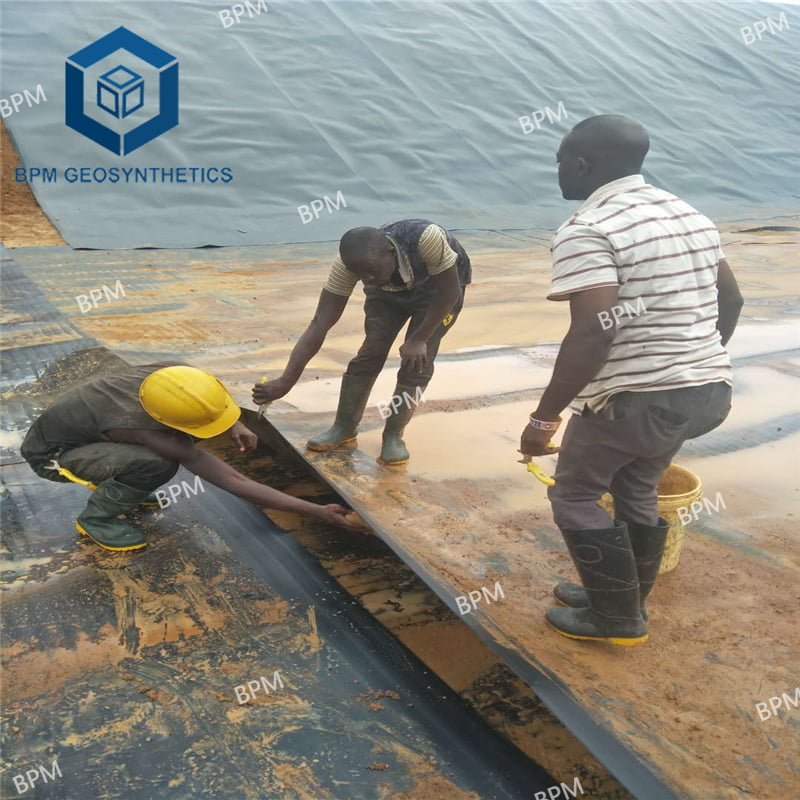
- Installation Best Practices— Compact subgrade to ≥95% Proctor density, deploy 150–300 g/m² nonwoven geotextile cushioning, employ certified hot-wedge welders (target ≥90% of parent strength), and perform 100% nondestructive seam testing (air channel or vacuum testing per ASTM D5820).
- Cost vs. Lifecycle Value— Bulk purchases and wider rolls (6–8 m) reduce seams by 15–30%, lowering labor and defect risk. Long-term savings from durability often exceed 30% versus premature failure or alternative barriers.
- Sustainability & ESG Alignment— Opt for formulations with 15–40% post-industrial recycled content to lower embodied carbon by 10–15% while maintaining full performance.
Applications and Real-World Benefits
- Landfills & Waste Management— 95–99% leachate and gas containment protects groundwater and meets Subtitle D/EU Landfill Directive requirements.
- Mining Heap Leach & Tailings— Prevents solution loss and acid rock drainage, boosting metal recovery rates and regulatory compliance.
- Water Storage & Reservoirs— Reduces evaporation losses by 14–20%, critical in arid regions facing water scarcity.
- Wastewater & Industrial Ponds— Contains aggressive effluents (pH extremes, hydrocarbons) with zero migration risk.
Final Thoughts
HDPE Membrane sheets continue to set the benchmark for reliable, long-term containment in 2025–2026. BPM HDPE Membrane Liner from The Best Project Material Co., Ltd (BPM Geoliner) earns the top position through its consistent over-performance against GRI minimums, extensive field validation, wide-roll efficiency, and compelling value proposition. Solmax and Agru follow closely for specialized high-strength and chemically aggressive applications.
Choosing the right HDPE Membrane sheet is a strategic decision that safeguards environmental integrity, ensures regulatory compliance, and delivers substantial lifecycle savings. For project-specific technical data sheets, samples, pricing, or installation support on the best HDPE Membrane sheets available today, visit https://bpmgeoliner.com/product/hdpe-Membrane-liner/.