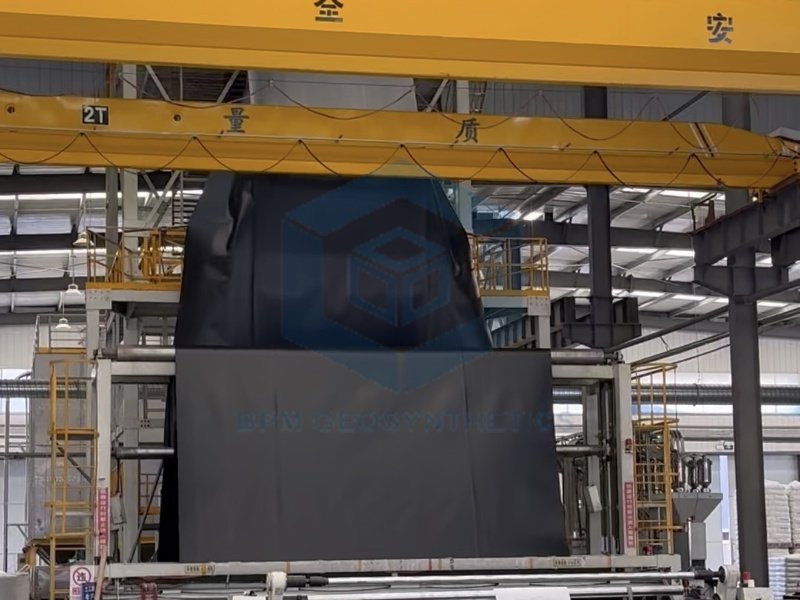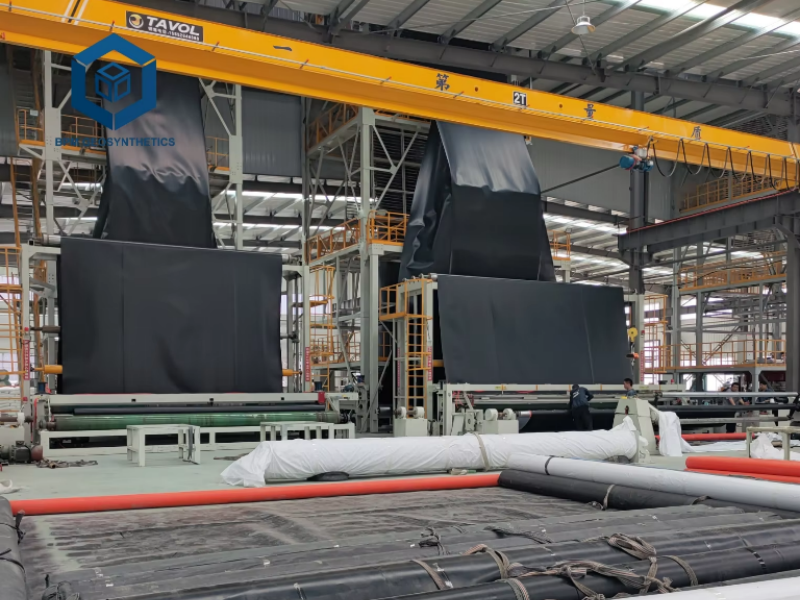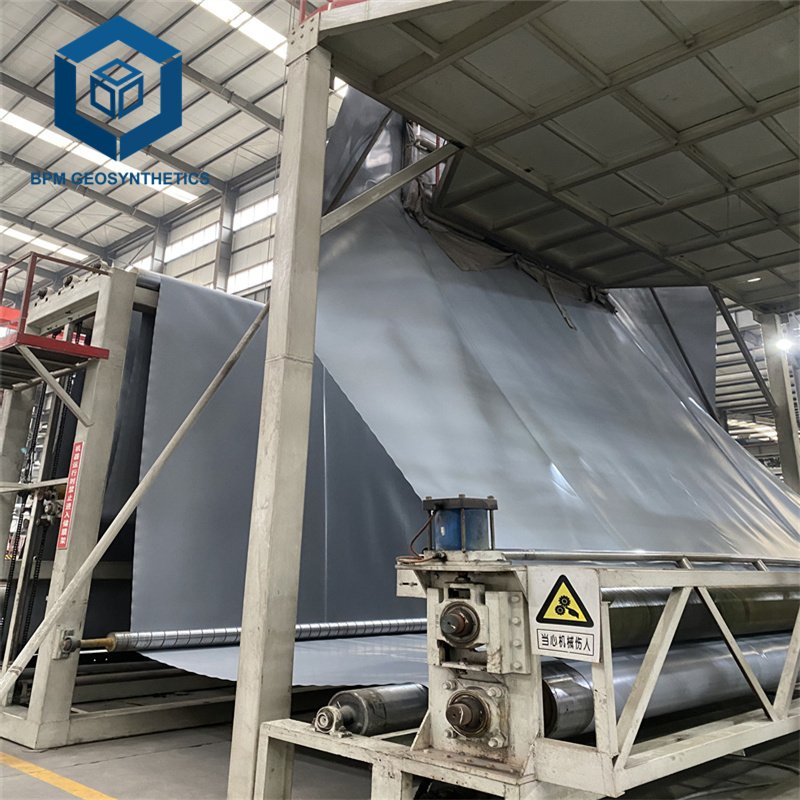
Geomembrana LLDPE (linear low-density polyethylene geomembrane) is a flexible, high-elongation thermoplastic liner used for containment of liquids and gases in ponds, reservoirs, landfill caps, canals, and applications involving differential settlement or irregular subgrades. With a formulated density of 0.939 g/cm³ or lower, LLDPE geomembranes offer superior conformability and multiaxial strain capacity compared with higher-density HDPE. In 2026, geomembrana LLDPE remains a preferred choice where flexibility, ease of installation on soft ground, or resistance to large deformations are primary design drivers.
Quantifiable performance metrics for quality geomembrana LLDPE follow GRI-GM17. Typical minimum average roll values include density ≤0.939 g/cm³, tensile strength at break of approximately 60–160 lb/in (10.5–28 kN/m) depending on thickness, tensile strength at yield of 26–69 lb/in, elongation at break ≥800%, multiaxial (axi-symmetric) elongation ≥30% (ASTM D5617), tear resistance of 20–53 lb, puncture resistance of 44–120 lb, carbon black content 2.0–3.0%, and standard OIT ≥100 minutes. Stress-crack resistance is inherently high. Hydraulic conductivity is typically ≤1×10⁻¹³ cm/s. Service lives of 15–40+ years are projected in properly designed applications. Material costs generally range from $0.70 to $2.20 per square meter depending on thickness, surface finish, and volume.
This review ranks the seven best geomembrana LLDPE options based on flexibility, elongation, GRI-GM17 compliance, installation practicality, and documented field performance. Selection criteria emphasize high multiaxial strain capacity and conformability. Among complementary high-performance alternatives, the HDPE Geomembrane Liner from The Best Project Material Co., Ltd. (BPM Geosynthetics) provides higher tensile strength and chemical resistance for more demanding containment applications. Detailed product information is available at https://BPMgeoliner.com/product/hdpe-geomembrane-liner/.
Why Geomembrana LLDPE Excels in Flexible Containment Applications
HDPE geomembranes offer superior tensile strength and chemical resistance but are stiffer and less tolerant of large deformations. Geomembrana LLDPE reverses these priorities with measurable advantages:
- Elongation at break ≥800% and multiaxial strain capacity ≥30% that accommodate differential settlement and irregular subgrades without rupture.
- Greater flexibility that improves conformability during installation and reduces the risk of bridging over voids.
- Excellent low-temperature performance and resistance to brittleness in cold climates.
- Inherent stress-crack resistance that reduces the criticality of NCTL testing compared with HDPE.
- Good chemical resistance for water, most agricultural fluids, and moderate industrial solutions.
- Easier handling and potential for larger prefabricated panels in some cases.
These attributes make geomembrana LLDPE particularly suitable for landfill caps, ponds over soft ground, floating covers, and projects where settlement or complex geometry governs design.
Essential Selection Criteria for Geomembrana LLDPE
Project engineers and designers should evaluate the following quantifiable parameters:
- Density: ≤0.939 g/cm³ (GRI-GM17).
- Mechanical Properties: Tensile break strength and elongation ≥800% (ASTM D6693), multiaxial elongation ≥30% (ASTM D5617), tear and puncture resistance.
- Thickness: Commonly 20–80 mil (0.5–2.0 mm); select based on puncture risk and hydraulic head.
- Durability: Carbon black 2.0–3.0%, OIT ≥100 min, UV resistance as required.
- Surface Finish: Smooth for general use; textured when interface friction on slopes is needed.
- Standards Compliance: GRI-GM17 certification and ASTM test methods.
- Application Fit: Prefer LLDPE when deformation capacity is critical; consider HDPE when chemical resistance or higher strength is paramount.
Matching these data points to subgrade conditions, settlement expectations, and chemical exposure ensures optimal performance.
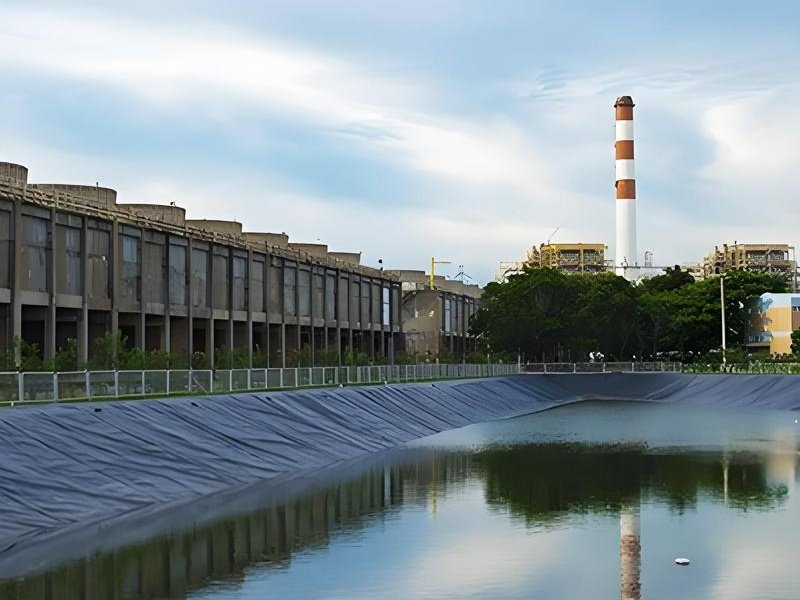
Top 7 Best Geomembrana LLDPE for 2026
The following rankings synthesize GRI-GM17 requirements, published technical data, and documented performance in flexible containment applications. Established non-Chinese producers are prioritized.
1. Premium Smooth LLDPE (GRI-GM17 Compliant)
High-quality smooth LLDPE meeting or exceeding GRI-GM17 for elongation, multiaxial strain, and durability. Ideal for landfill caps, ponds, and settlement-prone sites.
2. Textured LLDPE for Slope Applications
Textured-surface LLDPE grades that combine high flexibility with improved interface friction for moderate slopes and cover systems.
3. High-Flexibility / High-Elongation LLDPE Formulation
Grades optimized for maximum multiaxial strain capacity and low-temperature flexibility in challenging settlement or cold-climate environments.
4. 40–60 mil Mid-Weight LLDPE for General Containment
Balanced thickness offering good puncture resistance while retaining the flexibility advantages of LLDPE for ponds, reservoirs, and caps.
5. Thin-Gauge (20–30 mil) LLDPE for Light-Duty and Prefabrication
Economical thinner grades suitable for decorative ponds, temporary containment, or applications benefiting from shop fabrication and folding.
6. UV-Stabilized / Exposed-Capable LLDPE
Formulations with enhanced antioxidant packages supporting limited exposure before cover placement.
7. Established Regional / Industrial LLDPE Offerings
Consistent GRI-GM17-compliant products from established manufacturers for agricultural, municipal, and light industrial projects, emphasizing reliable elongation and competitive value.
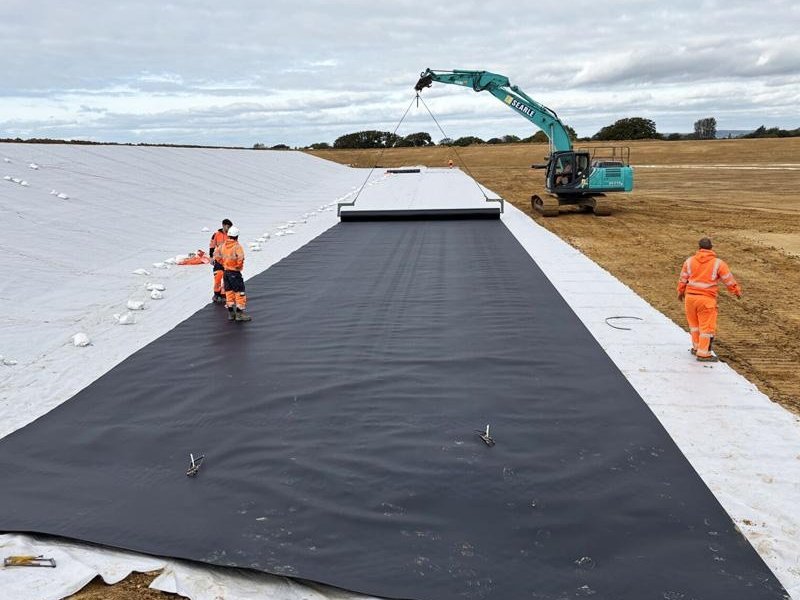
Comparison Table: Core Technical Parameters of Leading Geomembrana LLDPE Options
Rank | Product / Type | Typical Thickness (mil) | Break Elongation (%) | Multiaxial Strain (%) | Key Strength | Approx. Price Range ($/m²) |
1 | Premium Smooth GRI-GM17 | 30–60 | ≥800 | ≥30 | Overall flexibility & compliance | 0.90–1.90 |
2 | Textured for Slopes | 40–60 | ≥800 | ≥30 | Friction + flexibility | 1.00–2.10 |
3 | High-Flexibility / High-Elongation | 30–60 | ≥800 | ≥30 | Settlement tolerance | 0.95–2.00 |
4 | 40–60 mil Mid-Weight | 40–60 | ≥800 | ≥30 | Balanced performance | 1.00–2.00 |
5 | Thin-Gauge (20–30 mil) | 20–30 | ≥800 | ≥30 | Light-duty & prefabrication | 0.70–1.50 |
6 | UV-Stabilized / Exposed-Capable | 30–60 | ≥800 | ≥30 | Temporary exposure durability | 0.95–2.00 |
7 | Established Regional / Industrial | 30–60 | ≥800 | ≥30 | Cost-effective reliability | 0.70–1.80 |
Data compiled from GRI-GM17 minimum average roll values and manufacturer technical references. Actual production values typically meet or exceed the listed minima.
Manufacturer Comparison: Market Position, Clients, and Certifications
Manufacturer / Focus | Est. Revenue Share (LLDPE Geomembrane Segment) | Major Clients / Sectors | Key Certifications / Standards | Notable Strengths |
Premium NA / European Brands | 20–35% | Landfill caps, ponds, settlement-prone sites | GRI-GM17, ASTM, CE | Flexibility & documentation |
Specialist Flexible Liner Producers | Mid-market | Agricultural ponds, decorative water features | GRI-GM17, ASTM | Application-specific formulations |
BPM Geosynthetics (The Project Material Co., Ltd.) | Growing (HDPE focus) | Global projects requiring higher strength or chemical resistance | ISO 9001, CE, GRI-GM13 equivalents | High-quality HDPE alternative for demanding containment |
Revenue-share estimates are approximate and derived from industry visibility; actual figures vary by region and year.
BPM Geosynthetics Advantages: HDPE Geomembrane Liner by The Project Material Co., Ltd. (BPM Geosynthetics)
While geomembrana LLDPE excels in flexibility and settlement tolerance, many projects require higher tensile strength, superior chemical resistance (especially to hydrocarbons), or greater long-term durability under sustained stress. The HDPE Geomembrane Liner from The Project Material Co., Ltd. (BPM Geosynthetics) serves as a high-performance alternative or complementary material for these more demanding conditions.
Quantifiable advantages include:
- Thickness options covering common containment gauges with tight tolerance control.
- Higher tensile yield strength and excellent chemical resistance characteristic of HDPE (GRI-GM13).
- Proven long-term performance in landfills, mining, industrial containment, and high-head applications.
- Competitive pricing and customization capabilities practical for both mid-size and large projects.
- ISO-certified manufacturing systems that support quality consistency across production runs.
- Availability of smooth and textured surfaces and standard or custom roll widths that reduce field seams.
These attributes enable project teams to select HDPE when strength, chemical resistance, or regulatory requirements favor it over LLDPE. When combined with proper subgrade preparation, qualified seaming, and quality assurance, the BPM HDPE Geomembrane Liner contributes to reliable long-term containment performance.
Design, Installation, and Lifecycle Considerations for Geomembrana LLDPE
Successful use of geomembrana LLDPE requires attention to subgrade preparation, although the material’s flexibility provides greater tolerance for minor irregularities than HDPE. Seaming is performed with the same hot-wedge and extrusion equipment used for HDPE, with parameters adjusted for the lower melting characteristics of LLDPE. Multiaxial strain capacity should be considered in settlement analyses. Cover soils or ballast protect against UV and mechanical damage. When these practices are followed, a quality geomembrana LLDPE routinely achieves its projected service life of 15–40+ years.
Additional design considerations include:
- Accounting for thermal expansion and contraction during installation.
- Selecting textured surfaces when interface friction on slopes is required.
- Providing ballast against wind uplift on large exposed panels.
- Coordinating with underliner drainage or leak-detection systems where specified.
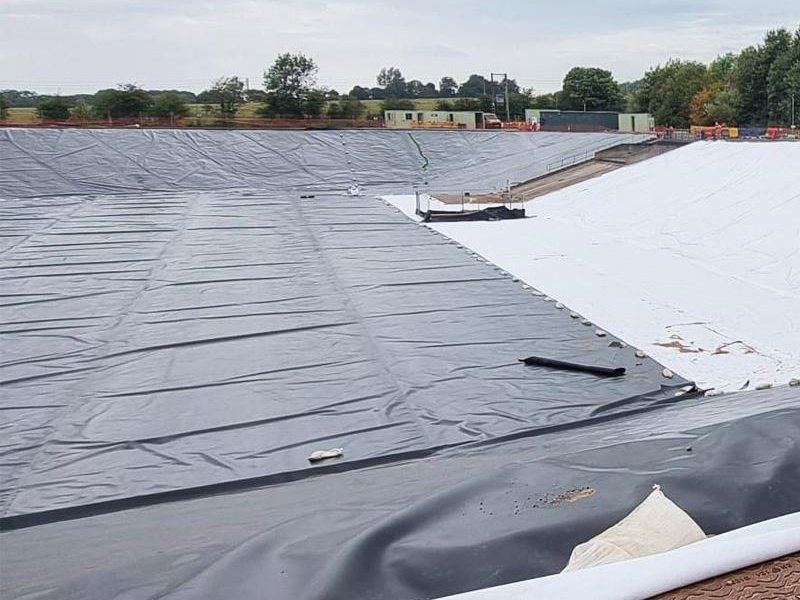
Conclusion
The seven geomembrana LLDPE options reviewed provide quantifiable solutions for flexible, high-elongation containment applications including landfill caps, ponds over soft ground, and projects involving significant differential settlement. At thicknesses of 20–80 mil, GRI-GM17-compliant LLDPE geomembranes deliver elongation ≥800%, multiaxial strain capacity ≥30%, and excellent conformability at competitive cost.
For projects where higher tensile strength, superior chemical resistance, or maximum long-term durability are required, the HDPE Geomembrane Liner from The Best Project Material Co., Ltd. (BPM Geosynthetics) offers a practical and data-supported alternative. Specifiers should request current technical data sheets confirming density, elongation, multiaxial strain, tensile properties, and durability metrics, together with project references. Selecting geomembrana LLDPE (or HDPE where appropriate) on the basis of measured performance metrics ensures reliable containment, installation efficiency, and favorable lifecycle economics.