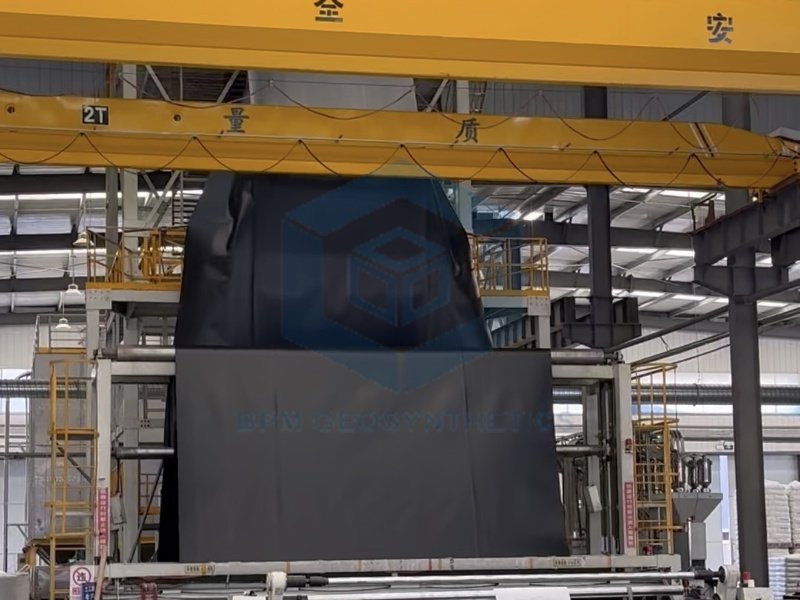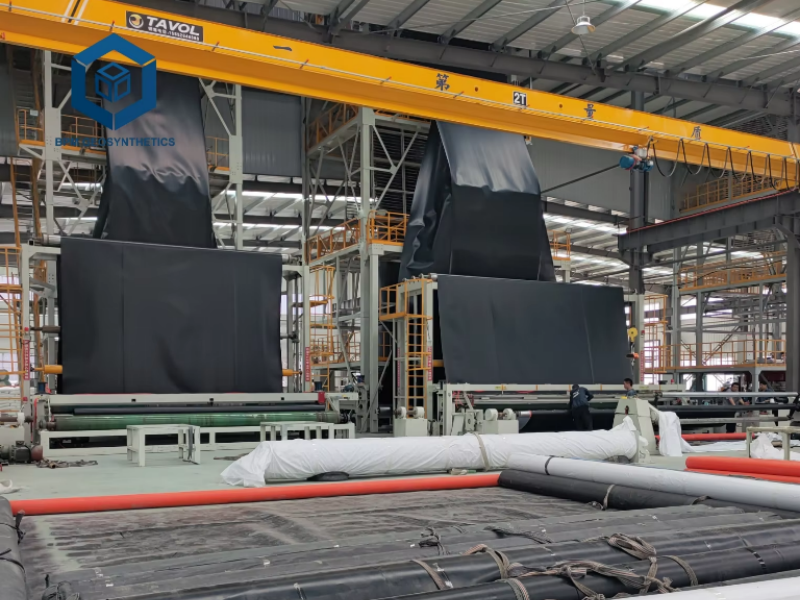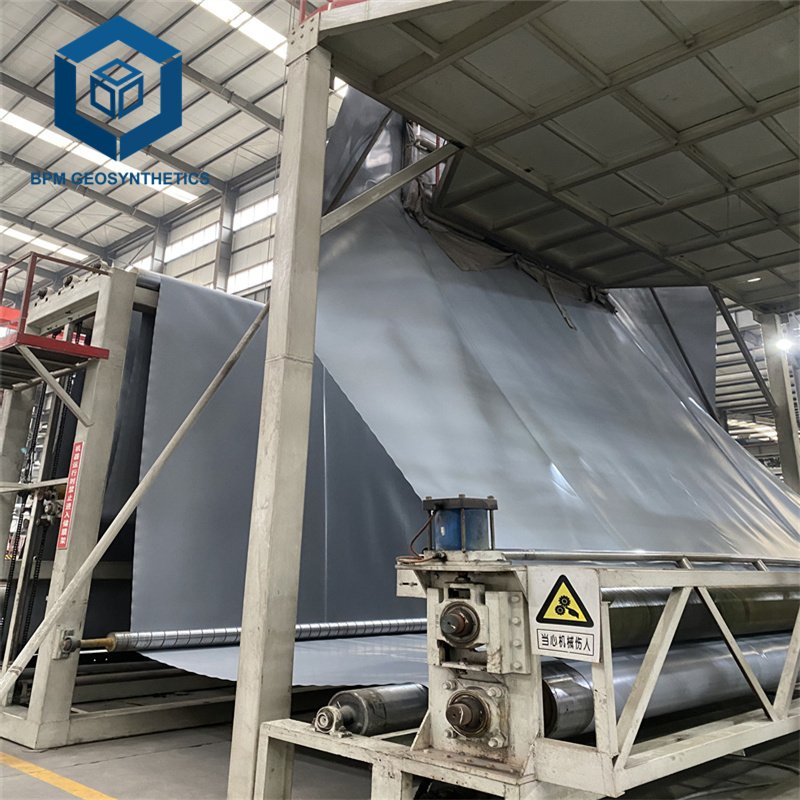
Geotextile fabrics are indispensable permeable geosynthetic materials used extensively in civil engineering, road construction, drainage systems, landfills, erosion control, and soil stabilization projects. They perform essential functions such as separation, filtration, drainage, reinforcement, and protection. Accurate knowledge of geotextile fabric cost is critical for project managers, engineers, contractors, and procurement specialists seeking reliable performance while controlling budgets.
In 2026, geotextile fabric cost typically ranges from $0.15 to $5.00 per square meter for material alone, with most standard engineering grades falling between $0.20 and $2.50 per square meter. Fully installed costs, including labor, overlaps, and site preparation, commonly range from $1.00 to $8.00 per square meter. This comprehensive guide consolidates current market data, technical specifications, quantifiable performance metrics, and practical cost-optimization strategies. It also highlights competitive, high-quality geotextile solutions available from The Best Project Material Co., Ltd (BPM Geosynthetics).
1. What Is Geotextile Fabric?
Geotextile fabric is a permeable textile product manufactured primarily from polypropylene (PP) or polyester (PET) polymers. It is designed for use in contact with soil, rock, or other geotechnical materials. Most modern geotextiles are synthetic and engineered to allow water passage while retaining soil particles or providing mechanical support.
A typical geotextile consists of continuous filaments or staple fibers that are either woven, needle-punched (non-woven), or thermally bonded. Key measurable properties include:
- Mass per unit area (GSM): commonly 100–800 g/m² or higher
- Tensile strength: 5–200 kN/m depending on type and grade (ASTM D4595 wide-width strip method)
- Puncture resistance: often 200–2,000 N (ASTM D6241 CBR puncture or D4833)
- Hydraulic properties: permittivity and apparent opening size (AOS) critical for filtration and drainage (ASTM D4491 and D4751)
- Service life: 20–50+ years when properly installed and protected from prolonged UV exposure
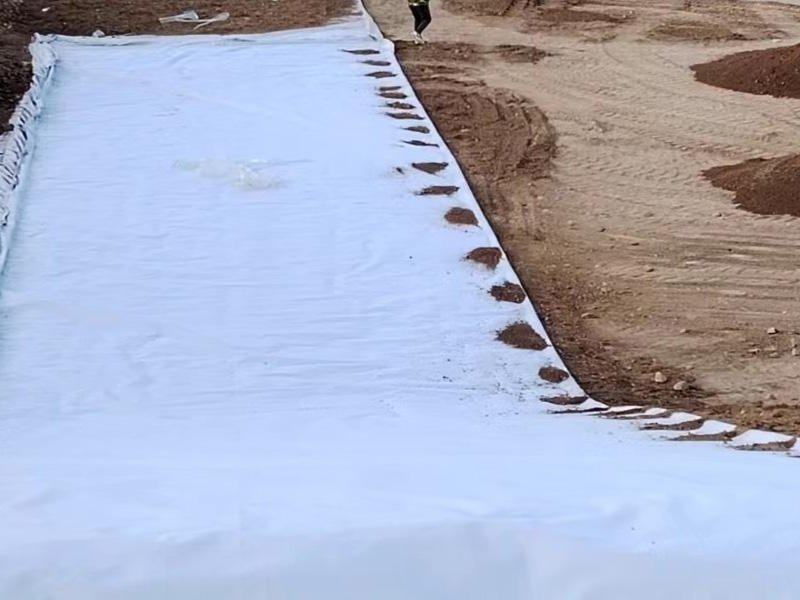
Geotextiles are supplied in wide rolls and installed by overlapping, pinning, or sewing. They reduce the need for traditional aggregate layers, extend infrastructure lifespan, and lower long-term maintenance costs.
2. Types of Geotextile Fabric and Cost Implications
2.1 Non-Woven Geotextile Fabric
Produced by needle-punching or thermal bonding of staple or continuous filaments. Non-woven geotextiles offer high permeability, excellent conformability, and superior filtration performance. They dominate drainage, separation, and protection applications and generally represent the more economical category, with prices typically $0.15–$2.50 per square meter.
2.2 Woven Geotextile Fabric
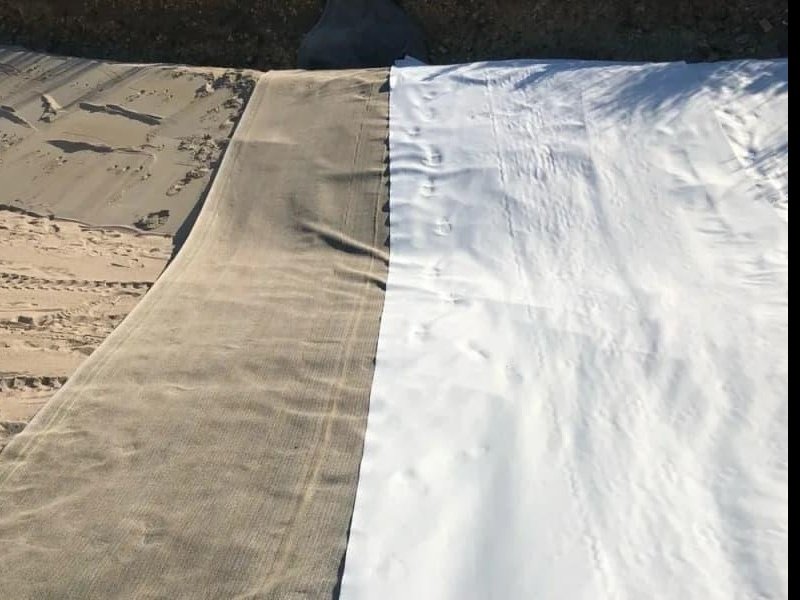
Manufactured by interlacing high-tenacity yarns or slit-film tapes on specialized looms. Woven geotextiles deliver higher tensile strength, lower elongation, and excellent load distribution, making them ideal for reinforcement and separation under heavy traffic. Prices commonly range from $0.50 to $3.50+ per square meter for high-strength grades.
2.3 Specialty and Composite Variants
Knitted geotextiles, composite products combining woven and non-woven layers, and natural-fiber options (jute or coir) serve niche applications. These can range from $0.10 to over $5.00 per square meter depending on performance requirements.
In current market data, non-woven products hold approximately 50–65% of volume share due to their versatility in filtration and drainage, while woven products command a significant portion of structural reinforcement applications.
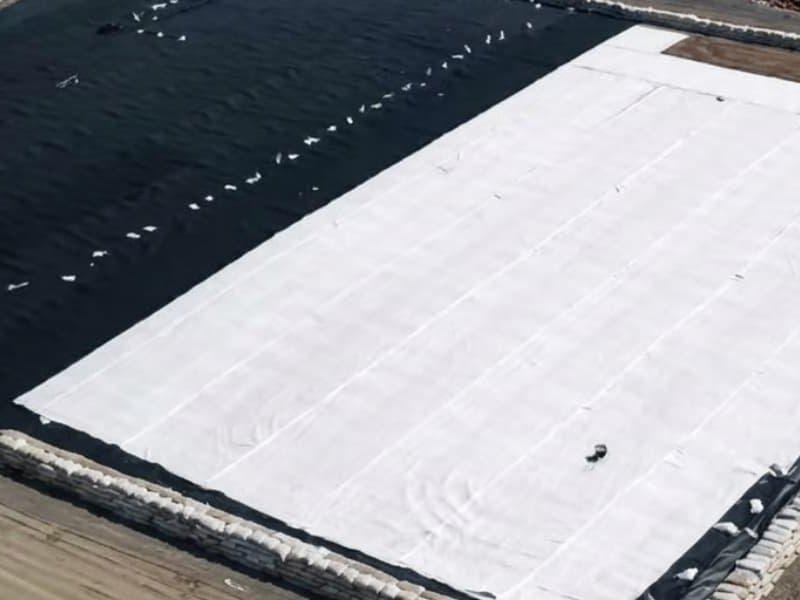
3. Key Specifications and Parameters Affecting Geotextile Fabric Cost
Performance and geotextile fabric cost are directly linked to quantifiable technical parameters:
- Weight (GSM): The primary cost driver; every additional 100 GSM typically increases price by 15–40%
- Tensile strength (ASTM D4595): Higher values required for reinforcement grades raise cost
- Puncture resistance: Critical for installation survivability over coarse aggregates
- Hydraulic conductivity and AOS: Determine suitability for filtration versus drainage functions
- Polymer type and UV stabilizers: PP offers excellent chemical resistance at lower cost; PET provides higher modulus and creep resistance in certain applications
- Roll width and length: Wider rolls reduce seams and installation labor
Standards such as ASTM D4595, D4632 (grab tensile), D6241, D4491, and AASHTO M288 guide specification, testing, and quality assurance.
4. Factors Affecting Geotextile Fabric Cost
4.1 Material Quality and Polymer Type
Polypropylene accounts for the majority of market volume because of its chemical inertness (resistant across pH 2–13) and favorable cost structure. Polyester typically commands a 15–35% premium due to higher tensile performance and UV resistance in some grades. Virgin polymer formulations deliver superior long-term durability compared with recycled-content alternatives.
4.2 Weight (GSM) and Thickness
GSM is the single largest determinant of geotextile fabric cost. Lightweight fabrics (100–200 GSM) cost $0.15–$0.80 per square meter and suit landscaping or light filtration. Medium grades (300–400 GSM) typically range $0.50–$1.50 per square meter for road and drainage work. Heavy grades (500–800+ GSM) reach $1.00–$3.00+ per square meter for high-load protection or reinforcement.
4.3 Manufacturing Process
Needle-punching for non-wovens is generally more economical than weaving. Continuous-filament processes, specialized finishes, or dual-sided treatments add cost. High-tenacity yarn production for woven products increases manufacturing complexity and price.
4.4 Order Volume and Project Scale
Orders exceeding 10,000 m² commonly receive 10–30% volume discounts due to economies of scale. Small residential or pilot projects incur higher unit costs because of fixed setup, packaging, and logistics charges.
4.5 Supplier Location and Logistics
Asia-Pacific factory pricing remains the most competitive globally. Delivered prices in North America and Europe are higher due to ocean freight, duties, and stricter compliance requirements. Shipping can add $0.05–$0.30 per square meter depending on destination and volume.
4.6 Installation and Site Conditions
Material typically represents 40–60% of total project cost. Labor for placement, overlapping, pinning, and securing adds 20–50%. Rocky or irregular subgrades, limited access, or adverse weather increase installation expenses. Wider rolls reduce the number of seams and associated labor.
4.7 Certifications and Quality Standards
Products supported by ISO 9001 and ISO 14001 management systems, together with third-party testing (SGS or equivalent) and compliance with ASTM or AASHTO standards, carry a quality premium of 10–20%. Certified materials reduce field failure risk and long-term remediation costs.
4.8 Market Conditions and Raw Material Prices
Polypropylene and polyester resin prices track petroleum markets. Fluctuations of 5–10% in resin can translate into corresponding shifts in finished fabric pricing. Global infrastructure demand and sustainability initiatives also influence supply and pricing dynamics.
5. Geotextile Fabric Cost Ranges in 2026
Consolidated market data produce the following realistic ranges (material only, bulk factory or similar basis):
Non-Woven Geotextile Fabric:
- 100–200 GSM: $0.15–$0.80/m²
- 200–400 GSM: $0.40–$1.50/m²
- 400–800 GSM: $0.80–$2.50+/m²
Woven Geotextile Fabric:
- Standard grades: $0.50–$2.00/m²
- High-strength grades: $1.00–$3.50+/m²
Installed costs typically range from $1.00–$8.00 per square meter. A 10,000 m² road subgrade project using 300 GSM non-woven may incur material costs of $5,000–$15,000, with total installed costs substantially higher once labor and site preparation are included.
Comparison Table 1: Geotextile Fabric Cost and Performance by Type and Weight
Type | Typical GSM Range | Approx. Price (USD/m²) | Tensile Strength (kN/m) | Primary Functions | Common Applications |
Non-woven (light) | 100–200 | $0.15–$0.80 | 5–30 | Filtration, drainage, separation | Landscaping, French drains, light roads |
Non-woven (medium/heavy) | 300–800 | $0.50–$2.50 | 20–80 | Protection, heavy filtration | Landfill cushions, road bases |
Woven (standard) | 150–300 | $0.50–$2.00 | 20–100 | Separation, moderate reinforcement | Unpaved roads, embankments |
Woven (high-strength) | 200–500 | $1.00–$3.50+ | 50–200+ | High-load reinforcement | Highways, retaining walls, mining |
Comparison Table 2: Cost Drivers, Market Position & Quality Indicators
Parameter / Indicator | Typical Value / Range | Notes / Price Impact |
Global geotextile market growth | Steady CAGR driven by infrastructure | Supports volume manufacturing efficiencies |
Non-woven market share | Approximately 50–65% | Dominant in filtration and drainage |
Polypropylene share | Approximately 55–65% of synthetic volume | Preferred for chemical resistance and cost |
Major client sectors | Road construction, landfills, water management, mining | Drive specification and volume demand |
Common certifications | ISO 9001, ISO 14001, ASTM/AASHTO compliance, third-party testing | 10–20% premium for documented quality |
Typical factory lead time | 2–6 weeks for standard grades | Bulk orders improve pricing and availability |
Volume discount threshold | Often > 10,000 m² | 10–30% material cost reduction possible |
Installation share of total cost | 20–50%+ | Highly site-dependent |
6. Geotextile Fabric Cost Breakdown by Application
Road and Railway Construction
Medium-weight non-woven or woven fabrics (200–400 GSM) stabilize subgrades and separate aggregate from soil. Material costs typically $0.40–$1.50/m²; total installed $1.50–$4.00/m². Proper use can reduce aggregate thickness by 20–40% and extend pavement life.
Landfills and Waste Containment
Heavier non-woven protection layers (400–800 GSM) cushion geomembranes against puncture. Costs range $0.80–$2.50/m² material; installed $2.00–$5.00/m². These layers significantly extend liner service life.
Drainage and Filtration Systems
Lightweight to medium non-woven fabrics (100–300 GSM) maintain flow capacity while preventing soil migration. Material costs $0.20–$1.00/m²; installed $1.00–$3.00/m².
Erosion Control and Slope Protection
Woven or heavier non-woven products stabilize soil and support vegetation. Costs vary $0.50–$2.50/m² material depending on strength requirements.
Mining and Industrial Platforms
High-strength woven geotextiles provide reinforcement under heavy equipment loads. Material costs $1.00–$3.50+/m²; installed costs higher due to demanding site conditions.
7. Market Trends Impacting Geotextile Fabric Cost
Petroleum-derived polymer prices remain a primary volatility factor. Infrastructure investment in Asia-Pacific and emerging markets continues to support competitive manufacturing capacity. Sustainability pressures are increasing interest in recycled-content products where performance criteria allow. Wider rolls and improved production efficiency help control unit costs. Demand for higher-performance grades in mining and landfill applications supports premium pricing for certified high-strength products.
8. How to Optimize Geotextile Fabric Cost
- Select the minimum GSM and strength class that satisfies design requirements rather than over-specifying.
- Maximize order volume to secure factory discounts of 10–30%.
- Source factory-direct from high-volume manufacturers to eliminate intermediate mark-ups.
- Prefer non-woven grades for filtration and drainage applications where high tensile strength is not required.
- Coordinate installation with other site works to minimize mobilization and labor costs.
- Require full technical data sheets, third-party test reports, and compliance with relevant ASTM or AASHTO standards.
- Perform a lifecycle cost analysis that accounts for reduced aggregate quantities and extended service life.
- Engage suppliers early for design assistance, roll-layout optimization, and accurate project-specific quotations.
9. Advantages of The Best Project Material Co., Ltd (BPM Geosynthetics)
The Best Project Material Co., Ltd (BPM Geosynthetics) manufactures high-performance geotextile fabrics engineered for separation, filtration, drainage, reinforcement, and protection applications. Produced from quality polypropylene and polyester polymers with controlled manufacturing processes, these materials meet the durability and performance requirements of professional civil and environmental projects worldwide.
Key advantages include:
- Competitive factory-direct geotextile fabric cost typically in the $0.15–$2.50 per square meter range for standard non-woven and woven grades, delivering excellent value for both material-only and installed projects.
- Full range of weights from lightweight filtration fabrics to heavy protection and high-strength reinforcement grades.
- Consistent quality supported by ISO 9001 and ISO 14001 management systems and third-party testing capability aligned with ASTM and industry performance expectations.
- Wide roll widths that minimize seams and material waste on site.
- Proven track record in global road construction, landfill, drainage, mining, and civil infrastructure projects.
- Technical support for product selection, installation recommendations, and project-specific guidance.
- Reliable international supply chain capable of serving both small and large-volume orders with transparent lead times.
BPM Geosynthetics geotextile fabrics combine proven performance with cost-effective manufacturing, delivering an outstanding balance of quality and value for demanding applications.
For accurate, project-specific geotextile fabric cost quotations based on required type, weight (GSM), tensile strength, total area, and delivery details, contact The Best Project Material Co., Ltd (BPM Geosynthetics). Their sales and technical teams provide transparent pricing, samples, and supporting documentation to ensure successful project outcomes.
10. Conclusion
Geotextile fabric cost in 2026 ranges from approximately $0.15–$5.00 per square meter for material and $1.00–$8.00 when fully installed, with weight (GSM), type (non-woven versus woven), polymer, order volume, and site conditions serving as the primary cost drivers. Geotextiles remain indispensable for modern infrastructure because of their ability to improve soil performance, reduce aggregate requirements, extend service life, and lower overall project costs. By matching specifications precisely to design needs, leveraging factory-direct pricing, and ensuring proper installation, owners and contractors can achieve reliable long-term performance at optimized cost.
This guide has presented current market data, technical parameters, comparison tables, and practical optimization strategies to support informed decision-making. For competitive quotations on high-quality geotextile fabrics tailored to your exact requirements, request a detailed proposal from The Best Project Material Co., Ltd (BPM Geosynthetics). Their manufacturing expertise and global supply capability make them a trusted partner for cost-effective, durable geotextile solutions.