Introduction
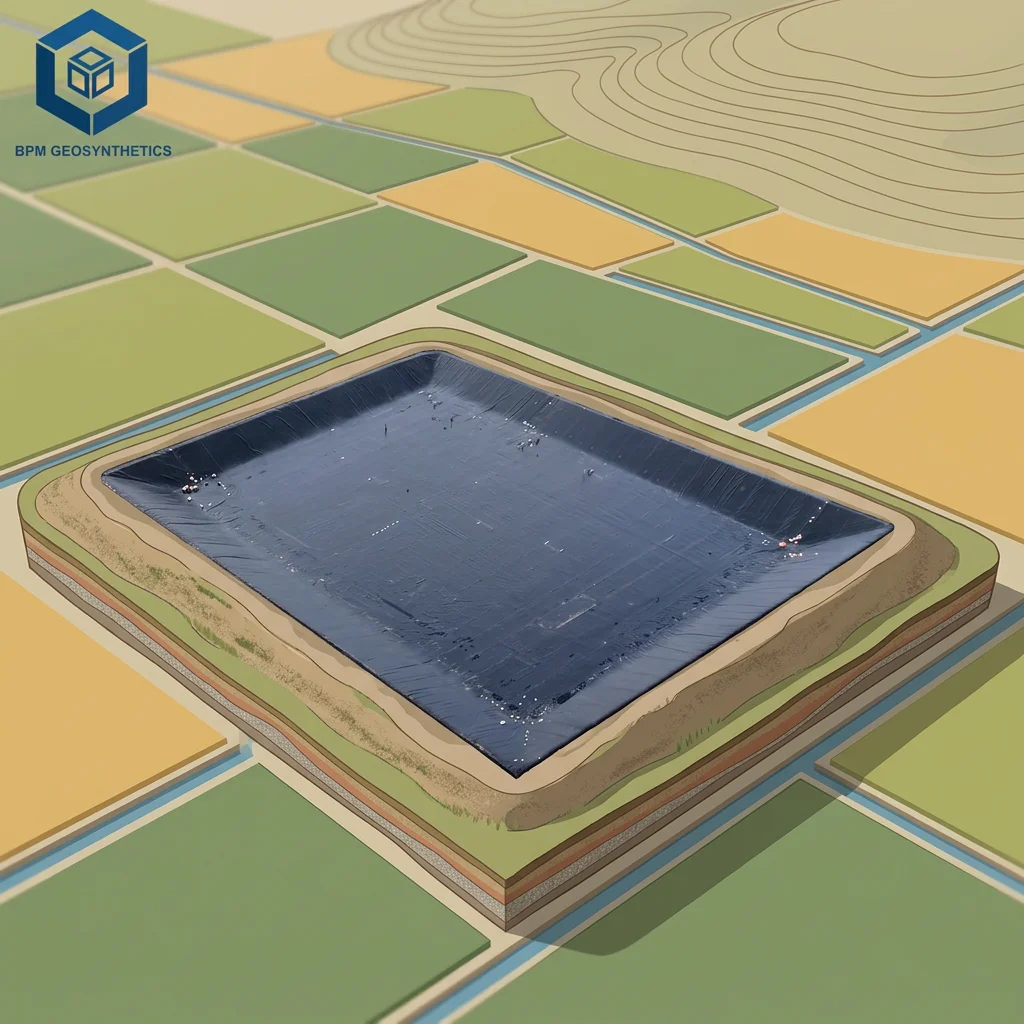
Landfills require reliable containment systems to protect soil, groundwater, and the surrounding environment from potential contamination. One of the most important components of a modern landfill is the geomembrane liner, which acts as a low-permeability barrier to control the movement of leachate and other liquids.
Choosing the right geomembrane liner is essential for long-term landfill performance. Factors such as chemical resistance, flexibility, tensile strength, puncture resistance, installation requirements, and project cost should all be considered before selecting a liner system.
In this review, we examine six commonly considered geomembrane liner materials and liner-system options for landfill applications. Each offers different advantages depending on the landfill design, operating conditions, and environmental protection requirements.
1. HDPE Geomembrane Liner
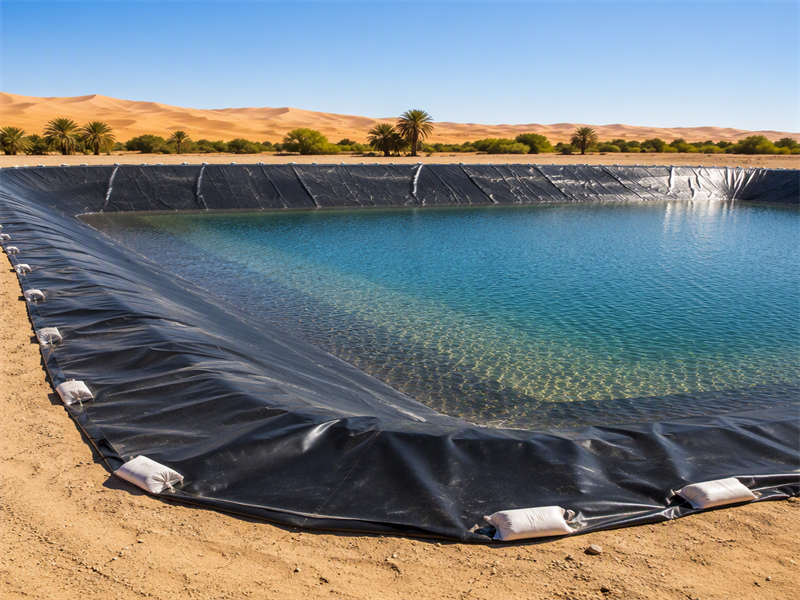
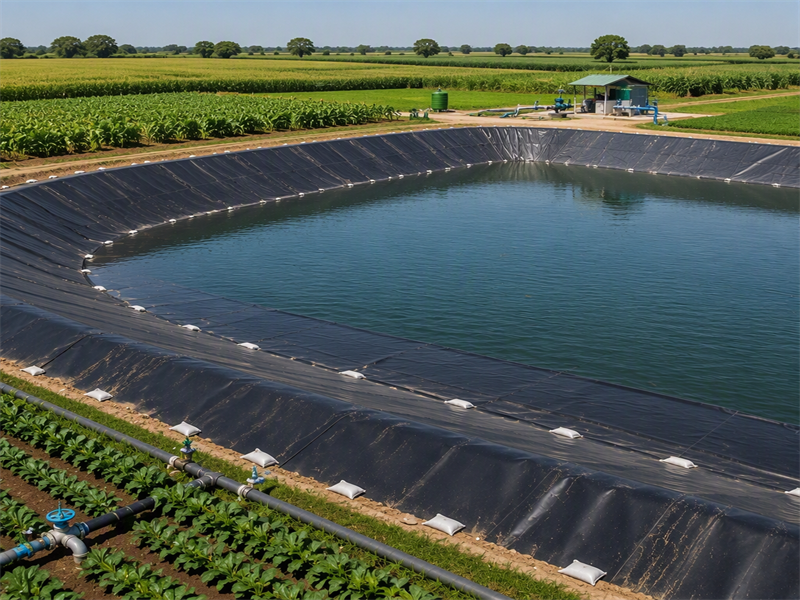
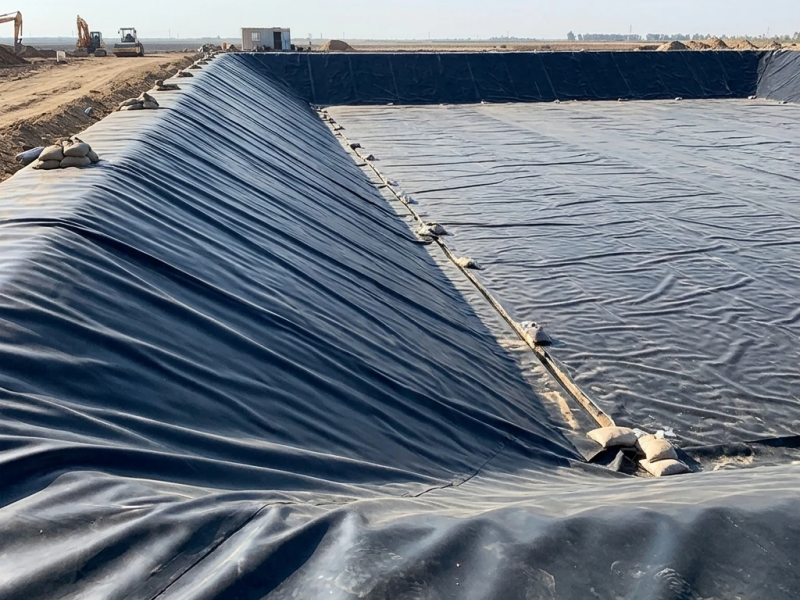
High-density polyethylene (HDPE) geomembrane is one of the most widely used materials for landfill containment systems. It is particularly suitable for landfill base liners, side slopes, and final cover applications where long-term containment performance is essential.
HDPE offers excellent chemical resistance, low permeability, and good resistance to environmental stress cracking when an appropriate grade is selected. These properties make it suitable for applications involving landfill leachate and other potentially aggressive substances.
Another advantage is that HDPE geomembranes can be joined using specialized thermal welding equipment, creating continuous seams when installation and quality control are properly managed.
Best for: Landfill base liners, leachate containment, and large-scale waste management projects.
Key consideration: HDPE is relatively stiff compared with more flexible materials, so careful detailing is necessary around corners, penetrations, and irregular surfaces.
2. LLDPE Geomembrane Liner
Linear low-density polyethylene (LLDPE) geomembrane is known for its flexibility and ability to accommodate certain types of deformation. It can be useful in landfill applications where settlement, irregular subgrades, or complex surface profiles require a more conformable liner.
Compared with conventional HDPE products, LLDPE geomembranes generally offer greater flexibility, which can simplify placement in some applications. They can also provide effective liquid containment when manufactured to appropriate specifications.
LLDPE may be considered for landfill side slopes, selected cover systems, and projects where flexibility is an important design requirement.
Best for: Applications requiring greater flexibility and conformity to the underlying surface.
Key consideration: The specific product’s chemical resistance, mechanical properties, and long-term stress performance should be evaluated against the expected landfill conditions.
3. PVC Geomembrane Liner
Polyvinyl chloride (PVC) geomembranes are flexible liners that can be useful in selected containment applications. Their flexibility can make them easier to handle and fit around complicated geometries than some stiffer materials.
However, PVC formulations vary considerably. Plasticizers and other additives can influence flexibility, durability, and long-term performance. Therefore, the material should be evaluated carefully before it is considered for a landfill project.
For primary landfill containment exposed to complex leachate chemistry, HDPE is often preferred because of its established chemical resistance. PVC should only be selected when its chemical compatibility and service-life requirements are adequately demonstrated.
Best for: Selected secondary containment or specialized applications where the product is specifically qualified.
Key consideration: Verify chemical compatibility, additive stability, and regulatory acceptance before use in landfill containment.
4. Flexible Polypropylene (fPP) Geomembrane
Flexible polypropylene geomembranes combine flexibility with useful chemical and mechanical properties. Depending on the formulation, they may provide an alternative to polyethylene products in applications requiring flexibility and specialized detailing.
Their ability to conform to certain surface profiles can be beneficial for landfill covers, secondary containment, and other engineered environmental protection systems.
However, not all fPP products are interchangeable. Their suitability for primary landfill containment depends on material specifications, chemical exposure, seam performance, and project design requirements.
Best for: Specialized containment systems and selected landfill cover applications.
Key consideration: Confirm the manufacturer’s technical data and project-specific performance requirements before specifying the material.
5. Reinforced Composite Geomembrane
Reinforced geomembranes incorporate a reinforcing layer within or between polymer layers. This construction can improve dimensional stability and handling characteristics for particular applications.
Reinforced products may be useful where controlled dimensional behavior or additional mechanical support is needed. However, reinforcement does not automatically provide better puncture resistance, chemical resistance, or durability than an unreinforced geomembrane.
For landfill projects, the entire composite structure must be evaluated, including the polymer layers, reinforcement material, seams, and compatibility with the waste containment environment.
Best for: Specialized engineered covers, secondary containment, and applications supported by project-specific testing.
Key consideration: Confirm that the reinforcement and joining system are suitable for the expected chemical exposure and long-term loading conditions.
6. Geomembrane and Geosynthetic Clay Liner (GCL) Composite System
A composite liner system combines a geomembrane with a geosynthetic clay liner (GCL). The geomembrane provides a low-permeability barrier, while the GCL uses a bentonite clay layer to limit water movement when properly hydrated and confined.
This combination is commonly considered in engineered landfill base-liner designs because the two components provide complementary containment functions. A properly designed composite system can reduce leakage compared with relying on a single barrier alone.
The performance of the system depends on the quality of the geomembrane, GCL properties, interface conditions, subgrade preparation, and construction quality assurance.
Best for: Engineered landfill base liners and projects requiring a composite containment barrier.
Key consideration: Site-specific groundwater conditions, GCL hydration, interface stability, and applicable regulations must be addressed during design.
Comparison of the Six Geomembrane Liner Options
The following table summarizes the general characteristics of the six options discussed above.
Liner Type | Main Advantage | Typical Consideration | Potential Application |
HDPE geomembrane | Excellent chemical resistance and low permeability | Relatively stiff; requires careful detailing | Landfill base and side-slope liners |
LLDPE geomembrane | High flexibility | Confirm long-term chemical and mechanical performance | Selected liners and landfill covers |
PVC geomembrane | Flexible and easy to handle | Formulation and chemical compatibility | Specialized containment |
Flexible polypropylene | Flexibility and adaptable performance | Product-specific qualification is essential | Selected covers and containment systems |
Reinforced composite geomembrane | Reinforcement can improve dimensional stability | Evaluate the complete composite structure | Specialized engineered applications |
Geomembrane + GCL | Complementary barrier functions | Requires careful interface and construction design | Composite landfill base-liner systems |
These options are not direct substitutes for one another. The best choice depends on the landfill design, regulatory requirements, leachate composition, subgrade conditions, and expected service life.
Practical Application: Selecting a Liner for a Municipal Landfill
Consider a municipal landfill project that requires a containment system to minimize leachate migration into the surrounding soil and groundwater.
The engineering team first evaluates the waste characteristics, anticipated leachate chemistry, groundwater conditions, slope geometry, and applicable environmental regulations. An HDPE geomembrane may be selected as the primary barrier because of its low permeability and chemical resistance.
Depending on local regulations and the engineered design, the system may also incorporate a geosynthetic clay liner, drainage geocomposites, protective geotextiles, and a leachate collection network.
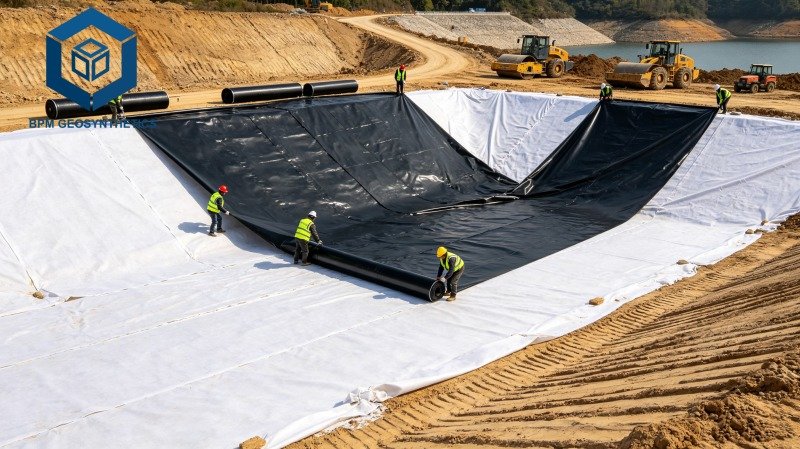
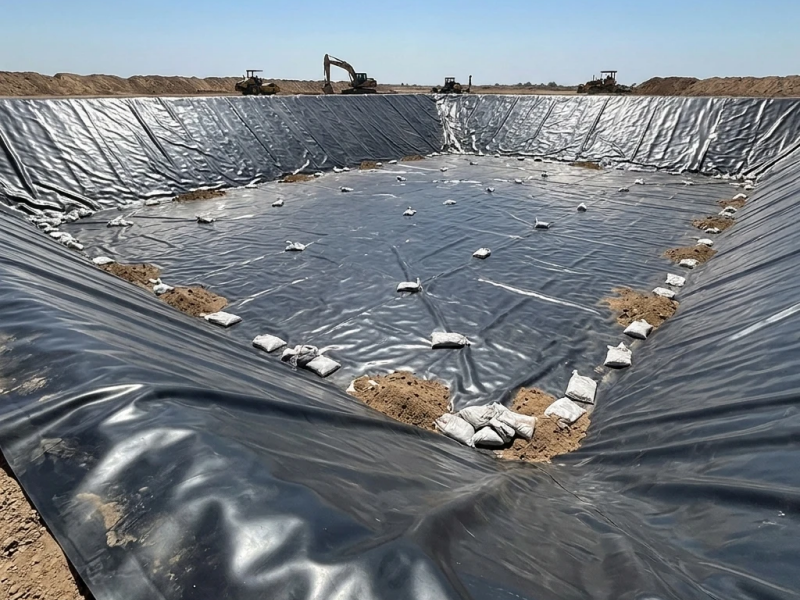
Before waste placement, installers prepare the subgrade, deploy the liner panels, complete compatible thermal welds, and perform the required seam testing and construction quality assurance inspections. Additional protective layers are installed where specified to reduce damage from overlying materials.
This approach illustrates why landfill liner performance depends on more than the geomembrane material alone. Proper system design, installation, drainage, and quality control are essential for reliable long-term containment.
How to Choose the Best Landfill Geomembrane
When comparing landfill geomembrane liners, consider the following factors:
1.Chemical resistance: Evaluate the liner against the expected leachate composition and operating conditions.
2.Mechanical properties: Review tensile strength, puncture resistance, stress cracking resistance, and deformation requirements.
3.Thickness and specifications: Select a product that meets the engineering design and applicable regulations rather than relying on thickness alone.
4.Seam integrity: Confirm that the material supports a suitable joining method and that seams can be inspected and tested.
5.Installation quality: Include subgrade preparation, protective geotextiles, drainage, and construction quality assurance in the project plan.
6.Long-term performance: Consider temperature, ultraviolet exposure, settlement, slope stability, and the expected service life.
Working with an experienced geomembrane manufacturer and qualified installation contractor can help ensure that the selected material meets the project’s technical and environmental requirements.
Conclusion
The best geomembrane liner for a landfill depends on the project’s containment objectives, site conditions, and regulatory requirements. HDPE remains a leading choice for many primary landfill liner applications because of its chemical resistance and low permeability. LLDPE offers greater flexibility, while PVC, flexible polypropylene, and reinforced products may suit more specialized applications when properly qualified.
For projects requiring enhanced containment, a geomembrane combined with a geosynthetic clay liner can provide complementary barrier functions as part of an engineered composite system.
Ultimately, the most reliable landfill liner solution combines appropriate material selection, sound engineering design, professional installation, and rigorous quality assurance. By evaluating these factors together, landfill operators and project developers can build containment systems that support environmental protection and long-term operational performance.