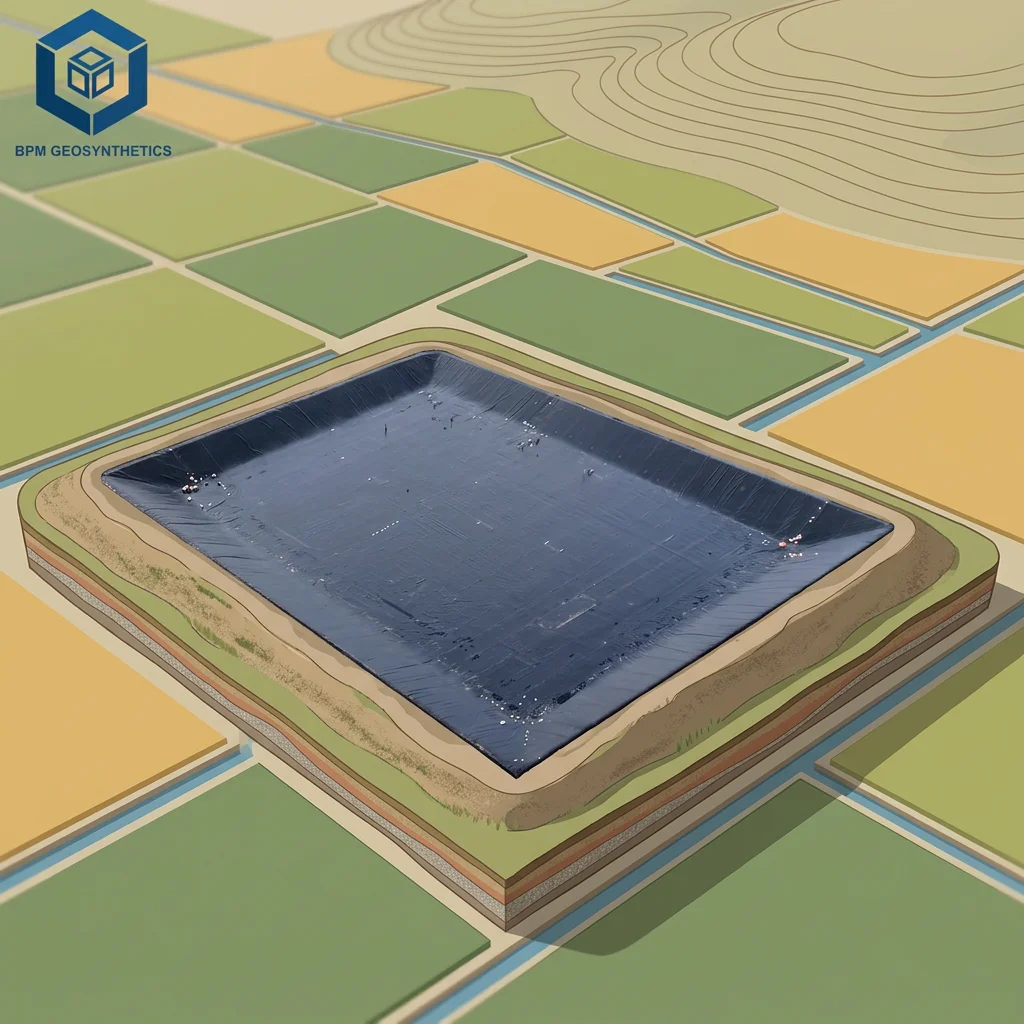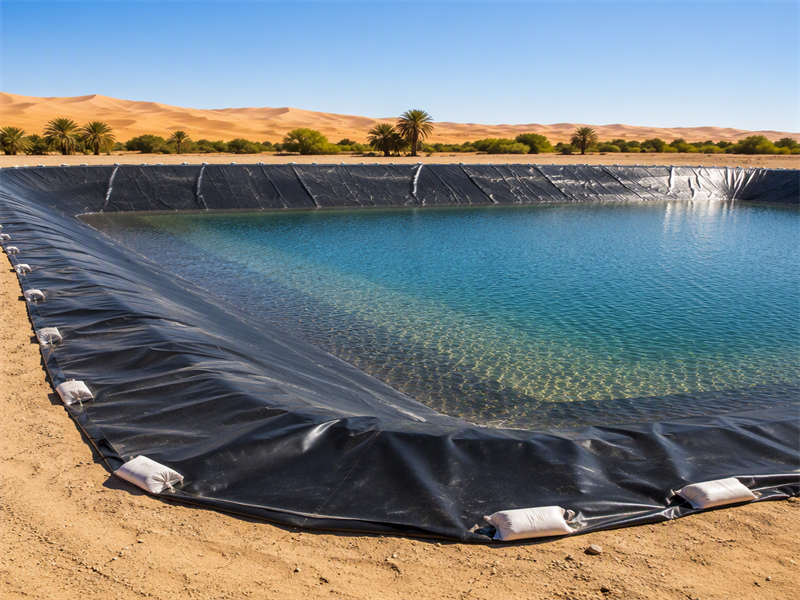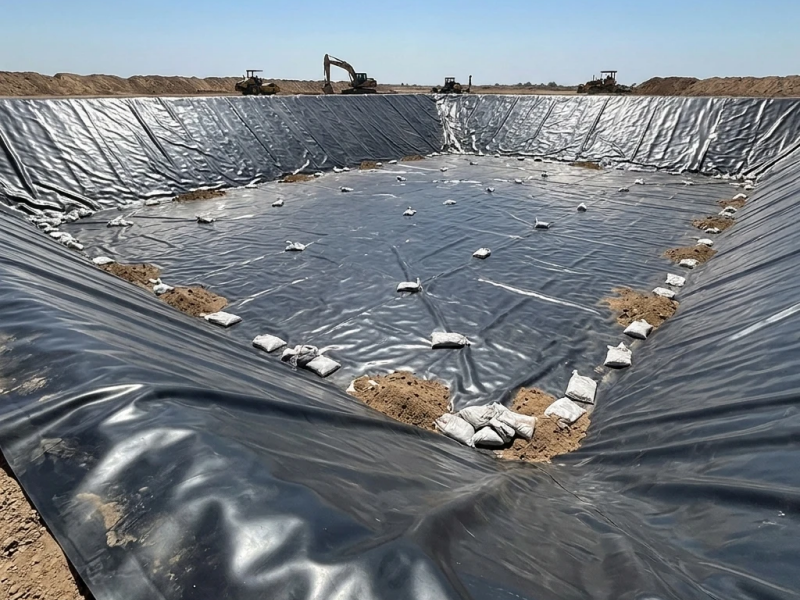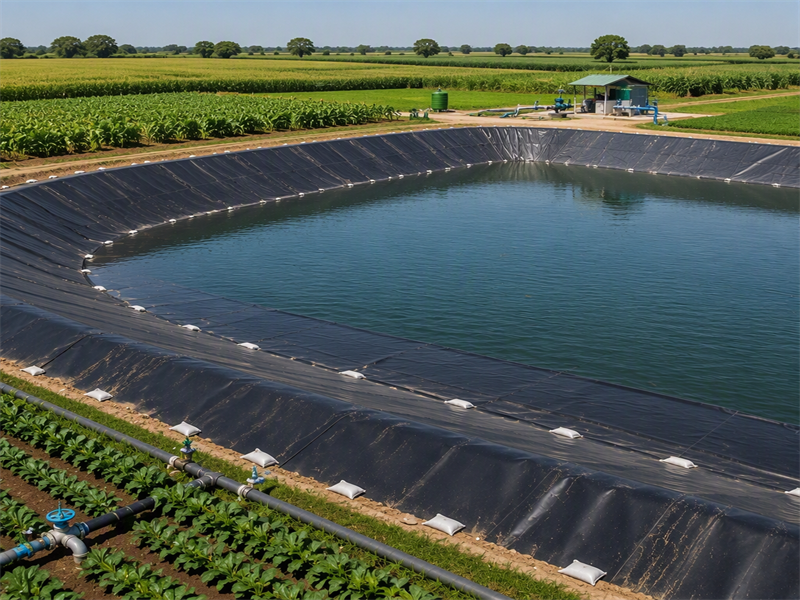
Geotextiles and geomembranes often appear together in civil, environmental, and agricultural projects. Many buyers use the two terms interchangeably. However, they serve completely different functions. One allows water to pass through. The other blocks water entirely. Understanding this distinction helps engineers, contractors, and project managers select the right material, control costs, and protect long-term performance. BPM Geosynthetics supplies both product families and regularly helps clients match each material to the correct application.
1. Defining Geotextile and Geomembrane
1.1 What Is a Geotextile?
A geotextile is a permeable fabric made from synthetic fibers, typically polypropylene or polyester. It allows liquids and gases to flow through while holding soil particles in place. Manufacturers produce geotextiles as woven or non-woven rolls. Woven fabrics offer high tensile strength. Non-woven fabrics provide excellent filtration and drainage. Engineers use geotextiles for separation, filtration, drainage, and reinforcement. A geotextile never acts as a water barrier.
1.2 What Is a Geomembrane?
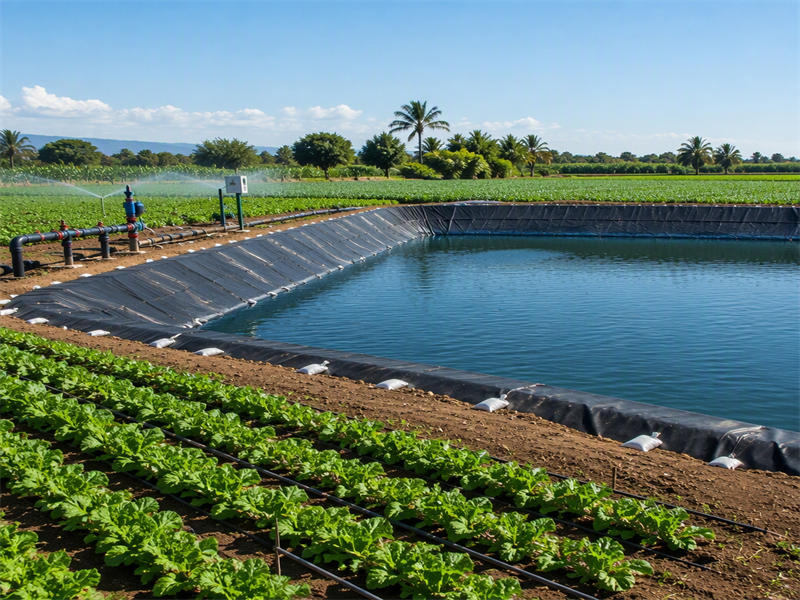
A geomembrane is an impermeable synthetic liner made from polymers such as HDPE, PVC, LDPE, or EPDM. It blocks liquids and gases almost completely. Permeability stays below 1×10⁻¹¹ cm/s. Manufacturers supply geomembranes in thick rolls, usually 0.3 mm to 3.0 mm. Installers weld or seam the panels together to form a continuous barrier. Engineers use geomembranes for containment, not drainage. A geomembrane never serves as a filter.
2. Core Differences at a Glance
2.1 Permeability
Permeability creates the most fundamental difference. Geotextiles allow water to pass. Geomembranes stop water from passing. This single property drives every other design decision.
Material Composition
Geotextiles use woven or non-woven fibers. Geomembranes use solid polymer sheets. The manufacturing processes differ completely. Fiber production emphasizes flexibility and filtration. Sheet extrusion emphasizes density and impermeability.
2.2 Primary Function
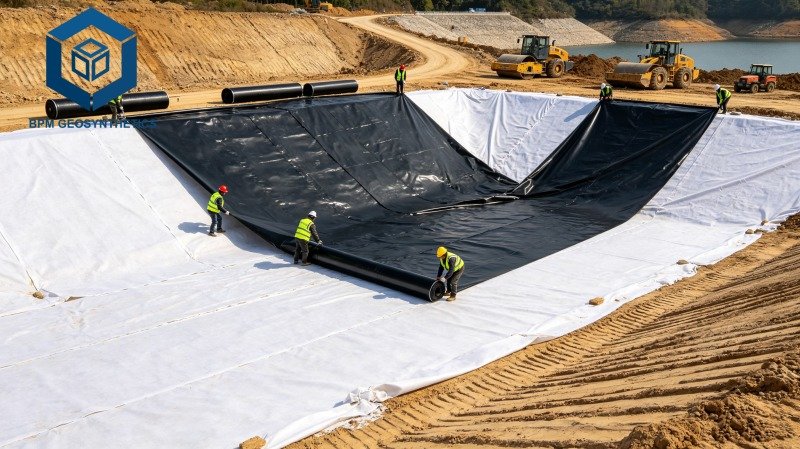
Geotextiles perform separation, filtration, drainage, and reinforcement. Geomembranes perform containment and sealing. Designers often combine both materials in one project. The geotextile protects the geomembrane from puncture damage, while the geomembrane blocks seepage.
2.3 Thickness and Strength
Geotextiles range from 0.1 mm to 5 mm in thickness and rely on tensile strength for performance. Geomembranes range from 0.3 mm to 3.0 mm and rely on puncture resistance and density. HDPE geomembranes reach 640 N puncture resistance under ASTM D4833.
2.4 Installation Methods
Workers unroll and overlap geotextiles, then secure them with pins or soil. Geomembranes require thermal welding or chemical seaming. Certified crews achieve 95% leak-free performance on geomembrane installations.
3. Where Each Material Performs Best
3.1 Geotextile Applications
Geotextiles excel in road construction, retaining walls, drainage systems, and erosion control. They separate soil layers and prevent mixing. They filter water while holding fine particles. They reinforce weak subgrades and extend pavement life. Farmers use geotextiles in drainage trenches and greenhouse floors.
3.2 Geomembrane Applications
Geomembranes excel in aquaculture ponds, landfills, irrigation reservoirs, wastewater treatment, and mining containment. They prevent seepage and protect groundwater. HDPE geomembranes reduce water loss by up to 95% in fish ponds. Landfill liners prevent leachate contamination and save up to $100,000 per acre in remediation costs.
3.3 Combined Use in One Project
Many projects need both materials. A landfill liner system typically places a geotextile above and below the geomembrane. The lower geotextile cushions the liner against subgrade punctures. The upper geotextile protects the liner during waste placement and drainage. This layered approach delivers both filtration and containment. BPM Geosynthetics recommends this combination for demanding containment projects.
4. How to Choose the Right Material
4.1 Start with the Project Goal
Ask one question first. Does the project need to move water or block water? A drainage problem calls for a geotextile. A containment problem calls for a geomembrane. Clear goals prevent costly specification errors.
4.2 Review Site Conditions
Soil type, slope, water table, and chemical exposure all influence selection. Porous soils benefit from geomembrane containment. Unstable subgrades benefit from geotextile reinforcement. Chemical exposure requires HDPE rather than PVC.
4.3 Check Standards and Certifications
Both materials should meet recognized standards. Geomembranes follow ASTM D6693 and ASTM D4833. Quality suppliers hold ISO 9001, SGS, and TUV certifications. Certified products cost 10–15% more but deliver 98% reliability. BPM Geosynthetics maintains full certification across its geomembrane and geotextile lines.
4.4 Calculate Total Cost
Material price alone misleads buyers. Installation, seam testing, and maintenance affect total cost. Geotextiles cost less per square foot but perform a different job. Geomembranes cost more but prevent seepage losses worth far more over a project’s lifespan.
5. Common Mistakes to Avoid
5.1 Using One Material for Both Jobs
Some buyers try to replace a geomembrane with a thick geotextile. This approach fails. Water passes through the fabric and defeats containment. Others try to use a geomembrane for drainage. This also fails because the liner blocks flow.
5.2 Ignoring Puncture Protection
Geomembranes need protection from sharp subgrade materials. A geotextile underlayment reduces puncture risk and extends liner lifespan by 30%. Skipping this layer causes leaks and expensive repairs.
5.3 Selecting on Price Alone
Cheap recycled liners cost 20% less but lose 30% of lifespan. Generic geotextiles may fail filtration tests. Buyers should compare certified products from established suppliers. BPM Geosynthetics provides verified specifications and third-party test reports.
Conclusion
Geotextiles and geomembranes differ in permeability, material, function, and installation. Geotextiles allow water to flow and handle separation, filtration, drainage, and reinforcement. Geomembranes block water and handle containment, sealing, and environmental protection. Most large projects use both materials together for best results. Engineers should define the project goal first, review site conditions, check certifications, and calculate total cost. Buyers who understand these differences avoid specification errors and protect project budgets. BPM Geosynthetics supplies certified geotextiles and geomembranes and helps clients select the right combination for every application.