1. Woven vs. Non Woven Geotextile: Key Differences and Selection Guide
Geotextiles play a critical role in modern civil engineering. They stabilize soil, improve drainage, and extend the lifespan of roads and infrastructure. However, choosing the wrong type can lead to project failure and costly repairs. The main distinction lies between woven and non woven geotextiles. Each type offers unique structures and performance characteristics. This article breaks down their differences to help you select the right material for your next project. BPM Geosynthetics provides both options to meet diverse engineering demands.
2. What Is a Woven Geotextile?
Woven geotextiles consist of two sets of yarns or threads interlaced at specific angles. Manufacturers produce these fabrics on specialized looms that create a uniform, regular pattern. This structure gives woven geotextiles distinct and measurable openings. The interlacing process results in a material with high tensile strength and low elongation. Consequently, woven geotextiles excel at carrying loads and distributing stress. They typically use high-strength polyester or polypropylene yarns to maximize performance. BPM Geosynthetics manufactures durable woven geotextiles designed for reinforcement applications.
2.1 Woven Geotextile
2.1.1 Monofilament Woven Geotextile
Description: Made from single, continuous synthetic filaments woven into a uniform grid. Provides consistent and predictable pore openings with high tensile strength at low elongation. Offers excellent soil retention and clogging resistance.
Applications: Filtration under riprap (25%), subsurface drainage (20%), erosion control (15%).
Key Specs: Tensile strength 30–120 kN/m (ASTM D4595), elongation 15–30%, apparent opening size (AOS) 0.075–0.425 mm, water flow rate 7–33 l/m²/s (ASTM D4491).
Price Range: $0.30–$1.00/m² for standard grades; $1.50–$3.00/m² for high-strength variants.
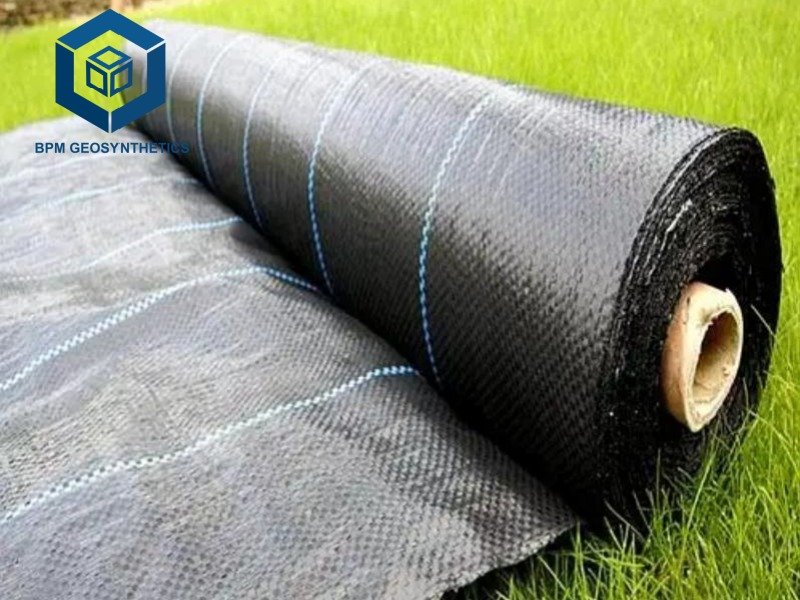
2.1.2 Slit-Film Woven Geotextile
Description: Manufactured from extruded polypropylene tapes woven on industrial looms. Delivers high tensile strength and low elongation for load-bearing applications. Less permeable than monofilament types but excellent for stabilization.
Applications: Road subgrade stabilization (35%), embankment reinforcement (25%), silt fences (10%).
Key Specs: Wide-width tensile strength 15–40 kN/m (ASTM D4595), elongation 15%, CBR puncture resistance 1.4–4.4 kN (ASTM D6241), UV resistance 70% at 500 hours (ASTM D4355).
Price Range: $0.40–$0.90/m² for light grades (90–140 GSM); $3.00–$7.50+/m² for heavy-duty reinforcement grades (600+ GSM).
3. What Is a Non Woven Geotextile?
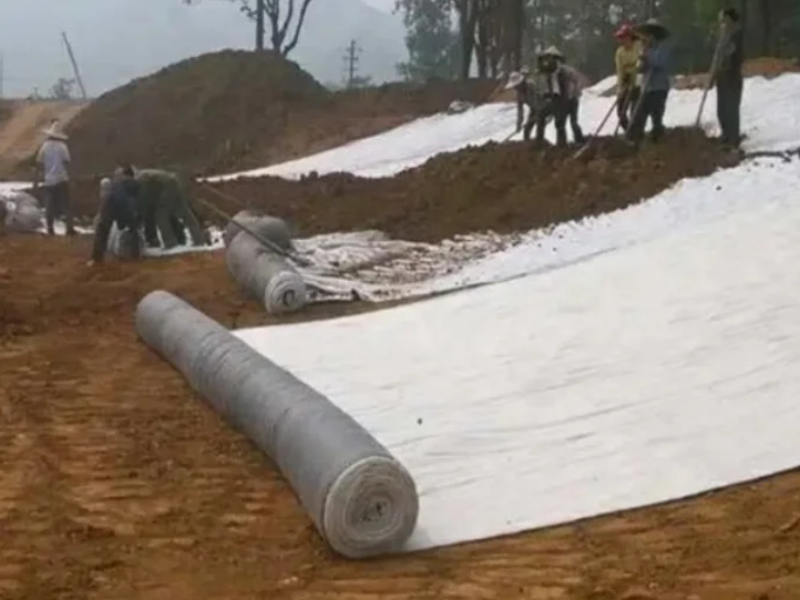
Non woven geotextiles follow a completely different manufacturing path. Workers randomly arrange short fibers or continuous filaments into a web. They then bond this web using needle punching, heat, or chemical resins. This random orientation creates a fibrous network with interconnected pores. As a result, non woven geotextiles offer excellent permeability and filtration properties. They allow water to flow freely while trapping soil particles. The random structure also gives the material high extensibility and flexibility. BPM Geosynthetics produces high-quality non woven geotextiles that conform well to uneven surfaces.
3.1 Nonwoven Geotextile
3.1.1 Needle-Punched Nonwoven Geotextile
Description: Fibers are mechanically entangled through needle punching to create a thick, bulky fabric. Offers high permeability and excellent drainage capacity. Demonstrates superior long-term flow performance with less than 15% clogging-related flow loss.
Applications: Drainage systems (30%), filtration layers (25%), green roof drainage (15%).
Key Specs: Thickness typically >2 mm, mass range 100–1200 g/m², permittivity 1.2–1.5 s⁻¹, flow rate 260 mL/min under load, grab tensile strength 400–1700 N (ASTM D4632).
Price Range: $0.20–$0.50/m² for lightweight (100–200 GSM); $0.40–$0.90/m² for medium (200–400 GSM); $0.80–$2.00/m² for heavy (400–800 GSM).
3.1.2 Heat-Bonded Nonwoven Geotextile
Description: Fibers are bonded using heat and pressure to produce a lightweight, thin, and smooth fabric. Provides moderate permeability and good dimensional stability. Less bulky than needle-punched types but offers reliable separation performance.
Applications: Landscaping separation (30%), erosion control blankets (20%), clayey soil reinforcement (10%).
Key Specs: Thickness 0.5–1 mm, moderate tensile strength, moderate permeability, suitable for filtration and separation in moderate-load conditions.
Price Range: $0.25–$0.60/m² for standard grades; continuous-filament versions cost 20–50% more than staple-fiber equivalents.
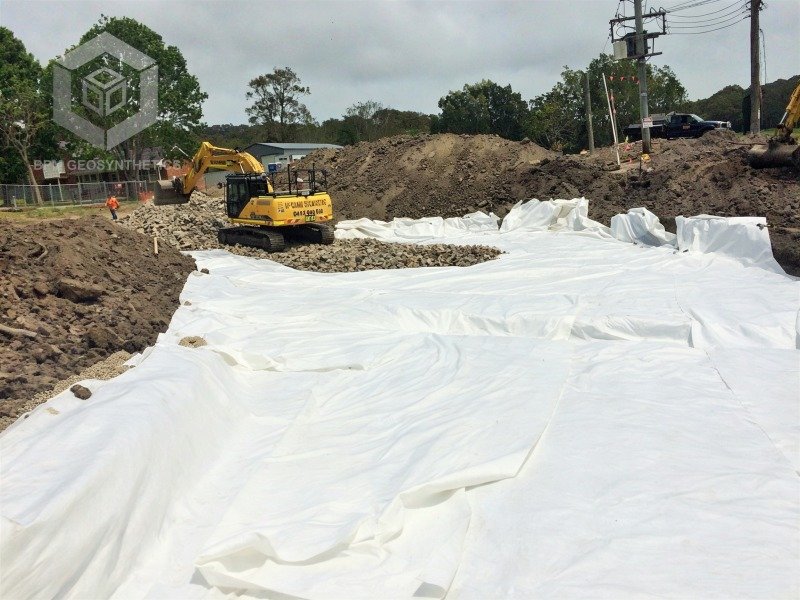
3.1.3 Spunbonded Nonwoven Geotextile
Description: Continuous filaments are extruded, laid into a web, and thermally bonded. Combines consistent quality with good strength-to-weight ratio. Resistant to biological and chemical degradation in buried conditions.
Applications: Landfill liner protection (20%), pond liners (15%), road separation (20%).
Key Specs: Tensile strength 8–30 kN/m (EN ISO 10319), elongation 50–90%, UV stabilized for extended exposure, resistant to soil chemicals and microorganisms.
Price Range: $0.30–$0.80/m² for standard grades; higher for specialized UV-stabilized or high-flow variants.
4. Key Differences: Structure and Strength
Key Differences Between Woven and Nonwoven Geotextiles
Woven and nonwoven geotextiles differ in structure, strength, hydraulic performance, applications, and durability. Below, we analyze these key differences to help engineers select the right material for each project.
Structure and Strength
Woven Geotextiles: Possess a stable, grid-like architecture formed by interlaced yarns. This structure provides superior tensile strength (30–120 kN/m) and minimal deformation under stress. They resist stretching and hold soil layers together effectively. Ideal for reinforcement applications where load-bearing capacity is critical.
Nonwoven Geotextiles: Feature a random, felt-like structure of entangled fibers. They exhibit lower tensile strength (8–30 kN/m) but much higher elongation at break (50–90%). This flexibility allows them to absorb energy and adapt to soil movement without tearing.
Impact: Woven fabrics are 2–4 times stronger in tension than nonwoven fabrics, but nonwoven fabrics offer 3–5 times greater elongation for conformability.
Hydraulic Performance: Filtration and Drainage
Nonwoven Geotextiles: Feature a complex, three-dimensional pore network with variable sizes. This structure provides high permeability (flow rates of 260 mL/min under load) and excellent soil retention. Water passes through quickly while fine particles stay trapped. They function as ideal filters and drains, preventing clogging and maintaining consistent flow rates over time.
Woven Geotextiles: Have smaller, more uniform pore sizes (AOS 0.075–0.425 mm). Their flow rates are generally lower (7–33 l/m²/s) and more predictable. While they can filter certain soils, they perform better in separation and reinforcement roles rather than high-flow drainage applications.
Impact: Nonwoven geotextiles deliver 5–10 times higher flow rates than woven types, making them the preferred choice for drainage and filtration systems.
Primary Applications: When to Use Each Type
Woven Geotextiles: Excel in reinforcement and stabilization tasks. They reinforce road subgrades, embankments, and retaining walls. Their high tensile modulus restricts lateral soil movement and reduces settlement. Construction crews also use woven fabrics for separation under heavy loads. Best suited for projects requiring high load-bearing capacity.
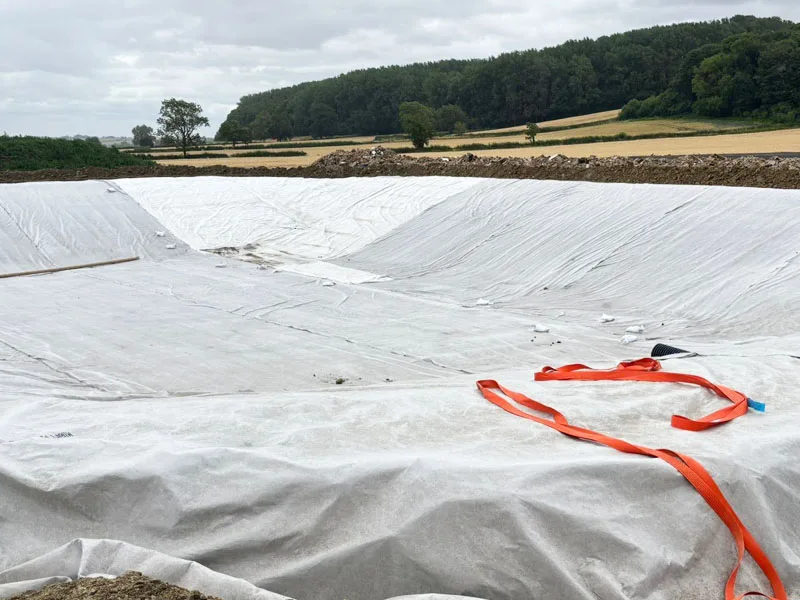
Nonwoven Geotextiles: Serve a broader range of hydraulic functions. They act as filtration layers in drainage trenches and French drains. They separate dissimilar soil layers while allowing water to pass through. Nonwoven fabrics also protect geomembranes in landfill liners and pond applications. BPM Geosynthetics supplies tailored solutions for each of these application scenarios.
Impact: Woven geotextiles dominate reinforcement projects (70% of road stabilization), while nonwoven geotextiles lead in drainage and filtration (60% of landfill liner protection).
Durability and Installation Considerations
Woven Geotextiles: Resist puncture and tear forces well due to their tight structure. However, they can unravel if cut improperly. Contractors must handle them with care to avoid damaging the weave. Proper tensioning during installation remains essential to maintain structural integrity.
Nonwoven Geotextiles: Resist puncture through their thick, fibrous mat structure (CBR puncture resistance 1.4–4.4 kN). They conform easily around irregular objects and do not unravel when cut. This flexibility simplifies installation on uneven subgrades. Nonwoven fabrics also offer excellent resistance to biological and chemical degradation in buried conditions.
Impact: Nonwoven geotextiles reduce installation time by 15–20% on uneven terrain, while woven geotextiles require 10–15% more careful handling to prevent weave damage.
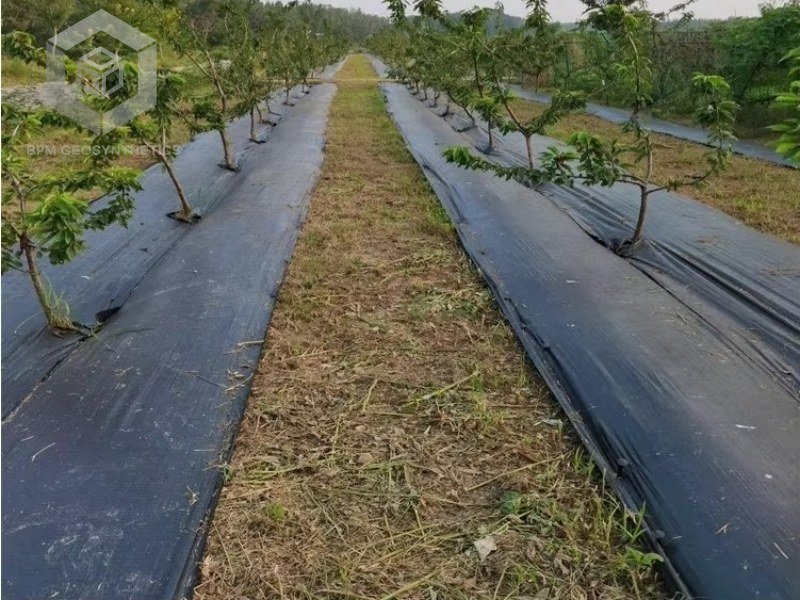
5. How BPM Geosynthetics Supports Your Project
BPM Geosynthetics manufactures a comprehensive range of geotextiles to meet global engineering standards. The company produces woven geotextiles from high-tenacity polyester and polypropylene yarns. These materials deliver consistent tensile strength for reinforcement projects. BPM also offers non woven geotextiles using needle-punched and spunbonded technologies. Their products feature excellent filtration and drainage performance. With customizable weight options from 100 GSM to 1000 GSM and various roll widths, BPM Geosynthetics adapts to specific project specifications. The company serves clients in road construction, railway infrastructure, landfill containment, and coastal protection worldwide. Choosing the right geotextile begins with understanding your project’s primary function.