Geomembrane service life is one of the most important considerations when selecting a liner for environmental protection, water storage, mining, agriculture, or industrial containment. A high-quality geomembrane can provide reliable containment for decades, helping prevent leakage, protect groundwater, and reduce long-term maintenance costs.
However, geomembrane service life is not a fixed number. It depends on the material type, thickness, manufacturing quality, environmental exposure, installation methods, and maintenance practices.
In this article, we explain what geomembrane service life means, how long different geomembranes may last, which factors affect their durability, and how to choose a reliable geomembrane solution from BPM Geosynthetics.
1. What Is Geomembrane Service Life
Geomembrane service life refers to the period during which a geomembrane continues to perform its intended function effectively. For most containment projects, this means maintaining sufficient impermeability, mechanical integrity, and chemical resistance under specified operating conditions.
A geomembrane may remain physically intact but still require repair if its seams, connections, or surrounding liner system develop defects. Therefore, service life should be evaluated based on the performance of the entire containment system, not just the polymer sheet itself.
The expected service life of a geomembrane can range from several decades to much longer under favorable conditions. Nevertheless, no single lifespan applies to every project. Actual performance depends on site-specific conditions and the quality of design and construction.
2. How Long Does a Geomembrane Last
Different geomembrane materials have different properties and durability characteristics. The following table provides a general comparison of common liner materials.
Geomembrane Type | General Durability Characteristics | Typical Applications |
HDPE Geomembrane | Excellent chemical resistance and good UV resistance when properly formulated | Landfills, mining, reservoirs, wastewater ponds |
LLDPE Geomembrane | High flexibility and good deformation accommodation | Agricultural ponds, irregular surfaces, containment lagoons |
PVC Geomembrane | Flexible, with performance dependent on formulation and plasticizer stability | Selected water containment and civil engineering projects |
EPDM Membrane | High elasticity and weather resistance | Selected flexible pond liners and cover systems |
Composite Geomembrane | Combines a barrier membrane with additional geosynthetic functions | Engineered containment and protected liner systems |
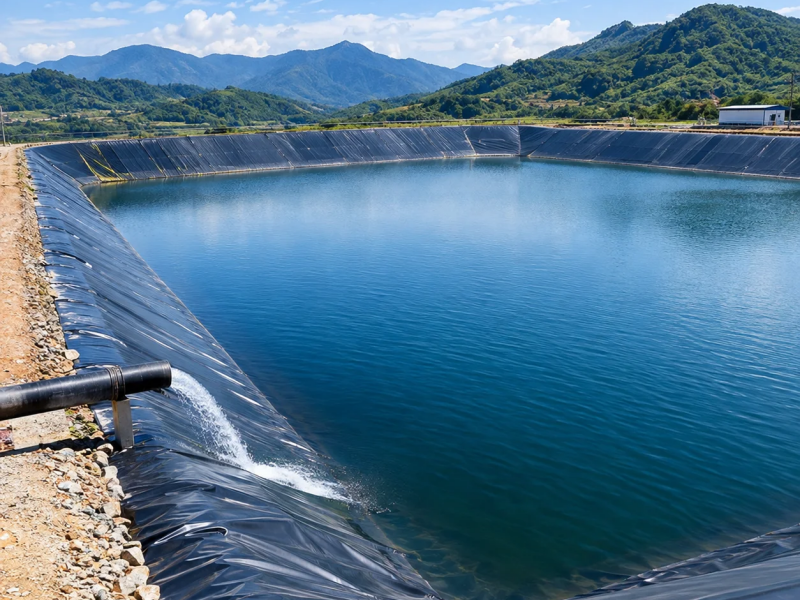
As a general planning consideration, well-designed and protected HDPE geomembranes may provide service lives of 50 years or more, while exposed liners may experience faster aging depending on their formulation and climate. These figures are indicative rather than guaranteed design lives.
For an accurate estimate, engineers should evaluate the manufacturer’s technical data, relevant durability tests, anticipated operating conditions, and project-specific design requirements.
3. What Factors Affect Geomembrane Service Life
Several factors determine how long a geomembrane can maintain reliable performance.
3.1 Raw Material Quality
The quality of the polymer resin and the formulation of stabilizers and antioxidants play important roles in long-term durability.
High-quality HDPE geomembranes are widely used because of their chemical resistance, mechanical strength, and resistance to environmental stress. Appropriate carbon black and antioxidant systems can help protect suitable HDPE products against UV exposure and oxidative degradation.
When purchasing a geomembrane, review the manufacturer’s quality control procedures, material specifications, and applicable test reports rather than relying on price alone.
3.2 Geomembrane Thickness
Thickness affects puncture resistance, mechanical robustness, and the liner’s ability to withstand installation and service stresses.
For example, a thinner geomembrane may be appropriate for certain low-stress pond applications, while landfill, mining, and industrial containment projects may require thicker materials because of greater mechanical or chemical demands.
However, thicker material is not automatically the best solution. The appropriate thickness should be determined by engineering calculations, subgrade conditions, loading, and applicable project specifications.
3.3 UV Exposure and Temperature
Ultraviolet radiation and elevated temperatures can accelerate polymer aging. Geomembranes installed in exposed reservoirs, open ponds, or uncovered containment facilities may experience more environmental stress than protected liners.
Temperature is also important because higher temperatures can accelerate antioxidant depletion and oxidation. Selecting a product suitable for the local climate and operating temperature helps improve long-term performance.
3.4 Chemical Exposure
Landfills, wastewater treatment facilities, mining operations, and biogas projects can expose geomembranes to complex chemical environments.
The compatibility of the liner with acids, alkalis, salts, hydrocarbons, or other process chemicals must be assessed before installation. A material that performs well in a water reservoir may not be suitable for a chemically aggressive industrial application.
3.5 Installation Quality
Even a high-quality geomembrane can fail prematurely if installation is poorly controlled.
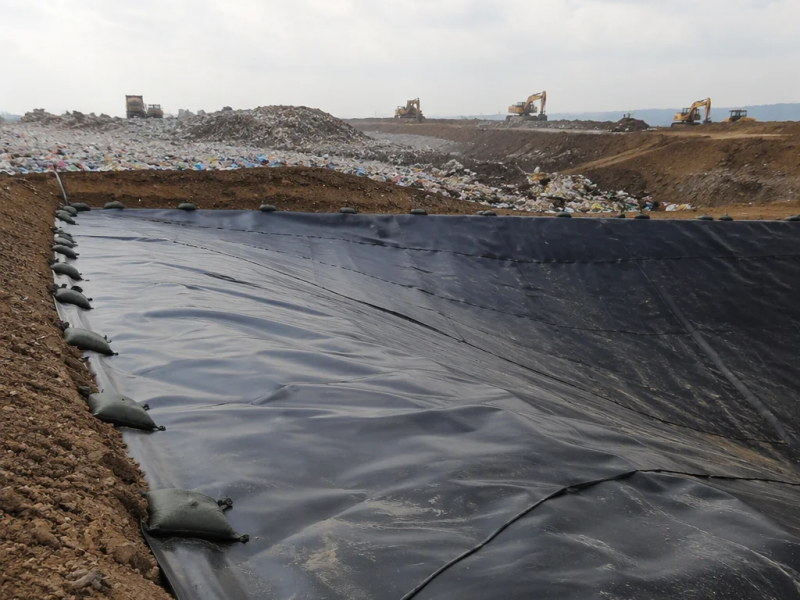
Common risks include inadequate subgrade preparation, punctures, excessive tension, poor welding, and damage caused by equipment or overlying materials.
Professional installation, qualified welding technicians, and appropriate seam testing are essential for reducing these risks.
4. How to Extend Geomembrane Service Life
Project owners and contractors can take several practical steps to improve geomembrane durability.
Choose the correct material. Match the polymer type, thickness, and formulation to the intended application and environmental conditions.
Prepare the subgrade properly. Remove sharp objects, compact the foundation as specified, and use a suitable protective geotextile where required by the design.
Control seam quality. Use approved welding procedures and inspect seams through appropriate nondestructive and destructive testing.
Provide suitable protection. Depending on the project, a designed cover layer, protective geotextile, or other protection system may reduce mechanical damage and environmental exposure.
Conduct regular inspections. Check exposed surfaces, anchor trenches, penetrations, drainage systems, and accessible seams for signs of damage or deterioration.
Repair defects promptly. Timely inspection and qualified repairs can prevent minor defects from developing into more serious leakage problems.
These measures should be incorporated into the project quality assurance and maintenance plans from the beginning.
5. Why Choose BPM Geosynthetics for Long-Term Geomembrane Performance
Selecting an experienced geomembrane supplier is an important step toward achieving reliable containment and managing lifecycle costs.
BPM Geosynthetics, also known as The Best Project Material Co., Ltd., offers geosynthetic solutions for a range of civil engineering, environmental protection, water management, and industrial applications.
Its geomembrane product portfolio includes HDPE geomembranes, textured geomembranes, and other liner solutions designed for different project requirements.
Working with BPM Geosynthetics gives buyers the opportunity to evaluate product options according to required thickness, application conditions, and project specifications. Customization and technical coordination can also help contractors and project owners identify suitable products for their intended use.
When evaluating BPM geomembranes, buyers should request the relevant technical data sheets, test reports, applicable standards, and product recommendations for their specific site conditions.
To explore available solutions, visit the BPM Geosynthetics geomembrane product range.
For projects where long-term performance is critical, the goal should be to select a complete liner system that combines suitable material properties, reliable installation, and effective quality control
6. Conclusion
Geomembrane service life depends on much more than the material’s name or thickness. Resin quality, UV exposure, temperature, chemical compatibility, mechanical stress, seam integrity, and installation quality all influence how long a liner can perform effectively.
HDPE geomembranes are a popular choice for demanding containment applications because of their chemical resistance and durability. Other materials, including LLDPE, PVC, and EPDM, may be appropriate when their specific characteristics match the project requirements.
By choosing the right material, following sound installation practices, and maintaining the liner system, project owners can improve reliability and reduce the risk of premature failure.
Looking for a durable geomembrane solution for your next project? BPM Geosynthetics offers a range of geomembrane products to help meet different containment requirements. Contact the BPM team to discuss your project specifications and identify a suitable liner solution.