What’s the filament geotextile made of? What’s the staple fiber geotextile made of? What’s the difference between these two types of geotextiles? What are the advantages of each? This guide will cover what that means in terms of characteristics, and common examples and applications of the two geotextiles. We’ll also cover:
1. What is filament geotextile?
1.1 Definition and basic structure
Filament continuous geotextile is a non-woven fabric made from endless synthetic filaments. These filaments typically use polyester or polypropylene as raw materials. The term “continuous” means the fibers run uninterrupted throughout the entire fabric. This structure delivers superior strength and long-term durability. Engineers often choose this type for demanding infrastructure projects. BPM Geosynthetics supplies high-quality filament geotextiles for global markets.
2. What is staple fiber geotextile?
2.1 Definition and basic structure
Staple fiber geotextiles consist of discrete fibers cut to specific lengths. Manufacturers typically cut these fibers from a few millimeters to several centimeters. Polyester and polypropylene remain the most common raw materials for these fibers. This type represents the most common product in geotextile factories worldwide. Staple fiber geotextiles offer flexibility for various general-purpose applications.
3. Differences in raw materials between filament and staple fiber geotextile
3.1 Fiber length and its effects
Staple fibers range from a few millimeters to several centimeters in length. Manufacturers can adjust this length for specific project requirements. Fiber length directly determines the fabric’s structural characteristics. Meanwhile, filament fibers feature much finer diameters, typically between tens and hundreds of micrometers. Finer diameters improve filtration performance and soil retention capacity significantly. Additionally, filament geotextiles have higher fiber density per unit area. Higher density provides greater strength and stability under heavy loads. Therefore, filament types suit load-bearing applications more effectively.
4. Differences between filament and staple fiber geotextile in physical characteristics
4.1 Fiber interlocking comparison
Filament geotextiles exhibit excellent fiber interlocking due to their continuous nature. This interlocking directly contributes to the fabric’s overall strength and stability. Conversely, staple fibers are shorter and randomly oriented. They possess less inherent interlocking ability naturally. However, manufacturers can achieve interlocking through mechanical entanglement during production. Needlepunching effectively binds staple fibers together into a cohesive fabric.
4.2 Strength and stiffness differences
Filament geotextiles generally show higher strength and stiffness overall. The continuous, parallel fiber arrangement enables them to withstand higher loads. They provide reliable structural support for demanding engineering projects. On the other hand, staple fiber geotextiles have lower strength due to random fiber orientation. Nevertheless, they still deliver sufficient strength for many standard geotechnical applications. BPM Geosynthetics offers both types to meet varying project needs.
4.3 Filtration and permeability traits
Filament geotextiles typically feature smaller pore sizes throughout their structure. This fine pore structure provides better filtration efficiency for fine particles. They effectively retain soil particles while allowing water passage. In contrast, staple fiber geotextiles have larger pores from random fiber arrangement. Consequently, they offer relatively higher permeability for faster water flow. This makes them suitable for drainage-intensive applications.
4.4 Construction and installation behavior
Filament geotextiles handle more easily during construction and installation processes. Their continuous fiber characteristics allow smooth laying and fixing on ground surfaces. Workers can deploy them quickly with standard equipment. However, staple fiber geotextiles may fracture or separate more easily. Their short fibers and random arrangement create vulnerability during handling. Therefore, careful installation practices become essential for staple fiber products.
5. Similarities between filament and staple fiber geotextile
5.1 Shared engineering functions
Both geotextile types serve civil engineering applications effectively. They enhance the stability and durability of engineering structures significantly. Additionally, they provide multiple functions including separation, filtration, reinforcement, and erosion prevention. Their primary goal is improving project performance and longevity. Moreover, both apply to road construction, slope stability, and drainage systems. Landfills and coastal protection projects also commonly use both types.
5.2 Installation methods
Installation involves unrolling and placing the fabric on prepared surfaces. Workers mechanically fix them using nails, pins, or other methods. The installation process remains relatively straightforward for both types. Standard construction equipment can complete the job efficiently. BPM Geosynthetics provides detailed installation guidance with every shipment.
5.3 Compatibility with other materials
Both geotextiles combine well with other geosynthetic materials effectively. They work alongside geomembranes, geogrids, or geonets for enhanced performance. These combinations provide additional functionality in specific applications. Furthermore, they complement each other to improve overall system performance. Designers often specify hybrid systems for complex engineering challenges.
5.4 Manufacturer’s perspective
According to non-woven geotextile manufacturers, both types have unique characteristics. Each type serves important roles in modern construction projects. The choice depends on project requirements, site conditions, and engineering specifications. BPM Geosynthetics helps customers select the optimal geotextile for their needs.
6. Differences between filament and staple fiber geotextile in recyclability
6.1 Filament geotextile recycling challenges
Filament geotextiles use continuous, unbroken fibers throughout their structure. These fibers are difficult to separate and recycle individually. As a result, their recyclability remains quite limited in practice. Most filament geotextiles end up in landfills after their service life. Some facilities incinerate them for energy recovery instead.
6.2 Staple fiber geotextile recycling advantages
Staple fiber geotextiles contain shorter, randomly arranged fibers loosely held together. This construction allows easier fiber separation during recycling processes. Mechanical or chemical processing can effectively separate the fibers. Manufacturers can then reuse these fibers in new geotextile products. Consequently, staple fiber types offer more sustainable end-of-life options. This recycling potential reduces the demand for virgin raw materials. BPM Geosynthetics actively promotes recycling programs for staple fiber products. This approach helps manufacturers adopt more sustainable waste management practices.
7.Differences between filament and staple fiber geotextile in production methods
7.1 Filament production process
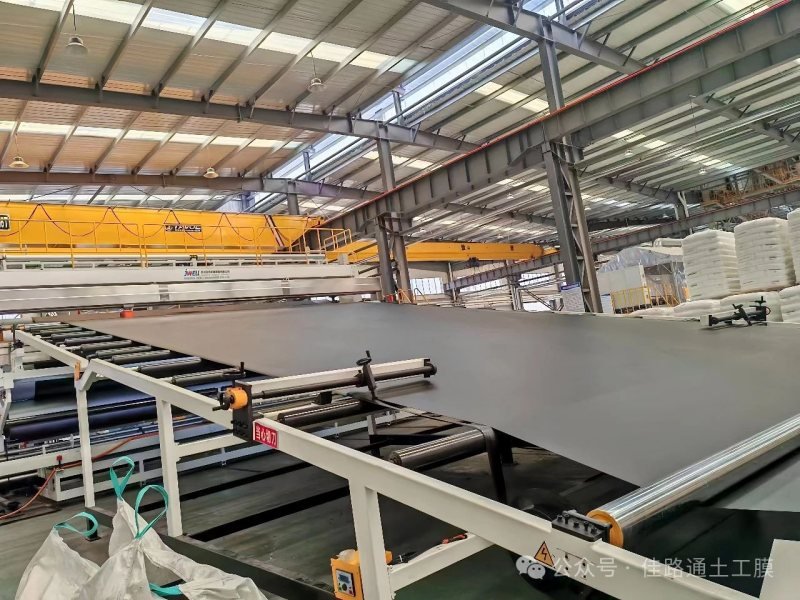
Filament geotextile production begins with continuous fiber extrusion. Spinning equipment directly extrudes molten synthetic polymers through spinnerets. These polymers include polyester or polypropylene materials. The process forms continuous filaments without any cutting steps. Subsequently, these filaments lay down into a uniform web structure. Needlepunching or thermal bonding then consolidates the web into fabric.
7.2 Staple fiber production process
Staple fiber production involves spinning or cutting continuous fibers into shorter lengths. Manufacturers then open, arrange, and form these fibers into a web. The web resembles a felt-like structure after forming. Mechanical needling or thermal bonding fixes the fibers together. This production method offers more flexibility in fiber length adjustment. Consequently, manufacturers can customize products for specific applications.
8. What are the similarities and differences between filament geotextiles and staple fiber geotextiles in terms of their function?
8.1 Shared functions
Both types effectively separate different soil layers or materials. They prevent mixing and infiltration between dissimilar particles. This separation maintains soil stability and structural integrity effectively. Additionally, both geotextiles serve filtration applications by retaining solid particles. They allow water passage while blocking soil movement. Furthermore, both prevent soil erosion by stabilizing the ground surface. They protect against water flow and wind erosion damage effectively.
8.2 Different functions: strength and stability
Filament geotextiles offer high tensile strength from continuous fiber construction. They provide superior stability for demanding engineering applications. Meanwhile, staple fiber geotextiles have tighter fiber entanglement patterns. They deliver adequate strength but generally fall short of filament performance. However, they still meet requirements for many standard projects.
8.3 Different functions: filtration performance
Filament geotextiles may allow smaller particles through fiber gaps. Their continuous structure creates limitations in fine particle filtration. Staple fiber geotextiles feature tighter fiber entanglement throughout. This tighter structure filters smaller particles more effectively. Therefore, choose staple types when fine filtration matters most.
8.4 Different functions: construction adaptability
Staple fiber geotextiles offer adjustable fiber lengths for customization. Manufacturers tailor them to specific construction needs and site conditions. Filament geotextiles have uniform fiber lengths with limited adjustability. Consequently, staple types provide greater flexibility in design adaptation. BPM Geosynthetics offers customized solutions for both geotextile types.
9. Applications of filament and staple fiber geotextile
9.1 Filament geotextile applications
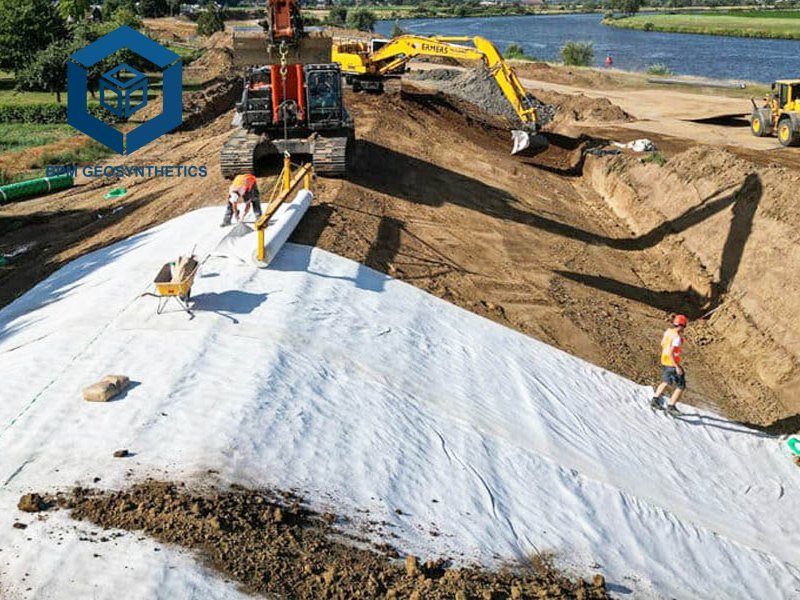
River and coastal protection projects use filament geotextiles extensively. They protect riverbanks, beaches, and restoration sites from water erosion. Additionally, they increase soil stability and impact resistance effectively. Artificial wetlands benefit from filament geotextiles as filter media. They help maintain wetland water quality and support ecosystem restoration. Mine reclamation projects utilize filament geotextiles for soil structure restoration. They reduce erosion, improve vegetation growth, and minimize pollution. Soil and water conservation efforts also rely on filament products. They reduce water flow velocity and increase water infiltration rates.
9.2 Staple fiber geotextile applications
Landfill covering systems widely use staple fiber geotextiles. They control leachate flow and prevent pollutant diffusion effectively. Their isolation and filtration functions protect groundwater quality. Pipeline protection represents another important application area. Staple geotextiles prevent pipe corrosion and external damage. They reduce soil movement and buffer environmental impacts. Green wall and green roof systems incorporate staple fiber geotextiles regularly. They support plant growth and maintain essential soil moisture. Roadbed reinforcement projects also benefit from staple fiber products. They increase roadbed stability and bearing capacity significantly. Furthermore, they reduce settlement and lateral displacement issues.
9.3 General selection guidance
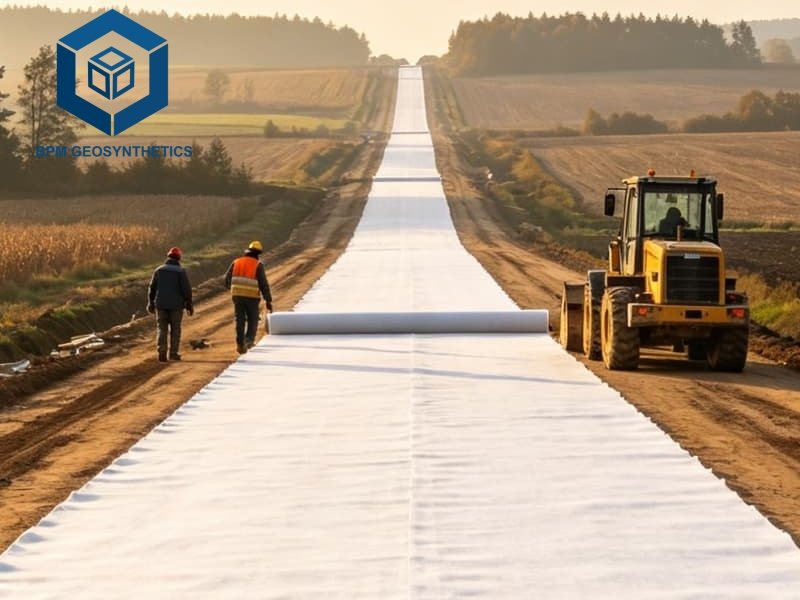
Filament geotextiles suit large-scale projects requiring high strength and durability. They perform well in applications demanding impermeability and long-term performance. Staple fiber geotextiles fit smaller projects focused on filtration and drainage. They serve soil conservation and vegetation restoration needs effectively. Always consider specific engineering requirements, soil conditions, and budget constraints. Consult BPM Geosynthetics for professional recommendations on geotextile selection. Their experts provide tailored solutions for every project type.