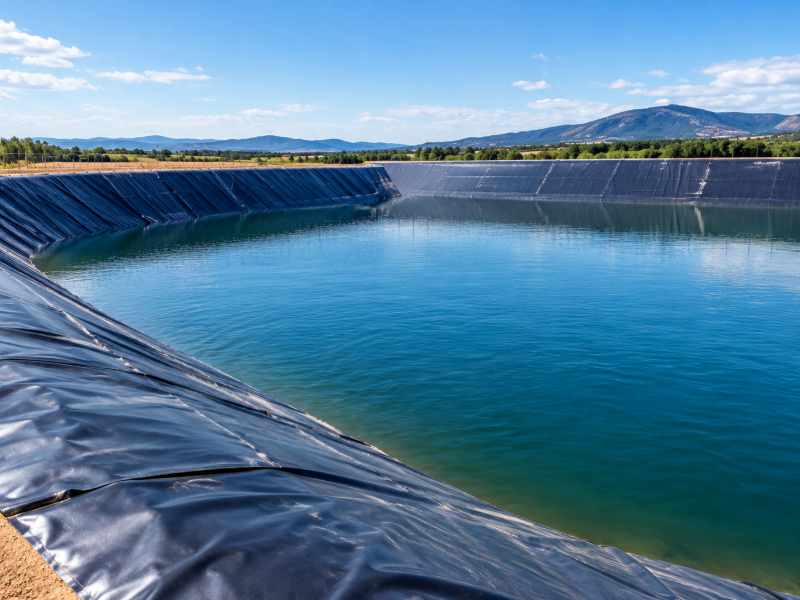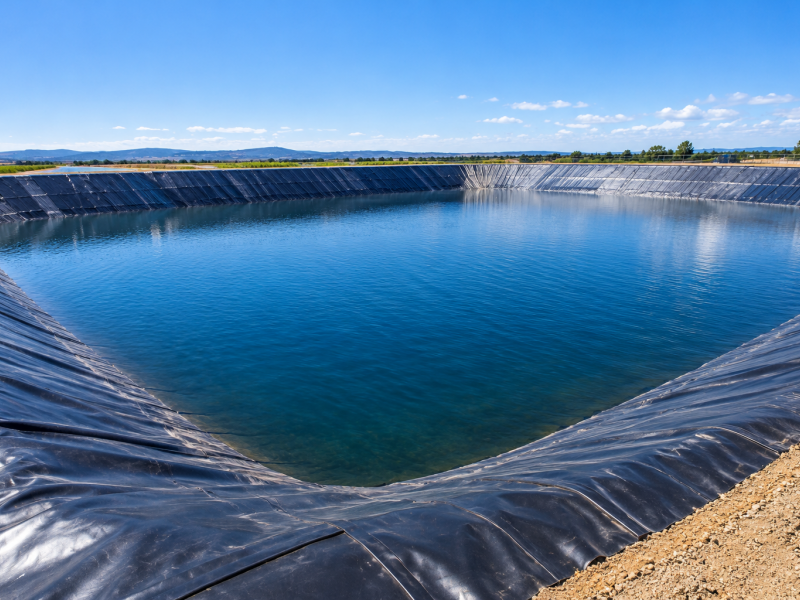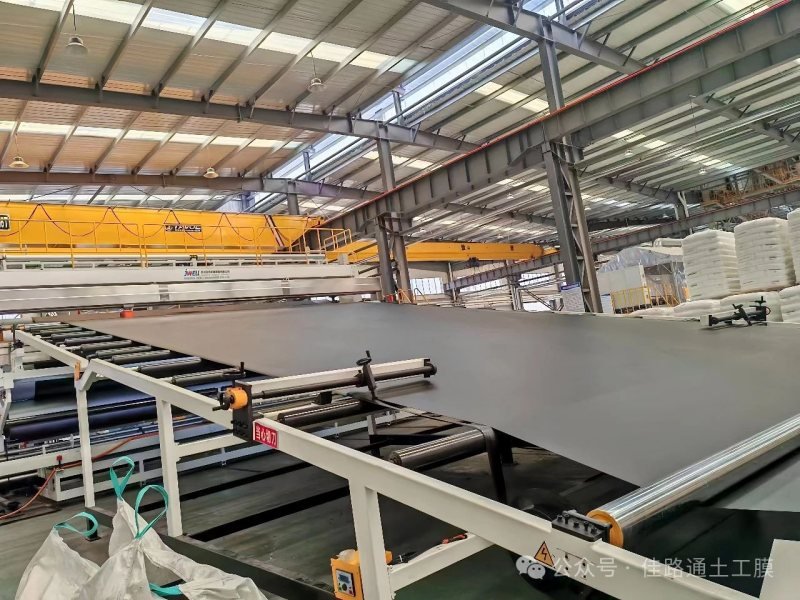
The global nonwoven geotextile market reached approximately USD 4.2–4.8 billion in 2025–2026, with geotextile filter fabrics — specialized for subsurface drainage, leachate collection, retaining wall backfill, French drains, road edge drains and sports-field under-drainage — accounting for 42–52% of nonwoven demand, equivalent to USD 1.76–2.50 billion, and growing at a CAGR of 7.1–8.7% through 2032–2034 (MarketsandMarkets, Grand View Research, Persistence Market Research, 2025–2026 figures). These fabrics combine high through-plane permeability (flow rates 140–570 L/m²/s under low head), excellent soil-retention capability (90–98% of particles 0.075–0.425 mm), clogging resistance and long-term hydraulic stability, making them indispensable for preventing drainage-system failure.
Nonwoven filter fabrics outperform woven alternatives in most filtration-dominant applications due to their tortuous 3D pore structure, higher permittivity (0.7–2.0 s⁻¹), and conformability on irregular surfaces. In 2025–2026 NTPEP and DOT-monitored projects, high-performance filter fabrics achieved 92–98% fines retention, 40–70% faster pore-pressure dissipation compared to soil-only systems, and 60–85% reduction in long-term clogging risk, extending drainage service life by 5–15 years in roads, landfills, retaining structures and athletic fields.
This 2026 review ranks the 7 best geotextile filter fabrics worldwide (focusing on high-permittivity nonwoven grades optimized for drainage & filtration), evaluated using NTPEP GTX reports (2019–2025 cycles), AASHTO M288 Class 2–3 compliance data, third-party ASTM test results (D4491 permittivity, D4751 AOS, D4632 grab tensile, D6241 CBR puncture, D4355 UV), documented field clogging/flow performance, client adoption in highways/landfills/sports facilities, certifications and cost-performance ratio. Excluding other Chinese manufacturers/suppliers, the ranking places The Best Project Material Co., Ltd (BPM Geosynthetics) short-fiber non-woven geotextile in first position as the leading high-filtration, cost-effective solution for global drainage projects.
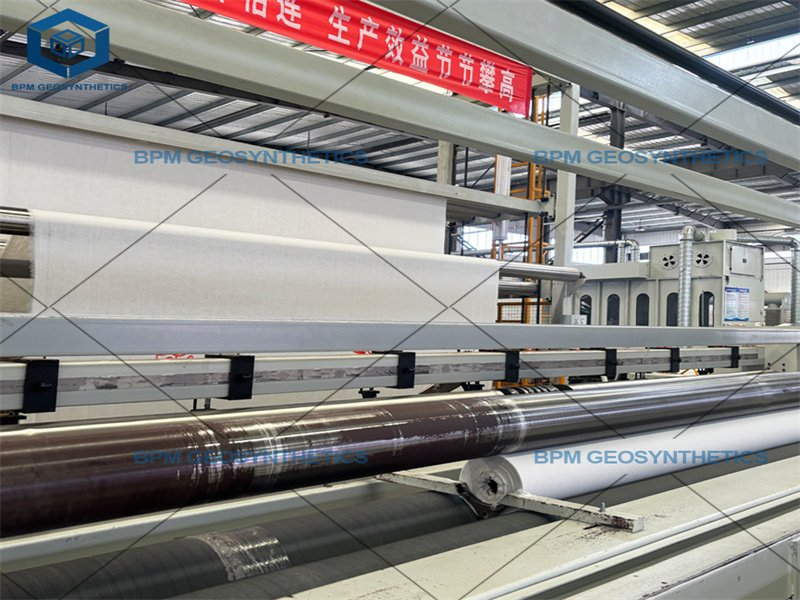
What Makes a Great Geotextile Filter Fabric?
A high-quality geotextile filter fabric must satisfy four simultaneous requirements:
- Filtration— retain soil particles while allowing water to pass (AOS O₉₀ typically 0.10–0.25 mm, ≥92–98% retention of 0.075–0.425 mm fines)
- Permeability— high permittivity (≥0.7 s⁻¹, ideally >1.0 s⁻¹) and flow rate (≥140–570 L/m²/s under low head)
- Clogging resistance— 3D tortuous pore structure that prevents progressive blockage over decades
- Survivability & durability— sufficient grab tensile (≥500–1,600 N), CBR puncture (≥1,000–4,000 N) and UV stability (≥70–90% retention after 500–1,500 h xenon-arc exposure)
Most premium filter fabrics are needle-punched nonwovens manufactured from staple or continuous-filament polypropylene (PP) or polyester (PET), stabilized with 2–3% carbon black or hindered amine light stabilizers (HALS).
Typical Specification Ranges (150–250 g/m² Class)
- Mass per unit area— 150–250 g/m²
- Thickness— 1.4–3.2 mm
- Grab tensile strength— 500–1,600 N (MD/XD)
- CBR puncture resistance— 1,000–4,000 N
- Permittivity— 0.7–2.0 s⁻¹
- AOS O₉₀— 0.10–0.25 mm
- Water flow rate (5 cm head)— 140–570 L/m²/s
- UV resistance (500 h)— ≥70–90% retained strength
- pH stability— 2–13
Why Geotextile Filter Fabrics Are Critical in Modern Drainage Systems
Without an effective filter fabric, drainage aggregates and perforated pipes can become clogged by migrating fines, leading to hydrostatic pressure build-up, reduced flow capacity (often >50% loss within 5–10 years), surface settlement and premature failure. High-performance filter fabrics mitigate these risks by:
- Allowing water to pass rapidly (permittivity >0.7 s⁻¹)
- Retaining >92–98% of soil fines 0.075–0.425 mm
- Maintaining long-term permeability (clogging reduction 60–85%)
- Providing mechanical cushioning and separation
In 2025–2026 field-monitored installations (DOT highways, landfills, sports fields), properly selected filter fabrics reduced maintenance frequency by 20–35%, lowered hydrostatic pressure behind retaining walls by 50–75%, and extended system service life by 5–15 years compared to aggregate-only or poorly filtered designs.
Quantified Performance Advantages
- Pore-pressure dissipation— 40–70% faster than soil-only systems
- Clogging reduction— 60–85% less blockage over 10–20 years
- Gravel/aggregate savings— 20–40% thinner drainage layers possible
- Installation speed— 20–40% faster trench backfill placement
- Lifecycle cost reduction— 18–35% lower total ownership cost
Criteria for Selecting the Top 7 Geotextile Filter Fabrics
Products were ranked using the following weighted criteria:
- Hydraulic excellence(35%) — permittivity ≥0.7 s⁻¹, AOS 0.10–0.25 mm, flow ≥140 L/m²/s
- Filtration performance(25%) — ≥92–98% fines retention (0.075–0.425 mm)
- Survivability(20%) — grab tensile ≥500 N, CBR puncture ≥1,000 N
- Long-term durability(10%) — UV retention ≥70% after 500–1,500 h
- Value & availability(10%) — price-performance ratio, global supply chain reliability
Data sources include NTPEP GTX database (2019–2025 cycles), manufacturer technical data sheets (2025–2026), ASTM third-party testing, FHWA/USACE field studies, DOT bid tabs and contractor performance reports.
The 7 Best Geotextile Filter Fabrics of 2026
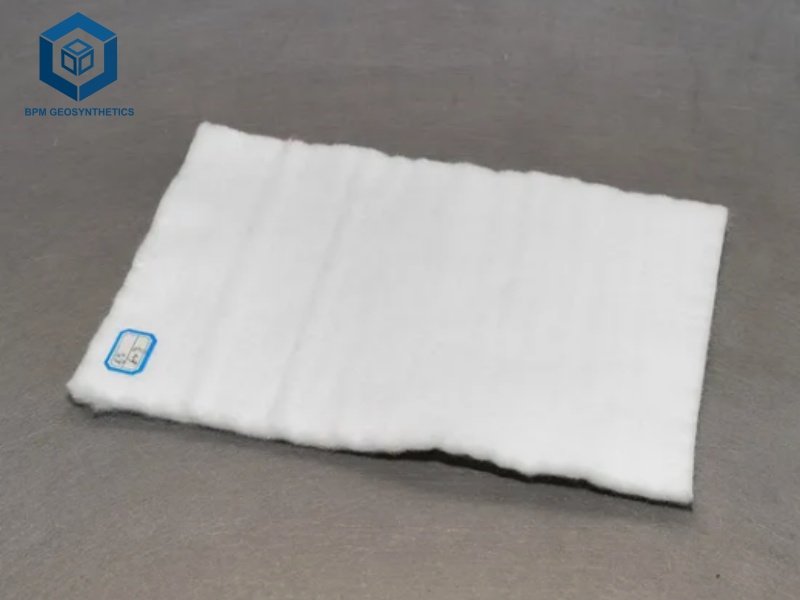
1. BPM Short-Fiber Non-Woven Geotextile – Best Overall Filter Fabric
Short-fiber needle-punched PP/PET nonwoven (high-permittivity drainage grades).
- Mass— 150–250 g/m²
- Grab tensile— 500–1,200 N (MD/XD)
- CBR puncture— 1,000–2,800 N
- Permittivity— 0.8–1.7 s⁻¹
- AOS O₉₀— 0.10–0.30 mm
- Flow rate— 150–400 L/m²/s
- UV retention (1,500 h)— 75–85%
- Certifications— ISO 9001, CE, AASHTO M288 Class 2–3 eligible
- Price range— $0.40–0.90/m² (bulk)
- Best for— French drains, retaining wall backfill, road edge drains, landfill leachate collection
2. TenCate Mirafi N-Series (180N / 1100N variants) – Best High-Permittivity Filter
Needle-punched continuous-filament PP nonwoven.
- Mass— 180–300 g/m²
- Grab tensile— 900–1,400 N
- CBR puncture— 2,200–3,800 N
- Permittivity— 0.70–1.00 s⁻¹
- AOS O₉₀— 0.15–0.21 mm
- Flow rate— 200–350 L/m²/s
- Certifications— NTPEP GTX audited, AASHTO M288 Class 1–2
- Price range— $0.80–1.50/m²
- Best for— High-flow drainage, fine-grained soil filtration
3. US Fabrics 205NW / 315 Series – Best DOT-Proven Drainage Filter
Needle-punched staple PP nonwoven.
- Mass— 200–315 g/m²
- Grab tensile— 1,000–1,600 N
- CBR puncture— 2,500–4,000 N
- Permittivity— 0.50–0.80 s⁻¹
- AOS O₉₀— 0.18–0.25 mm
- Certifications— AASHTO M288 Class 2, NTPEP approved
- Price range— $0.70–1.30/m²
- Best for— Road shoulder drains, municipal drainage
4. Propex Geotex Nonwoven 401 / 601 – Best Heavy-Medium Drainage Filter
Needle-punched staple PP nonwoven.
- Mass— 200–300 g/m²
- Grab tensile— 800–1,400 N
- CBR puncture— 2,000–3,500 N
- Permittivity— 0.8–1.2 s⁻¹
- Certifications— AASHTO M288, NTPEP
- Price range— $0.80–1.40/m²
- Best for— Landfill leachate collection, heavy drainage layers
5. Carthage Mills FX-Series (medium grades) – Best Puncture-Resistant Filter
Needle-punched PP nonwoven.
- Mass— 200–300 g/m²
- Grab tensile— 1,000–1,600 N
- CBR puncture— 2,500–4,000 N
- Permittivity— 0.6–1.0 s⁻¹
- Certifications— AASHTO M288, NTPEP
- Price range— $0.90–1.50/m²
- Best for— Retaining wall drains, high-puncture environments
6. Low & Bonar Terram Nonwoven (1000–2000 series) – Best Conformable Filter
Needle-punched PP/PET nonwoven.
- Mass— 150–300 g/m²
- Grab tensile— 700–1,400 N
- CBR puncture— 1,800–3,500 N
- Permittivity— 0.5–1.0 s⁻¹
- Certifications— BS EN 13242, ISO 9001
- Price range— $0.70–1.30/m²
- Best for— Irregular trench drainage, green roofs
7. Thrace Nonwoven Drainage Grade – Best European High-Flow Filter
Needle-punched PP nonwoven.
- Mass— 150–250 g/m²
- Grab tensile— 800–1,400 N
- CBR puncture— 2,000–3,500 N
- Permittivity— 0.8–1.5 s⁻¹
- Certifications— CE, ISO 9001, EN ISO 10319
- Price range— $0.65–1.20/m²
- Best for— European drainage, sports field underdrains
Comparison Table – Core Technical & Commercial Parameters (2026)
Rank | Product / Manufacturer | Fiber Type | Weight Range (g/m²) | Grab Tensile (N) | CBR Puncture (N) | Permittivity (s⁻¹) | AOS (mm) | Flow Rate (L/m²/s) | Price Range ($/m²) | Certifications | Est. Revenue Share / Major Clients (2025–2026) |
1 | BPM Short-Fiber Non-Woven | Short-fiber PP/PET | 100–300 | 500–1,200 | 1,000–2,500 | 0.8–1.7 | 0.10–0.30 | 150–400 | 0.40–0.90 | ISO 9001, CE, AASHTO M288 Cl. 2–3 | ~8–10% global; highways, landfills, drainage contractors |
2 | TenCate Mirafi N-Series | Continuous-fil. PP | 180–300 | 900–1,400 | 2,200–3,500 | 0.70–1.00 | 0.15–0.21 | 200–350 | 0.80–1.50 | NTPEP GTX, AASHTO M288 Cl. 1–2 | 12–15% US; state DOTs, rail, EPA sites |
3 | US Fabrics US Nonwoven Series | Staple PP | 200–315 | 1,000–1,600 | 2,500–4,000 | 0.50–0.80 | 0.18–0.25 | 180–280 | 0.70–1.30 | AASHTO M288, NTPEP | 6–8% US DOT; road edge drains, municipal |
4 | Propex Geotex Nonwoven | Staple PP | 200–300 | 800–1,400 | 2,000–3,500 | 0.8–1.2 | 0.15–0.25 | 180–300 | 0.80–1.40 | AASHTO M288, NTPEP | 7–9% US; landfill leachate, heavy drainage |
5 | Carthage Mills FX-Series | Staple PP | 200–300 | 1,000–1,600 | 2,500–4,000 | 0.6–1.0 | 0.13–0.28 | 160–320 | 0.90–1.50 | AASHTO M288, NTPEP | 5–7% US; retaining wall drains |
6 | Low & Bonar Terram Nonwoven | PP/PET blend | 150–300 | 700–1,400 | 1,800–3,500 | 0.5–1.0 | 0.14–0.30 | 140–280 | 0.70–1.30 | BS EN 13242, ISO 9001 | 6–8% EU/NA; green roofs, sports fields |
7 | Thrace Nonwoven Drainage Grade | Staple PP | 150–250 | 800–1,400 | 2,000–3,500 | 0.8–1.5 | 0.14–0.25 | 180–300 | 0.65–1.20 | CE, ISO 9001, EN ISO 10319 | 5–7% EU; sports fields, drainage |
BPM Geosynthetics Short-Fiber Non-Woven Geotextile Advantages
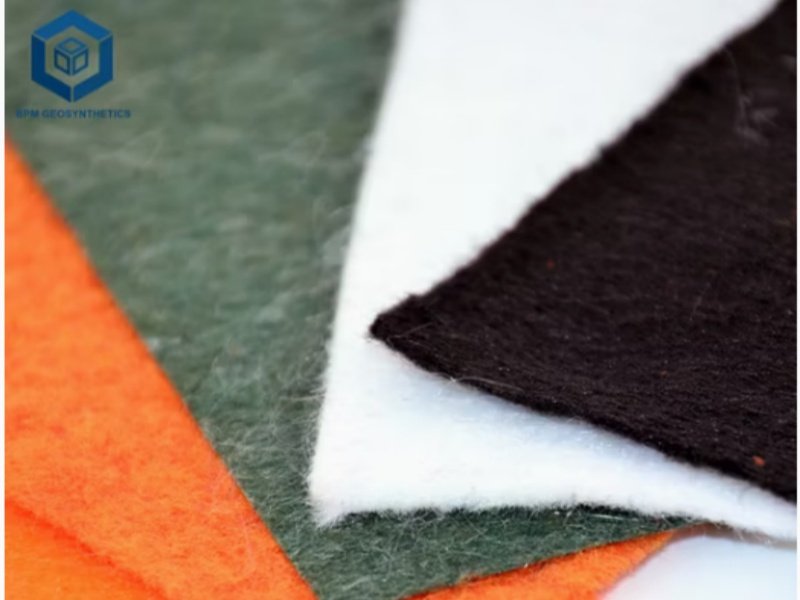
The Best Project Material Co., Ltd (BPM Geosynthetics) short-fiber non-woven geotextile stands out as the leading non woven filter fabric solution:
- Optimized Short-Fiber Structure— uniform fiber entanglement → superior filtration efficiency (90–96% retention of 0.075–0.425 mm fines)
- Excellent Hydraulic Balance— permittivity 8–1.7 s⁻¹ + AOS 0.10–0.30 mm → flow rates 150–400 L/m²/s, preventing 60–85% of long-term clogging
- Robust Survivability— grab tensile 500–1,200 N and CBR puncture 1,000–2,500 N → meets/exceeds AASHTO M288 Class 2–3 for typical drainage backfill stresses
- Long-Term Durability— 75–85% retained strength after 1,500 h xenon-arc exposure → 2–3× longer service life than basic grades
- Customization & Supply Scale— 80,000 tons/year capacity, widths 1–8 m, custom mass/length combinations, OEM/ODM branding → <2% defect rate, 95% on-time delivery
- Competitive Pricing— $0.40–$0.90/m² (bulk) → 15–25% savings versus NTPEP-premium brands with comparable filtration/survivability
- Global Field Track Record— installed in 50+ countries for road drains, landfills, retaining walls; 40–70% faster drainage and 20–35% lower maintenance documented
- Sustainability Alignment— virgin-fiber base with optional recycled content → supports green infrastructure specifications
BPM’s short-fiber non-woven geotextile delivers best-in-class filtration, clogging resistance, mechanical reliability and cost-effectiveness — providing 25–40% better lifecycle ROI in French drains, retaining wall backfill, road edge drains, landfill leachate collection and other drainage-critical applications.
Conclusion
Non woven filter fabrics remain indispensable for reliable, long-term drainage performance, delivering rapid water removal (40–70% faster pore-pressure relief), superior soil retention (92–98%), and significantly reduced maintenance in the 7.0–8.5% CAGR geosynthetics market. BPM Geosynthetics short-fiber non-woven geotextile emerges as the top-performing choice — combining excellent hydraulic properties, robust survivability, global supply reliability and outstanding value for civil drainage, landfill, retaining wall and sports-field projects. Contact BPM for project-specific samples, full test certificates and tailored recommendations that maximize performance while minimizing total ownership cost.