1.Introduction
Slope protection prevents erosion, stabilizes soils, and promotes vegetation on embankments, roadside cuts, drainage channels, and coastal slopes. Geotextiles — woven, non-woven, or composite fabrics — are a cost-effective, versatile solution. This article reviews seven of the best geotextile options for slope protection, comparing materials, strengths, drainage performance, UV resistance, typical uses, and installation tips.
Quick Comparison Table
Material | Best for | Strength (typical) | Drainage/Filtration | UV Resistance | Notes | |
1. High-strength Woven Geotextile | Polypropylene (PP) woven | Heavy structural slopes, separation, load support | Very high | Low permeability (primarily separation) | Moderate | Good for roads, revetments |
2. Needle-punched Nonwoven Geotextile | Polyester (PET) or PP | Filtration, drainage, erosion control under turf | Medium | High permeability | Good | Promotes vegetation, cushioning |
3. Biodegradable Coir (Coconut) Mat | Natural coir fiber | Short-term erosion control, revegetation | Low–medium | High | Natural degradation (months–years) | Ideal where permanent fabric not desired |
4. Turf Reinforcement Mat (TRM) Composite | Synthetic fibers + matrix | Permanent erosion protection with vegetation | High | Moderate | High | Combines soil reinforcement + plant growth |
5. Geocomposite Drainage Board | HDPE core + nonwoven | Rapid subsurface drainage on slopes | Medium | Excellent (channeled core) | High | Useful behind retaining walls, steep channels |
6. UV-stabilized Polyester Nonwoven | Polyester with UV treatment | Long-term filtration & separation on exposed slopes | Medium–high | High | Excellent | Good chemical resistance |
7. Heavy-duty Asphalt/Bituminous-backed Geotextile | Nonwoven + bitumen | Slope waterproofing & erosion control | High | Low | High | Used where water infiltration must be minimized |
2.Detailed Reviews
2.1High-strength Woven Geotextile
Overview: Woven polypropylene geotextiles offer exceptional tensile strength and low elongation.
Best uses: Slope stabilization where load distribution, separation, and stability are primary concerns (e.g., road shoulders, revetments).
Pros: High strength, durable, cost-effective, easy to anchor.
Cons: Limited filtration/drainage; not ideal where water flow through fabric is required.
2.2Needle-punched Nonwoven Geotextile
Overview: Manufactured by entangling fibers, giving high porosity and good filtration.
Best uses: Drainage layers, protection under turf, erosion control where plant growth is desired.
Pros: Excellent water permeability, cushioning properties, supports vegetation roots.
Cons: Lower tensile strength than woven fabrics.
2.3Biodegradable Coir (Coconut) Mat
Overview: Natural fiber mats that stabilize soil temporarily and promote seed germination.
Best uses: Short-term erosion control during revegetation projects and environmentally sensitive sites.
Pros: Eco-friendly, retains moisture, improves seed establishment.
Cons: Degrades over time; not suitable for long-term structural stabilization.
2.4Turf Reinforcement Mat (TRM) Composite
Overview: Engineered mats combining synthetic fibers with an open matrix that holds soil and seed.
Best uses: Permanent slope protection where vegetation is preferred but reinforcement is needed—channels, steep slopes.
Pros: Durable, UV-resistant, provides structural reinforcement and vegetation support.
Cons: Higher cost; requires proper anchoring and installation.
2.5Geocomposite Drainage Board
Overview: A 3D core (HDPE) bonded to geotextile layers for high-flow drainage.
Best uses: Slopes needing rapid subsurface drainage, behind retaining walls, cut slopes prone to seepage.
Pros: Excellent in-plane flow, separates soil from drainage core.
Cons: More expensive and bulkier; requires careful placement.
2.6UV-stabilized Polyester Nonwoven
Overview: Polyester fiber nonwovens treated for long UV exposure resistance.
Best uses: Exposed slopes with long-term filtration needs, coastal or high-sun environments.
Pros: Good durability, chemical resistance; maintains permeability under load.
Cons: Potentially higher cost than standard PP nonwovens.
2.7Heavy-duty Asphalt/Bituminous-backed Geotextile
Overview: Nonwoven fabric coated with bitumen for waterproofing and erosion protection.
Best uses: Areas where water infiltration must be limited (e.g., slope faces above retaining systems).
Pros: Waterproofing plus protective fabric layer; resists washout.
Cons: Limits vegetation growth; heavier, less breathable.
3.Buying Guide — How to Choose
Function first: Decide whether you need separation, filtration, drainage, reinforcement, waterproofing, or temporary protection.
Strength and elongation: For structural support choose high tensile strength/low elongation (woven or TRM). For vegetation and filtering choose nonwoven.
Permeability: High CBR or runoff requires geocomposites or nonwovens with good flow rates.
UV and chemical resistance: For long-term exposed slopes choose UV-stabilized synthetics (PET or treated PP).
Biodegradability: Use coir/jute for temporary, environmentally sensitive projects.
Installation and anchoring: Choose products compatible with your anchoring method (staples, pins, toe-boards) and slope gradient.
Cost vs. lifespan: Higher upfront cost (TRMs, geocomposites) often yields longer-term performance.
4.Basic Installation Tips
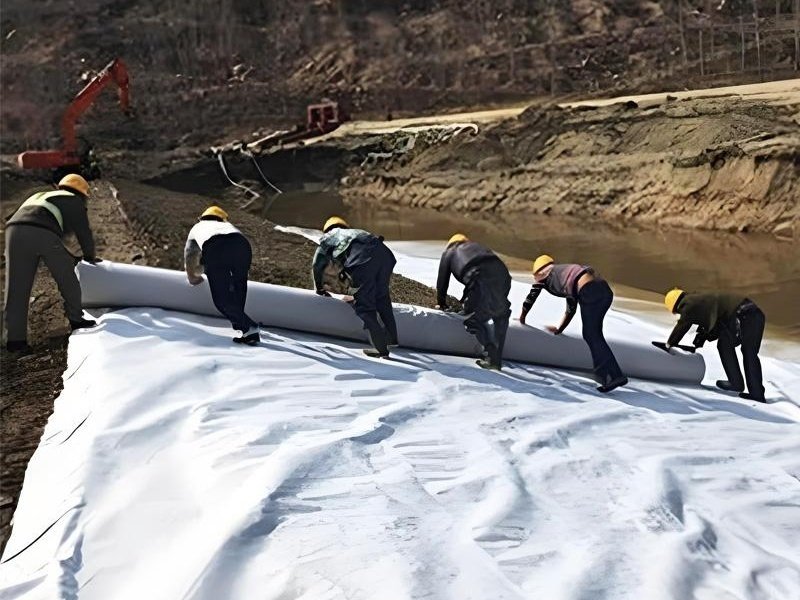
Prepare slope: Remove debris, grade surface to design slope, and seed/soil as specified.
Overlap seams: Follow manufacturer overlap recommendations—typically 0.3–1.0 m depending on slope and material.
Anchor properly: Use stakes, staples, or sandbags at designed spacing; pay attention to top and toe anchoring.
Combine: Use biodegradable mats initially and replace/cover with longer-term products if needed.
Inspect & maintain: Check after storms, repair tears, and re-anchor loosening edges.
5.FAQ
Can geotextiles support vegetation? Yes — nonwovens and TRMs encourage root penetration and help vegetation establish while providing erosion control.
Do geotextiles stop all erosion? No — proper selection, installation, and maintenance are required; severe hydraulic forces may need rock, concrete, or engineered armoring.
How long do they last? Synthetic geotextiles (PP/PET) last decades if UV-stabilized; natural fibers last months to a few years.
6.Conclusion
Selecting the best geotextile depends on your slope’s function, exposure, drainage needs, and expected lifespan. For structural reinforcement choose high-strength woven fabrics or TRMs; for filtration and vegetation support select needle-punched nonwovens; for temporary revegetation use biodegradable coir mats; for rapid drainage choose geocomposites. Evaluate site conditions and installation requirements to match the product to performance needs. If you provide slope dimensions, soil type, and primary concerns (erosion, drainage, vegetation), I can recommend specific product specifications and installation steps.