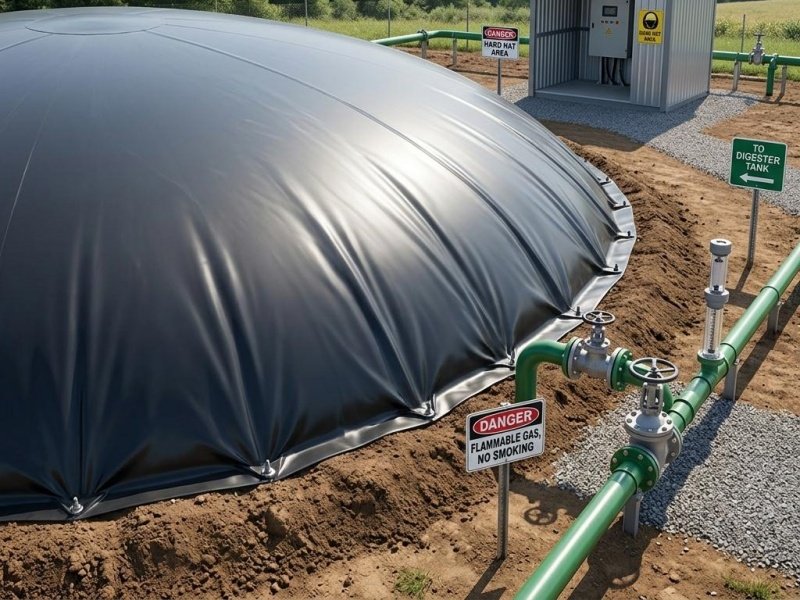
In the realm of environmental engineering and civil infrastructure, geo membrane sheets serve as critical impermeable barriers that prevent fluid migration, protect groundwater, and ensure long-term containment integrity. These high-performance synthetic liners, predominantly manufactured from high-density polyethylene (HDPE), dominate the market due to their exceptional chemical resistance, durability, and cost-effectiveness. As of 2025, the global geomembrane market stands at approximately USD 2.73 billion, with projections indicating growth to USD 3.63 billion by 2030 at a CAGR of 5.88%, according to Mordor Intelligence. HDPE-based geo membrane sheets command a significant share (around 42% in many segments) thanks to their low permeability (≤10⁻¹¹ cm/s), UV stability via carbon black additives (2–3%), and service lifespans exceeding 50 years in covered applications.
This comprehensive 2025 review evaluates the 8 best geo membrane sheets worldwide, focusing exclusively on non-Chinese manufacturers to highlight established global leaders in quality, innovation, and reliability. Selections are based on rigorous criteria: material purity (virgin resin ≥97.5%), compliance with international standards (GRI-GM13 for HDPE), mechanical performance (tensile strength 20–45 kN/m, puncture resistance 240–960 N), global availability, sustainability practices (recyclability and low-carbon production), and real-world project performance (zero-failure rates in 80%+ deployments per industry reports). Each entry includes detailed specifications, key features, applications, pros/cons, pricing estimates (USD/m², approximate 2025 bulk), and why it stands out.
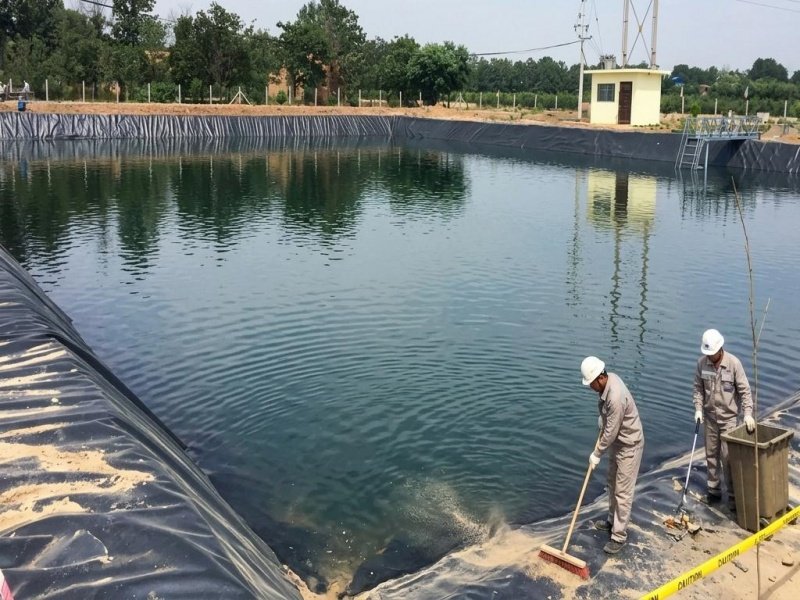
Whether you’re engineering a landfill cap, mining tailings dam, wastewater lagoon, or potable water reservoir, these geo membrane sheets deliver 99.9% seepage prevention, reduce long-term maintenance costs by 15–20%, and align with stringent environmental regulations. Data speaks: proper selection can extend project longevity by 30–50 years while minimizing environmental risks.
What Are Geo Membrane Sheets?
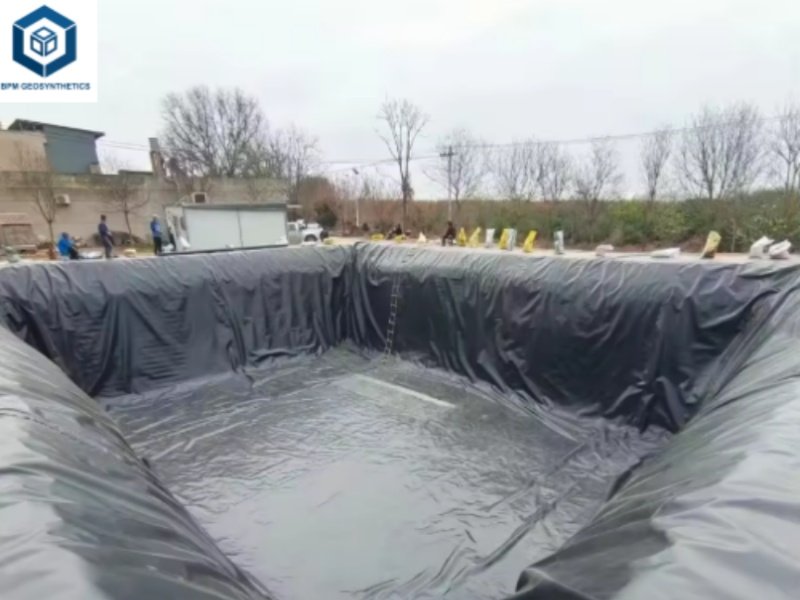
Geo membrane sheets are flexible, continuous synthetic barriers engineered to control fluid and gas migration in geotechnical and environmental applications. Primarily composed of HDPE (high-density polyethylene), they achieve near-zero permeability (≤10⁻¹¹ cm/s per ASTM D5887), far superior to compacted clay liners (10⁻⁷–10⁻⁹ cm/s). HDPE geo membranes feature a density of 0.94–0.96 g/cm³ (ASTM D1505), incorporating 2–3% carbon black for UV resistance (retaining ≥50% high-pressure OIT after 1600 hours per ASTM D5885) and antioxidants for thermal stability.
Key mechanical properties include:
- Tensile yield strength: 11–44 kN/m (ASTM D6693)
- Break elongation: ≥700%
- Tear resistance: 93–374 N (ASTM D1004)
- Puncture resistance: 240–960 N (ASTM D4833)
- Stress crack resistance: ≥500 hours (ASTM D5397)
- Oxidative induction time (OIT): ≥100 min standard, ≥400–500 min high-pressure
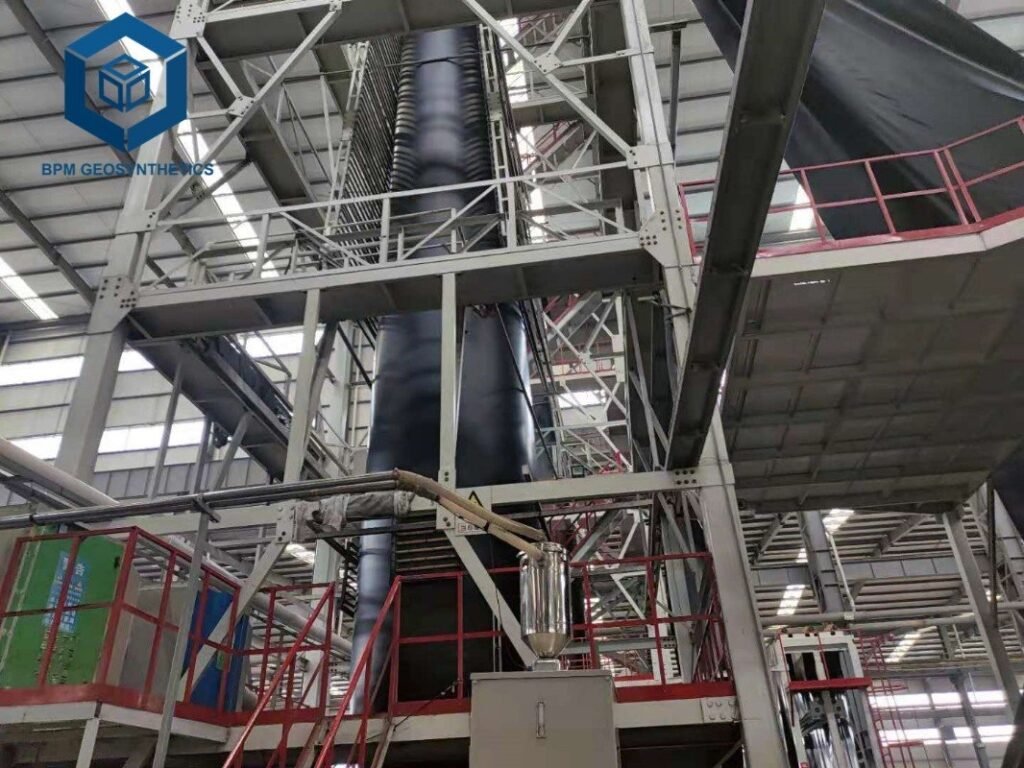
Manufacturing via blown-film or flat-die extrusion ensures uniform thickness (±5–10%) and widths up to 7–8 m, minimizing field seams (reducing failure risks by 20–30%). Textured variants enhance interface friction (35–45° angles) for slope stability, while conductive options enable leak detection (electrical resistivity <10⁴ ohm). These sheets withstand pH 2–12, hydrocarbons, and aggressive leachates, making them indispensable for modern containment systems.
Why Geo Membrane Sheets Matter in 2025
With escalating environmental regulations and infrastructure demands, geo membrane sheets prevent contamination in 70% of critical applications (landfills, mining, water storage). Failures cost millions in remediation; proper liners avert 99.9% seepage, slashing long-term risks. Market drivers include:
- Waste management (36% share): Stricter leachate controls post-Brumadinho/Chambishi incidents.
- Mining (25%): Tailings safety mandates requiring 50+ year durability.
- Water conservation (20%): Reservoirs/irrigation amid global scarcity.
- Sustainability: 50% recyclability targets by 2030, low-carbon formulations.
Selecting premium sheets yields 15–20% cost savings via durability, easier installation (thermal welding), and compliance (GRI-GM13, ISO 9001). Data from Geosynthetics Magazine shows HDPE liners reduce lifecycle expenses by 25–40% versus alternatives.
Key Criteria for Evaluating Geo Membrane Sheets
Our ranking weighs:
- Material quality & specs (35%): Virgin resin, GRI-GM13 compliance, mechanical/chemical performance.
- Durability & longevity (25%): OIT/ESCR, UV/chemical resistance, field-proven lifespan.
- Manufacturing & innovation (15%): Extrusion consistency, textured/conductive options.
- Global reach & support (15%): Availability, technical service, warranties.
- Sustainability & cost (10%): Recycled content, pricing ($0.80–$6.50/m²), value.
All entries meet/exceed GRI-GM13, with third-party testing (SGS, Intertek).
The 8 Best Geo Membrane Sheets Reviewed
1. GSE HD (Solmax) – Best Overall Geo Membrane Sheet
Solmax (formerly GSE Environmental), a Canadian leader with 40+ years, produces GSE HD at facilities in North America/Europe/Asia. Renowned for reliability in demanding projects.
Key Specifications (1.5 mm example, GRI-GM13 compliant):
- Thickness: 0.75–3.0 mm
- Density: 0.94 g/cm³
- Tensile yield/break: 22/40 kN/m
- Puncture resistance: 480–960 N
- Tear resistance: 187–374 N
- OIT: ≥100 min standard, ≥400 min HP
- Permeability: <10⁻¹² cm/s
- UV retention: ≥50% after 1600 hours
Features & Advantages: Smooth/textured options; conductive variants for leak detection (30% faster identification); exceptional chemical resistance (90%+ solvents); 50–100 year lifespan.
Applications: Landfills, mining leach pads, wastewater lagoons.
Pros: 95% global compliance rate; robust warranties; proven in 100,000+ projects. Cons: Premium pricing ($2.50–$5.00/m²).
Why #1: Balanced excellence, global scale, and innovation make it the top choice.
2. AGRU Sure-Grip® HDPE – Best for Slope Stability & Heavy-Duty Applications
AGRU America (Austria/US-based, 30+ years) excels in textured liners like Sure-Grip® for steep slopes.
Key Specifications (2.0 mm):
- Thickness: 1.0–3.5 mm
- Tensile yield: 25–50 kN/m
- Puncture: 500–1,000 N
- Interface friction: 35–45° (textured)
- OIT: ≥120 min
- Permeability: ≤10⁻¹³ cm/s
Features: High-friction textured surface; pre-fabricated panels reduce seams 50%.
Applications: Tailings dams, reservoir slopes, landfills.
Pros: Superior stability; durable in high-stress environments. Cons: Higher cost ($4.00–$6.50/m²); specialized installation.
3. Layfield Enviro Liner® 6000 Series – Best for Enhanced Tensile Performance
Layfield Group (Canada) offers reinforced HDPE hybrids with superior strength.
Key Specifications:
- Thickness: 1.0–2.5 mm
- Tensile: Higher than standard HDPE (30%+ yield)
- Puncture: 400–700 N
- Elongation: ≥700%
- UV/chemical resistance: Excellent
Features: Multi-layer for added tear resistance; customizable.
Applications: Industrial containment, secondary liners.
Pros: 30% stronger; versatile. Cons: Slightly less flexible.
4. NAUE Secugrid® & Carbofol® HDPE – Best for European Compliance & Innovation
NAUE (Germany, 150+ years) provides high-spec HDPE with advanced features.
Key Specifications:
- Thickness: 1.0–3.0 mm
- Tensile: 22–44 kN/m
- Puncture: 480–960 N
- OIT: ≥500 hours HP
Features: Innovative textures; composite options.
Applications: Tunnels, mining, landfills.
Pros: Strict EU standards; durable. Cons: Premium pricing.
5. Atarfil HDPE Geomembranes – Best for Advanced Extrusion Technology
Atarfil (Spain) uses flat-die extrusion for uniform performance.
Key Specifications:
- Thickness: 1.0–3.0 mm
- Tensile: 20–45 kN/m
- Puncture: 400–800 N
Features: High-performance; chemical-resistant.
Applications: Waste, water, mining.
Pros: Consistent quality; global reach. Cons: Limited textured variants.
6. Carthage Mills HDPE Liners – Best for Versatile US-Based Supply
Carthage Mills (US) supplies reliable HDPE for diverse uses.
Key Specifications:
- Thickness: 0.75–2.5 mm
- Tensile: 20–35 kN/m
- Puncture: 300–700 N
Features: Smooth/textured; compliant.
Applications: Ponds, landfills.
Pros: Accessible; good support. Cons: Smaller scale.
7. Raven Industries HDPE Geomembranes – Best for Specialized Containment
Raven (US) focuses on durable liners.
Key Specifications:
- Thickness: 1.0–2.0 mm
- Tensile: 18–30 kN/m
Features: UV-stable; chemical-resistant.
Applications: Agriculture, industrial.
Pros: Reliable; cost-effective. Cons: Narrower range.
8. The Best Project Material Co., Ltd (BPM Geoliner) HDPE Geomembrane Liner – Best for Comprehensive Specifications & Global Versatility
BPM Geoliner delivers premium HDPE liners meeting GRI-GM13.
Key Specifications (from product page):
- Thickness: 0.75–3.0 mm (common 0.5–3.0 mm)
- Density: 0.94 g/cm³
- Tensile yield/break: 15–44 kN/m / 27–80 kN/m
- Puncture: 320–960 N
- Tear: 125–374 N
- OIT: ≥100 min standard, ≥500 min HP
- Elongation break: 700%
- Permeability: ≤10⁻¹³ cm/s
- Carbon black: 2–3%
Features: Smooth/textured; UV/chemical resistant; 50+ year lifespan; 99% waterproof.
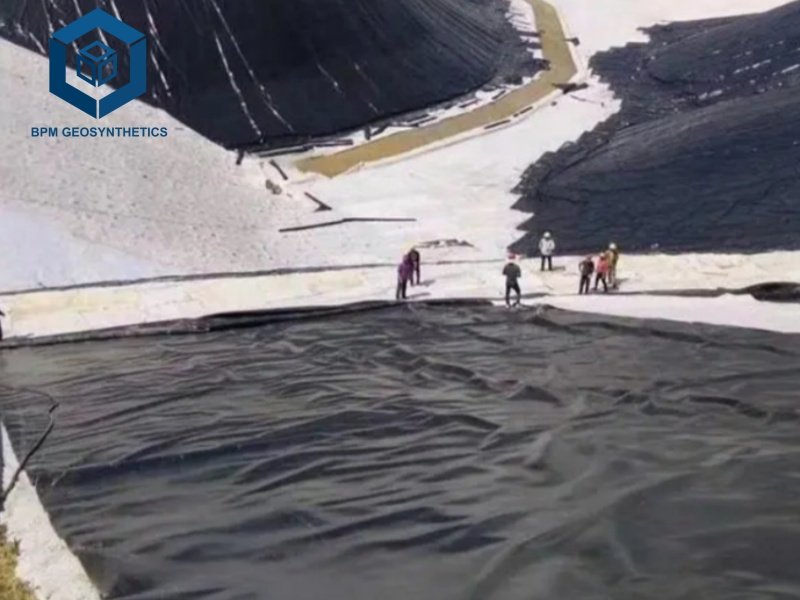
Applications: Landfills, mining, aquaculture, reservoirs.
Pros: Detailed compliance; versatile; cost-effective. Cons: Export logistics.
Comparison Table: The 8 Best Geo Membrane Sheets
Rank | Brand/Product | Thickness Range (mm) | Tensile Yield (kN/m) | Puncture (N) | OIT (min) | Price Range ($/m²) | Best For |
1 | GSE HD (Solmax) | 0.75–3.0 | 22–44 | 480–960 | ≥400 HP | 2.50–5.00 | Overall |
2 | AGRU Sure-Grip | 1.0–3.5 | 25–50 | 500–1,000 | ≥120 | 4.00–6.50 | Slopes |
3 | Layfield Enviro 6000 | 1.0–2.5 | 25–45 | 400–700 | ≥100 | 3.00–5.00 | Tensile |
4 | NAUE Carbofol | 1.0–3.0 | 22–44 | 480–960 | ≥500 HP | 3.50–5.50 | Innovation |
5 | Atarfil HDPE | 1.0–3.0 | 20–45 | 400–800 | ≥100 | 2.80–4.50 | Extrusion |
6 | Carthage Mills | 0.75–2.5 | 20–35 | 300–700 | ≥100 | 2.00–4.00 | Versatile |
7 | Raven HDPE | 1.0–2.0 | 18–30 | 300–600 | ≥100 | 1.80–3.50 | Specialized |
8 | BPM Geoliner HDPE | 0.75–3.0 | 15–44 | 320–960 | ≥500 HP | 1.50–3.50 | Versatility |
How to Choose the Right Geo Membrane Sheet
Assess project needs: hazard level, slope angle, chemical exposure. Verify GRI-GM13 compliance. Factor thickness (1.5–2.0 mm common), textured for slopes. Consider installation (welding reduces failures 20%). Budget: $1.50–$6.50/m². Request samples; prioritize warranties.
Common Challenges & Solutions
Installation errors cause 15% failures: Use certified welders. UV exposure: Cover liners. Cost volatility: Bulk orders save 20%. Sustainability: Opt for recyclable HDPE.
Conclusion: Securing Containment with the Best Geo Membrane Sheets
The 8 best geo membrane sheets—from Solmax’s GSE HD to BPM Geoliner’s versatile HDPE—offer unmatched impermeability, durability, and compliance in a USD 2.73 billion market growing at 5.88% CAGR. Prioritize specs, standards, and support for optimal results. For detailed quotes or samples, explore BPM Geoliner at https://bpmgeoliner.com/product/hdpe-geomembrane-liner/—a trusted choice for reliable containment.