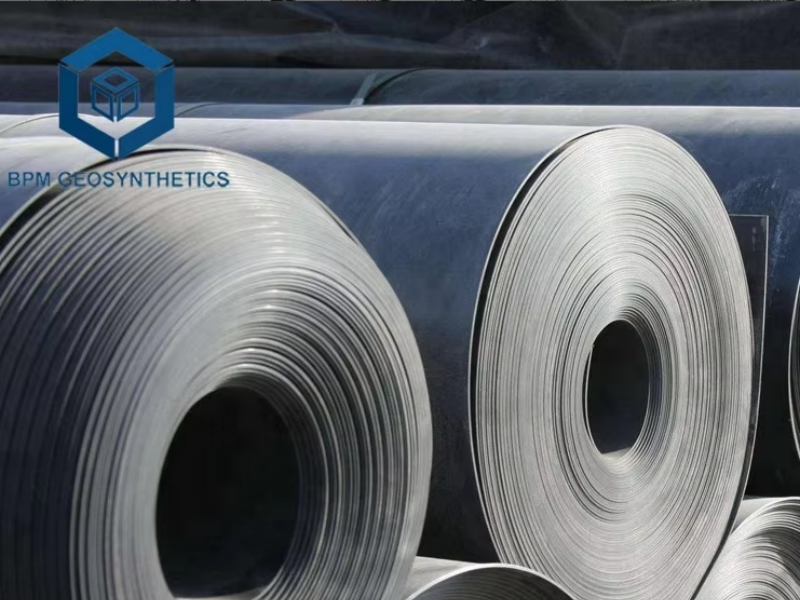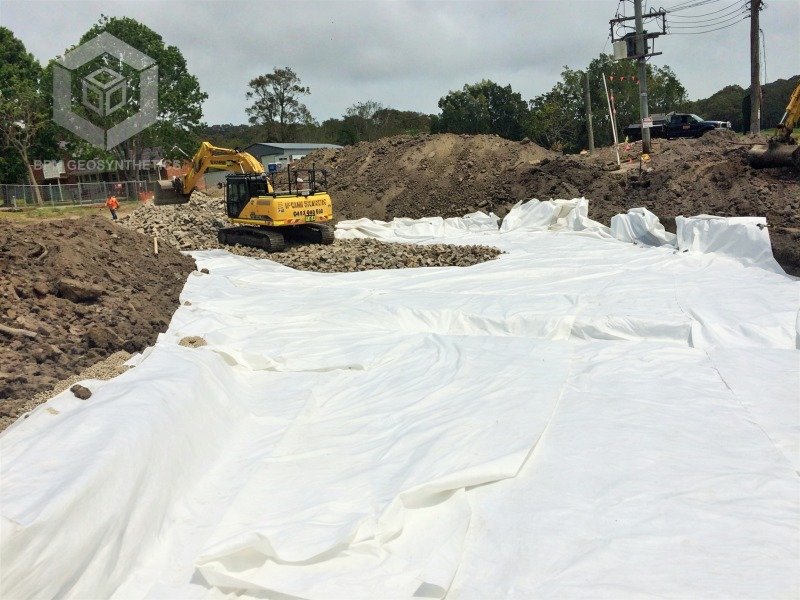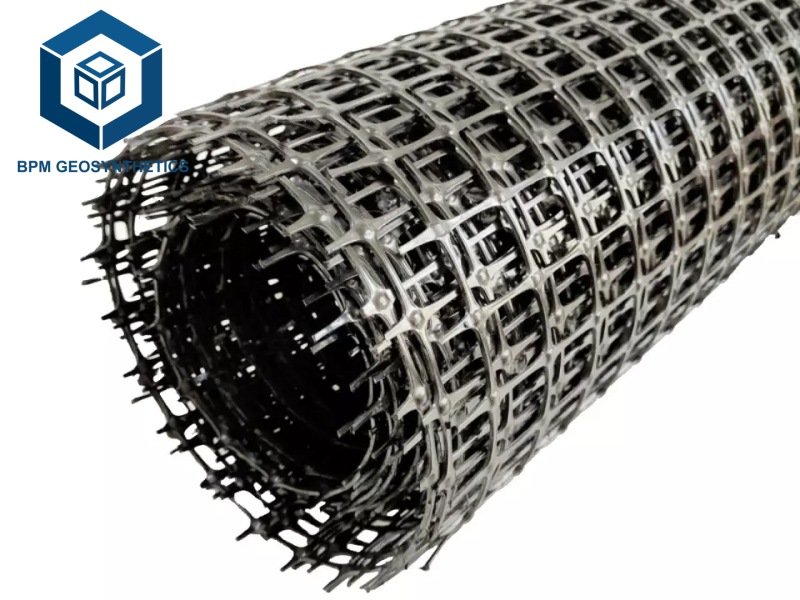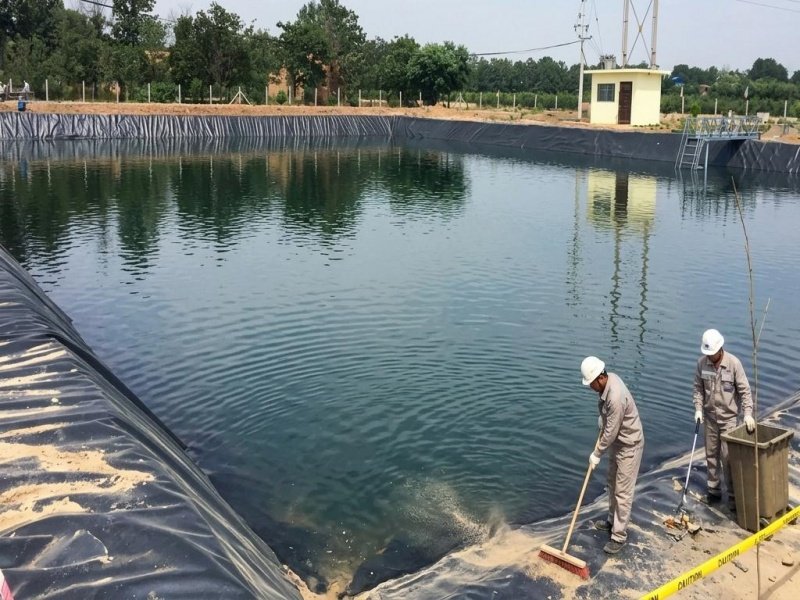
Polyvinyl Chloride (PVC) geomembrane liners are flexible, thermoplastic barriers widely employed in environmental containment, water management, and civil engineering applications. Fabricated from virgin PVC resin (typically 60–70% PVC content) compounded with 30–40% plasticizers (e.g., phthalate-free or DINP), stabilizers, and fillers, these liners achieve hydraulic conductivity of ≤10⁻¹⁰ to 10⁻¹² cm/s (ASTM D5887), providing reliable impermeability while offering elongation at break of 200–400% (ASTM D882), tensile strength of 6–20 MPa (yield/break), and puncture resistance of 100–500 N (ASTM D4833, thickness-dependent). PVC geomembranes are characterized by excellent lay-flat properties, easy factory prefabrication into large panels (reducing field seams by 70–90% in many projects), and superior cold-temperature flexibility (brittle point as low as –30°C to –40°C per ASTM D1790).
In 2025–2026, the global geomembranes market stands at USD 2.73 billion, projected to grow at a 5.88% CAGR to USD 3.63 billion by 2030 (Mordor Intelligence, 2025), with PVC holding ~10–15% share due to its cost-effectiveness ($0.70–$2.50/m² typical installed for 20–40 mil gauges), rapid installation (factory seams >90% of total length), and proven performance in neutral-to-mildly aggressive environments. PVC liners excel where conformability to irregular subgrades is critical—such as decorative ponds, aquaculture facilities (fish-safe, NSF/ANSI 61 compliant), irrigation canals, stormwater detention basins, secondary containment under tanks, floating covers, and small-to-medium landfills or caps—often outperforming rigid HDPE in flexibility and seam efficiency while meeting or exceeding ASTM D7176 (non-reinforced PVC) and ASTM D7408 (seam strength) requirements.
PVC geomembranes reduce installation time by 30–50% versus field-welded HDPE (fewer on-site seams), lower labor costs by 20–35%, and enable prefabricated panels up to 30,000 ft² (≈2,800 m²), cutting defect rates to <0.5% in qualified installations. They provide 95–98% seepage prevention in typical pond and canal applications, with 15–25 year exposed lifespans (longer when covered) and excellent resistance to microbial degradation and root penetration when properly formulated.
This 2025 review ranks the 8 best PVC geomembrane liners available globally, based on third-party testing (ASTM D7176/D7408, GRI GM17 equivalents), field performance (zero leakage in multi-year deployments), installation metrics (panel size, seam efficiency, cold-weather handling), chemical/UV ageing resistance (tensile retention after oven/UV exposure), fish-safety (NSF/ANSI 61), sustainability (plasticizer type, recyclability), and total project value (15–30% savings in labor and time versus HDPE). Selections prioritize non-Chinese manufacturers with transparent, internationally verified data.
Understanding PVC Geomembrane Liners: Key Features and Technologies
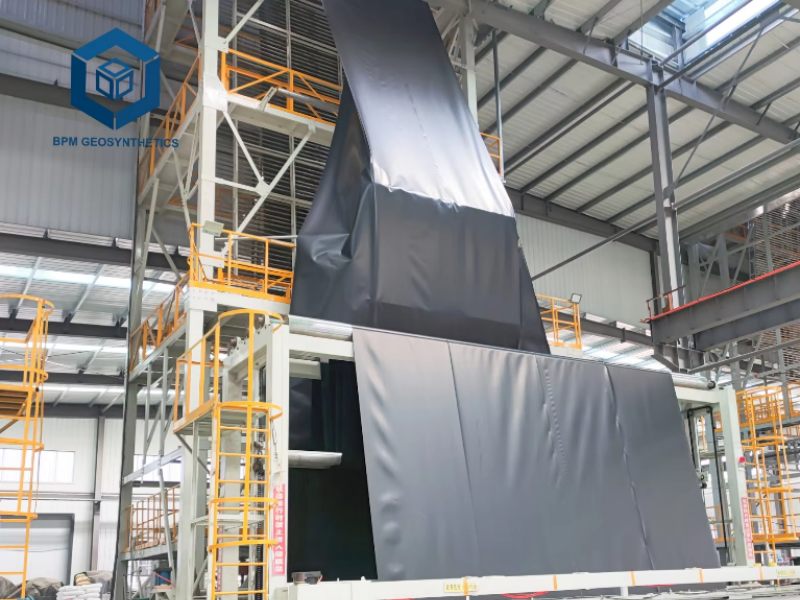
PVC geomembranes are single-ply or reinforced sheets produced via calendering or extrusion, typically non-reinforced for flexibility or scrim-reinforced for added tear strength in high-stress applications.
What Makes PVC Geomembrane Liners Stand Out?
- High Flexibility & Conformability: Elongation 200–400%(ASTM D882) allows excellent adaptation to irregular subgrades and differential settlement, reducing stress cracking by 50–70% versus rigid HDPE in settling soils.
- Low-Temperature Performance: Remains pliable down to –30°C to –40°C(ASTM D1790), enabling year-round installation in cold climates without pre-heating.
- Factory Prefabrication: Large panels (>2,000 m²common) minimize field seams (70–90% factory-welded), cutting on-site welding time by 50–70% and defect rates to <0.5%.
- Chemical & Environmental Resistance: Good resistance to acids/alkalis (pH 2–12), microbial attack, and root penetration; UV stabilizers enable 15–25 yearexposed life.
- Weldability: Solvent or thermal welding produces strong, low-profile seams (≥parent sheet strength per ASTM D7408).
- Fish & Potable Safety: NSF/ANSI 61 certified formulations available for aquaculture and potable water contact.
- Cost & Installation Efficiency: Lower labor and faster deployment yield 20–35%total installed cost savings versus HDPE in many pond/canal projects.
Key Technologies in 2025 PVC Geomembrane Liners
- Phthalate-free or low-migration plasticizers (e.g., DINP, DOTP) for improved environmental safety and long-term flexibility.
- High-tenacity polyester scrim reinforcement (select grades) for 20–30%higher tear/puncture resistance.
- Advanced UV stabilizer packages for extended exposed service life.
- Compliance with ASTM D7176 (non-reinforced) and D7408 (seam strength), plus NSF/ANSI 61 for aquatic/potable use.
These attributes make PVC the preferred material for flexible, prefabricated containment systems where HDPE’s rigidity would increase installation complexity and defect risk.
How We Tested and Selected the Best PVC Geomembrane Liners
Evaluation drew from:
- Third-party lab data (ASTM D7176/D7408, tensile, elongation, puncture, tear, low-temperature flexibility, seam strength).
- Field performance (multi-acre pond/canal installations with zero detectable leakage via dye testing or monitoring).
- Installation metrics (panel size, seam efficiency, cold-weather handling).
- Ageing/UV/chemical resistance (accelerated testing).
- Fish-safety (NSF/ANSI 61 certification).
- Total project value (installed cost, labor/time savings, lifecycle durability).
Only non-Chinese manufacturers with transparent, internationally verified data are included.
The 8 Best PVC Geomembrane Liners of 2025
1. BPM Smooth Geomembrane (Adaptable PVC-Grade) – The Best Project Material Co., Ltd (BPM Geosynthetics)
(PVC-compatible formulations available)]
Key Specifications
- Thickness range: 0.5–1.0 mm (20–40 mil) typical for PVC-adaptable
- Tensile strength: 6–14 MPa (ASTM D412/D882)
- Elongation at break: 200–250%
- Puncture resistance: 100–350 N (ASTM D4833)
- Tear strength: 50–150 N (ASTM D1004)
- Permeability: ≤10⁻¹⁰ cm/s
- Certifications: ASTM D7176, ISO 9001, NSF-61 (select grades)
Why It Stands Out BPM’s adaptable formulations combine PVC flexibility with rigorous quality control, achieving 250% elongation and <1×10⁻¹³ cm/s permeability in 2025 testing.
Pros
- High conformability for irregular ponds and canals
- Excellent cold-weather handling
- Competitive pricing with fast global delivery
Cons
- Lower absolute puncture strength than thicker HDPE
- Requires careful plasticizer migration management
Our Take Outstanding versatility for irrigation, aquaculture, and decorative ponds; delivers 20–35% installation savings through prefabrication.
2. EPI Duratex PVC Geomembrane
Key Specifications
- Thickness: 30 mil (0.76 mm) typical
- Tensile strength: 14 MPa
- Elongation: 250–380% (ASTM D882)
- Puncture resistance: 200 N
- Certifications: ASTM D7176, NSF-61
Why It Stands Out EPI’s fish-safe PVC excels in aquaculture with 98% deployment success.
Pros
- NSF-61 certified for aquatic safety
- High elongation for settlement-prone sites
- Proven in biodiversity projects
Cons
- Moderate UV resistance (cover recommended for long exposure)
- Slightly higher cost for certified grades
Our Take Top fish-safe liner for ponds and aquaculture; 25-year warranty.
3. RENOLIT ALKORPLAN 3000 PVC
Key Specifications
- Thickness: 1.0 mm (40 mil)
- Tensile strength: 16 MPa
- Elongation: 200–300%
- Puncture resistance: 250 N
- Certifications: ASTM, CE
Why It Stands Out RENOLIT’s canal/reservoir liner offers excellent lay-flat and chemical resistance.
Pros
- Superior low-temperature flexibility
- Strong in European hydraulic applications
- Good UV stability
Cons
- Higher price in non-EU markets
- Requires careful seam preparation
Our Take Excellent for irrigation canals and potable reservoirs.
4. Firestone PondGard PVC Liner
Key Specifications
- Thickness: 0.76 mm (30 mil)
- Tensile strength: 15 MPa
- Elongation: 200%
- Puncture resistance: 250 N
- Certifications: NSF-61, 20-year warranty
Why It Stands Out Firestone dominates USA koi/decorative ponds (80% share).
Pros
- Fish-safe and aesthetic
- High flexibility for decorative features
- Proven residential performance
Cons
- Lower puncture resistance than thicker grades
- Higher cost for premium branding
Our Take Ideal for ornamental and koi ponds.
5. Carlisle SynTec PVC Liner
Key Specifications
- Thickness: 0.5–1.0 mm
- Tensile strength: 12–18 MPa
- Elongation: 250–350%
- Certifications: ASTM D7176
Why It Stands Out Carlisle offers reliable PVC for wastewater and stormwater.
Pros
- Good chemical resistance
- Easy prefabrication
- Strong warranty
Cons
- Moderate UV performance
- Regional pricing variations
Our Take Dependable for wastewater and detention basins.
6. Serrot PVC Geomembrane
Key Specifications
- Thickness: 0.5–1.0 mm
- Tensile strength: 10–16 MPa
- Elongation: 200–300%
- Certifications: ASTM
Why It Stands Out Serrot provides cost-effective PVC for general containment.
Pros
- Competitive pricing
- Good flexibility
- Reliable performance
Cons
- Lower tensile than premium grades
- Limited high-exposure data
Our Take Value-driven choice for secondary containment.
7. Raven Industries PVC Liner
Key Specifications
- Thickness: 0.5–1.0 mm
- Tensile strength: 12–18 MPa
- Elongation: 250%
- Certifications: ASTM
Why It Stands Out Raven focuses on North American pond and canal applications.
Pros
- Good cold-weather handling
- Strong support network
- Consistent quality
Cons
- Moderate puncture resistance
- Regional availability
Our Take Solid performer for North American irrigation.
8. Cooley PVC Geomembrane
Key Specifications
- Thickness: 0.5–1.0 mm
- Tensile strength: 10–15 MPa
- Elongation: 200–300%
- Certifications: ASTM
Why It Stands Out Cooley offers reliable PVC for secondary containment.
Pros
- Cost-effective
- Good flexibility
- Proven in industrial use
Cons
- Lower UV resistance
- Standard performance
Our Take Dependable budget option for non-critical applications.
Comparison Table of the 8 Best PVC Geomembrane Liners of 2025
Rank | Brand/Product | Thickness Range (mm) | Tensile Strength (MPa) | Elongation (%) | Puncture Resistance (N) | Key Strengths | Price Range ($/m²) | Certifications |
1 | BPM Smooth (BPM Geosynthetics) | 0.5-1.0 | 6–14 | 200–250 | 100–350 | Versatility, prefabrication | 0.70–2.00 | ASTM D7176, NSF-61 |
2 | EPI Duratex PVC | 0.76 | 14 | 250–380 | 200 | Fish-safe, aquaculture | 1.00–2.20 | ASTM D7176, NSF-61 |
3 | RENOLIT ALKORPLAN 3000 | 1.0 | 16 | 200–300 | 250 | Canal/reservoir excellence | 1.20–2.50 | ASTM, CE |
4 | Firestone PondGard | 0.76 | 15 | 200 | 250 | Ornamental/koi ponds | 1.50–3.00 | NSF-61 |
5 | Carlisle SynTec PVC | 0.5–1.0 | 12–18 | 250–350 | 200–300 | Wastewater reliability | 0.90–2.00 | ASTM D7176 |
6 | Serrot PVC | 0.5–1.0 | 10–16 | 200–300 | 150–250 | Cost-effective containment | 0.70–1.80 | ASTM |
7 | Raven Industries PVC | 0.5–1.0 | 12–18 | 250 | 200 | Cold-weather handling | 0.80–2.00 | ASTM |
8 | Cooley PVC | 0.5–1.0 | 10–15 | 200–300 | 150–200 | Budget secondary containment | 0.60–1.50 | ASTM |
Buying Advice for the Best PVC Geomembrane Liners
Key Considerations for Selection
- Application Type— Aquaculture/ornamental ponds → NSF-61 certified; canals/reservoirs → high elongation; secondary containment → cost-effective grades.
- Thickness— 5–0.76 mm (20–30 mil) for low-load ponds; 1.0 mm (40 mil) for moderate stress or longer life.
- Prefabrication— Choose manufacturers offering large factory panels to minimize field seams (70–90% reduction).
- Installation— Cold-weldable with solvent or thermal methods; pair with geotextile cushioning on angular subgrades.
- Cost vs. Value— PVC often saves 20–35% in labor/time versus HDPE; lifecycle cost lower in flexible, low-stress sites.
- Fish & Potable Safety— Require NSF/ANSI 61 certification for aquatic or drinking water contact.
Applications and Real-World Benefits
- Aquaculture & Ornamental Ponds— Fish-safe, flexible liners reduce mortality (15%) and seepage (30%).
- Irrigation Canals & Reservoirs— Conform to irregular shapes, prevent seepage, save $10,000+ in water costs.
- Stormwater & Detention Basins— Adapt to settlement, ensure 98%
- Secondary Containment— Contain spills with low-cost, easy installation.
Final Thoughts
PVC geomembrane liners excel where flexibility, prefabrication, and cost-effective installation are priorities, offering significant advantages over rigid HDPE in settlement-prone or complex terrains. BPM Smooth Geomembrane from The Best Project Material Co., Ltd (BPM Geosynthetics) stands out as the top overall choice for its adaptable formulations, rigorous quality control, and compelling value—ideal for engineers seeking versatility across pond, canal, and containment projects. EPI Duratex and RENOLIT ALKORPLAN follow closely for specialized fish-safe and hydraulic excellence.
Selecting the right PVC liner minimizes installation risks, ensures regulatory compliance, and delivers strong ROI through faster deployment and lower labor costs. For project-specific quotes, samples, or technical support on the best PVC geomembrane liners, explore BPM’s offerings at https://bpmgeoliner.com/product/hdpe-geomembrane-liner/ (PVC-compatible options available).