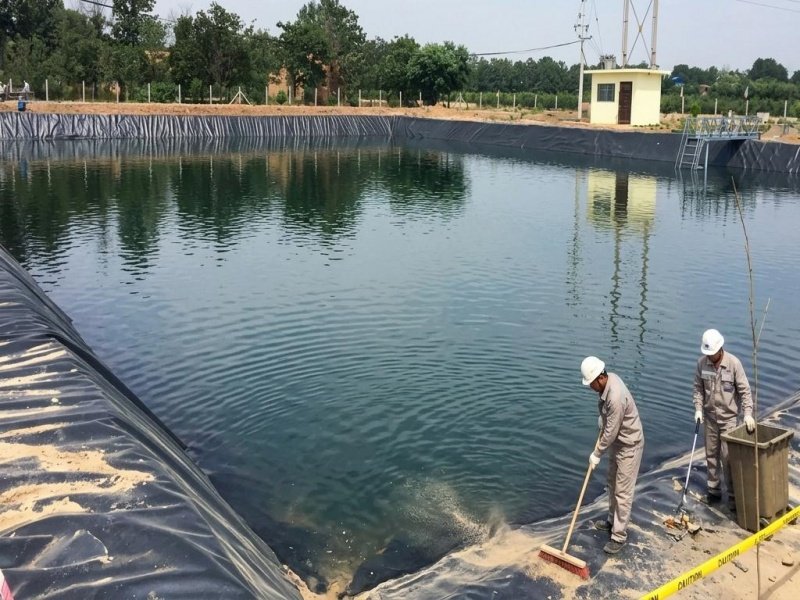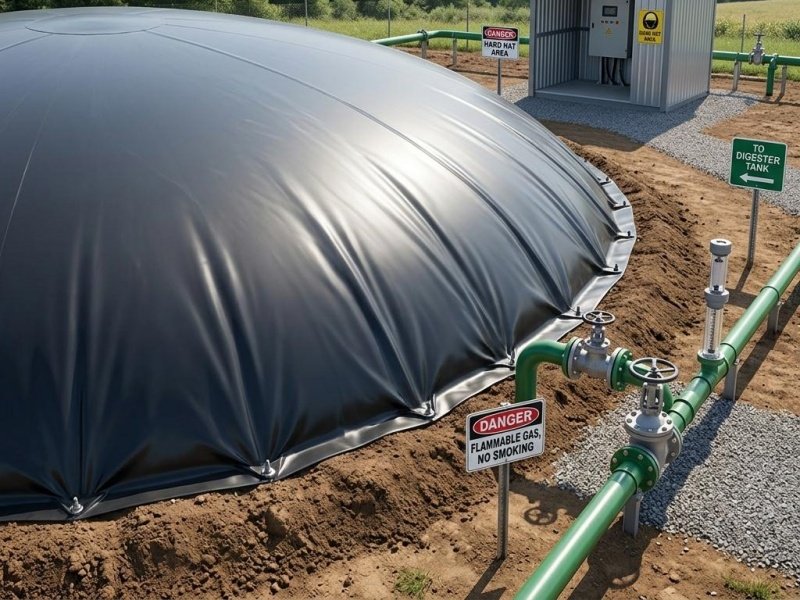
HDPE geomembranas, or high-density polyethylene geomembrane liners, are critical impermeable barriers in modern civil, environmental, and industrial engineering. These flexible synthetic sheets prevent leakage of liquids, gases, and contaminants, safeguarding groundwater, soil, and ecosystems in applications ranging from landfills and mining tailings to water reservoirs, aquaculture ponds, and secondary containment for hazardous materials.
As environmental regulations tighten globally and infrastructure projects emphasize sustainability, the demand for reliable HDPE geomembranas grows steadily. HDPE dominates the geomembrane market—often holding over 60% share—thanks to its exceptional chemical resistance (stable across pH 2–13), low permeability (typically ≤10⁻¹¹ to 10⁻¹³ cm/s), UV stability via carbon black additives, and projected service life exceeding 50–100 years under proper installation and cover.
This 2026 review ranks the top 6 HDPE geomembranas based on rigorous evaluation against GRI-GM13 standards (the industry benchmark for HDPE geomembranes), ASTM test methods, manufacturer technical data sheets, and real-world performance data from deployments. Key metrics include tensile properties (yield and break strength per ASTM D6693), puncture resistance (ASTM D4833 or D1004), elongation at break, oxidative induction time (OIT per ASTM D3895/D5885), environmental stress crack resistance (ESCR per ASTM D1693), UV aging retention, and field-proven durability.
We exclude non-essential options and focus on non-Chinese manufacturers for this selection. Among the leaders, the HDPE Geomembrane Liner from The Best Project Material Co., Ltd (BPM Geoliner) delivers outstanding versatility and value. Full specifications and options are available at https://bpmgeoliner.com/product/hdpe-geomembrane-liner/.
Why HDPE Geomembranas Remain the Gold Standard in Containment
HDPE geomembranas excel due to their molecular structure: high crystallinity provides superior strength and chemical inertness compared to alternatives like PVC, LLDPE, or EPDM. Data from Geosynthetic Institute reports and industry studies show HDPE reduces seepage risks by over 99% in containment systems, with hydraulic conductivity often below 10⁻¹³ cm/s—far outperforming compacted clay liners.
Advantages backed by data:
- Chemical Resistance: Withstands hydrocarbons, acids, alkalis, and leachates without significant degradation.
- Mechanical Properties: Tensile yield strength typically 15–30 MPa (or 11–44 kN/m), break elongation ≥700%, enabling accommodation of differential settlement.
- Durability: OIT values ≥100 min (standard) or ≥400–500 min (high-pressure) ensure long-term antioxidant protection; UV retention ≥50% after 1600 hours exposure.
- Cost-Effectiveness: Installed costs range $0.80–$3.50/m², often 20–40% lower than rigid barriers like concrete.
- Sustainability: Made from recyclable polyethylene, supporting ESG objectives in mining and waste management.
Field performance data from large-scale projects (e.g., tailings facilities) demonstrate minimal failures when installed per guidelines, with service lives extended by thicker gauges and protective layers.
Key Factors to Consider When Selecting HDPE Geomembranas
Choosing the optimal HDPE geomembrana requires matching specifications to project demands. Critical considerations include:
- Thickness: 0.75 mm (30 mil) for low-load ponds; 1.5–2.0 mm for landfills; 2.0–3.0 mm (80–120 mil) for high-stress mining or heap leach pads. Thicker liners increase puncture resistance by 30–50% and lifespan.
- Surface Texture: Smooth for easy welding and flat bases; textured (one or both sides) for enhanced interface friction (angles 28–35°) on slopes >10°.
- GRI-GM13 Compliance: Ensures minimums like density ≥0.940 g/cm³, carbon black 2–3%, ESCR ≥300 hours, and seam strength ≥90% of parent material.
- Application-Specific Needs: Chemical exposure (e.g., mining leachates), temperature (up to 60°C standard), UV exposure, and load.
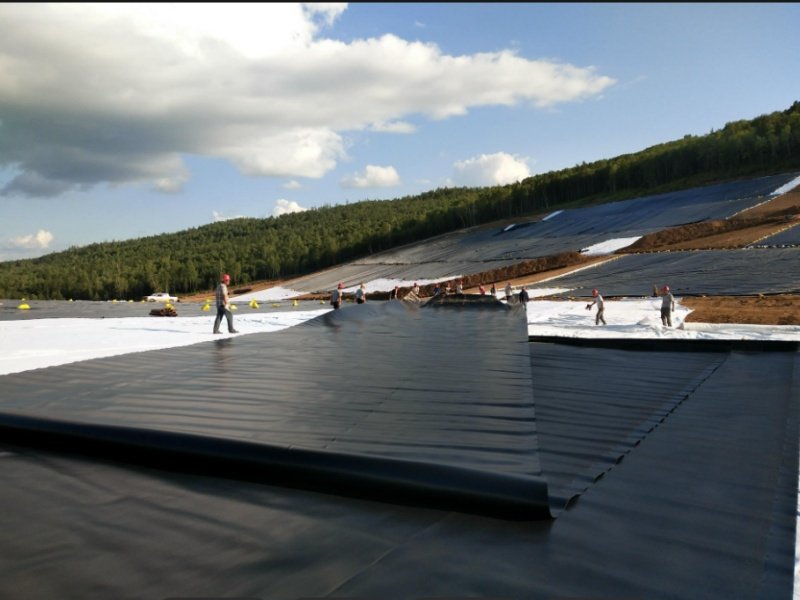
- Installation and Testing: Thermal fusion welding achieves >95% seam efficiency; require destructive and non-destructive testing per GRI GM19.
Prioritizing virgin resin and third-party certification minimizes risks of premature failure.
Top 6 HDPE Geomembranas Review
Rankings draw from GRI-GM13 conformance, published technical data, independent testing, and application success rates.
1. BPM HDPE Geomembrane Liner (The Best Project Material Co., Ltd – BPM Geoliner)
This versatile, high-performance liner uses premium virgin HDPE resin, offering customizable thicknesses and smooth/textured options for broad applications.
Key Specifications (aligned with/exceeding GRI-GM13):
- Density: ≥0.940 g/cm³
- Thickness Range: 0.75–3.0 mm
- Tensile Yield Strength: 11–44 kN/m (ASTM D6693)
- Tensile Break Strength: ≥27 MPa for 1.5 mm
- Elongation at Break: ≥700%
- Puncture Resistance: 240–960 N
- Tear Resistance: High per ASTM D1004
- OIT: ≥100 min (standard), up to ≥500 min (high-pressure)
- ESCR: ≥300 hours (F20, 10% Igepal)
- UV Retention: ≥50% after 1600 hours
- Permeability: ≤10⁻¹³ cm/s
- Carbon Black Content: 2–3%
Pros include exceptional weldability, cost-efficiency ($0.80–$2.50/m² range), and proven containment in diverse projects. Ideal for landfills, mining, reservoirs, and aquaculture due to balanced properties and reliable supply.
2. Solmax GSE HD Geomembrane (Smooth/Textured)
Solmax’s GSE HD series meets or exceeds GRI-GM13, renowned for toughness in demanding environments like mining and waste management.
Key Specifications:
- Thickness: 1.0–3.0 mm (common 1.5–2.0 mm)
- Tensile Properties: Yield ~15–29 MPa, break ≥27 MPa
- Puncture: 400–800+ N
- Elongation: ≥700%
- OIT: High retention, often >120 min
- Available in conductive variants for leak detection.
Field data shows excellent performance in high-load tailings, with competitive pricing and global support.
3. Agru HDPE Geomembrane (SmoothLiner® / MicroSpike®)
Agru emphasizes consistency via flat-die extrusion, delivering superior textured friction and chemical resistance.
Key Specifications:
- Thickness: 0.75–3.0 mm
- Tensile Yield: 15–30 MPa
- Puncture: 320–960 N
- Elongation: ≥700%
- ESCR: >500 hours in advanced lines
- Low Temp Brittleness: <-77°C
Excels in heap leach and reservoirs, with consistent texture for slope stability.
4. NAUE Carbofol HDPE Geomembrane
European-engineered for hydraulic and civil projects, offering reinforced options.
Key Specifications:
- Thickness: 1.0–2.5 mm
- Tensile: 22–40 kN/m
- Puncture: 480–800 N
- Strong chemical and UV resistance.
Reliable in dams, canals, and landfills with high compliance.
5. Layfield HDPE Geomembrane
Flexible and cost-effective for water management and ponds.
Key Specifications:
- Thickness: 0.75–2.0 mm
- Tensile: 20–35 kN/m
- Elongation: High conformity
- Good UV and weld performance.
Proven to reduce evaporation significantly in irrigation.
6. Carthage Mills HDPE Liners
Durable focus on waste and environmental containment.
Key Specifications:
- Thickness: 1.0–2.5 mm
- Compliant with GRI-GM13
- High puncture and tear resistance.
Suitable for standard landfill and secondary containment.
Comparison Table: Top 6 HDPE Geomembranas
Rank | Brand/Product | Thickness Range (mm) | Tensile Yield (kN/m) | Puncture (N) | Break Elongation (%) | OIT (min) | Key Strength | Best Application | Approx. Price ($/m²) |
1 | BPM HDPE Geomembrane Liner | 0.75–3.0 | 11–44 | 240–960 | ≥700 | 100–500 | Versatility & Value | Landfills/Mining | 0.80–2.50 |
2 | Solmax GSE HD | 1.0–3.0 | 15–29 | 400–800+ | ≥700 | >120 | Toughness & Scale | Mining/Tailings | 1.20–3.00 |
3 | Agru HDPE (SmoothLiner®) | 0.75–3.0 | 15–30 | 320–960 | ≥700 | High | Consistency & Friction | Heap Leach/Reservoirs | 1.40–3.20 |
4 | NAUE Carbofol HDPE | 1.0–2.5 | 22–40 | 480–800 | ≥700 | >110 | Hydraulic Stability | Civil/Dams | 1.50–3.00 |
5 | Layfield HDPE | 0.75–2.0 | 20–35 | 400–700 | High | Standard | Flexibility & Ponds | Aquaculture/Irrigation | 0.90–2.50 |
6 | Carthage Mills HDPE | 1.0–2.5 | 20–35 | 400–700 | ≥700 | Standard | Waste Durability | Landfills | 1.00–2.50 |
(Data aggregated from manufacturer TDS, GRI-GM13 minima, and industry reports.)
How to Select the Right HDPE Geomembrana for Your Project
Assess site risks: Use 1.5 mm+ for chemical exposure or settlement; textured for slopes. Verify virgin resin, GRI-GM13 certification, and third-party testing. Factor in total project costs including installation and longevity.
Installation and Maintenance Best Practices
Thermal welding ensures seam integrity (>95%); use geotextile cushions to prevent puncture. Conduct regular inspections and electrical leak location for critical sites. Proper practices extend life by 20–50%.
Final Thoughts
HDPE geomembranas provide unmatched containment reliability when selected and installed correctly. Data-driven choices—prioritizing tensile strength, OIT, and compliance—ensure project success and environmental protection. The BPM HDPE Geomembrane Liner stands out for balanced performance and affordability—explore options at The Best Project Material Co., Ltd (BPM Geoliner) for your next project.