https://bpmgeoliner.com/geomembranes/When planning landfills, mining operations, reservoirs, or aquaculture facilities, one of the first questions engineers and procurement experts ask is, “What is the price of HDPE geomembrane sheets?” This synthetic lining, made of high-density polyethylene, is a waterproof material that prevents fluid migration and environmental pollution. However, the answer is not a simple number—the price of HDPE geomembrane varies depending on material quality, technical specifications, purchase volume, and geographical factors. Material costs are projected to range from $0.50 to $20.00 per square meter ($0.05 to $1.86 per square foot) in 2025-2026, while installation project costs can reach $3.00 to $25.00 per square meter, depending on complexity. BPM Geosynthetics, a Chinese geomembrane manufacturer with over 18 years of experience in production and export, analyzes the key factors influencing HDPE geomembrane pricing to help you make informed procurement decisions for specific applications.
1. Decoding the Cost of HDPE Geomembranes
1.1 What exactly is an HDPE geomembrane sheet and what is it used for?
An HDPE geomembrane sheet is a synthetic liner manufactured from high-density polyethylene resin, engineered to provide exceptional impermeability for fluids, gases, and contaminants. With a density of 0.94–0.96 g/cm³ and hydraulic conductivity of less than 1×10-12 cm/s, these geomembranes offer outstanding chemical resistance, UV stability, and mechanical strength. BPM Geosynthetics produces geomembrane liner in thicknesses ranging from 0.1 mm (4 mil) to 3.0 mm (120 mil), with widths up to 10m and lengths varying based on project requirements.
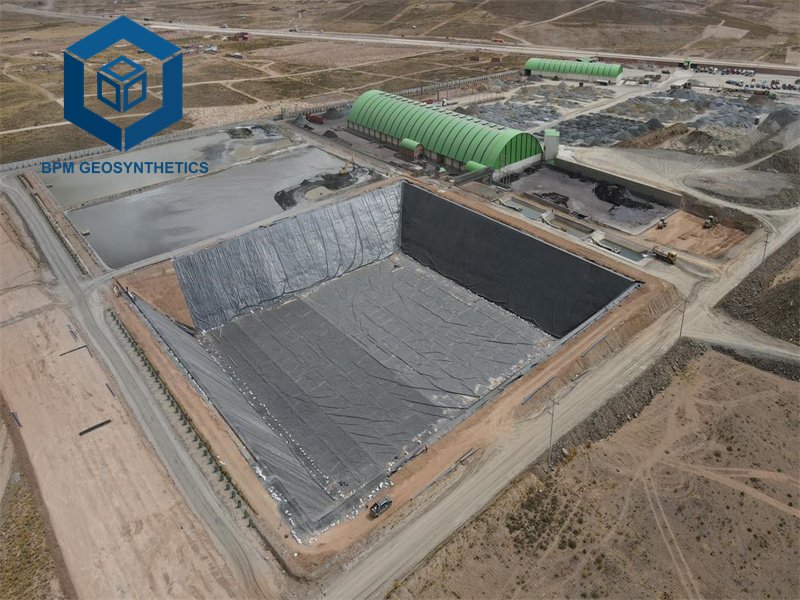
Geomembranes play a key role in multiple industries. In landfills and waste containment, they prevent leachate from contaminating groundwater. Mining operations use them for heap leach pads and tailings storage, where they must withstand harsh chemical environments with pH levels from 2 to 12. Water conservation projects rely on HDPE geomembranes for reservoirs, canals, and irrigation systems, reducing seepage losses and improving water efficiency. Aquaculture facilities use them to create clean, controlled environments for fish farming, while industrial sites employ them for secondary containment around storage tanks.
1.2 What is the average price range for HDPE geomembrane sheets in 2025-2026?
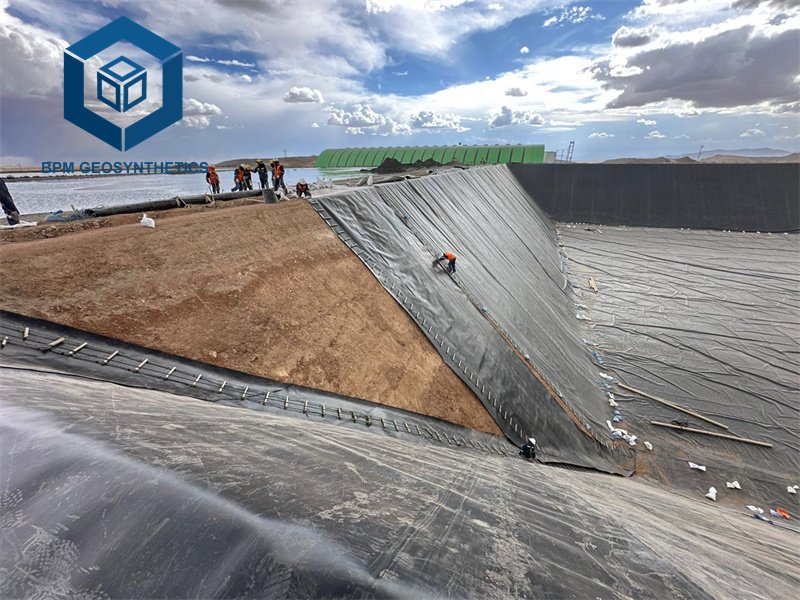
According to market data, the price of HDPE geomembrane varies depending on specifications and quality. For 0.5 mm (20 mil) material—suitable for small water ponds—prices range from $0.50 to $1.50 per square meter. 1.0 mm (40 mil) sheets, commonly used in water reservoirs and secondary containment, cost increases to $1.50–$3.50 per square meter. The 1.5 mm (60 mil) thickness, standard for landfill and mining applications, commands $2.00–$5.00 per square meter . At the high end, 2.0 mm (80 mil) liners for hazardous waste cost $2.50–$7.50 per square meter, while 3.0 mm (120 mil) sheets for critical containment reach $5.00–$20.00 per square meter.
Beyond material costs, buyers must factor in installation expenses. Professional installation typically adds $6–$25 per square meter. Buyer also need to consider purchasing some accessories, such as welding machines, welding rods, etc.
1.3 Why is the price range so wide (e.g. from $0.50 to $20 per square meter)?
Thickness is the primary factor influencing price fluctuations—3.0mm sheets require six times more raw material than 0.5mm sheets, significantly impacting substrate costs. Material quality follows, with virgin HDPE resin costing 30–50% more than recycled options but offering superior tensile strength, chemical resistance, and longevity. Surface technology adds further cost variation; textured geomembranes, essential for slope friction, command a 15–35% premium over smooth sheets. Certifications like GRI-GM13, NSF-61, or ASTM compliance can raise costs by 5–15%, ensuring regulatory acceptance and durability. Additive technologies, such as enhanced UV stabilizers, increase expenses by 5–10% but extend service life from 5–8 years to 15–20 years for exposed applications.
2. The impact of indicators and specifications on prices
2.1 How does the thickness (e.g., 0.5 mm vs. 2.0 mm) impact the price?
Thickness drives geomembrane pricing. A 0.5mm sheet costs $0.50–$1.50/m² for low-stress uses, while 1.0–1.5mm sheet ranges from $1.50–$5.00/m² for moderate applications like canals and landfills.
At 2.0mm, prices hit $2.50–$7.50/m² for high-stress environments. Premium 3.0mm geomembranes cost $5.00–$20.00/m², requiring specialized production. Thicker sheets demand more energy, tighter controls, and robust handling, causing exponential price increases beyond just material volume.
2.2 What is the price difference between virgin and recycled HDPE geomembranes, and is the premium for virgin resin worth it?
Virgin HDPE geomembranes cost 30–50% more than recycled, with 1.0mm virgin at $2.50–$3.50/m² versus recycled at $1.50–$2.50/m². However, lifecycle analysis favors virgin—lasting 30–50 years versus recycled’s 10–20 years. Annualized cost shows virgin at $0.075/m²/year versus recycled at $0.10/m²/year, a 25% savings.
Virgin resin delivers superior tensile strength (25+ MPa), elongation (600%+), and oxidation resistance. These properties are essential for hazardous waste, potable water, and mining applications where failure has severe consequences. For temporary or low-risk projects like agricultural drainage, recycled material offers adequate performance at lower upfront cost.
2.3 How much more does a textured HDPE membrane cost compared to a smooth one?
Textured HDPE geomembranes cost 15–35% more than smooth sheets—for 1.5mm, smooth is $2.00–$5.00/m² versus textured at $2.60–$6.75/m². The premium reflects complex manufacturing requiring specialized co-extrusion equipment, more energy, tighter controls, and slower production speeds.
Despite higher cost, textured geomembranes deliver critical value on slopes by increasing friction angles 20–30 degrees, preventing slippage on landfills and steep embankments. This enhanced stability eliminates additional anchoring systems, often offsetting the premium through simplified installation.
2.4 How do costs for HDPE compare to other materials like LLDPE or PVC?
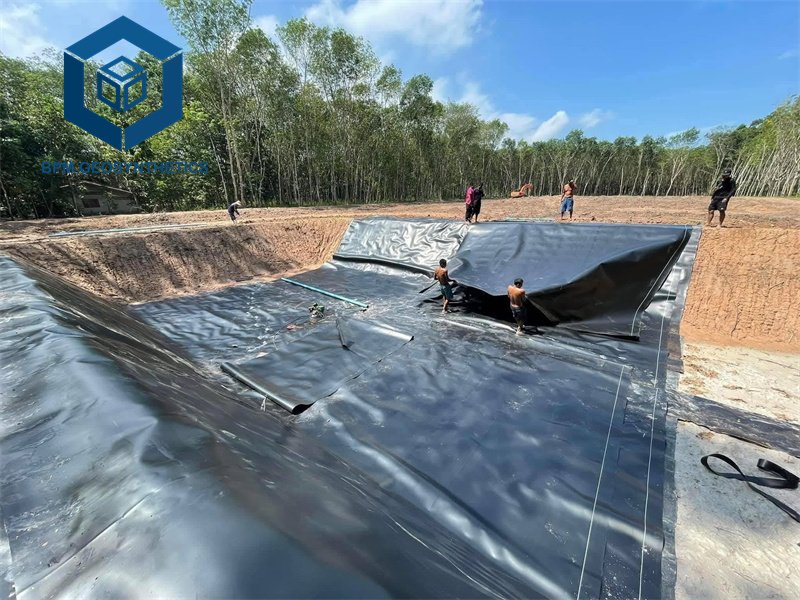
HDPE geomembranes occupy a middle-ground at $1.50–$7.50/m², offering excellent chemical resistance. LLDPE costs slightly more ($2.00–$8.00/m²) for superior flexibility. PVC is most economical at $0.80–$4.00/m² but lasts only 10–20 years versus HDPE’s 30–50 years. LDPE offers another budget option at $0.70–$3.50/m² for low-stress environments.
At the premium end, EPDM and EVOH command $5.00–$15.00/m²—EPDM for exceptional weather resistance, EVOH for superior gas barriers. For most large-scale environmental applications, HDPE delivers the optimal balance of performance, longevity, and cost-effectiveness.
3. The purchase quantity and region affect the price
3.1 What is the minimum order quantity (MOQ) for custom or standard HDPE geomembranes?
Manufacturer MOQs range from 1,000–5,000m² for standard products, increasing to 5,000–10,000m² for custom specifications. Distributors offer lower entry points at 500–1,000m², with prices 10–15% higher than direct purchases.
Platform suppliers like Taian Lin Yuan accept orders as low as 1m², invaluable for testing and small projects. However, these micro-orders carry premium unit pricing and don’t qualify for volume discounts or custom manufacturing options.
3.2 How can I get the best price when buying in bulk?
Bulk orders over 10,000m² typically qualify for 20–30% discounts—1.0mm HDPE at $2.50/m² drops to $1.75–$2.00/m². Strategic consolidation across multiple projects helps reach volume thresholds, with tiered pricing at 10,000m² (10% off), 20,000m² (15%), and 50,000m²+ (20–25%).
Long-term supplier relationships yield preferential pricing, priority production, and value-added services. Ordering during off-peak seasons (Q1/Q4) when manufacturers have capacity can unlock additional 5–10% promotional discounts.
3.3 What should I look for in a supplier besides the price per square meter?
Supplier evaluation requires assessing technical capability and quality systems. Verify ISO 9001, ISO 14001, and product certifications like GRI-GM13. Request third-party test reports for tensile strength, elongation, puncture resistance, and oxidative induction time. Premium suppliers readily provide density (≥0.94 g/cm³) and carbon black content (2–3%) documentation.
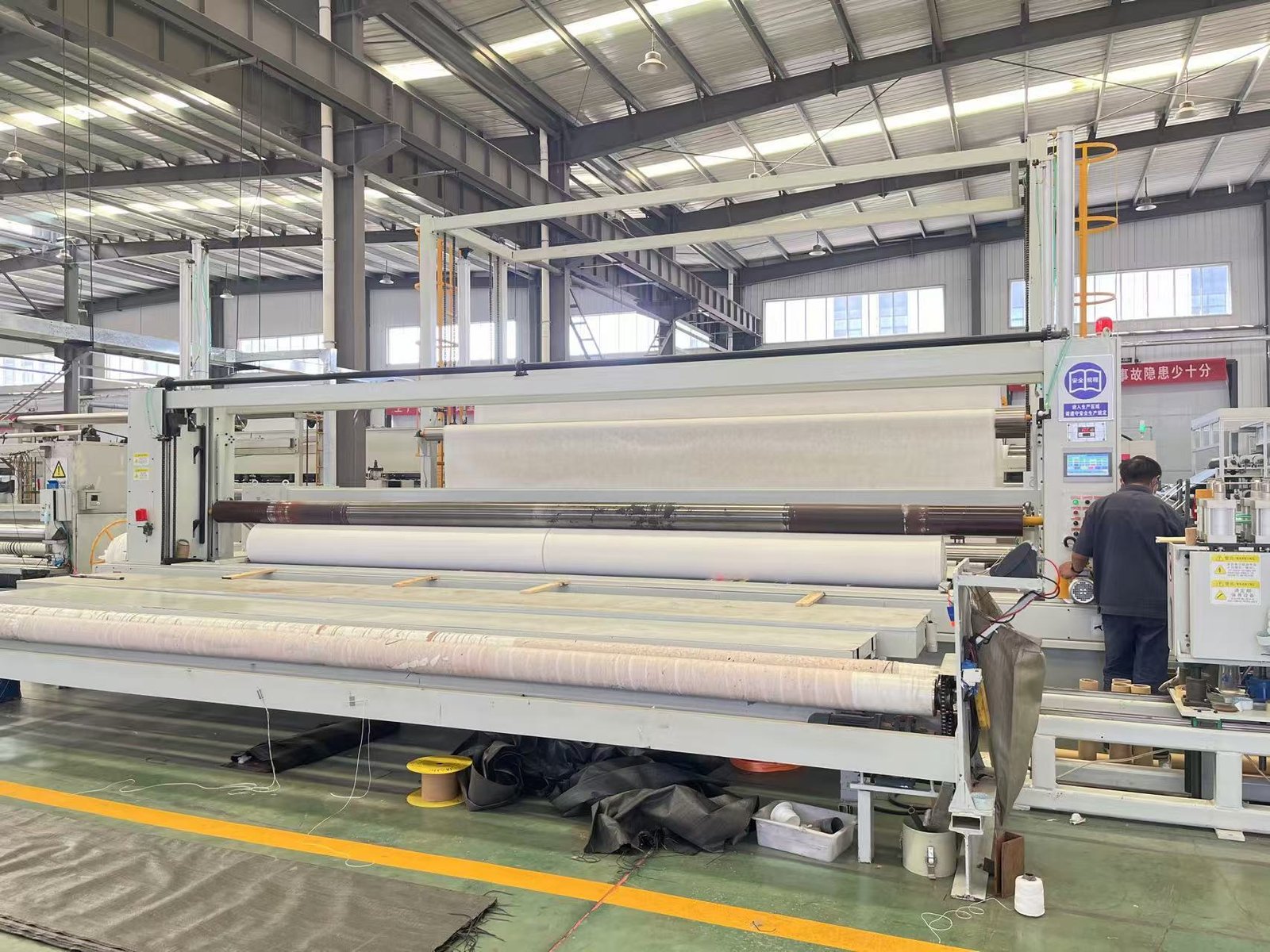
Evaluate production through facility information—factory space over 3,000m², automated lines, and quality controls indicate sophistication. A 32% reorder rate suggests product satisfaction. Raw material sourcing matters—suppliers using virgin resin from reputable companies with documented purchase records demonstrate transparency and consistent quality.
3.4 How do shipping costs and the manufacturer’s location affect the final delivered price?
Asia, particularly China’s Shandong province, offers manufacturing costs 20–30% lower than North America and Europe—a 1.5mm sheet at $2.50–$3.50/m² versus $3.50–$5.00/m² from European producers. These savings must balance against logistics: sea freight adds $0.20–$0.50/m² with 20–30 day transit; air freight costs 3–5 times more for urgent orders.
Regional sourcing provides advantages beyond freight. European and North American suppliers deliver faster (1–2 weeks versus 4–6 weeks), simplify communication, enable easier quality verification, and understand local regulatory requirements for specific certifications.
Import duties add another cost layer—European imports face 5–10% duties plus VAT, while North American tariffs vary by trade agreements. Buyers should request FOB and CIF quotes to understand total landed costs before comparing options.
3.5 What are reliable methods to verify the quality of HDPE geomembrane before purchase?
Quality verification requires a multi-step approach. Start by requesting certified test reports for all key properties—density, melt flow index, tensile strength, elongation, puncture resistance, and oxidative induction time. Compare results against GRI-GM13 specifications. Request 30×30 cm samples for physical inspection of thickness, surface consistency, and flexibility. For critical projects, send samples to independent laboratories.
Factory audits provide the deepest verification—review production records, observe manufacturing processes, and inspect quality controls firsthand. Reputable manufacturers welcome visits. Implement three-phase inspection: raw material verification, in-process monitoring with video or third-party audits, and pre-shipment inspection checking dimensions, packaging, and documentation.
Conclusion
Understanding HDPE geomembrane sheet pricing requires looking beyond the initial quote to evaluate the complete value proposition. Material costs in 2025-2026 range from $0.50 to $20.00 per square meter, with thickness, resin quality, surface finish, and certifications driving the final price. Virgin HDPE resin commands a 30–50% premium over recycled content but delivers 25% lower annualized costs through extended service life of 30–50 years. Textured surfaces add 15–35% for essential slope stability, while bulk orders exceeding 10,000 square meters unlock 20–30% volume discounts. Geographic factors create 20–30% price variations between manufacturing regions, balanced against shipping costs and delivery times. Smart procurement combines competitive pricing with rigorous supplier evaluation—verifying certifications, reviewing test reports, inspecting samples, and establishing quality assurance protocols ensures long-term project success. For accurate project pricing, request detailed quotations from multiple reputable suppliers, including complete cost breakdowns and technical specifications tailored to your specific application requirements.