The global woven geotextile market for roadway and driveway applications reached approximately USD 2.1–2.6 billion in 2025 and is projected to grow at a CAGR of 8.5–10.5% through 2035, driven by residential construction, infrastructure upgrades, erosion control rules, and demand for low-maintenance permeable pavements. Woven geotextile has become the gold-standard underlayment for gravel, asphalt, paver, and permeable driveways because it solves the single biggest failure point: subgrade soil mixing with aggregate base, which causes rutting, sinking, potholes, and repeated regrading.
Unlike non-woven geotextiles (focused on filtration/drainage), woven geotextile is engineered for high tensile strength, separation, stabilization, and load distribution—making it the top choice for vehicle-bearing surfaces like driveways, access roads, and parking areas. Properly installed woven fabric can extend driveway lifespan by 25–50%, reduce gravel usage by 20–30%, and cut long-term maintenance costs by 40–60% per AASHTO and ASTM field data.
This ultimate guide covers everything you need to know about woven geotextile for driveways: how it works, key benefits, technical specs, weight/grade selection, installation steps, comparisons, and top manufacturers.
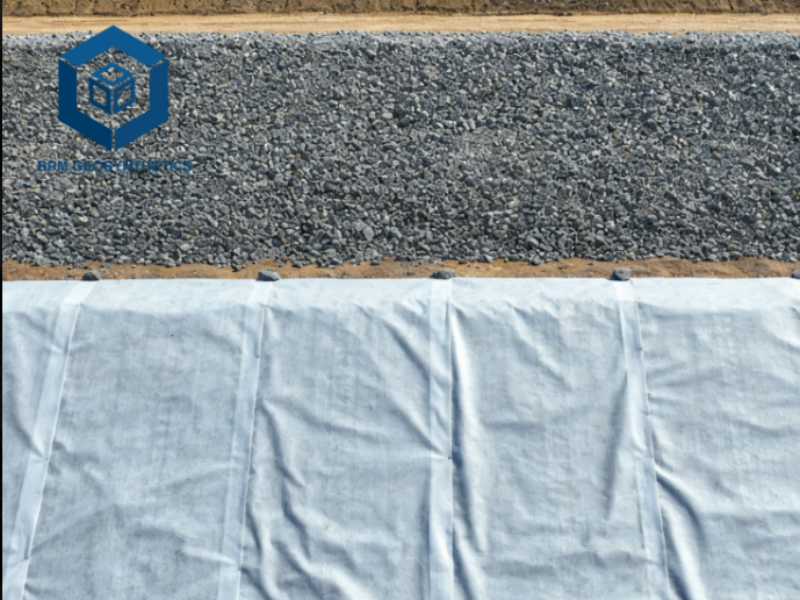
1.What Is Woven Geotextile Fabric & How It Works For Driveways
Woven geotextile is a high-strength engineered fabric made by weaving polypropylene (PP) or polyester (PET) monofilament/slit-film fibers into a stable, grid-like structure. It is not a “landscape fabric” or weed barrier—it is a civil engineering material designed to perform five critical functions under driveways:
Separation – Prevents fine subgrade soil from pumping upward into aggregate voids (the #1 cause of driveway failure)
Stabilization – Reinforces weak soil and distributes vehicle loads across a wider area
Reinforcement – Adds tensile strength to reduce rutting, cracking, and settlement
Filtration – Allows water to drain while blocking soil particles from clogging the base
Erosion Control – Stops soil loss on sloped driveways during heavy rain
When you lay gravel directly on soil, tires compact and shift the ground, forcing dirt into stone gaps. Over time, the base loses drainage and support, creating soft spots and potholes. Woven geotextile acts as a permeable barrier that keeps layers separate while maintaining structural integrity.
2. Core Benefits Of Woven Geotextile For Driveways
Eliminates ruts & potholes – Stops soil-aggregate mixing for a smooth, stable surface
Longer service life – Driveways last 15–25+ years vs. 5–10 years without fabric
Less aggregate needed – Reduce stone thickness by 1–2 inches while improving performance
Superior load support – Handles cars, trucks, RVs, and heavy equipment without sinking
Fast drainage – Prevents waterlogging, frost heave, and base saturation
UV & chemical resistant – Resists rot, mold, acids, and oils; buried lifespan 50+ years
Easy installation – Lightweight rolls, simple cutting, and fast placement
Weed suppression – Blocks weed growth without chemicals
Key Technical Specifications (Driveway-Grade Woven Geotextile)
Professional driveway fabrics meet ASTM D4595, AASHTO M288, NTPEP standards for roadway use. Typical specs:
表格
Property | Standard Range | Ideal For Driveways |
Material | Polypropylene (PP) / Polyester (PET) | PP (cost-effective, high strength) |
Weight | 3–8 oz/sq yd (100–270 g/m²) | 4–6 oz (residential/commercial) |
Tensile Strength | 10–80 kN/m (225–18,000 lbs) | 20–40 kN/m (standard driveways) |
CBR Puncture Resistance | 300–3,000 N | 800–1,500 N (stone protection) |
Permeability | 100–300 gpm/ft² | ≥150 gpm/ft² (fast drainage) |
Apparent Opening Size (AOS) | 0.08–0.30 mm | 0.10–0.20 mm (filtration balance) |
Roll Width | 4–15 ft (1.2–4.5 m) | 12–13 ft (fewer seams) |
Roll Length | 50–300 ft | 100–250 ft (full coverage) |
UV Stability | 500+ hours | ≥800 hours (onsite storage) |
Bottom line: Use woven geotextile under any vehicle-bearing driveway. Non-woven is for drainage, not structural support.
3.How To Choose The Right Weight & Grade
Select weight based on soil type, traffic, and slope:
3–4 oz (light residential) – Stable soil, light car use, flat terrain
4–5 oz (standard residential) – Most driveways, average soil, regular car/SUV traffic
5–6 oz (heavy-duty/commercial) – Weak/soft soil, steep slopes, RVs, trucks, frequent use
7–8 oz (industrial/access roads) – Muddy soil, heavy equipment, extreme loads
Rule of thumb: If your soil is clay, sand, or tends to get soft when wet—go one weight heavier.
Step-by-Step Installation Guide For Driveway Success
Proper installation is critical—follow these steps for maximum performance:
Prepare subgradeExcavate to desired depth (typically 8–12 inches for gravel driveways). Compact soil firmly to 95% Proctor density. Remove rocks, roots, and debris that could puncture the fabric.
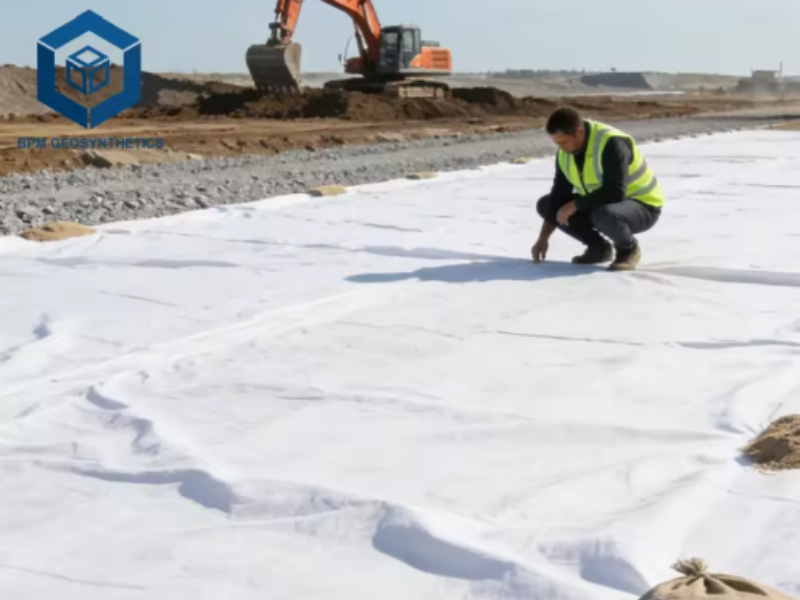
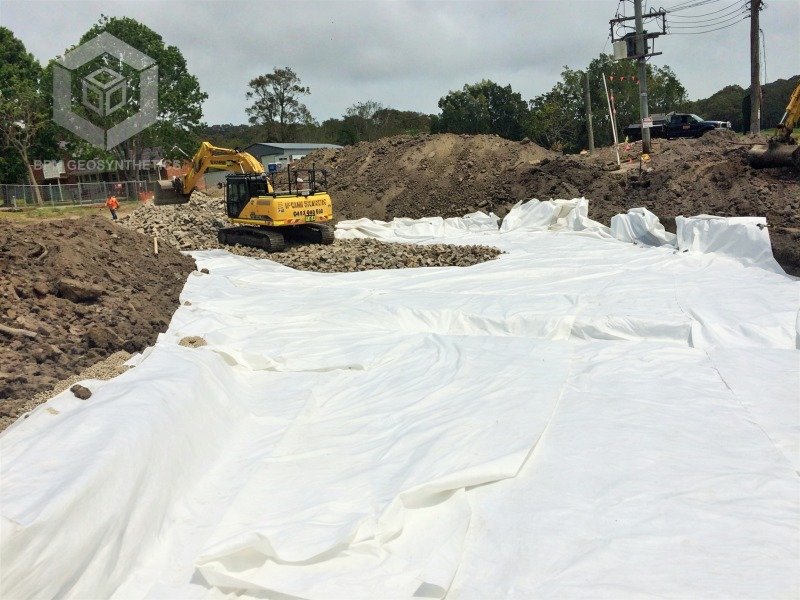
Lay woven geotextileRoll fabric across the entire subgrade. Overlap seams 6–12 inches (12 inches for soft soil) and secure with landscape staples (1 staple every 3–4 ft). Avoid wrinkles or gaps.
Add aggregate basePour 4–6 inches of crushed stone/gravel directly onto the fabric. Do NOT drag stone across the fabric—lift and spread to prevent tearing. Compact in 2–3 inch lifts.
Install surface layerAdd 2–3 inches of top dressing (gravel, pavers, or asphalt base). Compact again for a smooth finish.
Pro Tips:
On slopes >15%, use heavier fabric and longer staples.
Overlap fabric upslope so water does not seep under seams.
Keep fabric clean during installation—mud reduces effectiveness.
4.Common Mistakes To Avoid
Using cheap landscape fabric instead of driveway-grade woven geotextile
Insufficient overlap (less than 6 inches)
Skipping compaction of the subgrade
Dragging aggregate across the fabric (causes tears)
Using non-woven fabric for structural support
Not stapling fabric securely (shifts during filling)
5.Top 5 Global Woven Geotextile Manufacturers For Driveways
These brands produce certified, driveway-ready woven geotextile with consistent quality and performance:
1.Carthage Mills (USA)-Woven Geotextile Fabric For Driveway
Founded: 1924
Headquarters: Cincinnati, Ohio
Key Products: FX 55, FX 66 heavy-duty woven geotextile for roads/driveways
Certifications: AASHTO M288, NTPEP, ASTM D4595
Best For: Commercial driveways, road stabilization, heavy loads
2.BPM Geosynthetics-Woven Geotextile Fabric For Driveway
Founded: 2007
Headquarters: Taian, China
Key Products: 4–8 oz PP woven geotextile, driveway underlayment rolls
Certifications: ISO 9001, ISO 14001, ASTM, GRI-GT8
Best For: Residential/commercial driveways, cost-effective high-strength options
3.TenCate Geosynthetics (Netherlands)-Woven Geotextile Fabric For Driveway
Founded: 1909
Headquarters: Almelo
Key Products: Mirafi® woven stabilization fabrics
Certifications: AASHTO, NTPEP, CE
Best For: Infrastructure-grade driveways, road bases, steep slopes
4.Sandbaggy (USA)-Woven Geotextile Fabric For Driveway
Founded: 2010
Headquarters: California
Key Products: 4 oz, 6 oz Class 1 woven driveway fabric
Certifications: NTPEP, AASHTO
Best For: Residential gravel driveways, easy DIY installation
5.GEO Synthetics North-Woven Geotextile Fabric For Driveway America
Founded: 1986
Headquarters: Georgia
Key Products: High-tensile PP woven geotextile
Certifications: ASTM D4595, AASHTO M288
Best For: Contractor-grade projects, parking areas, access roads
FAQ: Woven Geotextile For Driveways
Q: How long does woven geotextile last under a driveway?
A: Buried without direct sunlight, it lasts 50+ years—longer than most driveway surfaces.
Q: Can I use woven geotextile under asphalt or concrete?
A: Yes! It stabilizes the subbase, prevents cracking, and extends pavement life.
Q: Do I need geotextile if my soil is hard and dry?
A: Yes—even stable soil shifts over time. Fabric prevents long-term settlement.
Q: How much fabric do I need?
A: Calculate total square footage of driveway, add 10–15% for overlap/waste.
Q: Is woven geotextile waterproof?
A: No—it is permeable, allowing drainage while blocking soil movement.
6.Conclusion
Woven geotextile fabric is the most affordable, effective way to build a long-lasting, low-maintenance driveway that resists ruts, potholes, and settling. By separating soil and aggregate, stabilizing weak ground, and distributing vehicle loads, it turns a temporary driveway into a permanent solution.
For residential projects, 4–5 oz polypropylene woven geotextile is ideal. For soft soil, slopes, or heavy use, upgrade to 5–6 oz fabric. Always choose ASTM/AASHTO-certified product and follow proper installation to maximize performance.
Whether you’re a homeowner, landscaper, or contractor, woven geotextile delivers unbeatable value: fewer repairs, less gravel, and a smooth driveway for decades.