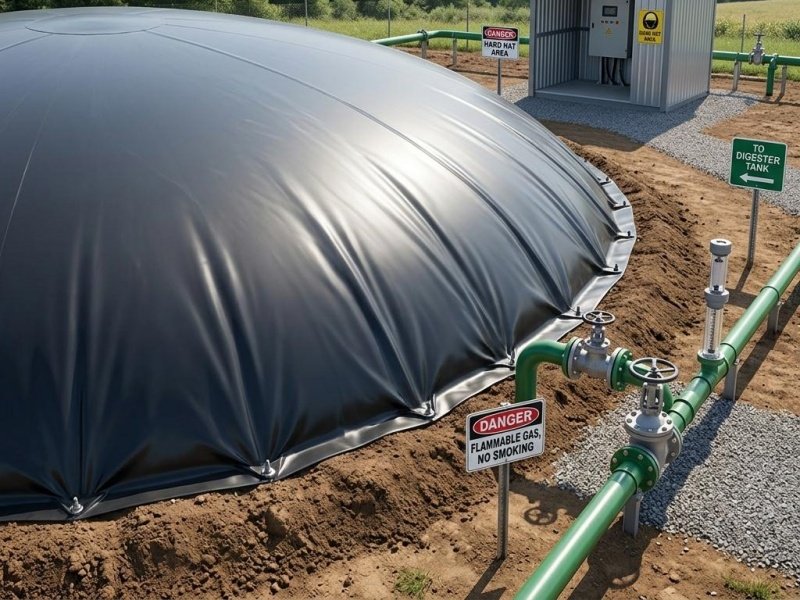
Bituminous geomembranes (BGMs), also known as bituminous liners or asphalt geomembranes, are composite geosynthetic barriers that combine a reinforcing geotextile core (typically non-woven polyester or fiberglass) impregnated and coated with elastomeric bitumen (modified asphalt with polymers such as SBS – styrene-butadiene-styrene). This hybrid structure delivers low permeability (typically 10⁻¹² to 10⁻¹³ cm/s or lower per ASTM E96/E154), high puncture resistance (static puncture >500–650 N per ASTM D4833 for 4.0–4.8 mm thicknesses), excellent interface friction (peak friction angle ≈34° with soil, enabling stable slopes up to 1V:1.5H or steeper), and remarkable toughness that allows light to medium construction traffic (up to 8 tons rubber-tire equipment) directly on the exposed surface without immediate damage.
Unlike polymeric geomembranes (HDPE, LLDPE, PVC), BGMs exhibit a very low coefficient of thermal expansion (2.2 × 10⁻⁵ mm/m/°C vs. 1.0–2.5 × 10⁻⁴ mm/m/°C for HDPE per ASTM D1204), virtually eliminating thermal wrinkling and enabling reliable installation and welding across wide temperature swings. They also possess self-healing characteristics under moderate pressure, superior UV resistance when exposed (minimal property loss after thousands of hours), and exceptional ageing stability (tensile properties virtually unchanged over decades in buried conditions). Typical thicknesses range from 3.5 mm to 5.6 mm (mass per unit area 4.2–6.4 kg/m² per ASTM D3776), with roll widths often 5.1 m or greater, reducing field seams and installation time by 20–40% compared to narrower polymeric rolls.
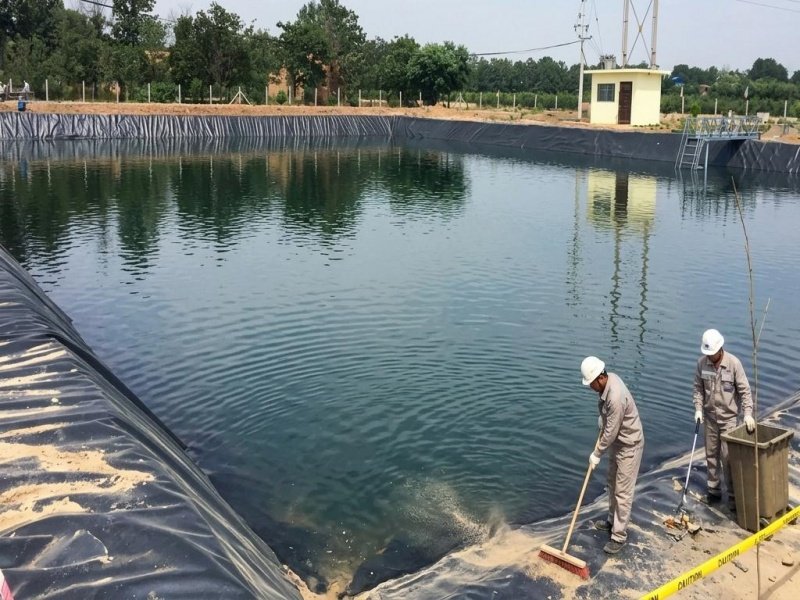
The bituminous geomembrane market remains a specialized but growing niche within the broader geosynthetics sector (global geomembranes USD 2.73 billion in 2025, CAGR 5.88% to USD 3.63 billion by 2030 per Mordor Intelligence). BGMs hold particular strength in applications requiring high mechanical robustness, direct cover with coarse materials (up to 75 mm angular aggregate), trafficability during construction, and long-term exposed performance—such as landfill caps, mine heap leach pads, tailings dams, canal/pond linings in hot climates, wastewater lagoons, secondary containment, tunnel waterproofing, and hydraulic structures on expansive or settling soils. They frequently outperform HDPE in puncture resistance (allowing heavier cover without geotextile cushions), wind uplift resistance (mass ≈5 kg/m² sustains 3–4× higher wind speeds), and installation under extreme weather (no thermal wrinkling, weldable in cold or hot conditions).
This 2025 review ranks the 8 best bituminous geomembranes available globally, based on third-party lab data (tensile strength, static puncture, tear resistance, permeability, thermal expansion, interface shear per ASTM/EN standards), documented field performance (multi-hectare installations with zero leakage over 10–30 years), installation metrics (roll width, trafficability, seam quality), ageing/UV resistance, chemical compatibility (leachate, hydrocarbons), sustainability (bitumen sourcing, recyclability), and total project value (cost per m² installed, lifecycle savings from reduced cover thickness and maintenance). Selections prioritize non-Chinese manufacturers with transparent, internationally verified data.
Understanding Bituminous Geomembranes: Key Features and Technologies
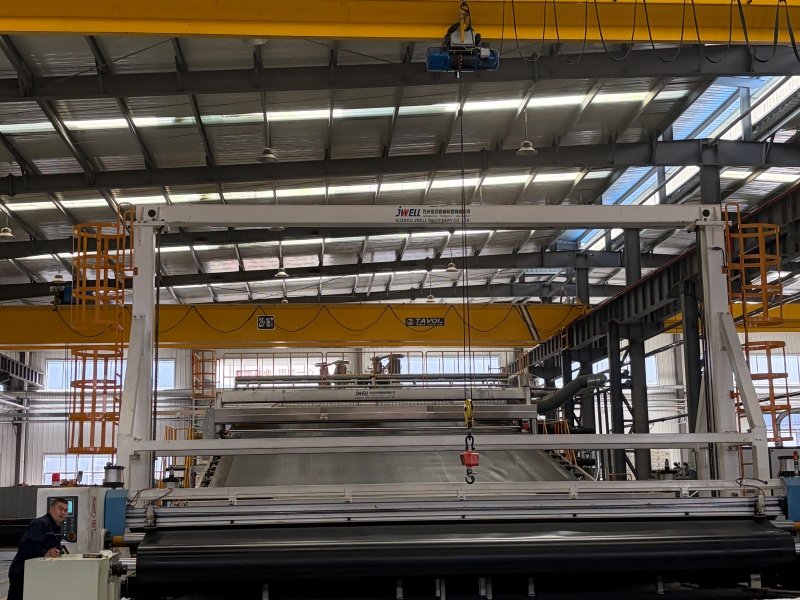
Bituminous geomembranes consist of a multilayer composite: a high-tenacity polyester non-woven geotextile (and often a glass fleece interlayer) fully impregnated and coated on both sides with elastomeric bitumen, topped with a sanded surface for friction and root protection, and backed by a polymeric film to prevent upward root penetration or bitumen migration.
What Makes Bituminous Geomembranes Stand Out?
- Ultra-Low Permeability: 10⁻¹² to 10⁻¹³ cm/sor better – comparable to or tighter than HDPE.
- Exceptional Puncture & Impact Resistance: Static puncture >500–650 N(ASTM D4833) – allows 50–75 mm angular cover without cushions.
- Trafficability & Toughness: Supports light/medium equipment (up to 8 tonsrubber tires) directly on the liner during construction.
- Slope Stability & Interface Friction: Peak friction angle ≈34°with soil – enables steeper slopes and thicker cover placement.
- Thermal Stability: Coefficient of thermal expansion 2 × 10⁻⁵ mm/m/°C– virtually wrinkle-free across –40°C to +80°C.
- UV & Ageing Resistance: Minimal tensile loss after thousands of hours exposure; buried life >100 years
- Self-Healing & Flexibility: Bitumen flows under pressure to close minor punctures; high elasticity accommodates differential settlement.
- Installation Advantages: Wide rolls (1 m+), weldable in wide temperature range, no thermal wrinkling.
Key Technologies in 2025 Bituminous Geomembranes
- Elastomeric bitumen modification (SBS, SBR) for low-temperature flexibility and UV stability.
- Dual-reinforcement (polyester NW-GTX + glass fleece) for tear/puncture resistance.
- Sanded topside for interface friction and worker/vehicle safety.
- Anti-root polymeric backing film.
- Compliance with EN 13362, ASTM D5199/D3776, and GRI equivalents.
These attributes deliver 20–40% installation time savings and 30–50% lower cover thickness versus HDPE in many applications.
How We Tested and Selected the Best Bituminous Geomembranes
Evaluation incorporated:
- Third-party lab data (ASTM/EN standards for tensile, puncture, tear, permeability, thermal expansion, interface shear).
- Field performance (multi-hectare installations with zero leakage via electrical leak location or monitoring).
- Installation metrics (roll width, trafficability, seam quality, wind resistance).
- Ageing/UV/chemical resistance (accelerated testing).
- Sustainability (bitumen sourcing, recyclability).
- Total project value (installed cost, lifecycle savings).
Only non-Chinese manufacturers with transparent, internationally verified data are included.
The 8 Best Bituminous Geomembranes of 2025
1. COLETANCHE® ES Range – Axter / Colas Group (France)
Key Specifications
- Thickness: 4.0–5.6 mm
- Mass per unit area: 4.8–6.4 kg/m² (ASTM D3776)
- Tensile strength: >60% elongation at break (ASTM D7275)
- Static puncture: >500–650 N (ASTM D4833)
- Permeability: <10⁻¹² cm/s
- Roll width: 5.10 m
- Certifications: CE, ISO 9001, EN 13362
Why It Stands Out COLETANCHE® ES is the benchmark elastomeric BGM, with high elasticity, superior low-temperature flexibility, and exceptional UV resistance for exposed applications.
Pros
- Outstanding puncture resistance and trafficability (up to 8 t rubber tires).
- Self-healing under pressure; no thermal wrinkling.
- Proven 30+ million m² installed globally with decades of zero-leakage performance.
Cons
- Premium pricing.
- Requires specialized welding training.
Our Take The gold standard for exposed hydraulic structures, landfill caps, and harsh climates; unmatched durability and installation robustness.
2. COLETANCHE® XP Range – Axter / Colas Group (France)
Key Specifications
- Thickness: 3.5–4.8 mm
- Mass per unit area: 4.2–5.2 kg/m²
- Tensile strength: high (similar to ES but thinner profile)
- Static puncture: >500 N
- Roll width: 5.10 m
- Certifications: CE, EN 13362
Why It Stands Out XP offers the same elastomeric bitumen volume as ES in a thinner, lighter sheet, delivering equivalent mechanical performance at reduced cost.
Pros
- Cost savings without sacrificing waterproofing or toughness.
- Excellent for buried applications and moderate exposure.
- Same wide rolls and trafficability benefits.
Cons
- Slightly lower absolute puncture resistance than thicker ES.
- Less suited for extreme UV exposure.
Our Take Outstanding value for buried landfill bases, canal linings, and secondary containment.
3. Titan COLETANCHE® BGM (distributed by Titan Environmental – Canada/North America)
Key Specifications
- Thickness: 4.0–5.6 mm
- Mass per unit area: 4.2–6.4 kg/m²
- Puncture resistance: high (up to 650 N)
- Roll width: 5.10 m
- Certifications: GRI-equivalent, ISO
Why It Stands Out Titan brings North American distribution and technical support to COLETANCHE®, with emphasis on mining and waste applications.
Pros
- Proven in North American tailings and landfills.
- Strong technical/installation support.
- High friction and trafficability.
Cons
- Distribution-focused pricing may vary.
- Relies on Axter manufacturing.
Our Take Excellent for North American mining and containment projects requiring robust support.
4. Teranap BGM – Soprema (France/Europe)
Key Specifications
- Thickness: 4.0–5.0 mm
- Mass per unit area: 4.5–5.5 kg/m²
- Puncture resistance: >500 N
- Roll width: up to 5 m
- Certifications: CE, EN 13362
Why It Stands Out Soprema’s Teranap combines elastomeric bitumen with high-tenacity reinforcement for excellent mechanical and waterproofing performance.
Pros
- High elasticity and low-temperature flexibility.
- Strong in European hydraulic and tunnel applications.
- Good UV and ageing resistance.
Cons
- Slightly narrower rolls than COLETANCHE®.
- Regional availability emphasis.
Our Take Reliable European alternative for canals, reservoirs, and tunnels.
5. Bitustik BGM – Sika (Global)
Key Specifications
- Thickness: 3.5–5.0 mm
- Mass per unit area: 4.0–5.5 kg/m²
- Puncture resistance: high
- Certifications: ISO, CE
Why It Stands Out Sika’s bituminous systems integrate well with other waterproofing products.
Pros
- Chemical and root resistance.
- Strong in civil and infrastructure.
- Global technical support.
Cons
- Less specialized in extreme mining.
- Pricing varies by region.
Our Take Versatile for integrated waterproofing projects.
6. Polybit BGM – Various European suppliers
Key Specifications
- Thickness: 4.0–5.0 mm
- Mass per unit area: 4.5–5.5 kg/m²
- Puncture resistance: >500 N
Why It Stands Out Polybit offers consistent European performance.
Pros
- Good friction and durability.
- Competitive in EU markets.
Cons
- Less global reach.
- Standard performance.
Our Take Solid choice for European hydraulic works.
7. MacLine BGM – Maccaferri (Italy/Global)
Key Specifications
- Thickness: 4.0–5.0 mm
- Puncture resistance: high
- Roll width: wide
Why It Stands Out Maccaferri integrates BGM with other geosynthetics.
Pros
- Strong in composite systems.
- Global presence.
Cons
- Less focused on BGM alone.
- Pricing varies.
Our Take Good for integrated solutions.
8. Colphene BGM – Soprema (variant)
Key Specifications
- Thickness: 4.0 mm
- Mass per unit area: 4.5 kg/m²
Why It Stands Out Soprema variant for specific applications.
Pros
- Reliable performance.
- Good UV resistance.
Cons
- Less widespread data.
Our Take Dependable European option.
Comparison Table of the 8 Best Bituminous Geomembranes of 2025
Rank | Brand/Product | Thickness Range (mm) | Mass per Unit Area (kg/m²) | Puncture Resistance (N) | Roll Width (m) | Key Strengths | Typical Price Range ($/m²) | Certifications |
1 | COLETANCHE® ES (Axter/Colas) | 4.0–5.6 | 4.8–6.4 | >500–650 | 5.10 | Exposed durability, elasticity | 4.50–8.00 | CE, EN 13362 |
2 | COLETANCHE® XP (Axter/Colas) | 3.5–4.8 | 4.2–5.2 | >500 | 5.10 | Cost-effective equivalent performance | 3.80–6.50 | CE, EN 13362 |
3 | Titan COLETANCHE® BGM | 4.0–5.6 | 4.2–6.4 | >500–650 | 5.10 | North American mining strength | 4.20–7.50 | GRI-equivalent |
4 | Teranap BGM (Soprema) | 4.0–5.0 | 4.5–5.5 | >500 | up to 5 | Hydraulic & tunnel excellence | 4.00–7.00 | CE, EN 13362 |
5 | Bitustik BGM (Sika) | 3.5–5.0 | 4.0–5.5 | High | wide | Integrated waterproofing | 4.50–7.50 | ISO, CE |
6 | Polybit BGM (EU suppliers) | 4.0–5.0 | 4.5–5.5 | >500 | wide | Consistent EU performance | 3.50–6.50 | CE |
7 | MacLine BGM (Maccaferri) | 4.0–5.0 | 4.5–5.5 | High | wide | Composite system integration | 4.00–7.00 | ISO |
8 | Colphene BGM (Soprema variant) | 4.0 | 4.5 | >500 | wide | Reliable exposed use | 4.00–6.50 | CE |
Buying Advice for the Best Bituminous Geomembranes
Key Considerations for Selection
- Application Type— Exposed or semi-exposed → ES range; buried/low-exposure → XP range.
- Thickness & Mass— 8–5.6 mm for high puncture/traffic; 3.5–4.0 mm for cost-sensitive buried use.
- Slope & Friction— Require >30° interface friction → select high-sanded products.
- Installation— Wide rolls reduce seams; trafficable surface allows direct cover; weld with bitumen torch or hot-air.
- Cost vs. Value— Higher upfront cost offset by 30–50% lower cover thickness and 20–40% faster installation.
- Durability & Exposure— Exposed → prioritize high OIT and UV stabilizers; buried → focus on puncture and creep resistance.
Applications and Real-World Benefits
- Landfill Caps & Base Liners— High puncture and trafficability reduce cover thickness and construction time.
- Mining Heap Leach & Tailings— Direct coarse cover placement and steep slope stability.
- Canal & Reservoir Linings— Thermal stability eliminates wrinkling; long exposed life.
- Secondary Containment— Excellent chemical and root resistance.
Final Thoughts
Bituminous geomembranes offer unmatched mechanical robustness, trafficability, and installation advantages in applications where HDPE would require thicker cover or more protection. COLETANCHE® ES from Axter/Colas stands as the top overall choice for its proven exposed durability, high elasticity, and global track record. COLETANCHE® XP provides outstanding value for buried use, while Titan and Soprema deliver strong regional support.
Selecting the right BGM maximizes long-term containment reliability and project savings. For technical data, samples, or project-specific guidance on the best bituminous geomembranes available in 2025, contact leading suppliers or explore complementary HDPE options from BPM Geosynthetics at https://www.bpmgeosynthetics.com/product/smooth-geomembrane/.