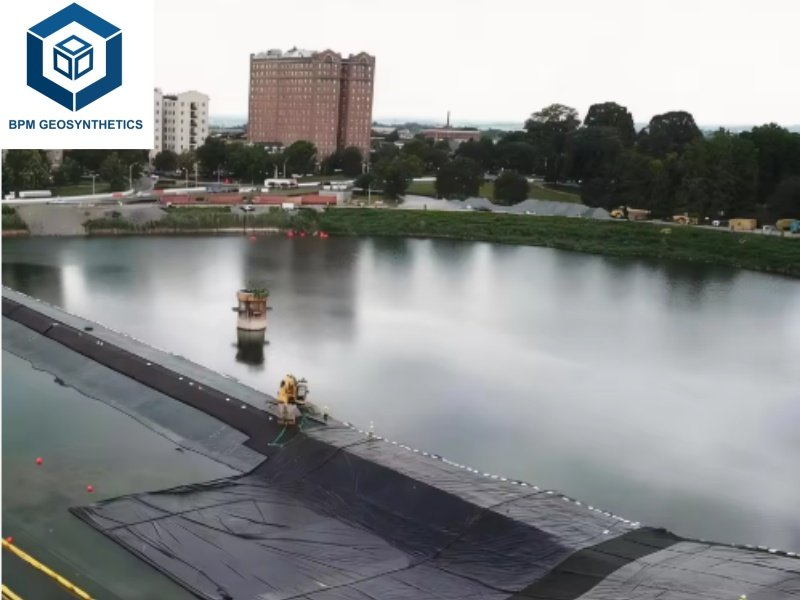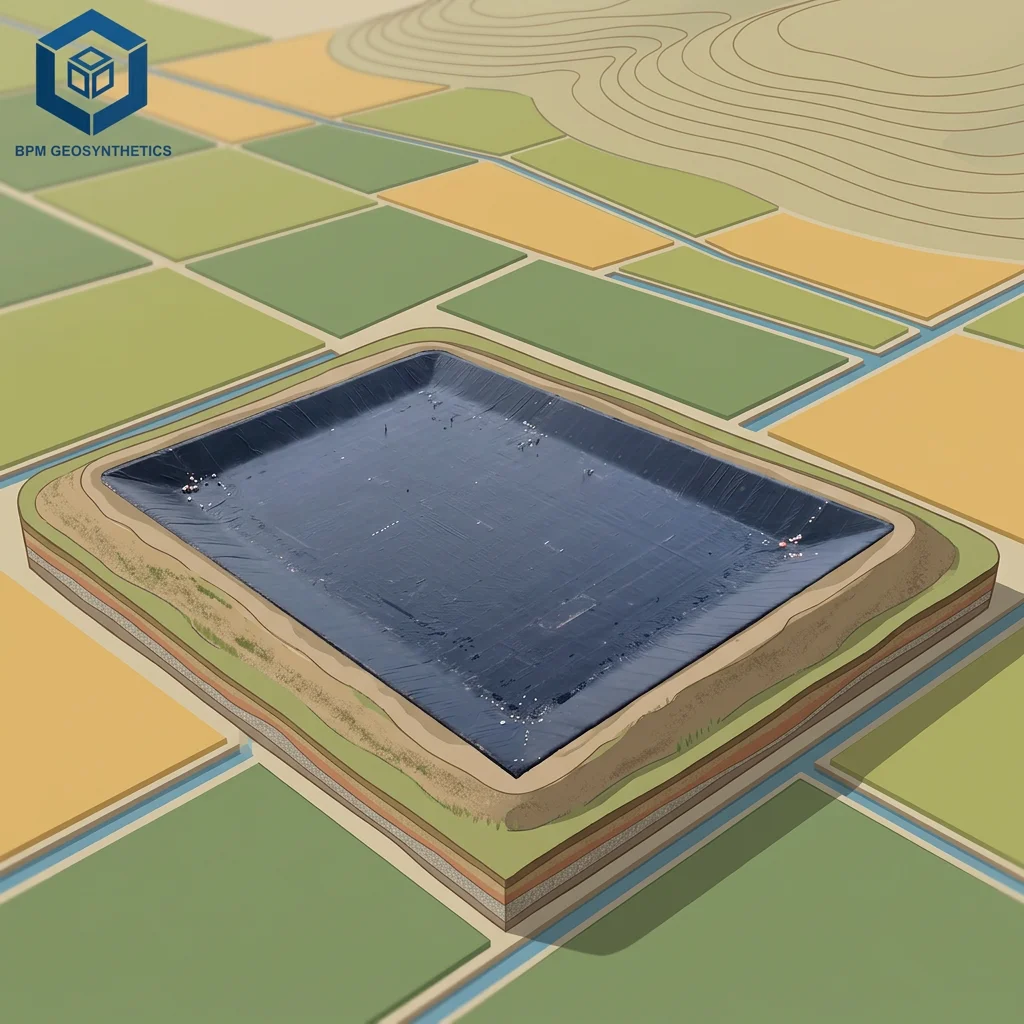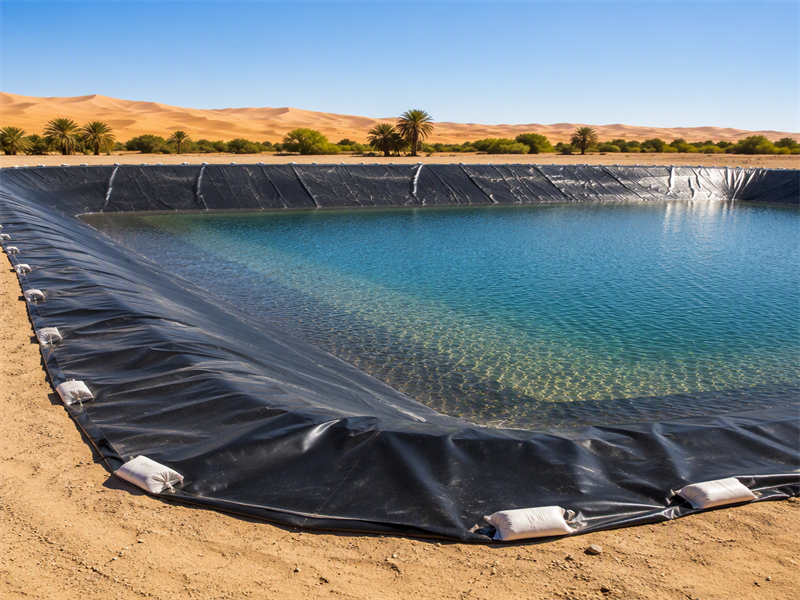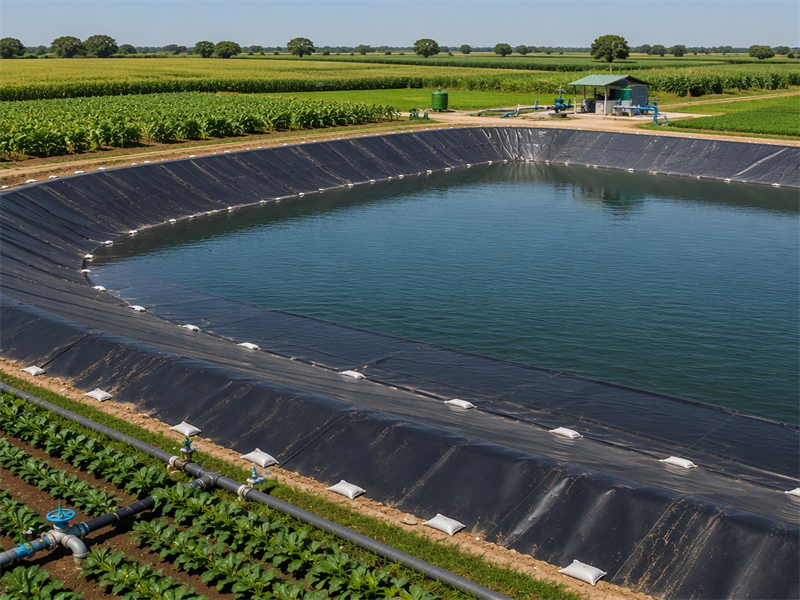
HDPE landfill liner (high-density polyethylene geomembrane) has become the universally recognized core anti-seepage solution, occupying more than 70% market share of global landfill liner projects. Compared with PVC, EPDM and other flexible liners, virgin resin HDPE landfill liner features ultra-low permeability, outstanding chemical corrosion resistance, strong anti-aging performance and 50–100 years design service life, fully meeting EPA, EU EN and GRI-GM13 international engineering standards.
This ultimate guide systematically sorts out all key knowledge that engineers, contractors and procurement teams need to master before deploying HDPE landfill liners, including raw material standards, performance parameters, system composition, thickness matching rules, installation quality control, common failure risks and cost-saving strategies, with BPM Geosynthetics’ industry-leading GRI-GM13 certified HDPE landfill liner as the core reference case.
1. What Is HDPE Landfill Liner & Core Working Principle–HDPE Landfill Liner
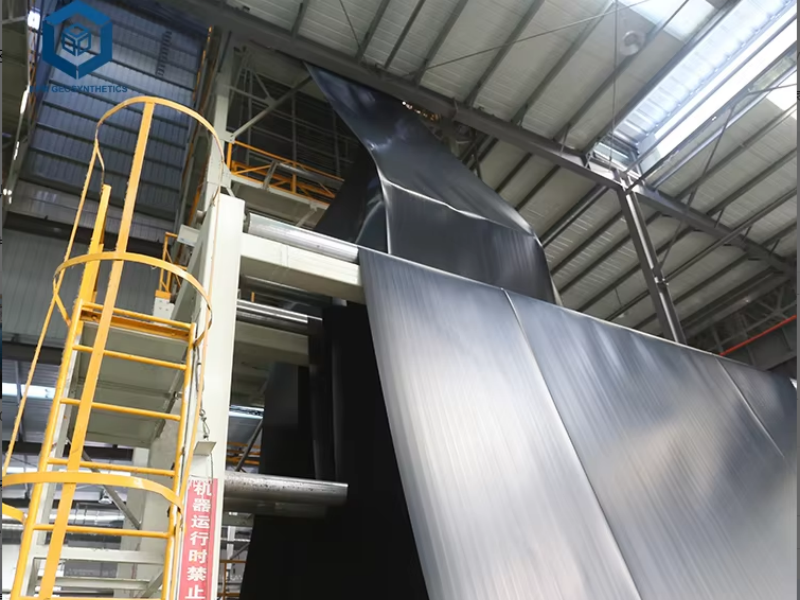
HDPE landfill liner is an extruded geomembrane manufactured with 100% virgin high-density polyethylene resin, mixed with 2.0–3.0% carbon black and high-efficiency antioxidant stabilizers to resist UV radiation and oxidative aging under long-term buried conditions. Its core function is forming an absolute impermeable barrier to isolate landfill leachate rich in organic acids, heavy metals and toxic solvents, preventing downward infiltration and cross-contamination of groundwater.
The material’s permeability coefficient can reach ≤1×10⁻¹¹ cm/s, which can block over 99.9% of leachate penetration, far exceeding the seepage resistance of compacted clay layers and geosynthetic clay liners used alone. Two mainstream surface types are available for different landfill zones: smooth HDPE liner for flat base leachate collection areas, and textured HDPE liner with rough surface for steep side slopes to increase interface friction and avoid liner sliding under waste load.
2. Mandatory GRI-GM13 Technical Specifications for Landfill-Grade HDPE Liner–HDPE Landfill Liner
All qualified landfill HDPE liners must comply with GRI-GM13 global geomembrane standard, with non-negotiable core technical indicators as follows:
- Raw material density: ≥0.940 g/cm³, only virgin HDPE allowed, recycled material addition strictly limited for hazardous waste landfills
- Carbon black content: 2.0–3.0%, evenly dispersed to guarantee long-term UV resistance
- Oxidation induction time (HP-OIT): ≥400 min, resisting chemical erosion from acidic and alkaline leachate
- Stress crack resistance (ESCR): ≥300 hours, premium products reach 2,000–5,000 hours to avoid delayed cracking under long-term load
- Break elongation: ≥700%, strong deformability to adapt foundation settlement
- Puncture resistance: 440 N for 1.5 mm liner, ≥640 N for 2.0 mm hazardous waste grade liner
Thickness selection follows international unified rules:
- Temporary waste stacking yards: 1.0 mm HDPE liner
- Conventional municipal solid waste landfills: minimum 1.5 mm smooth/textured HDPE liner (EPA Subtitle D mandatory requirement)
- Hazardous waste, chemical residue and deep high-load landfills: 2.0–2.5 mm thick HDPE liner
3. Complete Multi-Layer HDPE Landfill Liner System Structure–HDPE Landfill Liner
A single HDPE geomembrane cannot independently meet landfill anti-seepage requirements; standard single-liner and double-liner systems are configured with matched geosynthetic auxiliary materials layer by layer from bottom to top:
Single Liner System (General Municipal Landfill)
- Compacted subgrade base: Smooth, rock-free compacted soil with low permeability
- GCL geosynthetic clay liner (auxiliary secondary barrier)
- Primary HDPE landfill liner (1.5 mm textured for slopes, smooth for flat zones)
- Heavy-weight non-woven geotextile protective cushion: Prevent sharp waste and drainage gravel from puncturing HDPE sheet
- Geonet drainage layer + perforated leachate collection pipes: Discharge leachate timely to reduce hydraulic pressure on liner
- Waste filling layer
Double Liner System (Hazardous Waste Mandatory Standard)–HDPE Landfill Liner
Add a secondary HDPE liner and leak detection drainage layer between the base GCL and primary liner. Any leachate penetrating the upper primary liner will flow into the detection layer, realizing real-time leakage monitoring and eliminating hidden pollution risks.
4. Key Advantages of HDPE Landfill Liner Over Alternative Materials–HDPE Landfill Liner
- Superior chemical tolerance: Resist pH 2–14 acid-base leachate, hydrocarbon solvents and heavy metal ion corrosion, not prone to swelling or aging
- Ultra-long service life: Carbon black additive blocks UV damage; buried HDPE liner keeps stable performance for over 70 years
- Reliable hot-welded construction: Hot wedge welding fuses liner panels into an integrated barrier, seam strength reaches 90%+ of base material
- Wide roll production: 7–8 m wide rolls reduce welding seams by 30–40%, cutting leakage probability and installation labor cost
- Full regulatory compliance: Complete ISO 9001, ISO 14001, SGS and Intertek test reports, passing all global environmental project acceptance standards
By contrast, cheap recycled PVC liners suffer plasticizer migration after 3–5 years, turn brittle and crack easily, and are prohibited for formal landfill projects by most national environmental departments.
5. Standard Installation & Quality Control Procedures–HDPE Landfill Liner
Installation quality directly determines the long-term anti-seepage effect of HDPE landfill liner, and all construction steps require third-party inspection:
- Subgrade treatment: Remove all sharp stones, tree roots and hard protrusions; fill pits with fine soil and compact evenly
- Lay geotextile cushion first as puncture protection layer
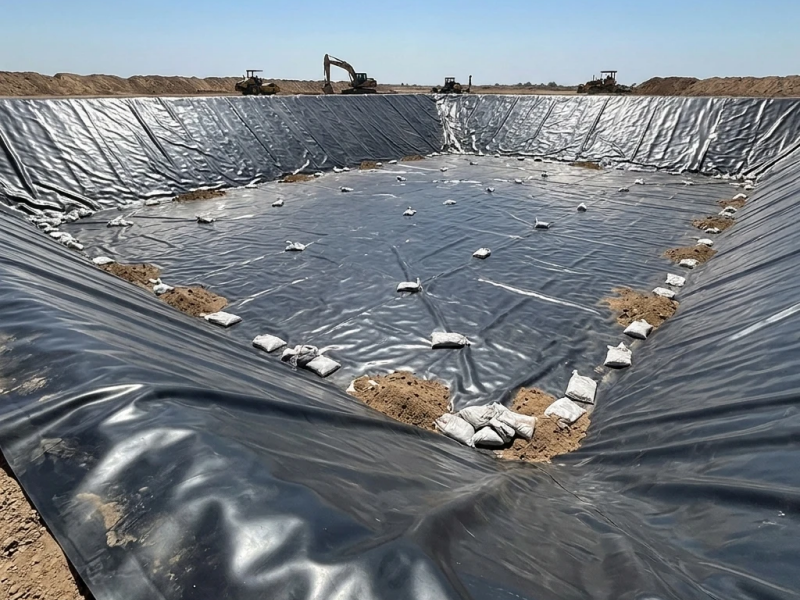
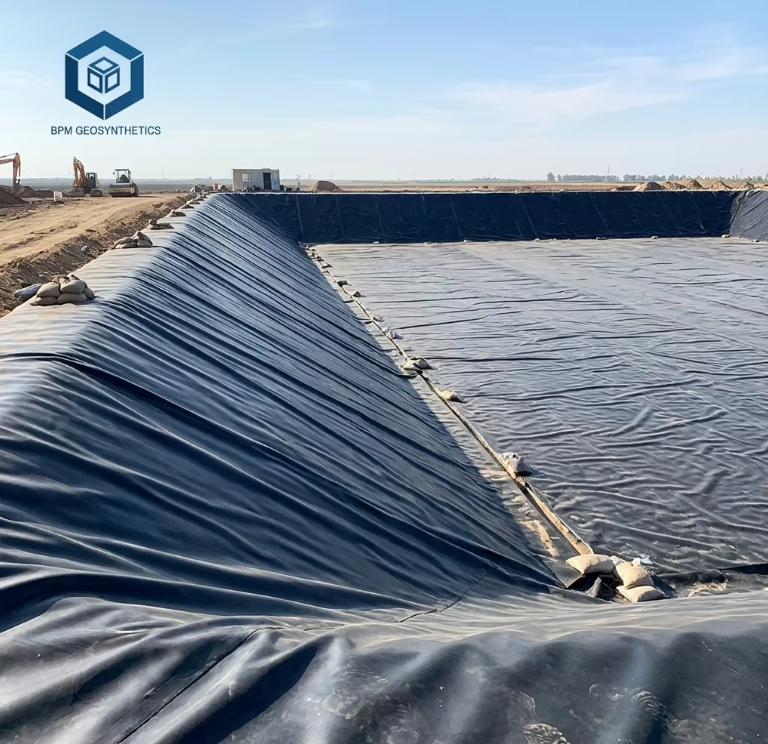
- Unroll HDPE liner neatly, reserve 10–15 cm overlap width for welding
- Complete hot wedge welding for all seams; conduct air pressure test and vacuum box inspection one by one to eliminate tiny holes
- Anchor liner edges into concrete anchor trenches to resist lateral sliding of slope liner
- Cover drainage geonet and geotextile protection layer immediately after inspection to avoid long-term direct sunlight exposure of bare HDPE liner
Only certified professional installers are qualified for landfill liner welding work; unstandardized manual splicing will lead to hidden leakage failures within 3–10 years.
6. Common Liner Failure Risks & Preventive Solutions
- Puncture damage: Caused by sharp subgrade stones or waste fragments → Solution: Lay ≥400 g/m² non-woven geotextile as protective cushion
- Slope slippage of liner: Smooth liner low friction coefficient → Solution: Adopt textured HDPE liner for all slope areas
- Early aging and cracking: Low carbon black or insufficient antioxidant content → Solution: Strictly select GRI-GM13 virgin resin HDPE liner with complete test certificates
- Seam leakage: Unqualified welding temperature or incomplete inspection → Solution: Implement full non-destructive testing for all welding joints
- Excessive foundation deformation: Liner tensile fracture → Solution: Choose HDPE with break elongation above 700% and design layered waste filling to reduce instantaneous load
7. How to Choose Cost-Effective HDPE Landfill Liner
Many buyers only focus on unit price while ignoring long-term hidden costs. Here are core selection principles:
- Prioritize virgin resin raw materials: Recycled mixed HDPE reduces upfront cost by 15–25% but faces high rework and pollution penalty risks in later operation
- Match thickness and surface according to waste category: Avoid over-specification causing material waste, or under-specification triggering regulatory non-compliance
- Select manufacturers with complete certification and large-width production lines: Factories such as BPM Geosynthetics provide factory-direct GRI-GM13 HDPE landfill liner with customizable width, thickness and surface type, equipped with global warehouse distribution and professional engineering technical support
- Calculate total project cost including auxiliary materials: Geotextile, geonet and installation labor account for nearly half of total investment; wide-width HDPE rolls effectively cut welding and construction expenses
- Confirm after-sales technical service: Reliable suppliers provide on-site construction guidance, free sample testing and long-term project performance tracking
Final Thoughts
HDPE landfill liner is the core environmental barrier determining the safety and compliance of waste disposal projects. Whether it is small municipal domestic waste landfills or large-scale hazardous waste industrial storage yards, designers and contractors must follow GRI-GM13 unified standards to select qualified virgin resin HDPE geomembranes, and standardize multi-layer system matching and installation testing procedures.
As global waste management environmental standards become increasingly stringent, unqualified low-cost liners will bring irreversible groundwater pollution and huge economic losses. High-performance GRI-GM13 HDPE landfill liners supplied by professional manufacturers like BPM Geosynthetics balance long-term durability, regulatory compliance and overall project cost, becoming the mainstream reliable solution for landfill anti-seepage engineering worldwide. For customized specification quotations, free lab test samples and professional landfill liner system design schemes, contact professional geosynthetic manufacturers to obtain one-stop engineering support.