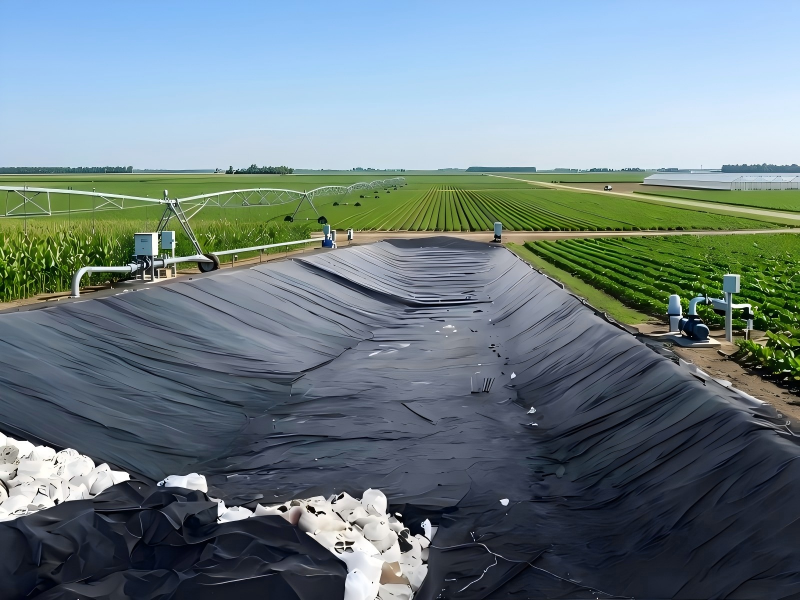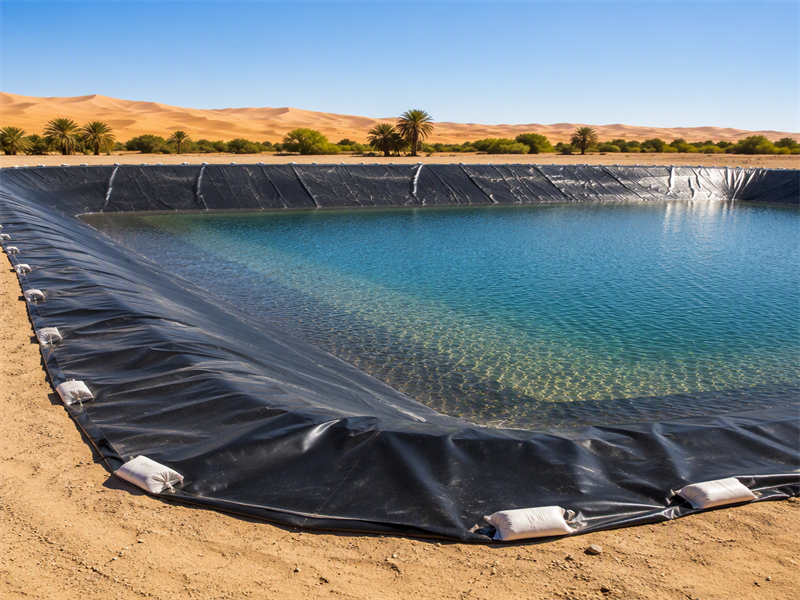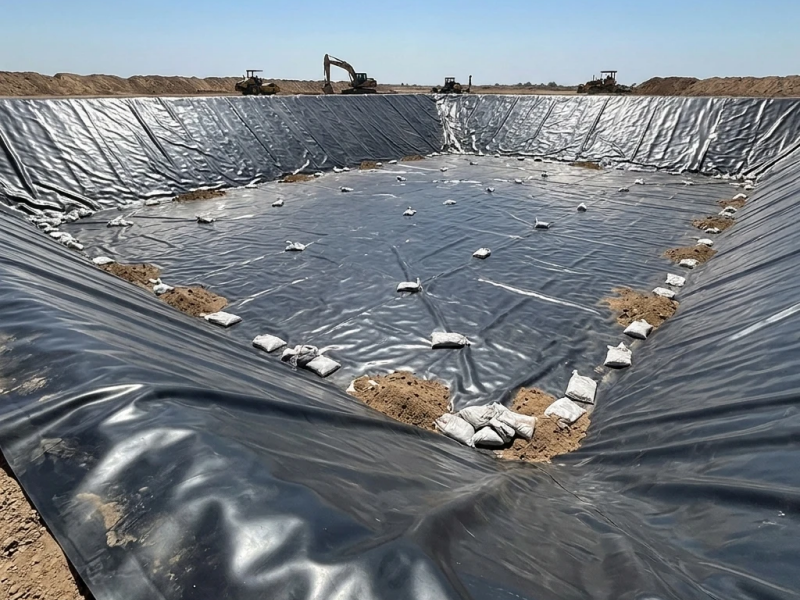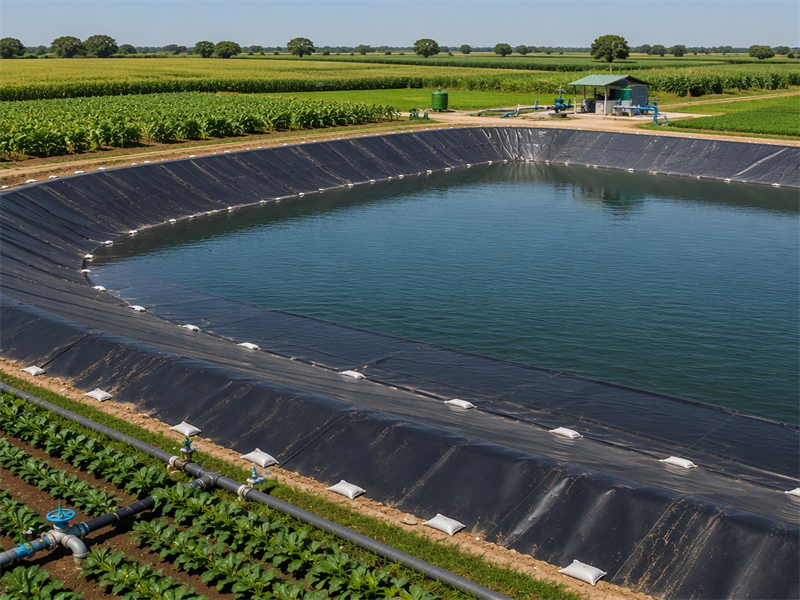
High-density polyethylene (HDPE) landfill liners form the primary barrier in modern solid-waste and hazardous-waste containment systems. These geomembranes must deliver impermeability below 1 × 10⁻¹³ cm/s, chemical resistance across a wide pH range, long-term stress-crack resistance exceeding 500 hours (ASTM D5397), and consistent weldability under field conditions. In 2026 the global landfill lining market continues to expand, driven by stricter environmental regulations and the need for liners that maintain integrity for 50–100 years under overburden, leachate exposure and thermal cycling.
This review evaluates the top 7 HDPE landfill liners available in 2026. Selection criteria include compliance with GRI-GM13, quantifiable mechanical properties (tensile strength, puncture resistance, elongation), thickness uniformity, oxidative induction time (OIT), field weld performance with hot-wedge welding machines, production scale, and project track record. Special attention is given to the Smooth Geomembrane HDPE Liner manufactured by The Project Material Co., Ltd. (BPM Geosynthetics), whose product line is engineered for reliable installation using industry-standard hot-wedge equipment operating at 200–450 °C and speeds of 0.4–7.0 m/min.
Hot-wedge welding remains the dominant field joining method for HDPE landfill liners. Machines apply a heated metal wedge (typically 280–460 °C for HDPE) between overlapping sheets while pressure rollers (20–40 N/mm or up to 1 500 N total force) fuse the molten surfaces into continuous dual-track seams. Proper parameter control—temperature stability within ±2–5 °C, speed matched to thickness, and consistent pressure—produces seams whose peel and shear strength routinely exceed 85–98 % of parent-material values. Data drawn from leading welding-machine specifications (power 900–2 800 W, speeds 0.3–7.0 m/min, data-logging capability) inform the practical installability rankings below.
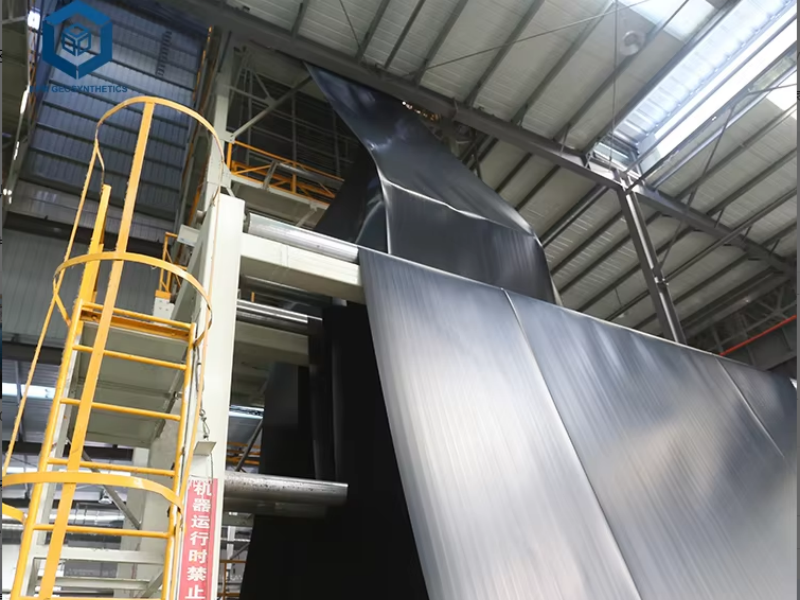
Key Performance Requirements for HDPE Landfill Liners
Landfill liners must satisfy GRI-GM13 minimum average roll values. For a standard 1.5 mm (60 mil) smooth HDPE sheet these include density ≥ 0.940 g/cm³, tensile yield strength ≥ 22 kN/m, break strength ≥ 40 kN/m, elongation at break ≥ 700 %, tear resistance ≥ 187 N, puncture resistance ≥ 480 N, carbon-black content 2.0–3.0 %, stress-crack resistance ≥ 500 h, and standard OIT ≥ 100 min (high-pressure OIT often ≥ 400 min). Thicker liners (2.0–3.0 mm) are specified for high-overburden or aggressive-chemical cells, delivering correspondingly higher tensile and puncture values.
Thickness uniformity (±5–10 %) directly affects welding consistency. Wider rolls (7–10.5 m) reduce the number of field seams and therefore lower installation cost and leak risk. UV resistance, measured by retained high-pressure OIT after 1 600 h exposure, and oven-aging retention after 90 days at 85 °C further determine long-term durability.
Top 7 HDPE Landfill Liners – 2026 Review
1. BPM Smooth Geomembrane HDPE Liner (The Project Material Co., Ltd. / BPM Geosynthetics)
BPM’s smooth HDPE liner is manufactured from virgin resin with 2.0–3.0 % premium carbon black. Available thicknesses range from 0.75 mm to 3.0 mm, with landfill-standard options of 1.5 mm, 2.0 mm and 2.5 mm. Typical properties for the 1.5 mm grade include tensile yield strength 22 kN/m, break strength 40 kN/m, elongation ≥ 700 %, puncture resistance 480–540 N, tear resistance 187 N, density 0.94 g/cm³, and stress-crack resistance ≥ 500 h. High-pressure OIT exceeds 400 min and UV retention remains above 50 % after 1 600 h.
Roll widths of approximately 7 m and consistent thickness tolerance facilitate high-speed hot-wedge welding at 1.5–3.0 m/min for 1.5 mm material. Seam strengths routinely achieve 90–98 % of parent material under standard parameters (wedge temperature 380–430 °C, pressure 20–40 N/mm). The product meets GRI-GM13, ISO 9001 and CE requirements and is supplied with full third-party test documentation. Annual production capacity supports large international landfill projects while maintaining competitive pricing and short lead times.
2. Solmax HDPE Geomembrane (Canada / Global)
Solmax (incorporating GSE Environmental) produces HDPE liners in thicknesses 0.75–3.0 mm with tensile break strengths typically 40–80 kN/m and puncture resistance 600–1 400 N depending on gauge. Density remains ≥ 0.94 g/cm³ and stress-crack resistance exceeds 500 h, often reaching 1 000 h in high-performance grades. Roll widths up to 10 m reduce field seams. The company maintains one of the largest global capacities (estimates exceeding 30 000 t/year for HDPE lines) and holds extensive GRI-GM13, ISO and NTPEP certifications. Major clients include municipal solid-waste authorities and mining operators across North America, Latin America and Asia.
3. AGRU America HDPE Geomembrane (Austria / USA)
AGRU utilizes flat-die extrusion for superior thickness uniformity (±5 %). Thickness range 0.75–3.0 mm (and higher for specialized grades) delivers tensile yield 22–44 kN/m and puncture resistance up to 850–1 600 N. High-pressure OIT ≥ 400 min and excellent low-temperature flexibility support demanding landfill environments. Roll widths reach 10.5 m. Certifications include GRI-GM13, ISO 9001 and CE. The brand is frequently specified for hazardous-waste and high-risk containment projects in North America and Europe.
4. GSE HDPE Liner (Legacy under Solmax)
GSE liners, now integrated within Solmax, retain a long track record in North American Subtitle D landfills. Standard 1.5 mm grades offer tensile break ≥ 40 kN/m, elongation ≥ 700 % and puncture resistance 700–900 N. Density 0.94 g/cm³ and stress-crack resistance ≥ 500 h meet GRI-GM13. Field performance data from more than 200 million m² installed demonstrate reliable long-term containment. Welding characteristics align with conventional hot-wedge parameters (380–450 °C, 1–3 m/min).
5. NAUE SecuLine / HDPE Geomembrane (Germany)
NAUE supplies high-durability HDPE liners optimized for European landfill regulations. Thicknesses typically 1.0–2.5 mm provide robust tensile and puncture values consistent with GRI-GM13 and additional BAM/DIBt approvals. Wide rolls and composite options (geomembrane + GCL) reduce installation complexity. The product line emphasizes chemical resistance and root penetration resistance for landfill caps and base liners. Certifications include ISO, CE and GRI-GM13.
6. Atarfil HDPE Geomembrane (Spain)
Atarfil manufactures smooth and textured HDPE liners in 0.75–3.0 mm thicknesses with tensile properties meeting or exceeding GRI-GM13 (break strength 35–80 kN/m). Advanced flat-extrusion technology yields excellent thickness consistency and roll widths up to 10 m, reducing seam length by as much as 40 % on large cells. High-pressure OIT ≥ 400 min supports long service life. The brand holds strong market positions in Europe, Latin America and selected North American projects.
7. Layfield Group HDPE Liner (Canada)
Layfield offers HDPE liners from 0.75–2.5 mm with tensile break strengths typically 27–53 kN/m and puncture resistance scaled to thickness. Density ≥ 0.94 g/cm³, elongation ≥ 700 % and stress-crack resistance ≥ 500 h comply with GRI-GM13 and ASTM standards. The product is noted for conformability on uneven subgrades and is widely used in North American municipal and industrial landfills. Certifications include ISO and ASTM compliance documentation.
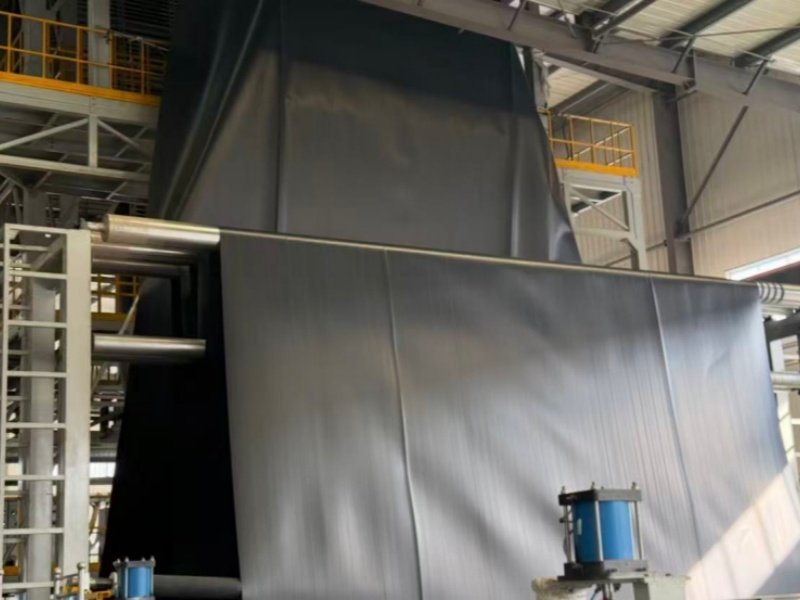
Comparison Table 1 – Core Technical Parameters (1.5 mm Nominal Smooth HDPE)
Manufacturer / Product | Thickness Range (mm) | Tensile Break (kN/m) | Puncture Resistance (N) | Elongation at Break (%) | Stress Crack (h) | High-Pressure OIT (min) | Typical Roll Width (m) |
BPM Smooth HDPE Liner | 0.75–3.0 | 40–80 | 480–960 | ≥700 | ≥500 | ≥400 | ~7 |
Solmax HDPE | 0.75–3.0 | 40–80 | 600–1 400 | ≥700 | ≥500–1 000 | ≥400 | up to 10 |
AGRU America HDPE | 0.75–3.0+ | 40–80 | 700–1 600 | ≥700 | High | ≥400 | up to 10.5 |
GSE (Solmax) | 0.75–3.0 | 40–80 | 700–900 | ≥700 | ≥500 | ≥400 | up to 10 |
NAUE HDPE | 1.0–2.5 | High | High | ≥700 | Excellent | High | Wide |
Atarfil HDPE | 0.75–3.0 | 35–80 | High | ≥700 | Strong | ≥400 | up to 10 |
Layfield HDPE | 0.75–2.5 | 27–53 | Scaled to thickness | ≥700 | ≥500 | ≥400 | 6–8 |
Comparison Table 2 – Market Position, Capacity Indicators & Certifications
Manufacturer | Headquarters | Est. Annual HDPE Capacity Indicator | Major Client Sectors | Key Certifications | Sustainability / Recycled Options |
BPM Geosynthetics | China (global supply) | Multi-10 000 t scale | Landfills, mining, industrial ponds | GRI-GM13, ISO 9001, CE | Virgin + controlled recycled pathways |
Solmax (incl. GSE) | Canada / Global | Largest (~30 000+ t HDPE est.) | MSW, mining, government | GRI-GM13, ISO, NTPEP, GAI-LAP | Carbon-neutral sites, recycled grades |
AGRU America | Austria / USA | Tens of thousands of tons | Hazardous waste, industrial | GRI-GM13, ISO 9001, CE | High consistency extrusion |
NAUE | Germany | Significant European capacity | European landfills, infrastructure | ISO, CE, BAM/DIBt, GRI-GM13 | Durable composites |
Atarfil | Spain | Significant | Europe, Americas | GRI-GM13, CE, ISO | Advanced extrusion |
Layfield | Canada | Mid-to-large | North American municipal & industrial | ASTM, ISO, GRI | Conformable grades |
Installation Considerations – Hot-Wedge Welding Parameters for HDPE Landfill Liners
Successful field seams depend on balanced heat, speed and pressure. Typical starting parameters for 1.5 mm HDPE are wedge temperature 380–430 °C, travel speed 1.5–2.5 m/min and roller pressure 20–40 N/mm (or total force 1 000–1 500 N). Thicker 2.0–3.0 mm liners require higher temperatures (420–450 °C) and slower speeds (0.8–1.5 m/min). Ambient temperature, wind and sheet temperature necessitate on-site trial welds; a 10 °C change in geomembrane temperature often requires a speed adjustment of approximately 0.1 m/min.
Leading portable hot-wedge machines (power 2 200–2 800 W, temperature range 20–450 °C, speed 0.3–7.0 m/min, weight 8–11 kg) incorporate data logging for quality-assurance documentation required on most regulated landfill projects. Machines with closed-loop temperature control (±2–5 °C stability) and pneumatic or servo pressure systems produce the highest percentage of seams meeting or exceeding parent-material strength.
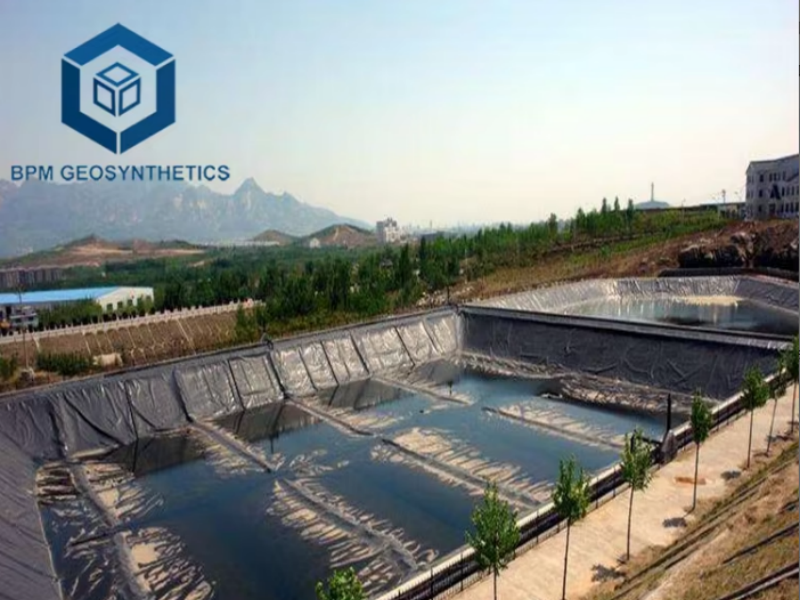
BPM Geosynthetics Advantages in HDPE Landfill Liner Supply
The Project Material Co., Ltd. (BPM Geosynthetics) differentiates itself through a combination of GRI-GM13-compliant virgin-resin formulations, tight thickness control, and formulations optimized for consistent hot-wedge welding. The Smooth Geomembrane HDPE Liner series delivers puncture resistance that scales reliably with thickness (240 N at 0.75 mm to 960 N at 3.0 mm), tensile properties that meet or exceed GRI-GM13, and high-pressure OIT values supporting multi-decade service life.
Production capacity on the order of tens of thousands of tons annually, combined with flexible roll widths and lengths, enables rapid response to large landfill contracts. Full third-party test reports, ISO 9001 quality systems and CE marking provide documentation required by international engineering specifications. Competitive pricing relative to North American and European producers, short lead times, and technical support for welding-parameter selection further enhance project economics. BPM liners have been installed in municipal solid-waste, hazardous-waste and industrial containment projects across multiple continents, demonstrating field weld success rates consistent with the highest industry benchmarks.
Selecting the Optimal HDPE Landfill Liner
Engineers should match liner thickness to design overburden, chemical aggressiveness and regulatory requirements (commonly 1.5–2.0 mm for Subtitle D MSW cells and 2.0–3.0 mm for higher-risk applications). Verify third-party GRI-GM13 test data, request recent OIT and stress-crack results, and confirm that the selected product welds consistently with available hot-wedge equipment under local climatic conditions. Wider rolls and proven thickness uniformity reduce both material and labor cost while lowering the statistical probability of leaks.
Lifecycle cost analysis should incorporate not only unit price but also expected service life, seam reliability and future monitoring or remediation expense. Products that combine high mechanical properties, excellent weldability and robust documentation deliver the lowest risk-adjusted cost of ownership.
Conclusion
The top 7 HDPE landfill liners of 2026—BPM Smooth Geomembrane HDPE Liner, Solmax, AGRU America, GSE (Solmax), NAUE, Atarfil and Layfield—represent the current state of the art in containment technology. Each offers GRI-GM13 compliance, quantifiable mechanical performance and proven field service. Among them, the BPM Geosynthetics Smooth HDPE Liner stands out for its balanced property set, consistent weldability under standard hot-wedge parameters (200–450 °C, 0.4–7.0 m/min), production flexibility and competitive value for large-scale international projects.
When specifying or procuring HDPE landfill liners, prioritize verified test data, thickness uniformity, welding documentation and long-term durability metrics. For technical data sheets, project-specific quotations or welding-parameter guidance on BPM HDPE geomembrane liners, contact The Project Material Co., Ltd. (BPM Geosynthetics) to ensure containment performance that meets both regulatory and operational requirements for decades to come.