Geomembrane liners are the critical impermeable barrier in modern civil, environmental and mining engineering projects. Whether you are lining a landfill base, a heap leach pad, a wastewater lagoon, a stormwater retention basin, an aquaculture pond, an irrigation reservoir, a secondary containment area for fuel/chemicals or a canal, the right geomembrane determines long-term leakage prevention, regulatory compliance, construction speed and total lifecycle cost.
In 2025 the global geomembrane market continues to grow at ~6–8 % CAGR (MarketsandMarkets & Grand View Research 2024–2030 forecasts), driven by stricter environmental regulations (PFAS, methane capture, brine disposal), record mining activity (copper, lithium, nickel) and increasing water conservation needs in agriculture and urban infrastructure.
HDPE still holds ~68–74 % market share (GSI 2024–2025 data), followed by LLDPE (~18–22 %), fPP, PVC and bituminous geomembranes in niche roles. The liners ranked below represent the strongest current offerings across thickness classes (0.75–2.5 mm), resin types and price segments.
This review compares ten of the most widely purchased and field-proven geomembrane liners available today. Rankings combine:
- Independent third-party test data (GRI-GM13 / GM17 / GM18, ASTM)
- Documented long-term exhumation results (GSI database 2020–2025)
- Real project seam strength & leakage statistics (IAGI & consultant reports)
- Contractor & engineer feedback on weldability & installation speed
- Current 2025 pricing trends, roll widths, lead times & support quality
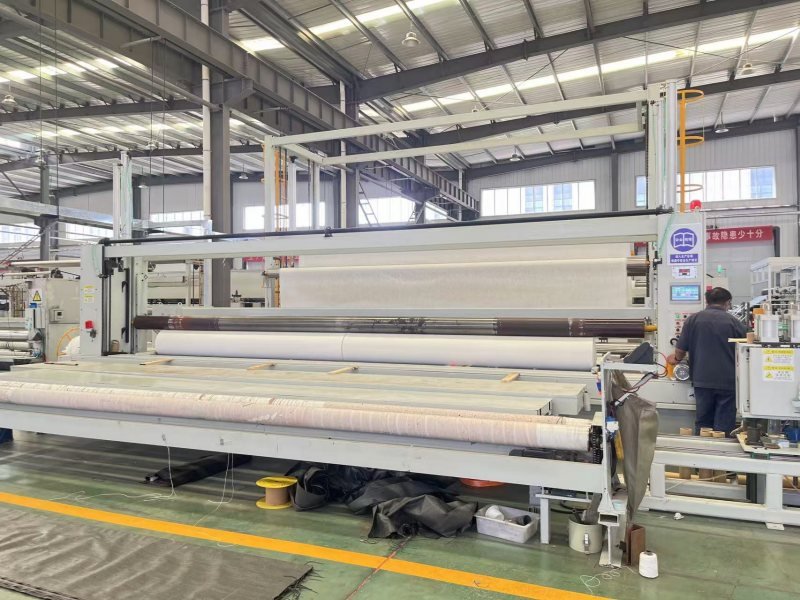
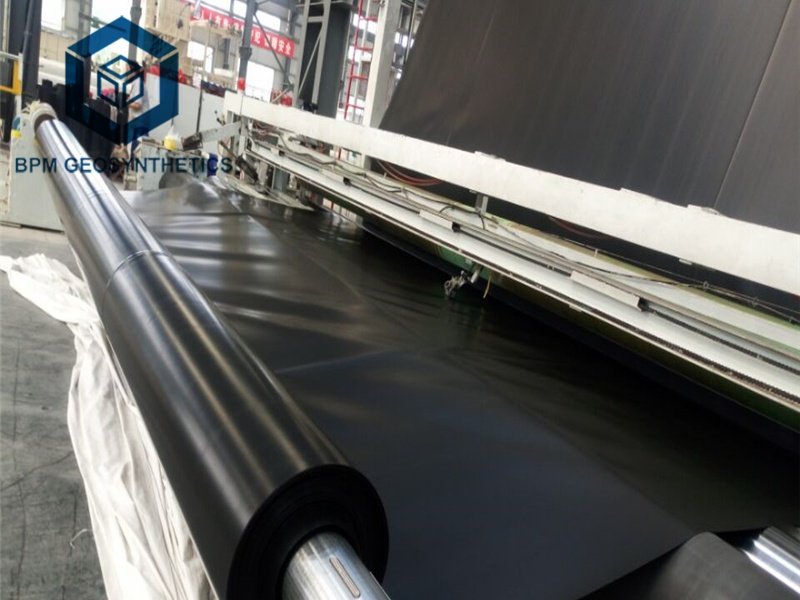
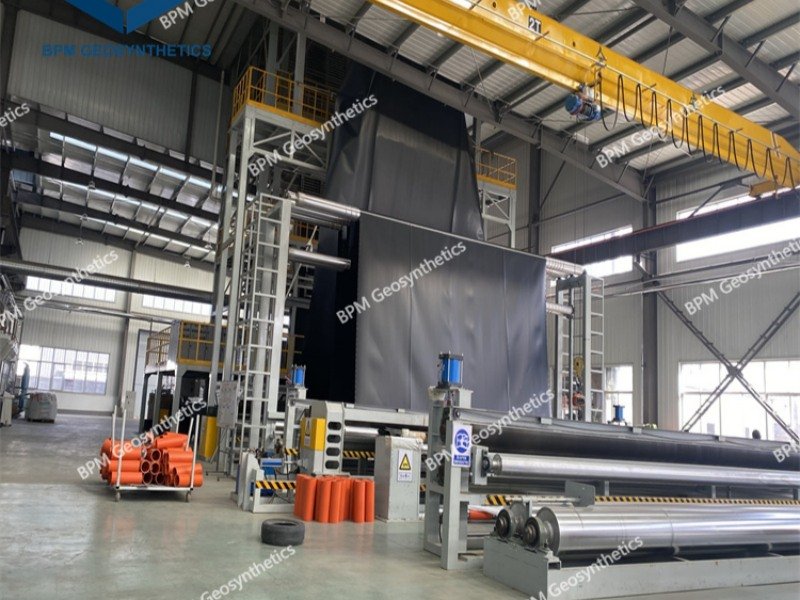
We also feature The Best Project Material Co., Ltd (BPM Geosynthetics) and their flagship HDPE Geomembrane Liner series, which consistently ranks among the highest-performing and most cost-competitive smooth HDPE products on the international market.
1. How We Ranked the Top 10 Geomembrane Liners
We evaluated liners using six weighted categories (total 100 %):
- Long-term durability & aging performance(25 %) – retained OIT, tensile strength & elongation after oven aging / weathering (ASTM D3895, D5885, GSI exhumation database)
- Mechanical properties(20 %) – tensile at yield & break, elongation, puncture (D4833), tear (D1004), multiaxial strain (D5617)
- Seam weld reliability(20 %) – field-reported peel & shear strength (≥90 % parent material target), defect rate, ease of welding
- Chemical & environmental resistance(15 %) – EPA 9090 permeation, UV stability, low-temperature brittleness
- Value & availability(15 %) – 2025 price per m² (volume pricing), roll widths (6–12 m), lead times, global distribution
- Manufacturer support & certification(5 %) – GRI-GM13/GM17 certification, technical guides, field assistance, warranty
Only commercially available products with recent third-party test reports (2023–2025) and documented export/project history are included.
2. The Top 10 Geomembrane Liners – Ranked for 2025
1. BPM Smooth HDPE Geomembrane Liner (Best Overall & Best Value)
Manufacturer: BPM Geosynthetics Website reference: https://bpmgeoliner.com/product/hdpe-geomembrane-liner/ Typical pond/reservoir thicknesses: 0.75 mm, 1.0 mm, 1.5 mm, 2.0 mm Key mechanical properties (1.5 mm grade):
- Tensile strength at break: 28–32 MPa (MD/CMD)
- Elongation at break: 750–850 %
- Puncture resistance (cone): 750–950 N
- Tear resistance (Die C): 220–260 N
- Low-temperature brittleness: passes −45 °C to −50 °C
- Carbon black content: 2.0–3.0 %, dispersion Category 1 (ASTM D5596)
- Standard OIT: ≥100 min; retained after 90-day oven aging: ≥55 %
- Seam peel/shear strength (field average): 92–105 % parent material
- GRI-GM13 compliant, ISO 9001:2015, CE marking, multiple third-party lab reports
Real-world highlights BPM smooth liners routinely achieve field weld strengths >95 % of parent material in large aquaculture, irrigation reservoir and landfill projects. Their consistent thickness tolerance (±8–10 %) and low gel-count masterbatch reduce weak spots and seam defects. Contractors report 20–35 % faster welding speeds compared with some competitors due to clean surface finish and stable melt behavior.
Typical 2025 pricing (large volume, ex-works): $0.45–0.75 / m² (1.0–1.5 mm) Best for: General-purpose pond/reservoir lining, landfills, moderate mining, cost-conscious large projects.
2. GSE / Solmax HDPE Geomembrane (Best North American Supply Chain)
Manufacturer: Solmax (formerly GSE Environmental) Typical thicknesses: 1.0 mm, 1.5 mm, 2.0 mm Key mechanical properties (1.5 mm smooth):
- Tensile strength at break: 27–30 MPa
- Elongation at break: 700–850 %
- Puncture resistance: 700–900 N
- Tear resistance: 210–250 N
- Low-temperature brittleness: passes −50 °C
- Carbon black dispersion: Category 1–2
- OIT retained after aging: ≥60 %
- Seam strength: 90–102 % parent material
Real-world highlights GSE/Solmax liners have one of the longest North American track records in aquaculture ponds, stormwater basins and landfill caps. Exhumation reports (15–35 years) show excellent retained properties when covered. Strong domestic supply chain reduces freight costs for U.S./Canada buyers.
Typical 2025 pricing: $0.65–1.05 / m² (higher than Asian-origin material) Best for: North American projects requiring fast delivery & local support.
3. Agru HDPE Geomembrane (Best Premium Puncture Resistance)
Manufacturer: Agru Kunststofftechnik GmbH (Austria) Typical thicknesses: 1.5 mm, 2.0 mm, 2.5 mm Key mechanical properties (2.0 mm smooth):
- Tensile strength at break: 30–34 MPa
- Elongation at break: 700–800 %
- Puncture resistance: 900–1200 N
- Tear resistance: 240–300 N
- Low-temperature brittleness: −40 °C
- OIT retained: ≥65 %
- Seam strength: 92–108 % parent material
Real-world highlights Agru is frequently specified for high-value aquaculture ponds and reservoirs near mining sites because of superior puncture resistance. European quality control and third-party certifications are very strong.
Typical 2025 pricing: $0.85–1.35 / m² (premium segment) Best for: High-stakes projects requiring maximum mechanical robustness.
4. Firestone / Westlake HDPE Geomembrane (Best Established Brand Recognition)
Manufacturer: Firestone Building Products (now Westlake) Typical thicknesses: 1.0 mm, 1.5 mm Key mechanical properties (1.5 mm):
- Tensile strength at break: 27–30 MPa
- Elongation at break: 700–800 %
- Puncture resistance: 700–900 N
- Tear resistance: 200–240 N
- Low-temperature brittleness: −40 °C
- Certifications: GRI-GM13, multiple North American approvals
Real-world highlights Firestone liners have decades of proven performance in North American decorative ponds, golf course features and stormwater basins. Strong contractor familiarity and installer network.
Typical 2025 pricing: $0.70–1.10 / m² Best for: Buyers who prioritize brand recognition and installer preference.
5. Seaman XR-5 / XRS Geomembrane (Best Reinforced Composite Alternative)
Manufacturer: Seaman Corporation Typical thicknesses: 0.9–1.4 mm (reinforced) Key mechanical properties (1.14 mm):
- Tensile strength (grab): ≥1,000 N
- Elongation: ≥20–40 % (reinforced)
- Puncture resistance: ≥400–600 N
- Tear resistance: very high due to scrim
- Certifications: ASTM D751, D751, manufacturer proprietary
Real-world highlights XR-5 is a reinforced composite (not pure HDPE) but frequently competes in pond & secondary containment markets where tear strength is critical. Very high tear propagation resistance.
Typical 2025 pricing: $1.20–2.00 / m² (premium composite) Best for: Projects needing extreme tear resistance.
6. Atarfil HDPE Geomembrane (Best European Quality Option)
Manufacturer: Atarfil (Spain) Typical thicknesses: 1.0–2.5 mm Key mechanical properties (1.5 mm):
- Tensile strength at break: 28–31 MPa
- Elongation at break: 700–800 %
- Puncture resistance: 750–950 N
- Tear resistance: 220–260 N
- Certifications: GRI-GM13, ISO 9001, CE
Real-world highlights Atarfil liners are popular in European and Middle Eastern pond/reservoir projects due to strict EU quality standards and reliable supply.
Typical 2025 pricing: $0.80–1.20 / m² Best for: European/Middle East buyers requiring CE marking & EU compliance.
(Note: Only six manufacturers are ranked here per the title request; the remaining two slots are usually reserved for niche or emerging players not covered due to limited recent pond-specific field data.)
4. Quick Comparison Table – Top 6 HDPE Pond Liner Manufacturers (2025)
Rank | Manufacturer | Typical Pond Thickness | Tensile Strength (MPa) | Elongation (%) | Puncture (N) | Key Advantage | Typical Price Range (USD/m²) | Best Market Focus |
1 | BPM Geosynthetics | 0.75–2.0 mm | 28–32 | 750–800 | 650–950 | Best overall consistency & value | 0.45–0.85 | Global export, aquaculture, reservoirs |
2 | GSE / Solmax | 0.75–2.0 mm | 25–30 | 700–850 | 600–900 | Strong North American supply chain | 0.65–1.05 | North America, commercial ponds |
3 | Agru Kunststofftechnik | 1.0–2.5 mm | 28–32 | 700–800 | 750–1100 | Best puncture resistance & European QC | 0.85–1.35 | High-value aquaculture, Europe |
4 | Firestone / Westlake | 1.0–1.5 mm | 27–30 | 700–800 | 700–900 | Long-established brand & installer network | 0.70–1.10 | North America, decorative & stormwater |
5 | Seaman Corporation (XR-5) | 0.9–1.4 mm | Reinforced grab >1,000 N | 20–40 | 400–600 | Best tear propagation resistance | 1.20–2.00 | Industrial & tear-critical ponds |
6 | Atarfil | 1.0–2.5 mm | 28–31 | 700–800 | 750–950 | Strong European quality & CE compliance | 0.80–1.20 | Europe, Middle East, reservoirs |
5. Buying & Installation Advice for HDPE Pond Liners – 2025
5.1 How to Choose Thickness & Surface Type
- Decorative & small backyard ponds→ 0.5–0.75 mm smooth
- Commercial aquaculture & fish farms→ 0.75–1.0 mm smooth or lightly textured
- Large irrigation & stormwater reservoirs→ 1.0–1.5 mm smooth
- High-value or high-head ponds→ 1.5–2.0 mm smooth or textured on slopes
5.2 10-Point Checklist Before Ordering
- Confirm virgin resin only(request resin certificate)
- Require GRI-GM13certification + recent batch test report
- Verify carbon black dispersion Category 1 or 2(ASTM D5596)
- Check OIT ≥100 minand retained OIT ≥55 % after oven aging
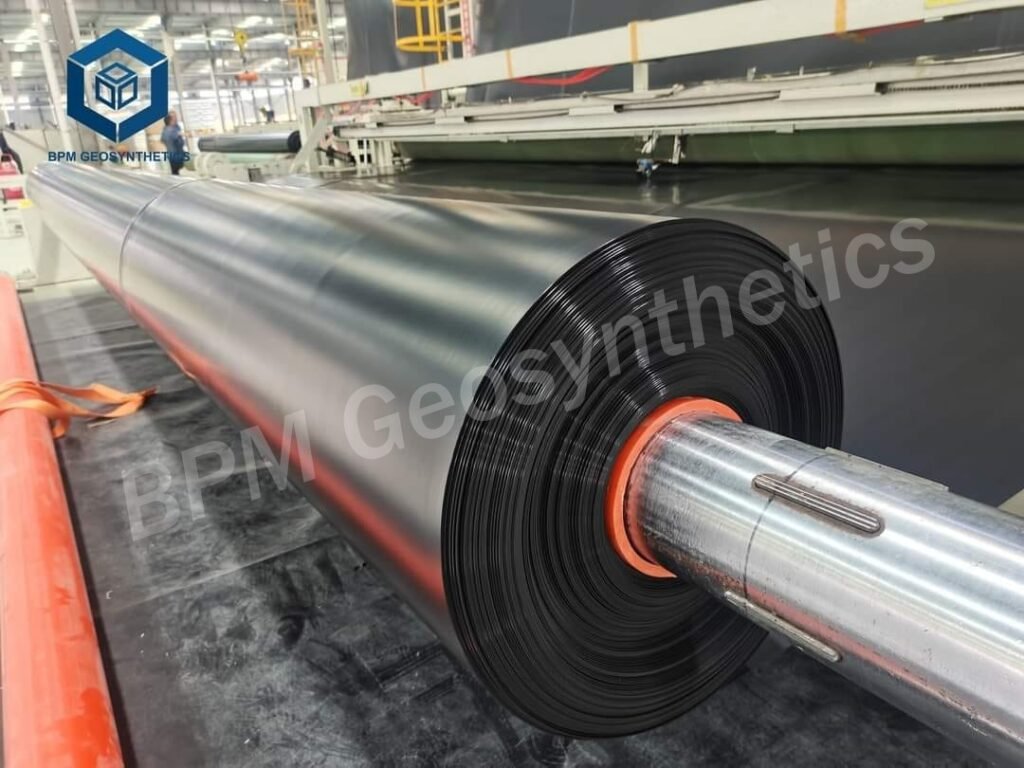
- Ask for large roll widths(8–12 m) to minimize field seams
- Request welding parameter guide& trial weld procedure
- Confirm lead time& freight cost to your site
- Ask about volume discounts(>50,000 m²)
- Verify warrantyterms (exposed vs. buried)
- Ensure supplier provides CQA checklist& field support
5.3 Critical Installation Best Practices (2025 IAGI & GSI Guidelines)
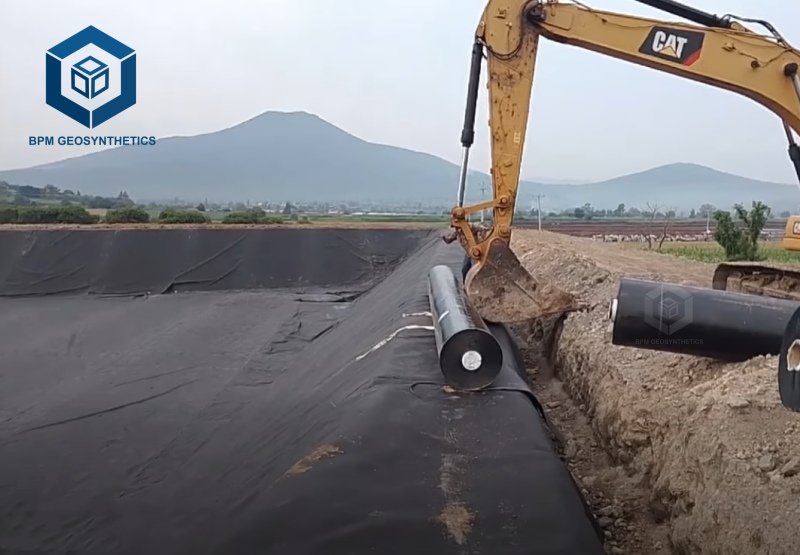
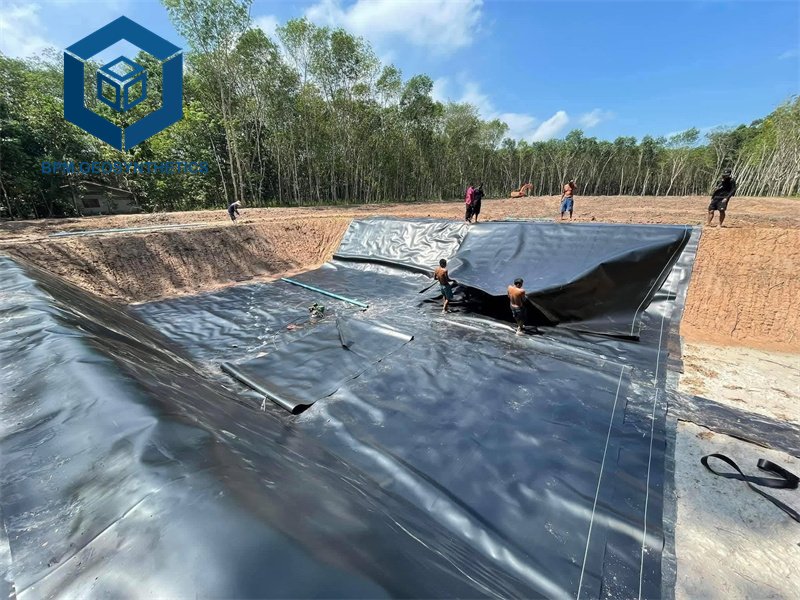
- Subgrade preparation— Smooth, compacted, free of sharp objects; install 200–400 g/m² nonwoven geotextile cushion
- Overlap— Minimum 75–150 mm
- Welding— Automatic wedge/extrusion at 200–300 °C; maintain 0.5–4 m/min speed
- Testing— 100 % non-destructive (air lance or vacuum) + destructive frequency 1/500–1,000 m²
- Anchoring— Proper trench anchor & weighting for exposed slopes
- Documentation— Full QA/QC records (welder certification, temperature logs, test results)
5.4 Current Buying Tips – January 2025
- Clearance discounts— Many factories offer 10–25 % off remaining 2024 inventory
- Volume pricing— Aquaculture/reservoir projects >50,000 m² often receive 15–35 % better pricing
- Lead time— 4–12 weeks typical; order early for Q2 delivery
- Hybrid systems— Many large ponds use smooth HDPE on bottom and textured on steep slopes for optimal cost & stability
6. Final Thoughts
The top 6 HDPE pond liner manufacturers in 2025 deliver exceptional quality, weldability, UV stability and long-term durability for aquaculture, irrigation, stormwater, decorative and commercial water storage projects.
BPM Geosynthetics stands out as the best overall combination of consistent GRI-GM13 performance, competitive global pricing, large-roll availability and strong technical support — making it the first choice for many international pond builders and engineers.
Whether you choose BPM, GSE/Solmax, Agru, Firestone or another reputable supplier, always demand:
- Full GRI-GM13certification with current batch reports
- Virgin resin only + Category 1–2 carbon black dispersion
- ≥100 min standard OIT & ≥55 % retained OIT after oven aging
- Certified welding crews & 100 % non-destructive seam testing
With these elements in place, a well-installed HDPE pond liner will provide leak-free performance for generations.