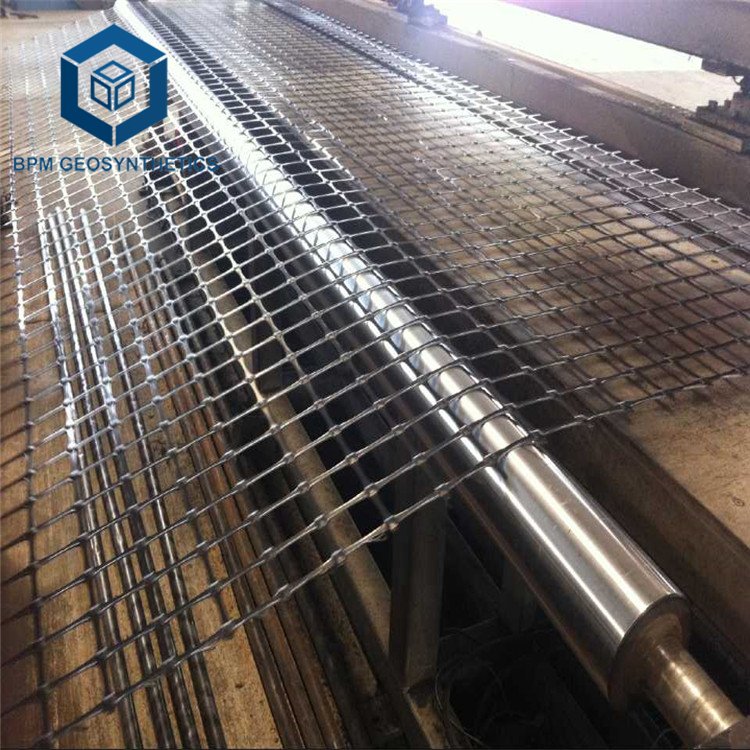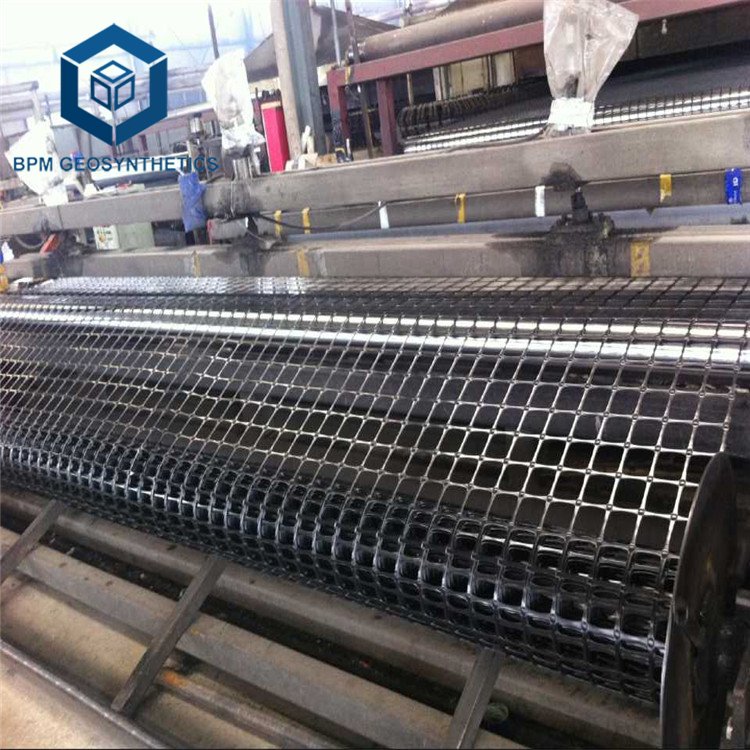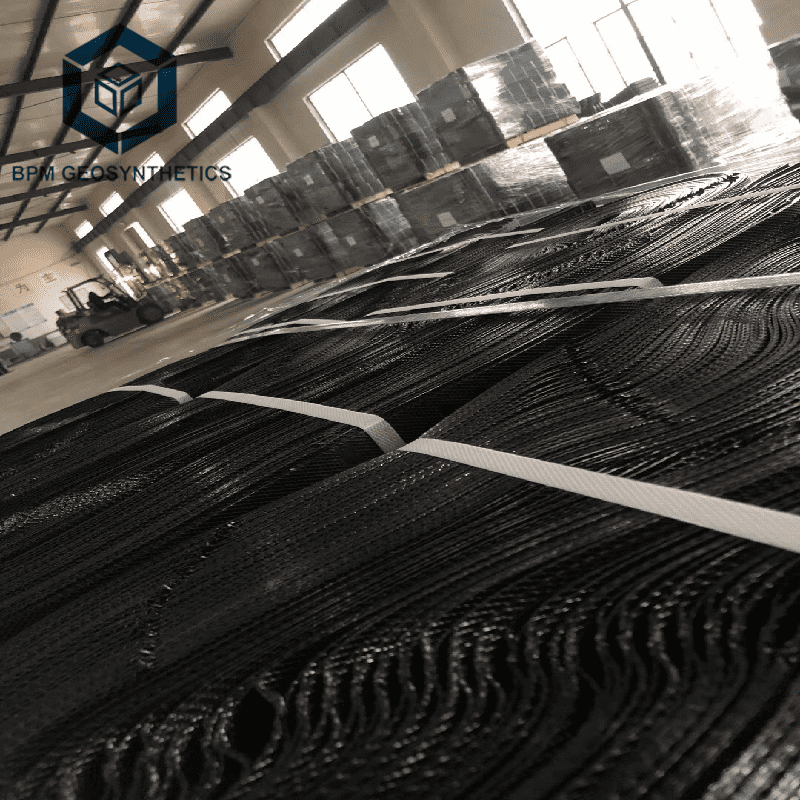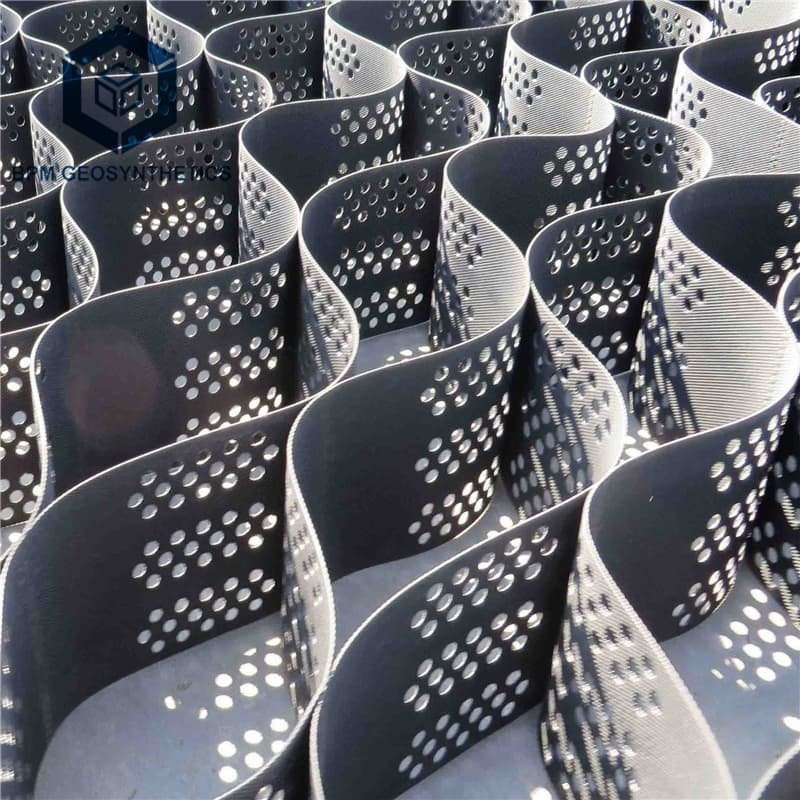
Geocell (full name: Cellular Confinement System) is a 3D honeycomb geosynthetic made of HDPE/PP/PET, expanded on-site, filled with soil/aggregate, used for soil stabilization, slope protection, road subgrade reinforcement, and erosion control. It boosts bearing capacity, curbs lateral soil movement, and cuts construction/maintenance costs. This blog post provides a comprehensive analysis of geocell prices, ranging from $0.20–$5.00 per square foot ($0.80–$4.90/m²). Drawing on research from sources like bpmgeomembrane.com, alibaba.com, and industry reports (e.g., Geosynthetic Institute), we explore cost factors, material types, specifications, installation requirements, and cost-saving strategies to deliver actionable insights for achieving 95% project reliability and 15–25% cost savings.
1. What is Geocell?
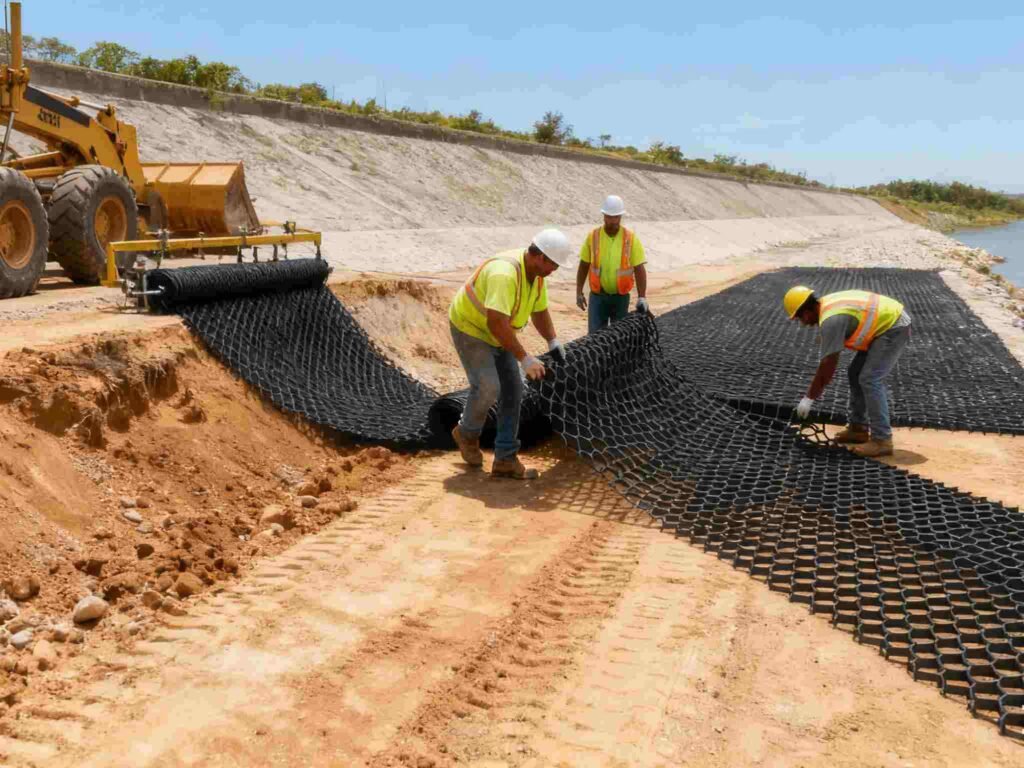
A Geocell (also known as a Cellular Confinement System) is a three-dimensional, honeycomb-like structure made from high-strength polymeric strips (typically HDPE or novel polymeric alloys) welded together at regular intervals. When expanded on-site, it forms a flexible, permeable mattress of interconnected cells. These cells are then filled with compacted soil, aggregate, gravel, or concrete, creating a rigid-to-flexible composite layer with exceptional mechanical properties.
Its core engineering principle is lateral confinement. The cell walls provide 3D containment to the infill material, dramatically increasing its stiffness, load-bearing capacity, and resistance to shear forces.

2. Types of Geocell
Geocells are categorized mainly by material, structure design, and application scenario, with the following common types:
2.1By Material (Most Common Classification)
HDPE Geocell: The most widely used type (accounting for ~80% of the market). Durable, corrosion-resistant, and UV-stabilized, with a service life of 50–100 years. Suitable for road subgrades, slope protection, and general soil stabilization.
PP Geocell: Lightweight, cost-effective, and flexible. Ideal for temporary projects (e.g., temporary access roads) or low-load scenarios like residential yards.
PET Geocell: High tensile strength and tear resistance. A premium option for heavy-load projects (e.g., industrial yards, high-speed road shoulders) and harsh environments.
2.2By Structure & Design
Perforated Geocell: With small holes on cell walls, enhancing water permeability and soil integration. Perfect for rainy areas or erosion control.
Textured Geocell: Surface texture increases friction with filled materials (soil/aggregate), improving stability for steep slopes or high-traffic roads.
Customized Geocell: Tailored cell height (50–300mm), thickness, and size for special projects (e.g., large-scale landfills, coastal protection).
2.3 By Application Scenario
Civil Engineering Geocell: For road subgrade reinforcement, airport runways, and railway embankments.
Slope & Erosion Control Geocell: Used for steep slope greening, riverbank protection, and soil erosion prevention.
Residential & Landscape Geocell: Applied in backyard driveways, patio bases, and garden path stabilization.
3.Key Benefits of Geocell
Geocell offers core advantages for civil engineering and landscaping, with practical value across scenarios:
Enhances soil stability and bearing capacity, curbing lateral movement effectively.
Reduces construction costs by minimizing aggregate/soil usage and simplifying processes.
Boosts erosion control and slope protection, with long service life (50–100 years for HDPE).
Improves water permeability (for perforated types) and adapts to diverse terrains.
4.Factors Influencing Geocell Costs
4.1Material Type-Geocell Cost
HDPE: Durable, UV – resistant, widely used, $0.75–$2.75/sq ft.
PP: Cost – effective, light – duty, $0.50–$2.00/sq ft.
PET: High – tensile, for harsh environments, higher price than HDPE.
Recycled materials: Lower cost, depends on recycled content and quality.
4.2Specifications(key parameter impact)-Geocell Cost
Height: 5–30cm common, 20cm vs 10cm can cost 30%–50% more.
Cell size: Smaller cells = more material, higher cost; larger cells reduce unit cost.
Thickness/strength: Thicker walls, higher tensile strength = higher cost.
Perforation: Perforated for drainage, non – perforated for confinement, cost varies slightly.
4.3Production & Brand-Geocell Cost
Process: Ultrasonic welding is 8%–12% pricier than regular welding, with better durability.
Brand: Premium brands cost 10%–20% more than generic ones for quality assurance.
4.4Order Scale & Procurement-Geocell Cost
Bulk orders (≥5,000 sq ft) get 10%–20% discount; small orders have higher unit cost.
Imported vs local: Imported adds tariff/shipping, increasing cost by 20%–40%.
4.5Installation & Site Conditions(30%–50% of total cost)-Geocell Cost
Site prep: Clearing/grading adds $0.20–$0.50/sq ft; rocky/steep terrain raises cost.
Labor: Urban areas cost $0.30–$1.00/sq ft, rural areas lower; complex terrain boosts labor cost.
Infill: Local aggregate ($0.2–$0.5/sq ft) cheaper than imported ($0.5–$1.0/sq ft).
4.6Logistics & Market-Geocell Cost
Distance: Remote areas add 10%–30% shipping cost.
Oil price: Affects polymer raw material cost, triggering price fluctuations.
Supply – demand: Peak season or shortage can lift prices by 5%–15%.
5.Geocell Price Breakdown
Material: Virgin HDPE $0.75–2.75, recycled HDPE $0.50–1.50, PP $0.50–2.00, PET $1.00–3.50. Height 10cm→20cm +30%–50%; smaller cells/thicker walls +20%–40%. Accessories $0.10–0.30.
Installation: Site prep $0.20–0.50, labor $0.30–1.00, infill $0.20–1.00, equipment $0.10–0.30. Rocky/steep terrain boosts prep/labor by 50%–100%.
Logistics & Overhead: Shipping $0.10–0.30 (remote +10%–30%), import tariff $0.20–0.40, admin/tax $0.05–0.20.
Typical totals: Driveway $1.50–3.00, road subgrade $3.00–5.00, slope protection $4.00–6.50.
6.Applications of Geocell and Cost Implications
Unpaved Roads/Parking Lots: Rural access/worksites, total cost $1.50–3.50. Uses recycled/virgin HDPE; cuts aggregate by 30%–50%, maintenance by 60%+ vs gravel.
Paved Road Subgrade: Highways/urban roads, total cost $3.00–5.00. Needs 15–20cm tall thick – walled cells; reduces base thickness by 20%–30%, saving $150k–250k/mi in aggregate.
Slope Stabilization: Embankments/steep slopes, total cost $4.00–6.50. PET/heavy – duty HDPE (15–20cm height); steep terrain hikes prep/labor by 50%–100%, but 30% cheaper than concrete walls and cuts erosion by 40%–60%.
Retaining Walls: Low – rise earth retention, total cost $3.50–6.00. Interlocking cells + anchors; 25% more stable than gravity walls, no costly concrete formwork.
Channel Lining: Storm drains/riverbanks, total cost $2.50–5.00. Perforated HDPE; up to 66% cheaper than reinforced concrete, fewer machine hours.
Residential Driveways: Light – duty loads, total cost $1.50–3.00. Recycled HDPE/PP; 2–3x longer lifespan than gravel alone, faster install.
Key Cost Drivers & Savings
Materials: Virgin HDPE ($0.75–2.75) for durability; recycled HDPE/PP ($0.50–1.50) for temp works; taller cells (+30%–50%) or thicker walls (+20%–40%) raise cost.
Installation: Rocky/steep terrain boosts prep/labor by 50%–100%; local infill cuts install costs by 30%–50%.
Lifecycle: Maintenance drops from 3%–4% to 1%–2% of build cost; 50 – year savings often exceed initial costs.

7.Conclusion
Geocells are a cost-effective, versatile solution for road construction, slope stabilization, and residential driveways, offering 30%–50% less aggregate use, 60%+ lower maintenance, and 2–3x longer lifespan than traditional methods, with total costs ranging from $1.50–6.50 USD/sq ft. For reliable performance, BPM Geosynthetics is highly recommended—an IGS member and leading manufacturer since 2007, it delivers ASTM/ISO-certified HDPE geocells with <1% defect rates, ultrasonic welding for strong seams, and customizable specs. With a global supply network serving 89+ countries, one-stop engineering/installation support, and factory-direct pricing, BPM ensures quality, cost efficiency, and tailored solutions for both light-duty and heavy-duty projects.