Polypropylene geotextile fabrics have become a cornerstone of modern civil engineering. They offer an excellent balance of strength, durability, and cost-effectiveness. Consequently, engineers and contractors increasingly rely on these materials for soil stabilization, filtration, and drainage. This review examines seven top-performing products. Furthermore, it highlights how manufacturers like BPM Geosynthetics deliver reliable solutions for diverse project requirements.
1.What Makes Polypropylene Geotextile Fabrics the Preferred Choice?
1.1 Superior Chemical and Biological Resistance
Polypropylene fibers resist degradation from alkalis, acids, and microorganisms. Therefore, these fabrics maintain their integrity in harsh soil environments. This resistance ensures a long service life compared to natural materials.
1.2 Excellent Strength-to-Weight Ratio
Polypropylene geotextile fabrics provide high tensile strength at relatively low weights. As a result, they offer efficient reinforcement without adding excessive bulk. This property simplifies transportation and installation on site.
1.3 Cost-Effective Performance
These fabrics deliver dependable performance at competitive price points. Consequently, they help project owners reduce overall material costs. Moreover, their durability lowers long-term maintenance expenses.
2. Key Evaluation Criteria for Top Products
2.2 Tensile Strength and Durability
We assessed each fabric based on its grab tensile strength and puncture resistance. High values indicate better load distribution and survivability during installation. Additionally, UV stability was a critical factor for exposed applications.
2.3 Filtration and Drainage Capability
Permittivity and apparent opening size (AOS) determine how well a fabric filters soil while allowing water flow. Therefore, a balanced ratio is essential for preventing clogging and ensuring proper drainage.
2.4 Manufacturer Reputation and Support
We considered the track record of each manufacturer. BPM Geosynthetics, for instance, provides comprehensive technical support and consistent quality control. Their expertise in geosynthetics manufacturing adds significant value for project success.
3. Top 7 Polypropylene Geotextile Fabrics Reviewed
3.1. BPM Geosynthetics Nonwoven Polypropylene Geotextile Fabric
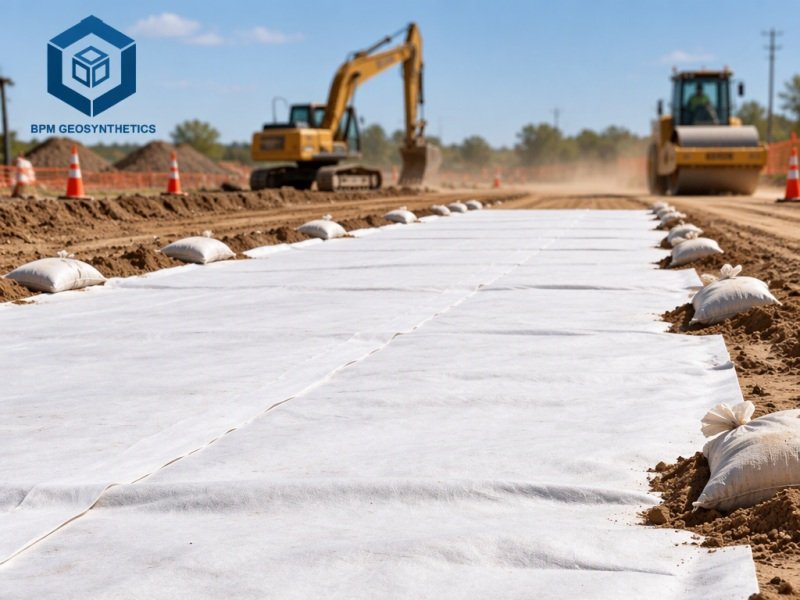
BPM Geosynthetics offers a high-quality nonwoven polypropylene geotextile fabric made from 100% virgin fibers. The manufacturing process uses needle-punching technology to create a stable, three-dimensional fiber structure. This structure delivers excellent water flow rates and fine-particle filtration. Consequently, the fabric performs exceptionally well in drainage and separation applications. It effectively prevents soil migration while allowing water to pass freely. Furthermore, the material resists clogging, which extends its service life in demanding environments. The fabric is available in weights from 100 g/m² to 1200 g/m², providing flexibility for various project scales. Additionally, BPM supplies custom roll widths and lengths to suit specific site requirements. The fabric also offers strong puncture resistance and UV stability for exposed conditions. Moreover, BPM Geosynthetics controls production in its own factory to ensure consistent quality. As a result, contractors receive reliable material with every order. This product suits road construction, landfill lining, drainage systems, and soil stabilization projects. Ultimately, BPM’s nonwoven polypropylene geotextile fabric combines durability, filtration performance, and specification flexibility.
3.2. TenCate Mirafi N-Series
The Mirafi N-Series remains a professional benchmark for high-end landscaping. It offers high permittivity and validated long-term permeability. However, its premium price point may limit its use to critical, high-value projects.
3.3. Hanes Geo TerraTex N-Series
Hanes Geo delivers a dependable mid-range option. The TerraTex N-Series meets AASHTO M288 Class 2 requirements. Therefore, it provides an excellent balance between performance and affordability for standard residential and commercial projects.
3.4. US Fabrics Landscape Nonwoven Series
US Fabrics focuses on heavy-duty performance. Their nonwoven series provides high puncture resistance, making it suitable for gravel driveways and heavy stone patios. This durability ensures reliable separation under demanding load conditions.
3.5. Propex Geotex Landscape Nonwoven
Propex excels in filtration-focused applications. The Geotex series offers high flow rates and excellent permittivity. Consequently, it is ideal for permeable paver systems and French drains where drainage is the primary concern.
3.6. Jingwei PP Woven Geotextiles
Jingwei provides customizable polypropylene woven geotextiles designed to meet diverse project needs. The company offers flexible specifications for weight, width, and tensile strength, allowing engineers to tailor the fabric precisely to site conditions. Moreover, Jingwei supports custom roll sizes and packing requirements for export orders. Consequently, importers gain greater control over material costs and logistics. This adaptability makes Jingwei a practical choice for importers and projects with specific technical requirements. Additionally, their responsive service helps streamline procurement and reduces lead times. As a result, buyers can secure reliable woven geotextiles without compromising on specification flexibility.
3.7. SKAPS Woven Geotextile
SKAPS delivers competitive woven products for soil stabilization. Their fabrics provide reliable tensile reinforcement for road construction and embankments. Therefore, they represent a solid option for cost-conscious projects requiring dependable performance.
4. How to Select the Right Polypropylene Geotextile Fabric
4.1 Match Fabric Type to Application
Choose nonwoven fabrics for filtration, drainage, and separation. These fabrics feature a random fiber structure that allows water to pass while retaining soil particles. Consequently, they perform well in drainage trenches, French drains, and separation layers under pavements. Alternatively, select woven fabrics for reinforcement and stabilization. Woven fabrics offer higher tensile strength and low elongation, making them ideal for load-bearing applications such as road bases and embankments. Furthermore, consider the installation conditions. Rough subgrades demand tougher fabrics with high puncture resistance. Understanding the primary function prevents costly specification errors. Therefore, always define the project’s main goal before comparing products. Additionally, consult the manufacturer’s technical team for guidance. BPM Geosynthetics provides expert support to help buyers match fabric type to application. This step ensures the selected fabric delivers reliable, long-term performance.
4.2 Verify Technical Specifications
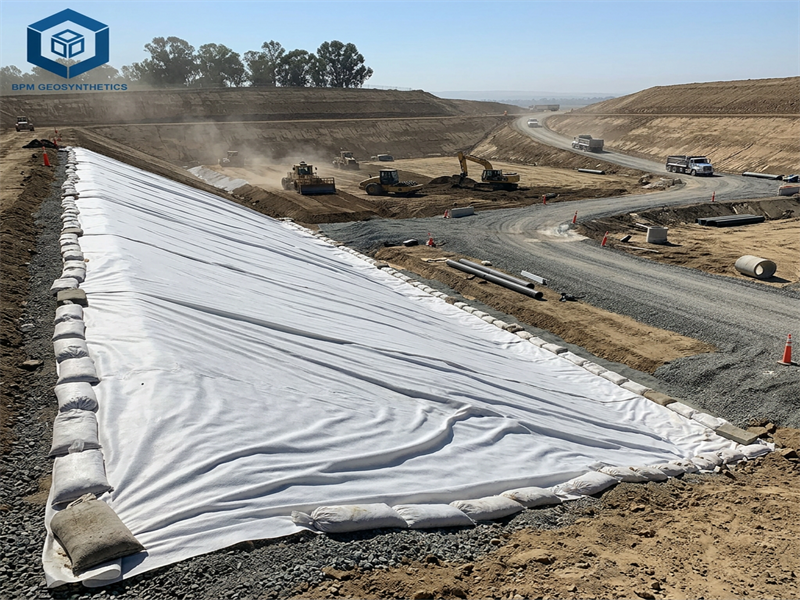
Always request test data for tensile strength, permittivity, and UV stability. Tensile strength indicates how much load the fabric can carry without tearing. Permittivity measures the fabric’s ability to allow water flow, which is critical for drainage applications. UV stability determines how well the fabric resists sunlight degradation during storage and exposure. Compare these values against project requirements. Furthermore, check the test methods used, such as ASTM D4632 for grab tensile strength and ASTM D4491 for water permeability. Ensure the manufacturer follows international standards like ASTM. Additionally, request third-party test reports when possible. This practice verifies the accuracy of the manufacturer’s data. BPM Geosynthetics provides complete test documentation with every order. Consequently, buyers can confirm product quality before installation. Reliable specifications prevent failures and protect project investments.
4.3 Consider Total Project Cost
Evaluate the long-term value rather than just the unit price. A slightly higher initial cost for superior durability often reduces maintenance and replacement expenses. Therefore, calculate the total cost over the project’s lifespan, including installation, maintenance, and potential repairs. Additionally, factor in installation ease and material availability. Fabrics that are easy to handle and install reduce labor costs and project delays. Furthermore, consider roll sizes and shipping efficiency. Larger rolls may lower freight costs per square meter. Reliable suppliers like BPM Geosynthetics offer factory-direct pricing and consistent supply. This stability helps contractors avoid costly downtime. Consequently, a comprehensive cost analysis reveals the true value of each product. Choose the fabric that delivers the best balance of performance, durability, and overall cost.
Conclusion
Selecting the right polypropylene geotextile fabric is critical for project success. The seven products reviewed here offer distinct advantages for different applications. BPM Geosynthetics stands out for its comprehensive product range and commitment to quality. Ultimately, careful evaluation of technical specifications and project needs will guide you toward the optimal solution.