Introduction
Short fiber geotextile fabric, also known as staple fiber nonwoven geotextile, is one of the most widely used geosynthetic materials in civil engineering, road construction, drainage systems, and environmental protection projects. Manufactured through a needle-punching process, this material consists of randomly distributed short synthetic fibers mechanically interlocked to create a strong, flexible, and permeable fabric.
Its excellent filtration, separation, drainage, and protection properties make it an important component in modern infrastructure projects.
However, different short fiber geotextile fabrics offer different performance characteristics depending on their raw materials, weight, thickness, tensile strength, and manufacturing processes.
In this article, we review seven popular short fiber geotextile fabric options, compare their characteristics, and explain how to choose the right product. We also introduce The Best Project Material Co., Ltd. (BPM), a professional geosynthetics manufacturer providing reliable geotextile solutions for global engineering projects.
1. 100g Short Fiber Nonwoven Geotextile
Best for: Landscaping and lightweight separation applications
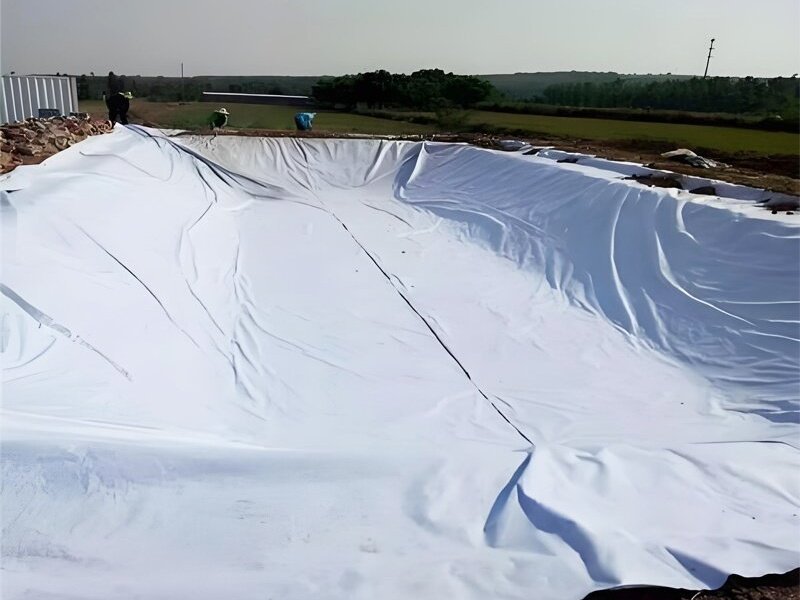
The 100g short fiber geotextile is a lightweight nonwoven fabric designed for applications with relatively low mechanical requirements.
Its flexible structure allows water to pass through while helping prevent soil particles from migrating between different material layers.
Typical applications include garden landscaping, light-duty drainage, and basic soil separation.
It is an economical option for projects where heavy mechanical loading is not expected.
2. 150g Short Fiber Geotextile Fabric
Best for: Residential landscaping and garden drainage
The 150g geotextile offers a balance between lightweight construction and practical mechanical performance.
Manufactured through needle punching, its fiber structure provides good water permeability and filtration properties.
It is commonly used beneath decorative gravel, in garden drainage systems, and for separating soil from aggregate layers.
For residential and landscaping contractors, this weight provides a practical and cost-effective solution.
3. 200g Short Fiber Needle Punched Geotextile
Best for: Road construction and soil separation
The 200g short fiber geotextile is a popular choice for general civil engineering applications.
Its relatively higher mass per unit area provides additional material coverage and mechanical resistance compared with lighter products.
It is widely used between subgrade soil and aggregate layers in road construction to reduce intermixing and maintain the stability of the pavement structure.
Other applications include railway construction, embankments, and foundation engineering.
4. 300g Short Fiber Nonwoven Geotextile
Best for: Drainage systems and infrastructure projects
The 300g needle-punched geotextile is designed for projects requiring a heavier nonwoven fabric.
Its three-dimensional fiber structure supports filtration and water movement while helping retain surrounding soil particles.
Common applications include retaining wall drainage, underground drainage systems, tunnel construction, and erosion control.
It can also provide a protective cushioning layer for geomembranes when properly selected for the project requirements.
5. 400g Heavy-Duty Short Fiber Geotextile
Best for: Heavy civil engineering and erosion protection
For projects involving more demanding installation conditions, 400g short fiber geotextile may provide a suitable solution.
Its greater mass per unit area generally offers additional material thickness and protection compared with lighter grades.
Typical applications include road foundations, embankments, drainage structures, and geomembrane protection systems.
Engineers should consider tensile strength, puncture resistance, elongation, and hydraulic properties when evaluating this product.
6. 100% Virgin Polypropylene Short Fiber Geotextile
Best for: Projects requiring consistent raw material quality
Raw material selection plays an important role in geotextile performance.
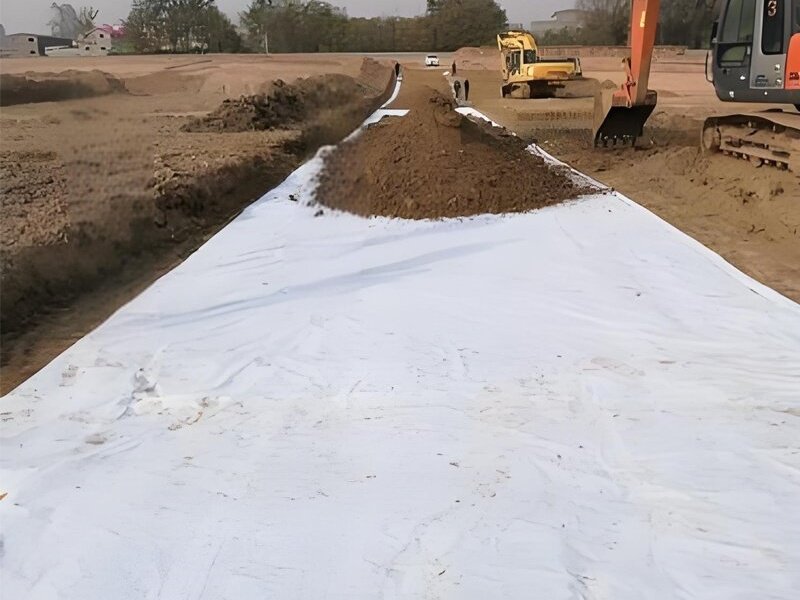
Polypropylene (PP) short fiber geotextiles are valued for their low density, chemical resistance, and moisture resistance.
When manufactured using suitable virgin PP fibers and controlled needle-punching processes, these products can provide reliable filtration, separation, and drainage performance.
They are commonly considered for road construction, drainage systems, agricultural engineering, and environmental applications.
7. Customized Short Fiber Needle Punched Geotextile
Best for: Large-scale and specialized engineering projects
Standard geotextile specifications do not always meet the requirements of every construction project.
Customized short fiber geotextiles allow buyers to select suitable weights, roll widths, roll lengths, raw materials, and performance specifications.
This flexibility is particularly valuable for large infrastructure projects, mining operations, landfills, and drainage engineering.
Working directly with a manufacturer can also help optimize material specifications and procurement costs.
Comparison of the 7 Best Short Fiber Geotextile Fabrics
Geotextile Type | Typical Weight | Recommended Applications |
Lightweight Nonwoven | 100g/m² | Landscaping, light separation |
General-Purpose Nonwoven | 150g/m² | Garden drainage, landscaping |
Road Construction Geotextile | 200g/m² | Roads, soil separation |
Medium-Heavy Geotextile | 300g/m² | Drainage, retaining walls |
Heavy-Duty Geotextile | 400g/m² | Infrastructure, protection |
Virgin PP Short Fiber | Customized | Drainage, civil engineering |
Customized Needle-Punched Fabric | Customized | Specialized engineering |
Note: These are representative product configurations rather than independently tested brand rankings. Actual performance depends on fiber type, manufacturing quality, and technical specifications. The appropriate weight should be determined by engineering requirements rather than weight alone.
Why Choose The Best Project Material Co., Ltd. (BPM)?
When sourcing short fiber geotextile fabrics, selecting an experienced manufacturer is just as important as choosing the correct product specifications.
The Best Project Material Co., Ltd. (BPM) is a professional geosynthetics manufacturer and supplier specializing in geotextiles, geomembranes, geogrids, geocells, and other engineering materials.
BPM offers short fiber needle-punched nonwoven geotextile fabrics designed for filtration, separation, drainage, and protection applications.
Key advantages of choosing BPM include:
Professional Manufacturing: BPM operates dedicated geotextile production facilities equipped with automatic production lines and testing equipment.
Wide Product Range: Customers can source short fiber geotextiles, filament nonwoven geotextiles, PET woven geotextiles, and PP woven geotextiles.
Customized Specifications: Different fabric weights, dimensions, and product requirements can be discussed according to project needs.
Quality Management: BPM reports ISO 9001 and ISO 14001 certifications, along with other certifications and third-party testing qualifications.
International Experience: BPM supplies geosynthetic products to customers across multiple international markets.
One-Stop Solutions: In addition to geotextiles, BPM provides other geosynthetic materials to support different civil engineering applications.
With manufacturing experience, professional technical support, and a comprehensive product portfolio, BPM aims to help contractors, distributors, and engineering companies find suitable geotextile solutions.
How to Choose the Right Short Fiber Geotextile?
Before purchasing short fiber geotextile fabric, consider these five important factors:
1.Fabric Weight: Choose an appropriate GSM based on project requirements, but do not use weight as the only performance indicator.
2.Raw Material: Confirm whether the product uses polypropylene (PP), polyester (PET), or another specified fiber.
3.Mechanical Properties: Evaluate tensile strength, elongation, puncture resistance, and tear resistance.
4.Hydraulic Performance: Check permeability, apparent opening size (AOS), and filtration requirements.
5.Quality Standards: Request technical data sheets and relevant laboratory test reports to verify compliance with applicable project standards.
Working with a professional manufacturer can help reduce material selection errors and improve project efficiency.
Final Verdict
Short fiber needle-punched geotextile fabrics are essential materials for modern civil engineering, providing reliable filtration, separation, drainage, and protection functions.
From lightweight 100g products to heavy-duty 400g fabrics and customized polypropylene solutions, each type offers different advantages for specific construction applications.
For buyers looking for a reliable short fiber geotextile manufacturer, The Best Project Material Co., Ltd. (BPM) is a worthwhile supplier to consider.
With professional manufacturing facilities, a broad range of geosynthetic products, customized production capabilities, and international supply experience, BPM is committed to providing cost-effective geotextile solutions for customers worldwide.
Looking for high-quality short fiber geotextile fabrics at competitive factory prices? Contact The Best Project Material Co., Ltd. today to discuss your project requirements and request a customized quotation!