1. Introduction
Non woven needle punched geotextile is one of the most widely used geosynthetic materials in modern civil engineering and infrastructure construction. Known for its excellent filtration, drainage, separation, and protection properties, this material plays an important role in road construction, railway projects, drainage systems, landfills, landscaping, and erosion control.
Unlike woven geotextiles, which are manufactured by interlacing yarns, non woven needle punched geotextiles are produced by mechanically entangling fibers using thousands of specially designed needles. This process creates a flexible, porous fabric with good water permeability and mechanical strength.
Whether you are an engineer, contractor, distributor, or project manager, understanding the properties and applications of needle punched geotextiles can help you select the right material for your project.
In this guide, we will explain how non woven needle punched geotextiles are manufactured, their main benefits, common applications, and how to choose a reliable supplier such as The Best Project Material Co., Ltd. (BPM Geosynthetics).
2. What Is Non Woven Needle Punched Geotextile?
Non woven needle punched geotextile is a permeable synthetic fabric commonly manufactured from polypropylene (PP) or polyester (PET) fibers.
During production, loose fibers are arranged into a web and passed through a needle punching machine. Barbed needles repeatedly penetrate the fiber web, entangling the fibers and forming a stable non woven fabric.
The resulting material has a three-dimensional fiber structure that allows water to pass through while helping retain surrounding soil particles.
Depending on the raw material, manufacturing process, and product specifications, needle punched geotextiles can provide different levels of tensile strength, puncture resistance, elongation, and permeability.
3. How Is Needle Punched Geotextile Manufactured?
The manufacturing process generally involves several important stages:
Step 1: Raw Material Selection
Polypropylene or polyester staple fibers are selected according to the required product characteristics and intended application.
Step 2: Fiber Opening and Blending
The fibers are opened, loosened, and blended to achieve a relatively uniform distribution.
Step 3: Web Formation
The fibers are arranged into a continuous web with a specified weight and thickness.
Step 4: Needle Punching
Special barbed needles repeatedly penetrate the fiber web, mechanically interlocking the fibers to create a strong and stable fabric structure.
Step 5: Finishing and Cutting
The fabric may undergo additional finishing, inspection, cutting, and winding processes before being packaged into rolls.
Step 6: Quality Inspection
Finished products are tested for relevant physical and hydraulic properties to ensure they meet the required specifications.
4. Main Advantages of Non Woven Needle Punched Geotextile
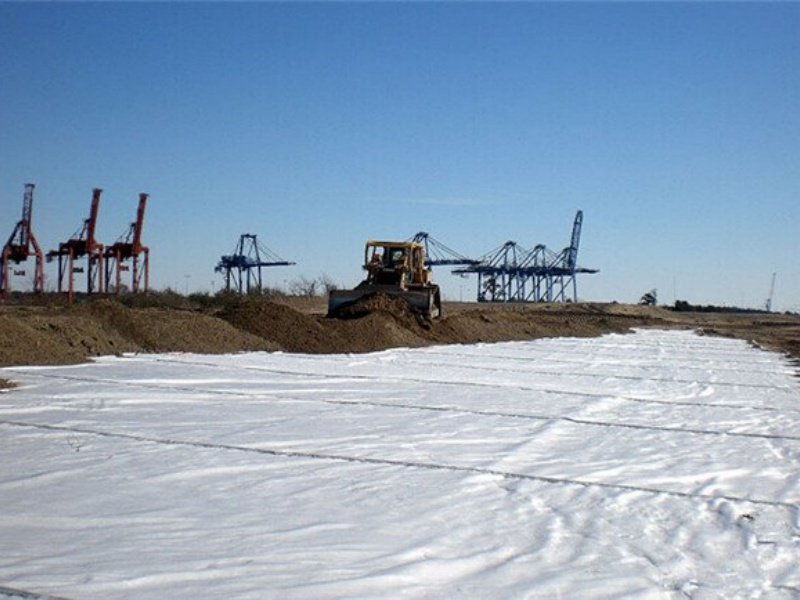
Needle punched geotextiles offer several advantages that make them suitable for demanding engineering environments.
Key Property | Description | Engineering Benefit |
High Permeability | Allows water to pass through the fabric | Supports effective drainage |
Filtration Performance | Retains soil particles while allowing water flow | Helps prevent soil migration |
Separation | Creates a barrier between different soil layers | Reduces material mixing |
Flexibility | Adapts to uneven ground surfaces | Simplifies installation |
Puncture Resistance | Resists damage from surrounding materials | Improves installation durability |
Chemical Resistance | Offers resistance to many soil-related chemicals | Suitable for various environments |
Protection | Provides cushioning between adjacent materials | Helps protect waterproofing membranes |
These properties make needle punched geotextiles a practical solution for infrastructure and environmental engineering projects.
5. Common Applications of Needle Punched Geotextile
Non woven needle punched geotextiles are used in many types of construction projects.
5.1 Road and Highway Construction
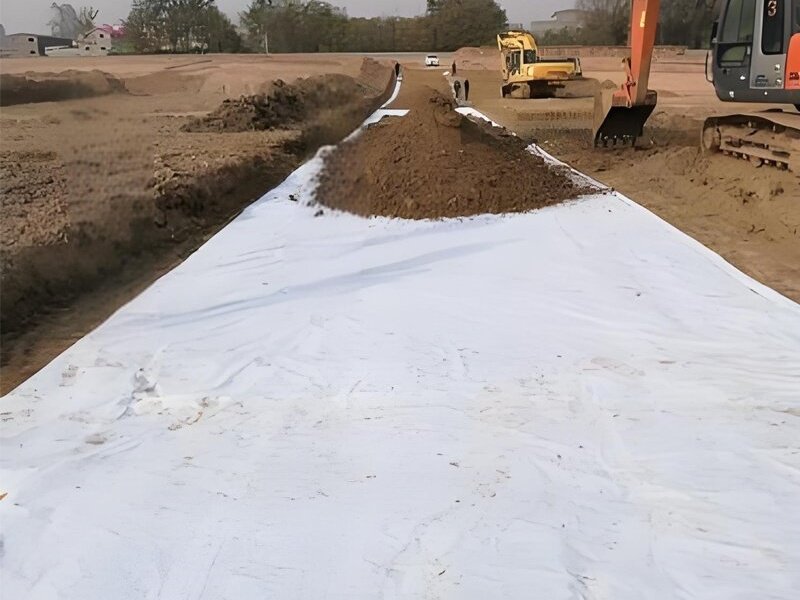
In road construction, geotextiles are installed between subgrade soil and aggregate layers. They help prevent the mixing of fine soil particles with gravel while maintaining water permeability.
This separation function can improve the stability of pavement structures and help extend road service life when properly designed.
5.2 Drainage Systems
Needle punched geotextiles are commonly used as filtration layers around drainage pipes, gravel trenches, and retaining wall drainage systems.
They allow groundwater to flow into drainage materials while reducing the migration of surrounding soil particles.
5.3 Railway Construction
In railway engineering, geotextiles can be placed beneath ballast or between soil layers to provide separation, filtration, and protection.
Their use helps maintain the performance of railway substructures under repeated loading.
5.4 Landfills and Environmental Protection
Geotextiles are frequently used in landfill engineering as protective and filtration layers.
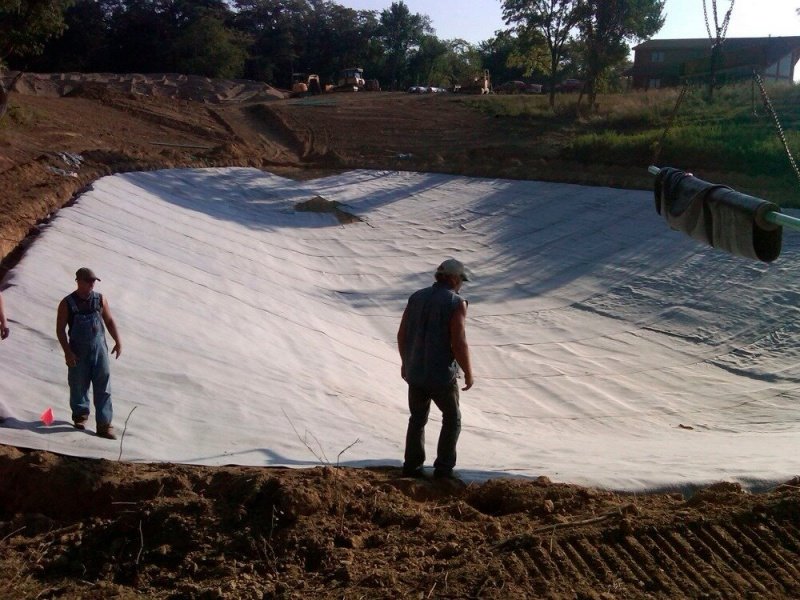
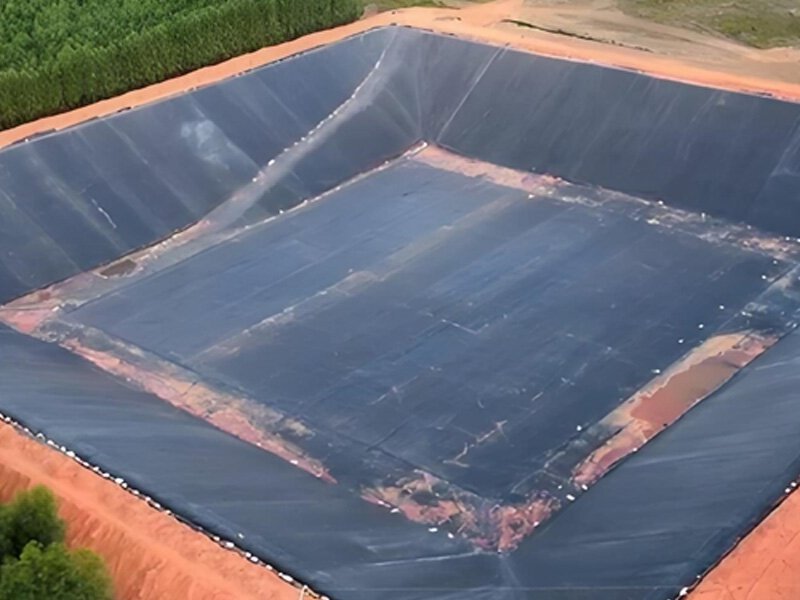
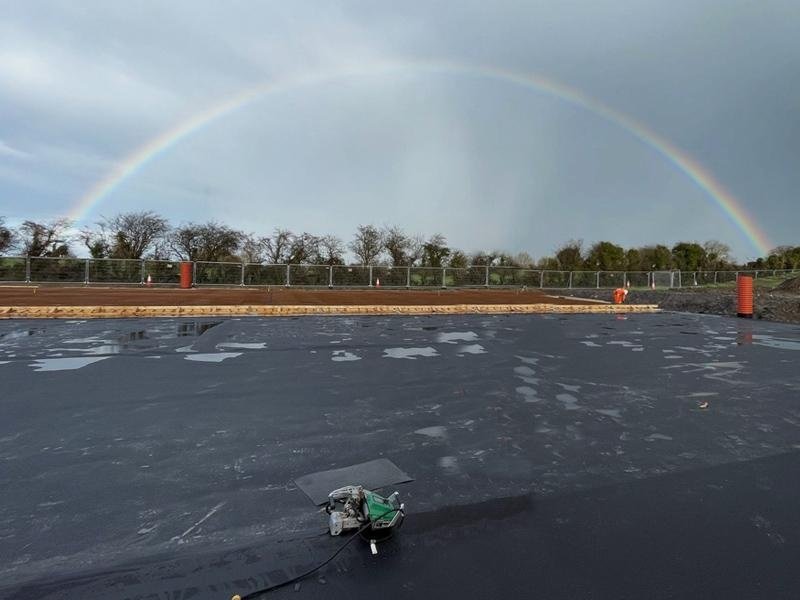
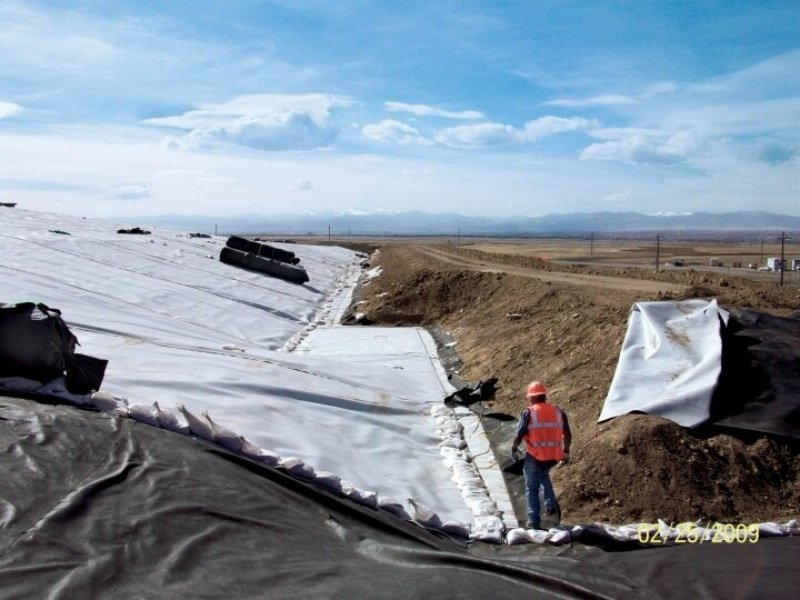
They can protect geomembranes from mechanical damage caused by stones or other materials and support drainage systems for leachate collection.
5.5 Landscaping and Erosion Control
In landscaping and slope protection projects, non woven geotextiles can help separate soil layers, support drainage, and reduce soil movement when incorporated into an appropriate erosion control design.
6. PP vs. PET Non Woven Needle Punched Geotextile
Polypropylene and polyester are two common raw materials used in non woven geotextile manufacturing.
Although both materials offer reliable engineering performance, they have different characteristics.
Comparison | PP Geotextile | PET Geotextile |
Full Name | Polypropylene | Polyester |
Density | Lower | Higher |
Weight | Generally lighter | Generally heavier at equivalent volume |
Chemical Resistance | Good resistance to many acids and alkalis | Good resistance to many environments, but sensitive to strong alkalis |
Moisture Absorption | Very low | Higher than PP |
Typical Applications | Drainage, filtration, separation | Road construction, filtration, reinforcement-related applications |
Main Advantage | Lightweight and chemically resistant | Good mechanical properties and dimensional stability |
The choice between PP and PET depends on the project’s design requirements, soil conditions, chemical exposure, and expected service life.
7. How to Choose the Right Needle Punched Geotextile
Selecting the correct geotextile is essential for achieving reliable engineering performance.
Here are several important factors to consider:
- Fabric Weight (GSM)
GSM refers to grams per square meter. Common geotextile specifications include 100, 150, 200, 300, 400, 500, and 800 GSM.
Higher GSM products generally provide more material per unit area, but weight alone does not determine performance.
- Tensile Strength
Tensile strength measures the fabric’s resistance to pulling forces. It should be selected according to installation conditions and project loading requirements.
- Elongation
Elongation indicates how much the fabric can stretch before breaking. It is particularly relevant when the geotextile is installed over uneven or deformable ground.
- CBR Puncture Resistance
This property evaluates the material’s resistance to concentrated penetration forces. It is important in projects involving coarse aggregates and construction equipment.
- Water Permeability
Water permeability and characteristic opening size should be evaluated together to ensure effective filtration without excessive soil loss or clogging.
- UV Resistance and Durability
If the geotextile will be exposed to sunlight before or during installation, UV resistance and the recommended exposure period should be considered.
8. Why Choose The Best Project Material Co., Ltd. (BPM Geosynthetics)?
The Best Project Material Co., Ltd. (BPM Geosynthetics) is a professional geosynthetics manufacturer and supplier based in China, specializing in geosynthetic materials for civil engineering, infrastructure, and environmental protection projects.
BPM provides non woven needle punched geotextiles made from polypropylene and polyester fibers for a variety of engineering applications.
Its product solutions are suitable for road construction, railway engineering, drainage systems, landfills, landscaping, and other geotechnical projects.
Key Reasons to Consider BPM:
- Product Variety:Offers PP and PET non woven geotextile solutions for different engineering requirements.
- Flexible Specifications:Different fabric weights, widths, and roll dimensions can be considered according to project needs.
- Engineering Applications:Products are designed for filtration, separation, drainage, and protection functions.
- Quality Management:Product testing and quality control are important parts of the manufacturing process.
- International Supply:Supports customers and projects in international markets.
- Technical Support:Provides product information and assistance in selecting suitable specifications.
Whether you need lightweight geotextiles for landscaping or heavy-duty non woven fabrics for infrastructure projects, BPM can help you evaluate suitable product options based on your technical requirements.
9. Installation Tips for Non Woven Needle Punched Geotextile
Correct installation is just as important as selecting the right product.
Consider the following recommendations:
1.Prepare and level the installation surface by removing sharp objects and debris.
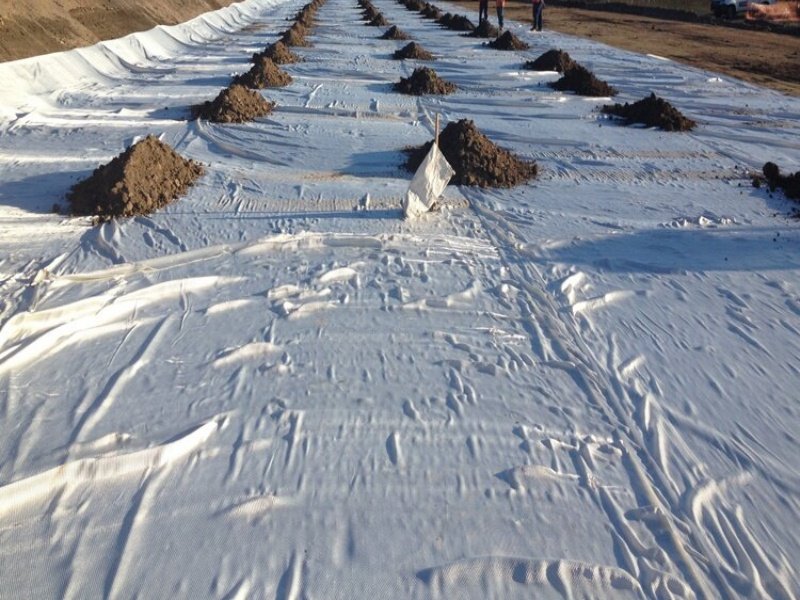
2.Unroll the geotextile carefully to avoid unnecessary wrinkles and folds.
3.Maintain the specified overlap between adjacent rolls according to engineering drawings and site conditions.
4.Secure the fabric temporarily when necessary to prevent movement during installation.
5.Avoid direct heavy equipment traffic on exposed geotextile.
6.Place aggregate or soil carefully to prevent tearing or displacement.
7.Inspect the installed material and repair damaged areas before covering them.
Always follow the project specifications and manufacturer’s installation recommendations.
10. Conclusion
Non woven needle punched geotextile is a versatile and reliable material for modern civil engineering and environmental protection projects. Its filtration, drainage, separation, and protection capabilities make it an essential component in roads, railways, drainage systems, landfills, and landscaping applications.
Choosing the right product requires careful consideration of raw materials, GSM, tensile strength, puncture resistance, permeability, and project conditions.
The Best Project Material Co., Ltd. (BPM Geosynthetics) offers PP and PET non woven needle punched geotextile solutions for different engineering applications. With flexible product specifications and international supply capabilities, BPM is a supplier worth considering for your next geosynthetic project.
If you are planning an infrastructure or environmental engineering project, contact BPM Geosynthetics to discuss your requirements and find a suitable non woven needle punched geotextile solution.