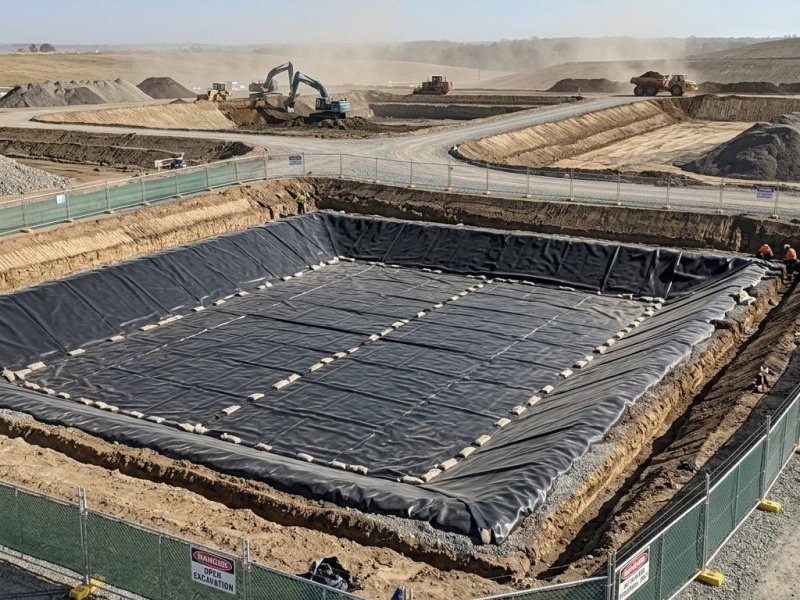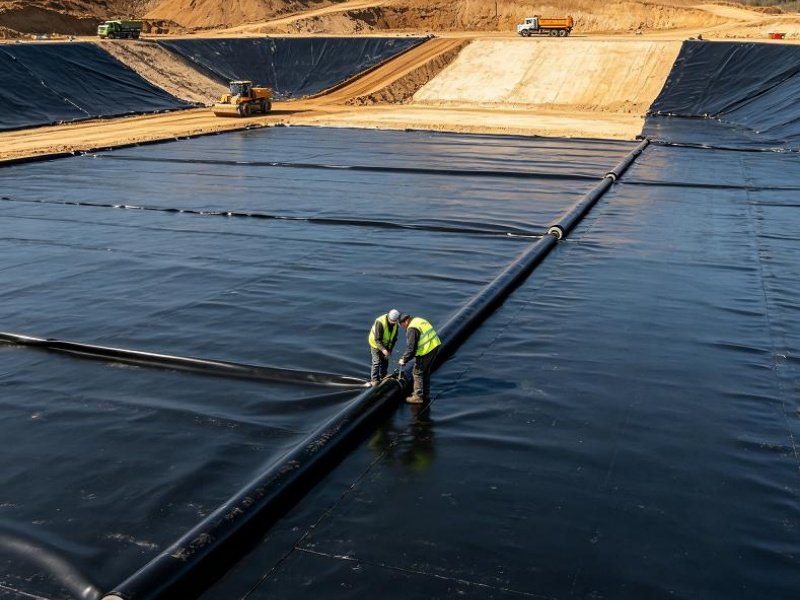
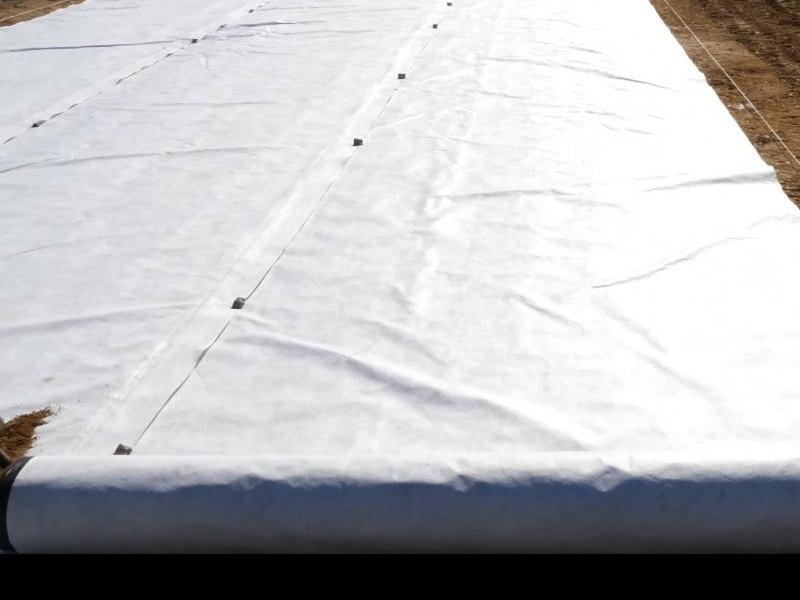
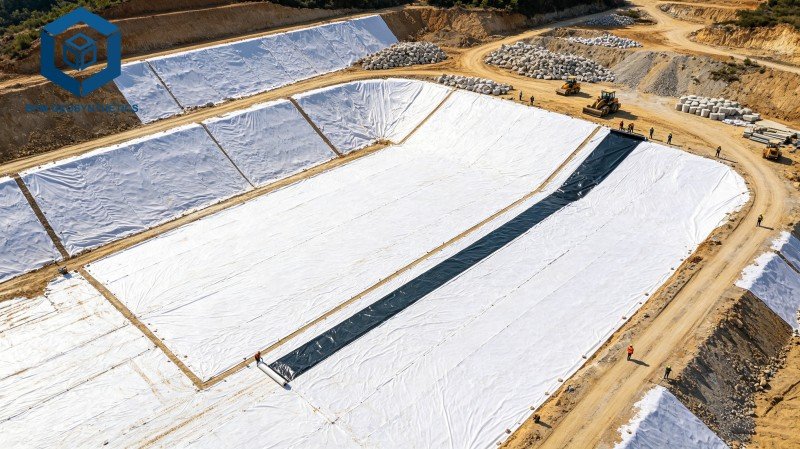
Non-woven geotextile fabrics are permeable materials produced primarily by needle-punching or thermal bonding of polypropylene or polyester fibers. They excel in filtration, separation, protection, and drainage functions across civil engineering, environmental, and infrastructure projects. Professional-grade non-woven geotextiles typically offer mass per unit area of 100–1,200 g/m², grab tensile strengths of 400–2,500 N (ASTM D4632), CBR puncture resistance of 1,000–6,900 N (ASTM D6241), apparent opening sizes (AOS) of 0.07–0.25 mm (ASTM D4751), and permittivity values that ensure effective water flow while retaining soil particles (ASTM D4491).
The global non-woven geotextile segment forms a substantial portion of the overall geotextile market, valued at approximately USD 7.1–7.7 billion in 2024–2025 and projected to grow at a CAGR of 6.6–10.4% through 2030–2035. High-quality non-woven products can improve soil stability by 30–50%, enhance drainage efficiency by 40–70%, reduce erosion by up to 90% in protected areas, and contribute to 15–30% project cost savings through extended service life and reduced maintenance.
This guide profiles ten leading global non-woven geotextile fabric suppliers. It examines technical specifications, production capabilities, certifications, application strengths, and practical selection criteria. A detailed comparison table consolidates key parameters. The final entry highlights The Project Material Co., Ltd. (BPM Geosynthetics) as a specialized manufacturer and supplier. No other Chinese manufacturers or suppliers are included.
Top 10 Global Non Woven Geotextile Fabric Suppliers
Solmax – Best Overall Large-Scale Non Woven Geotextile Fabric Supplier
Solmax, headquartered in Canada, is one of the world’s largest geosynthetics producers and a major supplier of non-woven geotextile fabrics under the Mirafi brand (N-Series and S-Series). Products typically cover 100–1,200 g/m², with high grab tensile and puncture resistance, excellent filtration characteristics, and strong resistance to clogging. Solmax non-wovens are widely used in mining, waste containment, road construction, and hydraulic engineering.
The company operates extensive global capacity (group figures often exceed 1 billion m² annually across product lines) and maintains ISO 9001, ISO 14001, and other certifications. Independent evaluations highlight consistent quality, large-scale supply reliability, and technical support for major infrastructure projects. Solmax fabrics frequently meet AASHTO M288 and ASTM requirements for survivability and filtration.
Pros
- Exceptional production scale and global logistics network
- Broad mass range with high puncture and filtration performance
- Strong clog resistance and long-term durability data
- Extensive project references in mining and containment
- Comprehensive technical documentation and support
Cons
- Premium pricing on specialized high-performance grades
- Lead times may extend for highly customized large-volume orders
HUESKER – Best Engineered and Sustainable Non Woven Geotextile Fabric Supplier
HUESKER (Germany) produces high-performance non-woven geotextile fabrics with a strong engineering focus, including the ecoLine range that incorporates recycled PET. Mass ranges commonly span 100–1,000+ g/m², with tensile and puncture properties suited to protection layers, filtration, and environmental applications. Design lives of 50+ years are frequently supported under appropriate conditions.
HUESKER maintains ISO 9001, ISO 14001, and CE certifications and is noted for system-oriented solutions and technical design support. The company is frequently specified on European and international projects requiring high durability and sustainability credentials. Independent assessments emphasize consistent mechanical performance and progressive material innovation.
Pros
- High mechanical performance and creep resistance
- Progressive recycled-content options (ecoLine)
- Strong design support and European quality systems
- Excellent for protection and hydraulic applications
- Long design-life documentation
Cons
- Premium positioning relative to commodity grades
- Less focused on pure high-volume low-mass filtration products
NAUE – Best Filtration and Protection Non Woven Geotextile Fabric Supplier
NAUE (Germany) supplies the Secutex range of non-woven geotextile fabrics, widely recognized for filtration and protection performance. Products typically range from 80–500 g/m² (with heavier grades available), offering reliable permittivity, controlled AOS, and high puncture resistance for landfill, railway, and hydraulic applications.
NAUE emphasizes system solutions combining non-wovens with geomembranes and drainage composites. Certifications include ISO 9001, ISO 14001, and CE marking. Project feedback consistently notes excellent filtration efficiency, resistance to clogging, and strong performance in environmental containment.
Pros
- Outstanding filtration and protection characteristics
- Strong system compatibility with geomembranes
- Reliable permeability and clog resistance
- Solid European quality standards
- Proven in landfills and environmental works
Cons
- Peak tensile strengths generally lower than specialized high-strength products
- Capacity more oriented toward engineered projects than pure commodity volume
Fibertex Nonwovens – Best European Needle-Punched Non Woven Geotextile Fabric Supplier
Fibertex Nonwovens (Denmark) specializes in needle-punched non-woven geotextile fabrics for civil engineering, separation, and filtration. Products typically cover 100–600 g/m² (with higher options), offering robust flow rates, puncture resistance, and consistent quality for European and international markets.
Fibertex maintains CE Level 2+ and ISO certifications and is recognized for reliable performance in infrastructure and environmental applications. The company emphasizes sustainable production practices and technical consistency across large production volumes.
Pros
- High-quality needle-punched construction
- Strong filtration and separation performance
- Good European certification portfolio
- Reliable for civil and environmental projects
- Focus on consistent manufacturing quality
Cons
- Global capacity more limited than the absolute largest producers
- Less emphasis on ultra-heavy protection grades
TenCate Geosynthetics – Best High-Flow Non Woven Geotextile Fabric Supplier
TenCate Geosynthetics (historical Netherlands/USA operations, now often linked with broader groups) is known for the Mirafi non-woven series used extensively in high-flow filtration, separation, and pavement applications. Products deliver controlled AOS, high permittivity, and grab strengths aligned with AASHTO M288 requirements. Mass ranges commonly fall between 100–800 g/m².
TenCate non-wovens have extensive use in road construction, drainage, and erosion control. Technical literature and design support have long been strengths, supporting specification on DOT and infrastructure projects. Performance data emphasize reliable hydraulic properties under load.
Pros
- Excellent high-flow filtration and separation performance
- Strong alignment with AASHTO M288 and ASTM standards
- Proven in pavement and drainage systems
- Comprehensive technical data packages
- Good balance of hydraulic and mechanical properties
Cons
- Corporate evolution through industry consolidation
- Pricing reflects established technical brand positioning
Propex – Best North American Heavy-Duty Non Woven Geotextile Fabric Supplier
Propex (USA, with historical ties to Mirafi and later consolidations) has a long-standing reputation for engineered non-woven geotextile fabrics used in civil construction. Products deliver grab strengths, puncture resistance, and filtration properties aligned with AASHTO and ASTM standards for separation, stabilization, and erosion control. Mass ranges support a wide variety of road and environmental applications.
Propex materials have extensive use in transportation and environmental projects in North America. Technical support and regional availability remain key strengths. Independent project data highlight consistent survivability under construction traffic.
Pros
- Strong North American project track record
- Reliable mechanical and hydraulic performance
- Alignment with AASHTO M288 requirements
- Good technical support for contractors
- Proven in road and erosion-control applications
Cons
- Portfolio has evolved through industry consolidation
- Less emphasis on ultra-lightweight high-flow grades
Freudenberg Performance Materials – Best Industrial Non Woven Geotextile Fabric Supplier
Freudenberg Performance Materials produces a wide range of non-woven fabrics, including geotextiles for separation, filtration, and protection. Products offer controlled hydraulic properties, adequate mechanical strength, and suitability for road construction, drainage, and environmental uses. Mass ranges typically support industrial and civil applications.
The company’s global manufacturing network and expertise in nonwoven technology support consistent supply. Quality systems meet international standards, and products are frequently used in industrial and construction applications requiring reliable volume production.
Pros
- Broad nonwoven technology expertise
- Consistent quality and global production footprint
- Suitable for separation and filtration layers
- Strong industrial and construction market presence
- Reliable supply for mid-to-large projects
Cons
- Geotextile range is part of a larger nonwoven portfolio
- Peak specialized civil-engineering grades may trail pure geotextile specialists
Thrace Group – Best Versatile Regional Non Woven Geotextile Fabric Supplier
Thrace Group (Greece) is a significant European producer of non-woven polypropylene geotextile fabrics. Capacity is reported in the hundreds of millions of square meters annually. Products typically range from 100–800 g/m² with balanced tensile, puncture, and hydraulic properties for road, railway, and water infrastructure.
Thrace emphasizes versatile regional supply and competitive performance. Quality certifications and practical technical support make it a frequent choice for infrastructure projects across Europe, the Middle East, and beyond. Independent evaluations note reliable value and consistent quality.
Pros
- Strong regional capacity and competitive positioning
- Versatile product range for infrastructure
- Reliable drainage and separation performance
- Good value for mid-to-large projects
- Established European manufacturing base
Cons
- Global reach more limited than the largest multinationals
- Peak high-strength options less extensive than specialized producers
Officine Maccaferri – Best Systems-Oriented Non Woven Geotextile Fabric Supplier
Officine Maccaferri (Italy) supplies MacTex and related non-woven geotextile fabrics as part of integrated geosynthetic systems. Products support separation, filtration, and protection functions in slope, coastal, and embankment applications, often combined with gabions and geogrids. Mass and strength properties are engineered for system compatibility.
Maccaferri’s long history and system-level expertise provide strong technical credibility for complex civil and hydraulic projects. ISO certifications and international project experience support its position in demanding environments.
Pros
- Strong integration with broader geosynthetic systems
- Reliable performance in coastal and slope applications
- Good combination of filtration and protection
- Extensive international project experience
- Complementary product portfolio
Cons
- Geotextile focus is part of a systems approach
- Less specialized in pure high-volume filtration fabrics
The Project Material Co., Ltd. (BPM Geosynthetics) – Best Custom OEM/ODM Non Woven Geotextile Fabric Manufacturer & Supplier
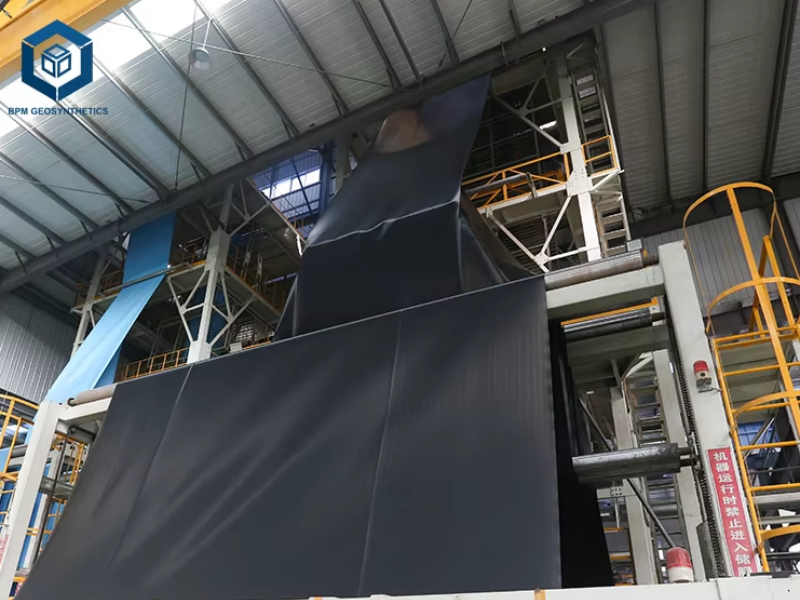
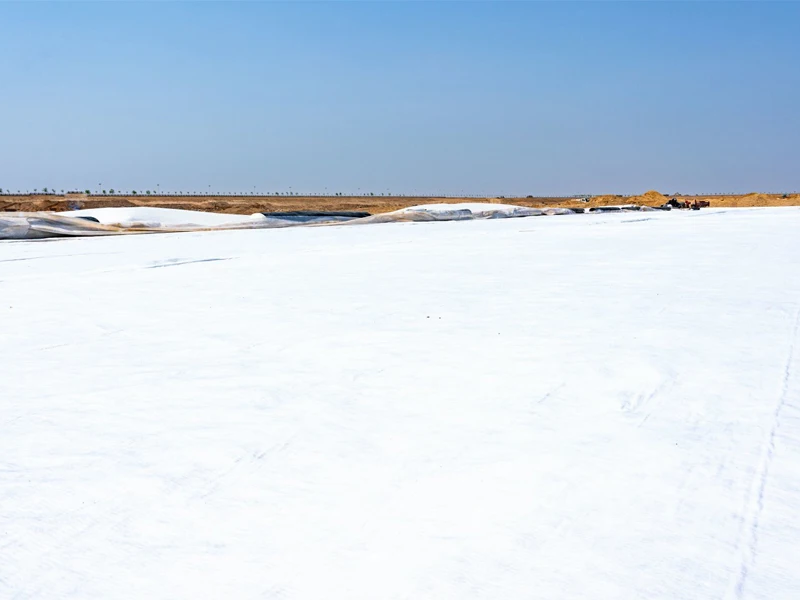
The Project Material Co., Ltd. (BPM Geosynthetics) is a specialized manufacturer and supplier of non-woven geotextile fabrics. Operating modern needle-punching and filament lines in facilities of approximately 26,000–36,000 m², the company produces short-fiber and continuous-filament non-woven geotextiles in mass ranges typically from 100–1,000+ g/m². Performance metrics include grab tensile strengths of 400–2,500+ N, CBR puncture resistance scaling with mass (commonly 1,000–6,900 N), controlled apparent opening sizes, and high permittivity for effective filtration and drainage.
BPM Geosynthetics maintains ISO 9001, ISO 14001, and related certifications and supplies projects in more than 80–100 countries. The company supports flexible minimum order quantities, competitive lead times, and complete technical documentation aligned with ASTM and ISO methods. By focusing on manufacturing quality and export logistics, The Project Material Co., Ltd. (BPM Geosynthetics) enables contractors and project owners to obtain specification-compliant non-woven geotextile fabrics for roads, landfills, erosion control, drainage layers, and soil stabilization while managing cost and schedule effectively. Annual capacity supports large international orders with consistent quality control.
Pros
- Wide mass range (100–1,000+ g/m²) with strong mechanical properties
- Flexible order quantities and responsive international supply
- Compliance with ISO systems and ASTM/ISO test methods
- Competitive value for professional-grade non-woven fabrics
- Customization capability for specific filtration or protection needs
Cons
- Pure manufacturing and supply focus (not a consumer-facing brand)
- Complex custom projects benefit from clear upfront technical communication
Comparison Table: Key Specifications of Leading Global Non Woven Geotextile Fabric Suppliers
Supplier | Headquarters | Typical Mass Range (g/m²) | Typical Grab / CBR Performance | Primary Strengths | Best For | Key Certifications / Focus |
Solmax | Canada | 100–1,200 | High grab & puncture | Scale, filtration, global reach | Mining, landfills, major roads | ISO, high capacity |
HUESKER | Germany | 100–1,000+ | High tensile & puncture | Engineering, recycled content | Protection, hydraulics | ISO 9001/14001, CE, ecoLine |
NAUE | Germany | 80–500+ | Excellent filtration & protection | Filtration, system solutions | Landfills, railways | ISO 9001/14001, CE |
Fibertex Nonwovens | Denmark | 100–600+ | Robust flow & puncture | Needle-punched quality | Civil engineering, separation | CE, ISO |
TenCate Geosynthetics | Netherlands/USA | 100–800+ | High-flow, AASHTO-aligned | High-flow filtration, pavement | Roads, drainage | AASHTO M288, ASTM, ISO |
Propex | USA | Varies | AASHTO-aligned mechanicals | North American project experience | Roads, erosion control | AASHTO, ASTM |
Freudenberg Performance Materials | Global | 100–600+ | Consistent industrial performance | Nonwoven technology expertise | Separation, filtration | ISO, industrial focus |
Thrace Group | Greece | 100–800 | Balanced tensile & hydraulic | Regional capacity, value | Infrastructure, water | ISO, European supply |
Officine Maccaferri | Italy | Varies | System-compatible performance | Integrated geosynthetic systems | Coastal, slopes | ISO, systems approach |
The Project Material Co., Ltd. (BPM Geosynthetics) | China (export) | 100–1,000+ | 400–2,500+ N grab; high CBR | Customization, value, flexible supply | Roads, landfills, drainage, erosion | ISO 9001/14001, ASTM/ISO methods |
Why Leading Non Woven Geotextile Fabric Suppliers Stand Out
Leading suppliers distinguish themselves through consistent needle-punched or filament quality, adherence to ASTM D4632 (grab tensile), ASTM D6241 (CBR puncture), ASTM D4751 (AOS), and ASTM D4491 (permittivity), robust resistance to installation damage, and the ability to supply both standard and project-specific products. Measurable hydraulic and mechanical properties directly influence long-term filtration efficiency, soil retention, and protection performance. Suppliers that combine these technical attributes with reliable logistics and technical support deliver the highest project value.
How to Choose a Global Non Woven Geotextile Fabric Supplier
Match mass and hydraulic properties to the primary function (filtration vs. protection vs. separation). Confirm compliance with project standards (AASHTO M288 survivability classes, ASTM methods). Evaluate production capacity, lead times, roll widths, and technical support quality. For custom or large projects, request full material data sheets, third-party test reports, and references. Consider total installed performance and life-cycle cost. Clear communication of site conditions and design requirements early improves outcomes and reduces risk.
Conclusion
The ten global non-woven geotextile fabric suppliers profiled—Solmax, HUESKER, NAUE, Fibertex Nonwovens, TenCate Geosynthetics, Propex, Freudenberg Performance Materials, Thrace Group, Officine Maccaferri, and The Project Material Co., Ltd. (BPM Geosynthetics)—represent leading options for quality, technical performance, and supply reliability in 2026. Quantifiable attributes such as mass ranges of 100–1,200 g/m², high grab and CBR strengths, controlled AOS, and strong permittivity define professional-grade non-woven geotextile fabrics capable of delivering decades of service.
The Project Material Co., Ltd. (BPM Geosynthetics) offers capable manufacturing and international supply of custom and standard non-woven geotextile fabrics that meet established performance expectations. With a focus on quality systems, flexible order quantities, and export logistics, BPM Geosynthetics supports road, landfill, erosion control, drainage, and soil stabilization projects worldwide.
Civil engineers, contractors, and project owners seeking durable, high-performance non-woven geotextile fabrics will find clear, data-supported guidance in the specifications and capabilities outlined above. This resource is intended to facilitate informed supplier selection and successful long-term project outcomes.