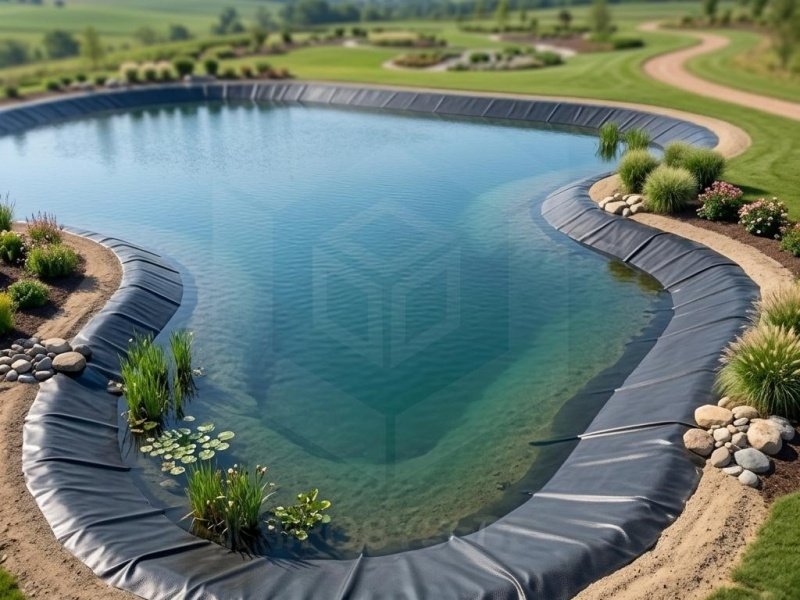
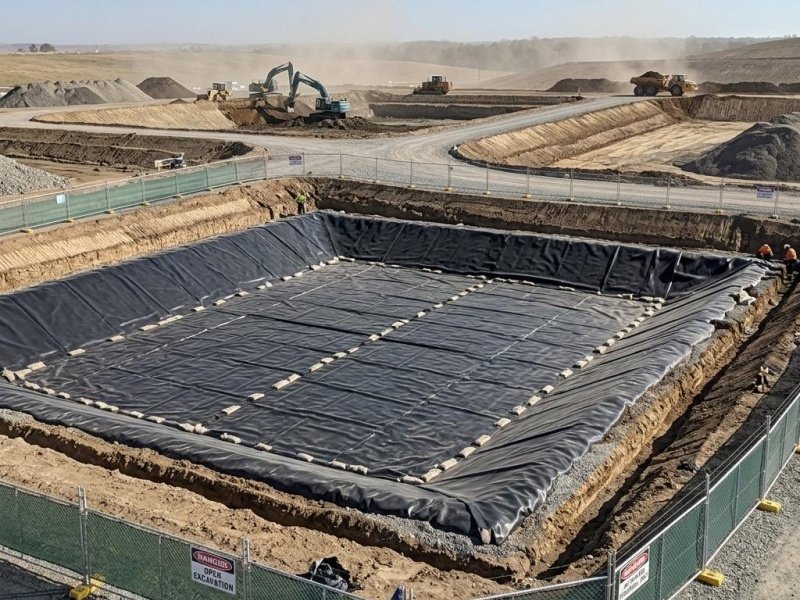
Wastewater lagoons are widely used in municipal sewage treatment, industrial wastewater storage, agricultural waste management, and environmental containment projects. Selecting the right wastewater lagoon liner is essential for preventing leakage, protecting groundwater, and maintaining long-term operational efficiency.
Among the available lining materials, high-density polyethylene (HDPE) geomembranes are a popular choice because of their low permeability, chemical resistance, and suitability for large containment areas. Other options, including linear low-density polyethylene (LLDPE), textured geomembranes, and reinforced flexible liners, can also meet specific project requirements.
This review examines seven wastewater lagoon liner options based on material properties, application suitability, installation requirements, and overall value. The selection is intended as a practical buyer’s guide rather than an independently certified performance ranking. Actual suitability depends on wastewater composition, site conditions, and engineering specifications.
What to Look for in a Wastewater Lagoon Liner
Before purchasing a wastewater lagoon liner, project owners should evaluate several important factors.
Chemical resistance: The liner must be compatible with the wastewater’s pH, dissolved chemicals, oils, and other contaminants.
Thickness and mechanical strength: Thicker membranes may provide additional protection against punctures and construction damage, depending on the application.
UV resistance: Exposed lagoons require materials designed to withstand sunlight and environmental aging.
Seam integrity: Welding quality and field inspection are critical to preventing leakage.
Slope stability: Textured liners can provide increased interface friction on sloped surfaces when properly designed.
Total project cost: Material price, transportation, underlayment, installation, testing, and maintenance should all be considered.
The 7 Best Wastewater Lagoon Liners Reviewed
1. BPM Smooth HDPE Geomembrane — Best Overall Value
Best for: Municipal wastewater lagoons, industrial effluent ponds, and large containment projects.
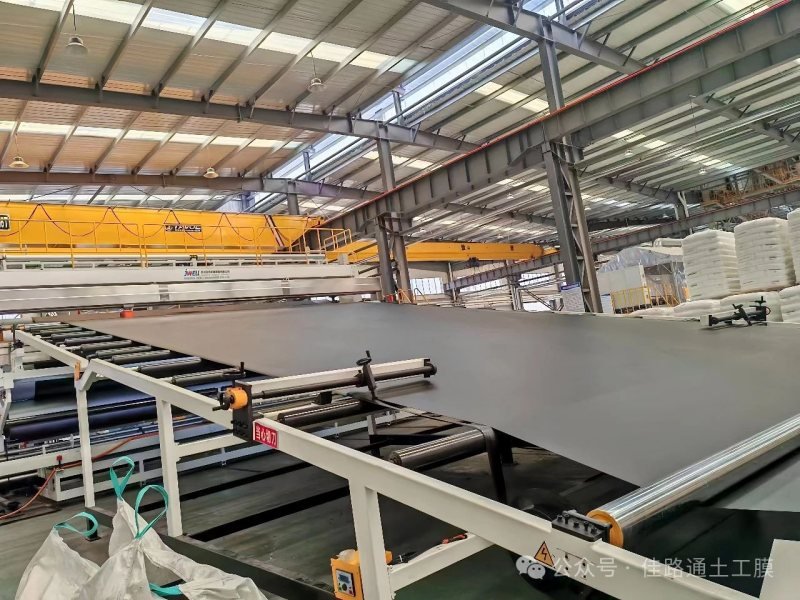
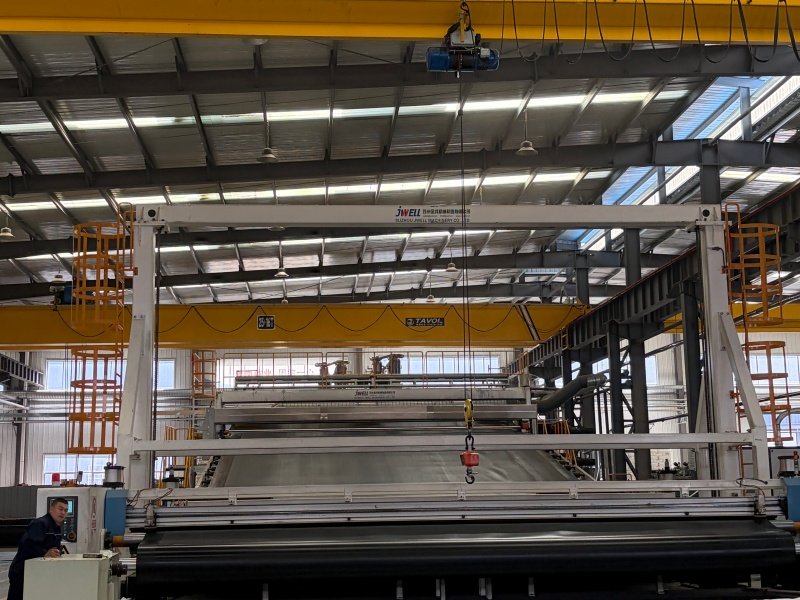
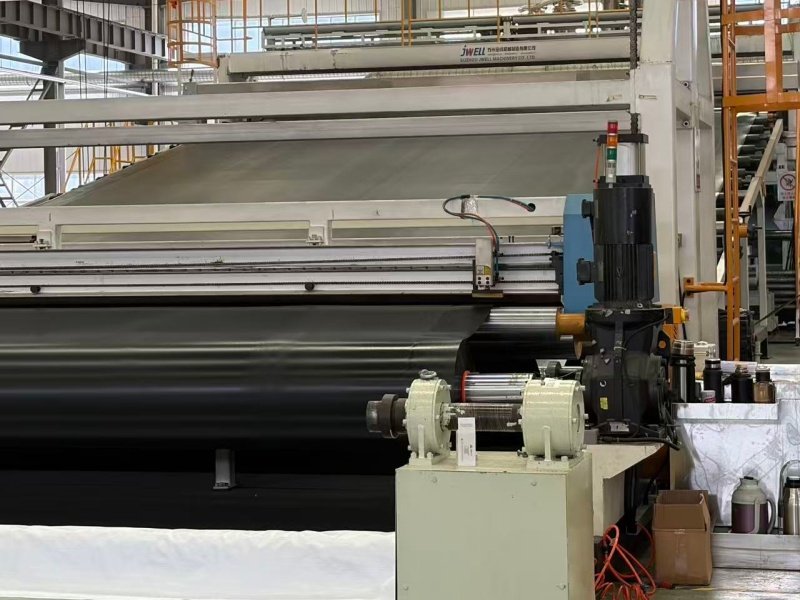
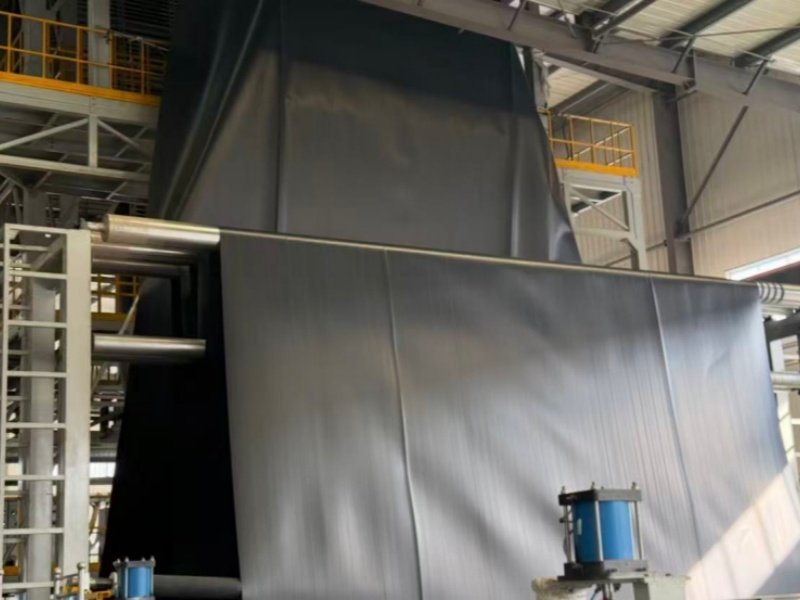
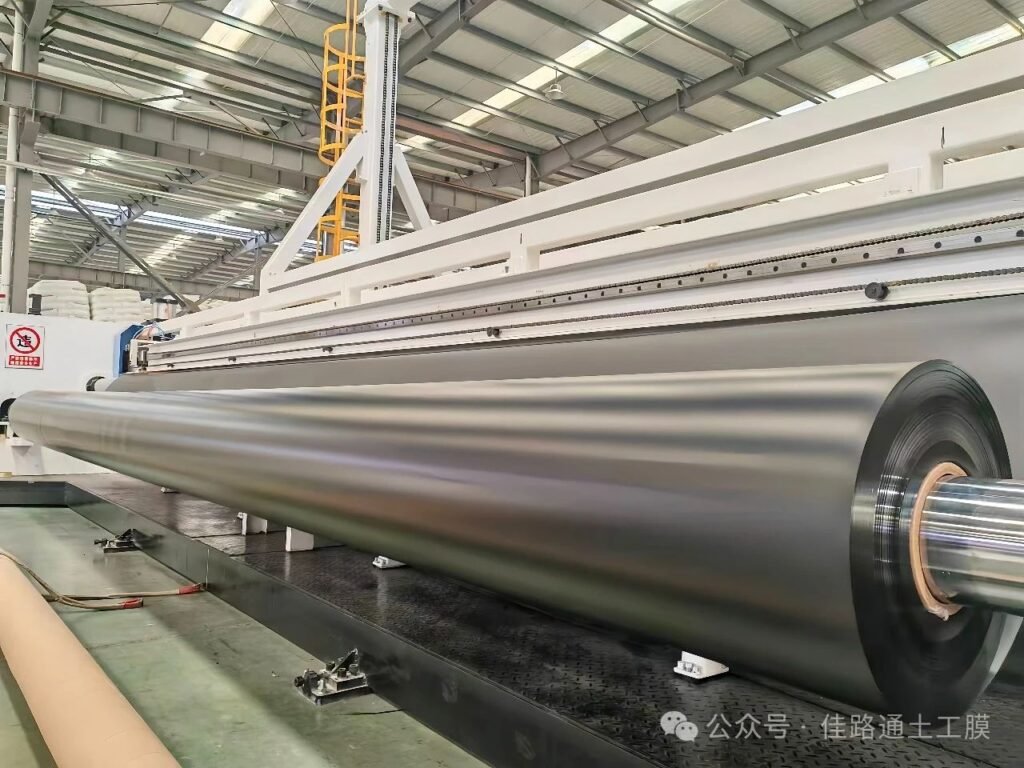
BPM Geosynthetics, associated with The Best Project Material Co., Ltd., offers smooth HDPE geomembrane liners for a range of civil engineering and environmental applications. The company’s product portfolio includes smooth HDPE geomembranes, textured HDPE geomembranes, and composite geomembrane liners. Product information.
HDPE is an attractive choice for wastewater containment because it combines low permeability with broad resistance to many common chemicals. Smooth geomembranes are particularly suitable for lagoon floors and relatively gentle slopes where a reliable barrier and efficient installation are priorities.
Pros:
Suitable for large-area wastewater containment.
Can be supplied in different thicknesses according to project requirements.
Compatible with professional hot-wedge and extrusion welding.
Factory-direct procurement may provide flexibility for customized orders.
Cons:
Smooth surfaces may provide insufficient interface friction on some steep slopes.
Chemical compatibility must be confirmed for aggressive industrial wastewater.
For buyers seeking a balance between performance, customization, and procurement cost, BPM smooth HDPE geomembrane is a practical option to consider.
2. Solmax GSE HD Geomembrane — Best for Established Containment Applications
Best for: Municipal wastewater, animal waste containment, and demanding environmental projects.
Solmax’s GSE HD is a high-density polyethylene geomembrane designed to exceed the GRI-GM13 specification. According to the manufacturer, the product is used in applications including waste containment, canals, and secondary containment. Smooth, textured, and conductive configurations are available within the product range. Official product information.
Its established product documentation and range of configurations make it a strong candidate for projects requiring documented material properties and a defined quality-assurance process.
Pros:
HDPE construction with low permeability.
Product options for different surface and monitoring requirements.
Manufacturer documentation supports engineering evaluation.
Cons:
Final cost depends on specification, quantity, and delivery location.
Project teams must still verify compatibility with the actual wastewater.
3. BPM Textured HDPE Geomembrane — Best for Sloped Lagoon Walls
Best for: Lagoons with steep side slopes, embankments, and space-constrained containment systems.
Textured HDPE geomembranes are designed to improve friction at the interface between the liner and adjacent materials. This can help engineers achieve the required slope stability when the liner system is properly designed.
BPM includes textured HDPE geomembrane in its product range, allowing buyers to evaluate smooth and textured options from the same supplier.
Pros:
Increased interface friction compared with a comparable smooth surface in suitable conditions.
Useful for engineered slopes and embankments.
Can be incorporated into a broader geomembrane lining system.
Cons:
Requires slope-stability calculations and interface shear testing where appropriate.
Surface texture alone does not guarantee slope stability.
For projects with significant side slopes, specify the required texture, thickness, and interface performance before ordering.
4. Solmax GSE LL LLDPE Geomembrane — Best for Flexibility
Best for: Lagoon layouts with irregular contours and applications where flexibility is important.
Linear low-density polyethylene (LLDPE) geomembranes generally offer greater flexibility than conventional HDPE liners. This can be advantageous where a liner must accommodate settlement, curved surfaces, or complex site geometry.
Solmax’s GSE LL product line is designed to meet or exceed the GRI-GM17 specification for LLDPE geomembranes. Manufacturer product range.
Pros:
Flexible material for irregular surfaces.
Suitable for evaluating applications with expected ground movement.
Available as part of an established geomembrane product portfolio.
Cons:
The appropriate thickness and mechanical properties must be established for each project.
Chemical compatibility and exposed-service requirements still require verification.
LLDPE can be a valuable alternative when flexibility is a higher priority than the stiffness associated with HDPE.
5. AGRU HDPE Geomembrane — Best for Specification-Driven Projects
Best for: Engineered wastewater facilities with detailed material specifications and quality requirements.
AGRU is another established geosynthetics manufacturer whose geomembrane products can be considered for engineered containment projects. When evaluating an AGRU HDPE liner, purchasers should focus on the specific product’s technical data sheet, applicable standards, thickness, and available surface finishes.
Pros:
An option for projects that require manufacturer-specific technical documentation.
HDPE is well suited to many containment applications.
Can be assessed against defined engineering and quality requirements.
Cons:
Product availability and transportation costs vary by region.
Exact wastewater compatibility and specification compliance must be confirmed for the selected product.
Rather than selecting a liner by brand name alone, compare the offered product against the project’s approved material specification.
6. Composite Geomembrane Liner — Best for Integrated Lining Systems
Best for: Sites requiring a geomembrane combined with geotextile or other supporting layers.
A composite geomembrane liner combines a barrier membrane with an additional geosynthetic layer. Depending on the product design, this arrangement may provide useful protection, drainage, or interface characteristics.
BPM lists composite geomembrane liners among its available products. The precise construction and function depend on the selected configuration.
Pros:
Can combine barrier performance with additional geosynthetic functions.
May simplify procurement of a coordinated lining material.
Useful where the design calls for integrated layers.
Cons:
Composite structures vary significantly between products.
The additional layer does not automatically replace a properly designed protective geotextile or drainage system.
Buyers should request a cross-sectional product description and confirm which layers are included in the quoted price.
7. Reinforced Flexible Liner — Best for Specialized Site Requirements
Best for: Selected retrofit projects, prefabricated sections, and applications requiring a flexible liner system.
Reinforced flexible liners use a reinforcement layer to improve dimensional stability and mechanical performance. Their suitability depends heavily on the polymer coating, reinforcement structure, chemical exposure, and installation method.
For wastewater lagoon projects, this category may be worth evaluating when prefabrication, flexibility, or a specialized installation method is required.
Pros:
Potentially useful for customized or prefabricated lining applications.
Reinforcement can improve dimensional stability.
May suit certain retrofit or site-specific requirements.
Cons:
Not all reinforced liners offer the same chemical resistance as HDPE.
Seam methods, long-term exposure performance, and warranty conditions must be checked carefully.
This option should only be selected after confirming that the complete liner system is compatible with the wastewater and expected operating conditions.
How to Choose the Right Wastewater Lagoon Liner
For many municipal and industrial lagoon projects, HDPE is a strong starting point because of its low permeability and broad chemical resistance. Smooth HDPE is often appropriate for lagoon floors, while textured HDPE may be preferable on engineered slopes. LLDPE deserves consideration when greater flexibility is required.
Thickness should not be selected by a universal rule. The correct specification depends on lagoon depth, subgrade conditions, expected loads, wastewater chemistry, exposure conditions, and project standards. Ask suppliers for relevant technical data, quality-control records, and chemical compatibility information.
Installation is equally important. The subgrade should be prepared properly, protective layers should be included where required, and field seams should be tested under the project’s quality-assurance plan. Relevant test methods may include ASTM D6392 for evaluating geomembrane seams, where applicable to the material and welding method.
Conclusion
The seven wastewater lagoon liner options reviewed here serve different project priorities. BPM smooth HDPE geomembrane is a practical value-oriented option for general containment; Solmax GSE HD provides an established HDPE product line; textured HDPE is worth considering for engineered slopes; and LLDPE, composite, and reinforced liners may offer advantages under specific site conditions.
For buyers seeking customizable geomembrane products, The Best Project Material Co., Ltd. (BPM Geosynthetics) offers smooth HDPE, textured HDPE, and composite geomembrane options. Before placing an order, request a quotation, product data sheet, recommended thickness, roll dimensions, and documentation relevant to your wastewater application.
Ultimately, the best wastewater lagoon liner is the one that meets the project’s engineering requirements, withstands the actual wastewater environment, and can be installed and inspected reliably over its intended service life.