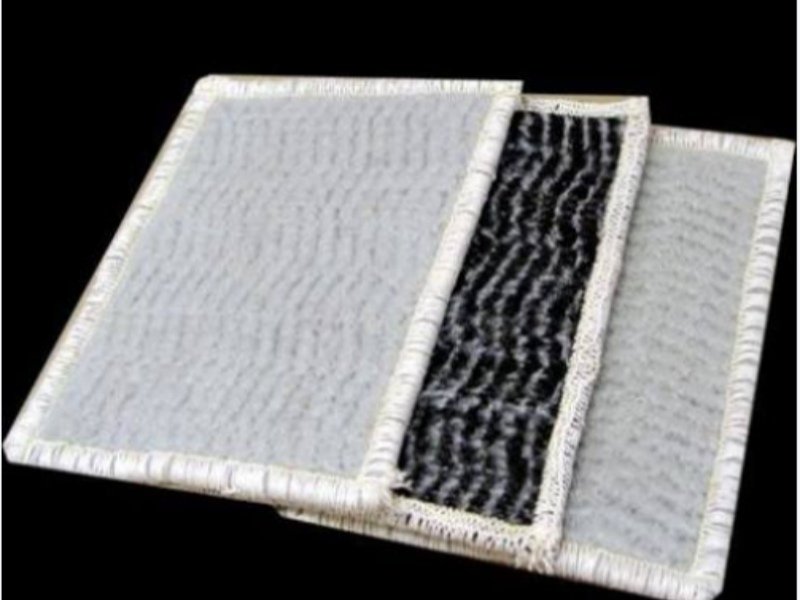
Geomembrane biodigester liner is a flexible, waterproof membrane used to line biodigesters, anaerobic digesters, biogas tanks, and other organic waste treatment systems. Its main purpose is to contain organic materials and liquids while preventing leakage and protecting the surrounding soil and groundwater from contamination.
Geomembrane biodigester liner are commonly manufactured from materials such as HDPE (High-Density Polyethylene), LLDPE (Linear Low-Density Polyethylene), and PVC. Among these options, HDPE and LLDPE are widely used because they provide excellent chemical resistance, durability, and resistance to moisture and biological degradation.
1.How Does a Geomembrane Biodigester Liner Work?
A biodigester uses anaerobic digestion to break down organic materials such as animal manure, agricultural waste, food waste, and wastewater in an oxygen-free environment. During this process, microorganisms decompose the organic matter and produce biogas, which mainly consists of methane and carbon dioxide.
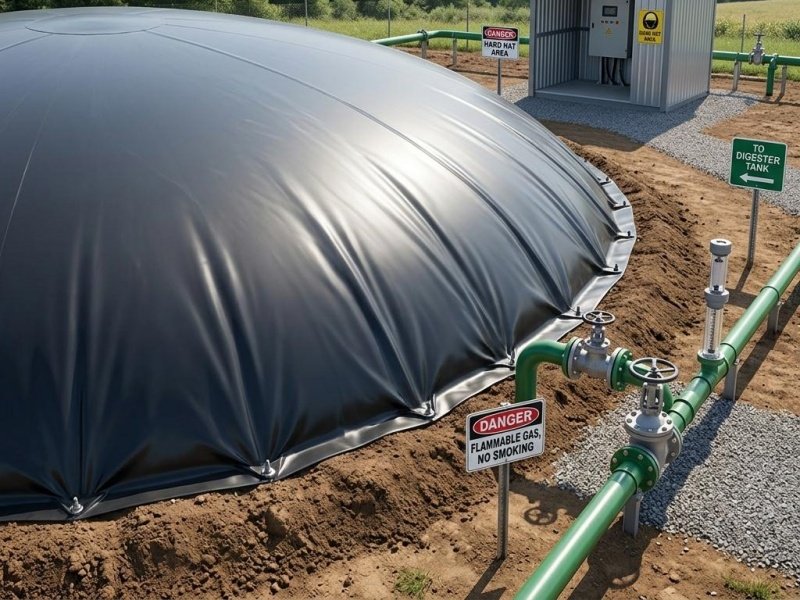
The geomembrane biodigester liner forms a protective barrier around the biodigester. Depending on the system design, it can be used as a bottom liner, sidewall liner, cover, or integrated flexible tank material.
The liner helps keep the feedstock and liquid inside the digestion system and prevents potentially contaminated liquids from escaping into the environment. In biogas applications, a properly designed geomembrane cover can also help collect and contain the gas generated during digestion.
2.Key Benefits of Geomembrane Biodigester Liners
2.1. Excellent Leakage Prevention
One of the most important functions of a geomembrane liner is to provide a low-permeability barrier. Properly installed geomembranes significantly reduce the risk of liquid leakage from the biodigester.
This is especially important when treating livestock manure, wastewater, or other materials that may contain nutrients, organic pollutants, or microorganisms.
2.2. High Chemical Resistance
The contents of a biodigester can contain chemicals, acids, salts, and other substances that may gradually damage conventional construction materials.
High-quality geomembranes offer strong resistance to many chemicals and biological substances, making them suitable for demanding anaerobic digestion environments.
2.3. Flexible and Adaptable
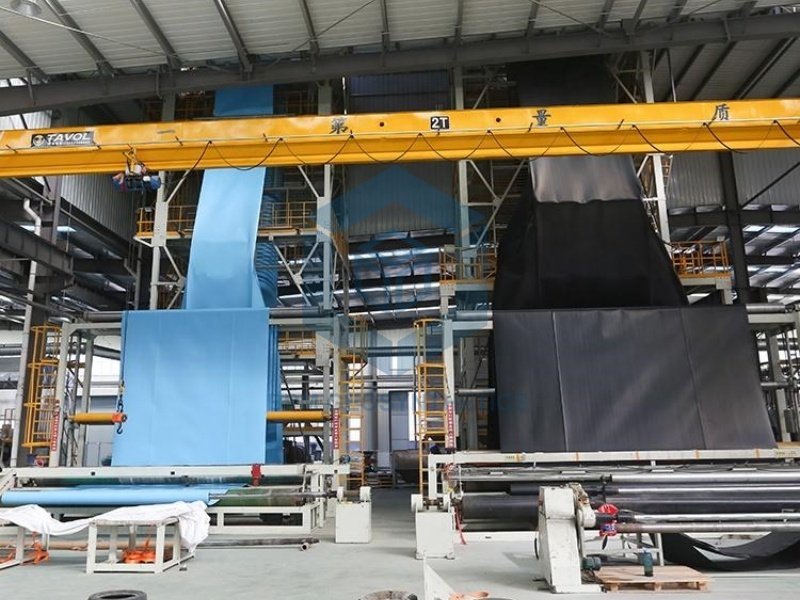
Unlike rigid concrete structures, flexible geomembrane liners can adapt to different tank shapes and site conditions. They can be fabricated into large panels and welded together to create a continuous containment system.
This flexibility makes geomembranes suitable for farm-scale digesters, lagoons, wastewater treatment facilities, and industrial applications.
2.4. Long Service Life
When the correct material and thickness are selected and the liner is properly installed, a geomembrane can provide a long service life.
UV resistance, puncture resistance, chemical resistance, and proper installation all contribute to the overall durability of the system.
2.5. Cost-Effective Installation
Geomembrane biodigester liner systems can often be installed more quickly than traditional concrete containment structures. The lightweight nature of the membrane also reduces transportation and handling requirements.
For large-scale projects, this can help reduce construction time and overall project costs.
3.Common Geomembrane Materials for Biodigesters
Different projects require different liner materials. The choice should be based on factors such as waste characteristics, temperature, UV exposure, mechanical loading, and expected service life.
Material | Main Advantages | Typical Considerations |
HDPE | High chemical resistance, durable, UV resistant | Relatively stiff and requires proper welding |
LLDPE | Flexible, good puncture resistance, adaptable | May require careful material selection for specific chemicals |
PVC | Flexible and easy to fabricate | Generally less suitable for some long-term outdoor applications |
Reinforced PVC | High flexibility and dimensional stability | Material performance depends on coating and reinforcement |
For many outdoor biodigester projects, HDPE or LLDPE geomembranes are commonly considered because of their combination of durability, chemical resistance, and waterproofing performance.
4.Where Are Geomembrane Biodigester Liners Used?
Geomembrane biodigester liner can be used in a wide range of anaerobic digestion and waste containment applications, including:
Livestock manure biodigesters
Agricultural biogas digesters
Food waste treatment systems
Municipal wastewater treatment
Industrial wastewater digesters
Anaerobic digestion lagoons
Sludge storage and treatment facilities
Biogas collection systems
On farms, for example, animal manure can be collected and fed into a biodigester. The anaerobic digestion process reduces organic waste while producing biogas that can potentially be used for heating, electricity generation, or other energy applications.
5.What Thickness of Geomembrane Is Suitable?
There is no single geomembrane thickness that is suitable for every biodigester. Common thicknesses may range from approximately 0.75 mm to 2.5 mm or more, depending on the application.
The appropriate thickness should be determined according to the site conditions and engineering requirements. Factors such as subgrade quality, potential puncture hazards, waste characteristics, installation method, and expected service life should all be considered.
For larger or more demanding projects, thicker geomembranes may provide additional mechanical protection. However, simply choosing the thickest membrane is not always the best solution. Material quality, welding performance, installation, and system design are equally important.
6.Installation Considerations
Proper installation is essential for the performance of a geomembrane biodigester liner.
Before installation, the foundation should be properly prepared. Sharp stones, roots, debris, and other objects that could puncture the membrane should be removed. In some applications, a geotextile protection layer may be installed beneath the geomembrane.
Geomembrane sheets are normally joined using specialized thermal welding equipment. Weld seams should be carefully inspected and tested to identify potential defects or leaks.
The liner should also be installed with appropriate anchoring and allowance for thermal expansion and contraction. For a complete biodigester system, the liner design should consider liquid containment, gas collection, structural stability, and access for maintenance.
7.Geomembrane Liner vs. Traditional Concrete Digester
Geomembrane biodigester liner and concrete systems each have advantages. The best choice depends on the project’s budget, design, operating conditions, and expected service life.
Feature | Geomembrane Liner | Concrete Structure |
Waterproofing | Excellent when properly welded | Can require additional waterproofing |
Flexibility | High | Low |
Installation | Relatively fast | Generally more construction-intensive |
Chemical Resistance | Generally excellent for suitable materials | Depends on concrete mix and protection |
Weight | Lightweight | Heavy |
Site Adaptability | High | More limited |
Maintenance | Requires inspection of membrane and seams | Cracks may require repair |
8.Conclusion
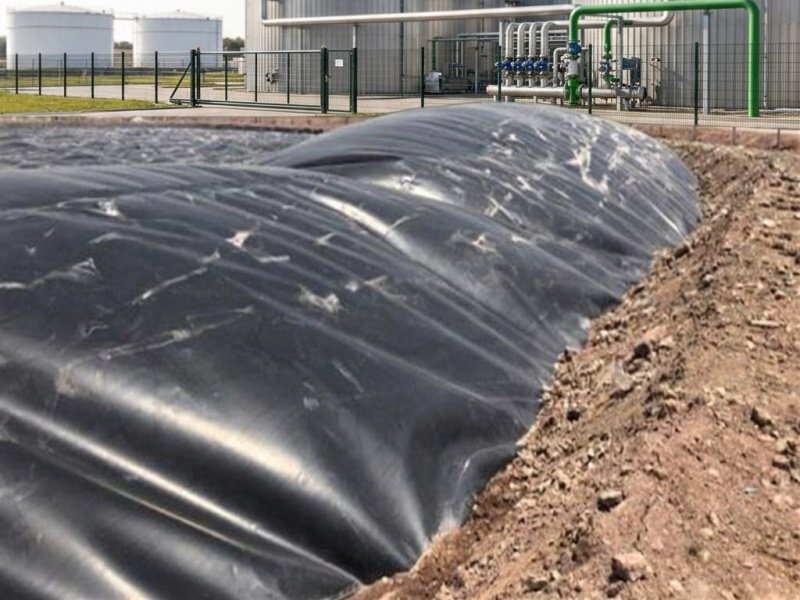
A geomembrane biodigester liner is an important component of modern anaerobic digestion and biogas systems. It provides reliable containment, helps prevent environmental leakage, and can offer excellent chemical resistance and long-term durability when the correct material is selected.
HDPE and LLDPE are among the most commonly considered geomembrane materials for biodigester applications. However, the ideal liner depends on factors such as the type of organic waste, digester design, climate, installation conditions, and required service life.
For a successful project, selecting a suitable geomembrane is only part of the process. Proper site preparation, professional welding, seam testing, anchoring, and regular inspection are also essential to ensure that the biodigester liner performs effectively over its intended service life.