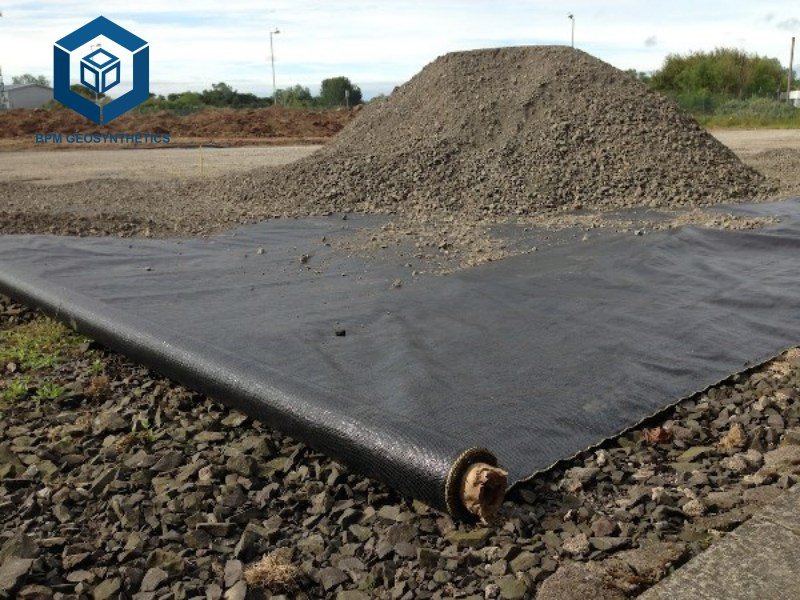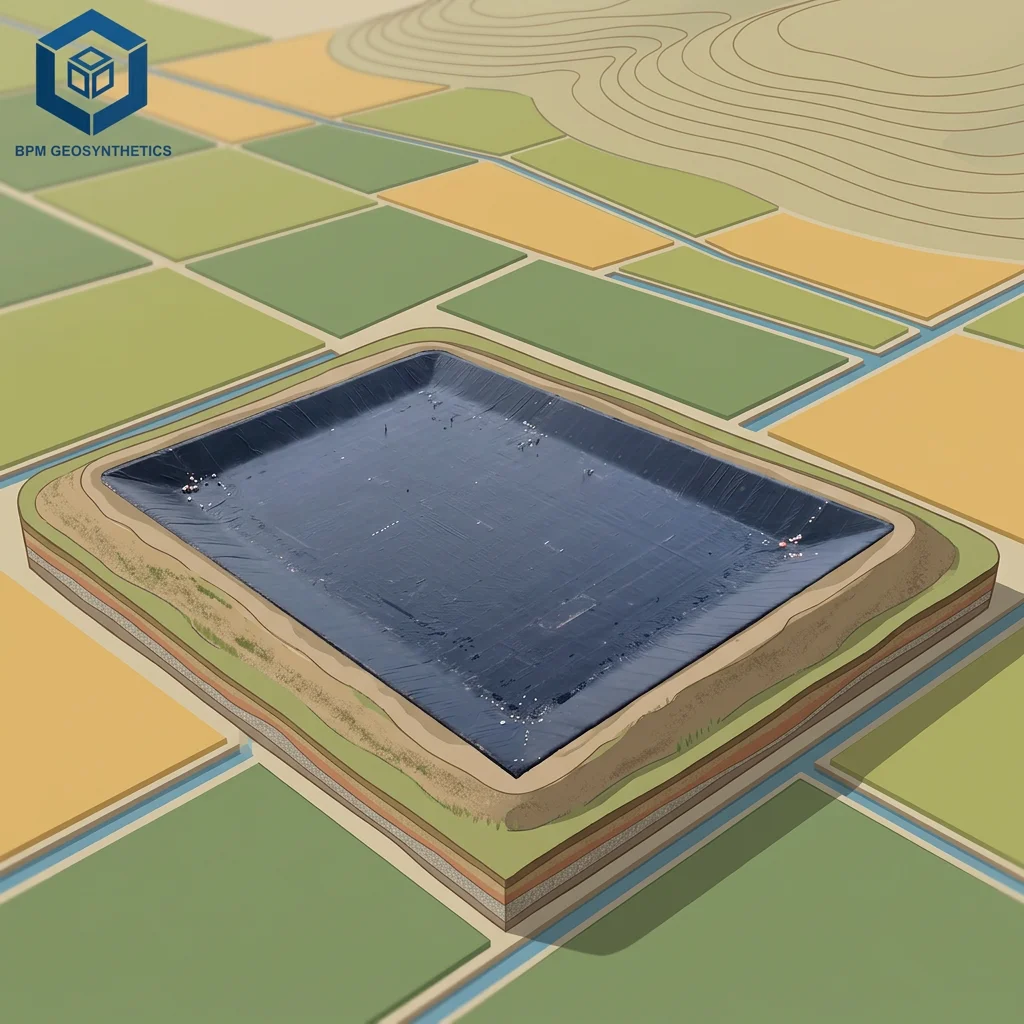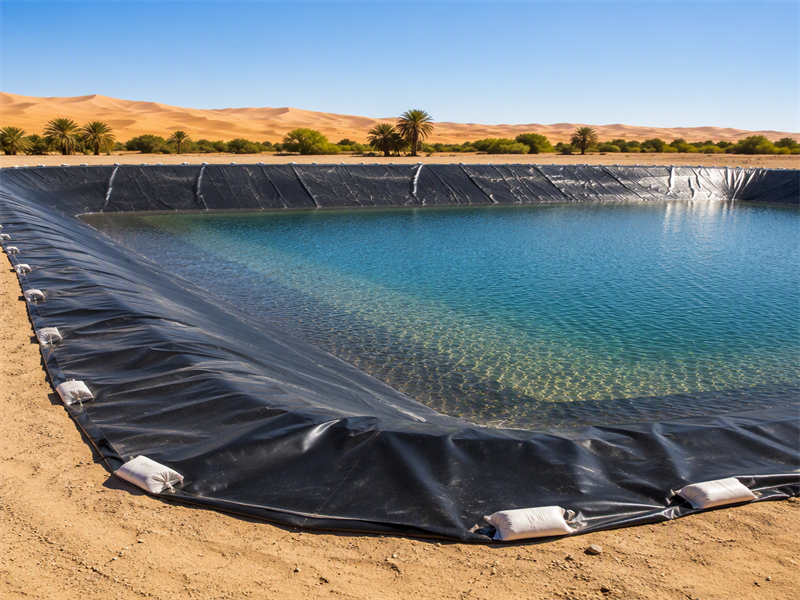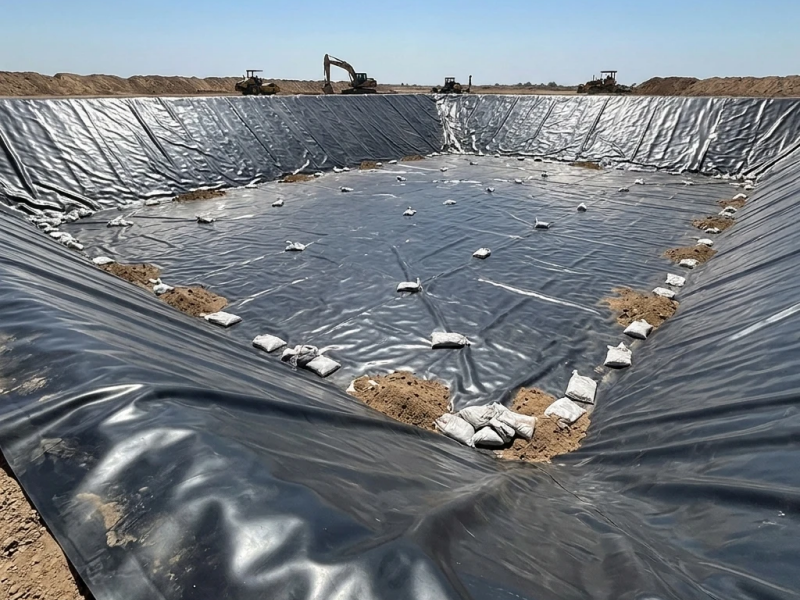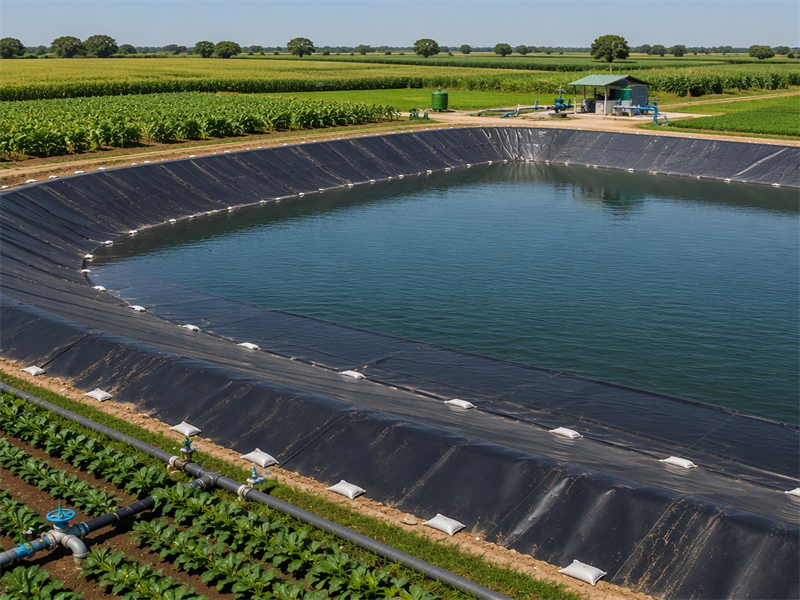
Linear low-density polyethylene (LLDPE) and low-density polyethylene (LDPE) geomembranes are flexible thermoplastic liners widely specified for applications requiring high elongation, conformability to irregular subgrades, and tolerance of differential settlement. Governed primarily by GRI-GM17 for LLDPE (formulated density ≤ 0.939 g/cm³), these materials deliver break elongation ≥ 800 %, multiaxial elongation ≥ 30 % (ASTM D5617), and good chemical resistance while remaining easier to handle and prefabricate than stiffer high-density polyethylene (HDPE) sheets. Thicknesses typically range from 0.50 mm to 3.0 mm (20–120 mil), with density ≤ 0.939 g/cm³, carbon-black content 2.0–3.0 %, and oxidative induction time (OIT) ≥ 100 min.
In 2026 the global demand for flexible polyethylene geomembranes continues to grow in landfill caps, pond liners, agricultural containment, mining covers, and sites with soft or settling foundations. This review evaluates the seven best LDPE/LLDPE geomembranes available, focusing on quantifiable mechanical properties, durability metrics, installation advantages, and project suitability. Because many critical containment projects ultimately require the higher tensile strength, puncture resistance, and chemical margin of HDPE, the review also highlights the Smooth Geomembrane HDPE Liner manufactured by The Project Material Co., Ltd. (BPM Geosynthetics) as a premium, GRI-GM13-compliant alternative that frequently delivers superior long-term value.
Key Properties and Standards for LDPE/LLDPE Geomembranes
GRI-GM17 sets minimum average roll values (MARV) for smooth and textured LLDPE. For a nominal 1.5 mm (60 mil) smooth sheet these include density ≤ 0.939 g/cm³, tensile break strength ≥ 21 kN/m (120 lb/in), elongation at break ≥ 800 %, tear resistance ≥ 178 N, puncture resistance ≥ 400 N, multiaxial elongation ≥ 30 %, stress-crack resistance ≥ 300 h (NCTL), and standard OIT ≥ 100 min. Textured grades add asperity-height requirements while accepting lower tensile and elongation values due to the texturing process.
Compared with HDPE (GRI-GM13, density ≥ 0.940 g/cm³), LLDPE offers higher elongation and superior flexibility, especially at low temperatures, and can be shop-fabricated into large panels. HDPE provides higher yield strength, greater puncture resistance in many thicknesses, broader chemical resistance (particularly to hydrocarbons), and a more stringent 500-hour stress-crack requirement. Welding of both materials uses hot-wedge and extrusion methods, although LLDPE typically melts at slightly lower temperatures and can be seamed more readily in prefabrication facilities.
Pure LDPE (density ~0.910–0.925 g/cm³) is less common for critical geomembrane applications because of lower stress-crack resistance and mechanical strength; most commercial “LDPE” liners in the geosynthetics market are actually LLDPE formulations meeting GRI-GM17.
The 7 Best LDPE Geomembranes – 2026 Detailed Review
1. Solmax LLDPE Geomembrane (Smooth & Textured)
Solmax produces high-quality LLDPE geomembranes in thicknesses from 0.75 mm to 2.5 mm with tensile break strengths typically 14–28 kN/m and elongation ≥ 800–1 000 %. Puncture resistance ranges from approximately 267 N (1.0 mm) to over 500 N in heavier gauges. Density remains ≤ 0.939 g/cm³ and stress-crack resistance exceeds 300 h. Wide rolls and consistent formulation support both field and shop fabrication. The product is widely used in landfill caps, settlement-prone ponds, and agricultural liners. Certifications include GRI-GM17, ISO, and ASTM compliance. Major clients span municipal waste authorities, mining operators, and water-management agencies across North America, Latin America, and global markets. Solmax’s scale (one of the largest global producers) ensures reliable supply and extensive project references.
2. AGRU LLDPE Geomembrane
AGRU’s flat-die extrusion process delivers excellent thickness uniformity for LLDPE sheets in the 0.75–2.5 mm range. Tensile and elongation properties meet or exceed GRI-GM17, with puncture resistance competitive in the 400–750 N range for mid-thickness grades. The material’s flexibility supports complex geometries and differential settlement. AGRU products carry GRI-GM17, ISO 9001, and CE markings and are frequently specified for European and North American environmental projects requiring high consistency. Clients include industrial containment and infrastructure owners seeking precise mechanical performance.
3. GSE LLDPE Geomembrane (Legacy under Solmax)
GSE LLDPE liners retain a strong North American track record for flexible containment. Standard 1.0–1.5 mm grades offer break elongation ≥ 800 %, multiaxial performance meeting ASTM D5617, and puncture resistance aligned with GRI-GM17. Density ≤ 0.939 g/cm³ and carbon-black stabilization provide UV durability. The product is valued for landfill closures and soft-subgrade applications. Integration within Solmax has expanded global availability while preserving proven formulation quality.
4. Layfield LLDPE Geomembrane
Layfield supplies smooth and textured LLDPE in thicknesses from 0.5 mm to 2.0 mm. Typical 1.5 mm properties include tensile break strength around 40 N/mm (scaled), elongation 800 %, and puncture resistance approximately 370 N. The material is noted for conformability and is used extensively in Canadian and North American pond, lagoon, and cover applications. Certifications follow ASTM and GRI-GM17 protocols. Clients include agricultural, municipal, and industrial operators prioritizing flexibility and ease of installation.
5. Raven Industries / Specialty Flexible PE Liners
Raven and related specialty producers offer flexible polyethylene geomembranes optimized for UV durability and puncture performance in the LLDPE density range. Thicknesses commonly 0.75–2.0 mm deliver elongation ≥ 800 % and good low-temperature flexibility. These liners suit aquaculture, agriculture, and exposed cover applications. Mechanical values align with GRI-GM17 expectations, and the products carry relevant ASTM documentation. Market presence is strong in North American specialty containment markets.
6. Atarfil Flexible Polyethylene / LLDPE Options
Atarfil produces high-quality polyethylene geomembranes, including flexible grades suitable for applications traditionally served by LLDPE. Thickness consistency from advanced extrusion, tensile properties meeting industry norms, and elongation performance support settlement-tolerant designs. Roll widths up to 10 m reduce field seams. Certifications include GRI standards, CE, and ISO. The brand serves European, Latin American, and selected global projects requiring reliable flexible barriers.
7. BPM Smooth Geomembrane HDPE Liner (Premium High-Performance Alternative)
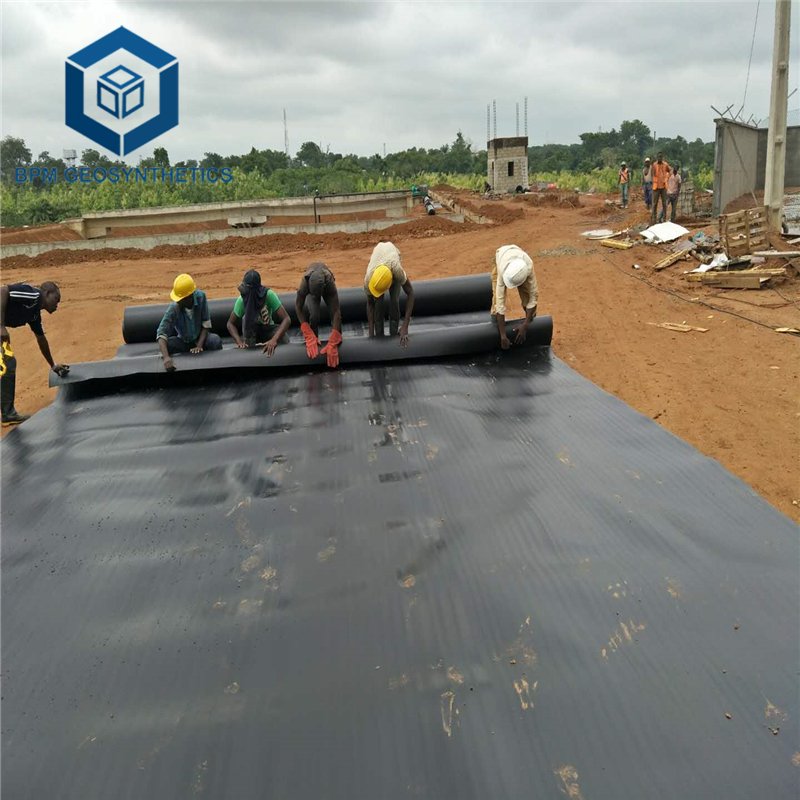
Although formulated as HDPE (density 0.94 g/cm³, GRI-GM13), the Smooth Geomembrane HDPE Liner from The Project Material Co., Ltd. (BPM Geosynthetics) is included as the leading polymer alternative when projects demand higher tensile strength, superior puncture resistance, broader chemical resistance, or longer documented service life. Thicknesses range from 0.75 mm to 3.0 mm. For a 1.5 mm grade, tensile yield reaches 22 kN/m, break strength 40 kN/m, elongation ≥ 700 %, puncture resistance 480–540 N (scaling to 960 N at 3.0 mm), stress-crack resistance ≥ 500 h, and high-pressure OIT ≥ 400 min. Roll widths of approximately 7 m and excellent hot-wedge weldability (200–450 °C, 0.4–7.0 m/min) make it ideal for large landfill bases, mining, and chemically aggressive containment. Many projects originally considering LLDPE upgrade to BPM HDPE for improved overall durability and regulatory documentation.
Comparison Table 1 – Core Technical Parameters (Nominal 1.5 mm Smooth Grades)
Product / Manufacturer | Density (g/cm³) | Tensile Break (kN/m) | Elongation at Break (%) | Puncture Resistance (N) | Multiaxial / Flexibility | Stress Crack (h) | Governing Spec |
Solmax LLDPE | ≤ 0.939 | ~21 | ≥ 800 | ~400 | Excellent (≥ 30 %) | ≥ 300 | GRI-GM17 |
AGRU LLDPE | ≤ 0.939 | Meets/Exceeds | ≥ 800 | 400–750 | Excellent | ≥ 300 | GRI-GM17 |
GSE LLDPE | ≤ 0.939 | ~21 | ≥ 800 | ~400 | Excellent | ≥ 300 | GRI-GM17 |
Layfield LLDPE | ≤ 0.939 | Scaled ~40 N/mm | 800 | ~370 | Excellent | ≥ 300 | GRI-GM17 |
Raven / Specialty Flexible PE | ≤ 0.939 | Meets GM17 | ≥ 800 | Good | Excellent | ≥ 300 | GRI-GM17 / ASTM |
Atarfil Flexible PE | Compliant | High | High | High | Very good | Compliant | GRI / CE |
BPM Smooth HDPE (Alternative) | 0.94 | 40 | ≥ 700 | 480–540 | Good (stiffer) | ≥ 500 | GRI-GM13 |
Comparison Table 2 – Market Position, Clients and Certifications
Manufacturer / Product | Headquarters / Focus | Capacity / Scale Indicator | Major Client Sectors | Key Certifications | Relative Position |
Solmax LLDPE | Canada / Global | Largest global PE capacity | Landfill caps, mining, municipal | GRI-GM17, ISO, ASTM | Market leader |
AGRU LLDPE | Austria / USA | Significant precision capacity | Industrial, environmental, infrastructure | GRI-GM17, ISO 9001, CE | Premium consistency |
GSE LLDPE | USA (Solmax) | Large integrated | North American waste & containment | GRI-GM17, ASTM | Proven track record |
Layfield LLDPE | Canada | Mid-to-large | Agriculture, municipal, industrial | ASTM, GRI-GM17 | Strong regional |
Raven / Specialty | USA | Specialty flexible | Aquaculture, agriculture, covers | ASTM | Niche flexible |
Atarfil Flexible | Spain | Significant | Europe, Americas | GRI, CE, ISO | Quality exporter |
BPM Smooth HDPE | Global supply | Multi-10 000 t scale | Landfills, mining, industrial, ponds | GRI-GM13, ISO 9001, CE | Leading HDPE alternative |
Installation and Performance Advantages of Flexible LDPE/LLDPE Liners
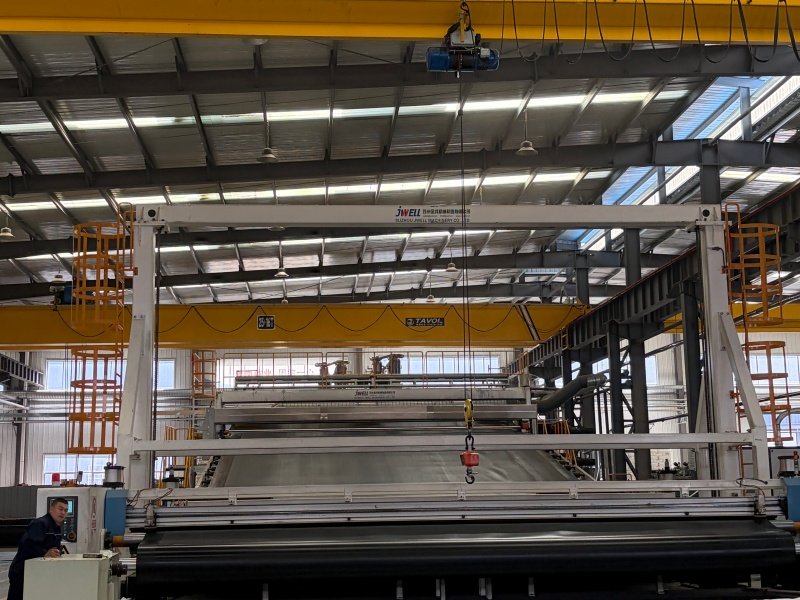
LLDPE geomembranes can be shop-fabricated into large panels (often > 2 000 m²), accordion-folded, and delivered for rapid field deployment, reducing on-site welding hours. Their high elongation and multiaxial capacity allow the liner to conform to soft or irregular subgrades and accommodate settlement without stress concentrations that could affect stiffer HDPE. Low-temperature flexibility remains superior, supporting installation in colder climates. Welding parameters are similar to HDPE but typically require slightly lower temperatures.
Limitations include lower yield strength and puncture resistance compared with equivalent-thickness HDPE, and a somewhat narrower chemical-resistance envelope for certain hydrocarbons. For these reasons, many engineers specify LLDPE for caps and covers while reserving HDPE for primary base liners.
BPM Geosynthetics Advantages – When HDPE Delivers Superior Long-Term Value
The Project Material Co., Ltd. (BPM Geosynthetics) manufactures Smooth HDPE Geomembrane Liners that frequently outperform pure LLDPE options in critical containment. Virgin-resin formulations with 2.0–3.0 % carbon black achieve density 0.94 g/cm³, tensile break strength 40–80 kN/m across the thickness range, elongation ≥ 700 %, and puncture resistance scaling from 240 N (0.75 mm) to 960 N (3.0 mm). Stress-crack resistance ≥ 500 h and high-pressure OIT ≥ 400 min support multi-decade service lives under GRI-GM13 protocols.
Wider rolls (approximately 7 m) reduce field seams, while consistent thickness tolerance ensures reliable hot-wedge welding at 200–450 °C and speeds of 0.4–7.0 m/min. Full third-party documentation, ISO 9001 systems, and CE marking satisfy international specifications. Production capacity measured in tens of thousands of tons annually enables competitive pricing and short lead times for large landfill, mining, and industrial projects. BPM HDPE is routinely selected when chemical resistance, higher mechanical strength, or longer documented durability outweigh the flexibility advantages of LLDPE.
Material Selection Framework – LDPE/LLDPE versus HDPE
Specify LLDPE (GRI-GM17) when differential settlement, complex geometry, shop fabrication, or maximum flexibility are primary requirements—typical of landfill caps, soft-foundation ponds, and agricultural liners.
Specify BPM Smooth HDPE (GRI-GM13) when higher tensile and puncture strength, superior chemical resistance (especially hydrocarbons), stricter stress-crack performance, or maximum long-term durability are required—typical of landfill base liners, heap-leach pads, and industrial chemical containment.
Hybrid designs or dual-liner systems can combine both materials. Decision metrics include expected settlement magnitude, chemical exposure profile, installation method (shop versus field), temperature range, and total installed cost inclusive of subgrade preparation and seaming.
Conclusion
The seven best LDPE geomembranes of 2026—Solmax LLDPE, AGRU LLDPE, GSE LLDPE, Layfield LLDPE, Raven/specialty flexible PE, Atarfil flexible grades, and the complementary BPM Smooth HDPE Geomembrane Liner—provide engineers with a complete spectrum of flexible and high-strength polyethylene barriers. LLDPE products excel in elongation (≥ 800 %), multiaxial strain (≥ 30 %), and conformability, while BPM HDPE delivers higher tensile strength (up to 80 kN/m), puncture resistance (up to 960 N), stress-crack resistance (≥ 500 h), and GRI-GM13-verified longevity.
Successful projects match material properties to site-specific demands for settlement, chemistry, strength, and service life. For detailed technical data sheets, project-specific quotations, or guidance on selecting between flexible LLDPE geomembranes and high-performance HDPE solutions, contact The Project Material Co., Ltd. (BPM Geosynthetics). Their Smooth HDPE Geomembrane Liner series stands ready to provide reliable, cost-effective containment for the most demanding environmental and industrial applications.