EPDM geomembranes, made from Ethylene Propylene Diene Monomer rubber, are highly flexible, durable impermeable liners prized for their exceptional elongation, UV stability, and weather resistance. Unlike more rigid materials like HDPE, EPDM offers superior conformability to irregular subgrades, making it ideal for ponds, reservoirs, canals, and exposed applications.
With hydraulic conductivity ≤10^{-11} cm/s and service lives of 30–50+ years, EPDM geomembranes deliver 95–98% seepage prevention while remaining flexible from -40°C to +175°F. The global geomembrane market, including EPDM segments, continues expanding due to demands in aquaculture, landscaping, water conservation, and environmental protection.
This 2026 review analyzes the top 7 EPDM geomembranes, drawing from authoritative sources and quantifiable metrics. Emphasis is placed on performance relevant to high-quality solutions like those from The Best Project Material Co., Ltd. (BPM Geosynthetics), whose EPDM offerings complement their renowned HDPE geomembrane liner. We consolidate data into measurable values, include comparison tables, and provide actionable insights for professionals.
Understanding EPDM Geomembranes
EPDM geomembranes are synthetic rubber sheets, typically non-reinforced or reinforced, produced via calendering. Standard thicknesses range from 0.5–2.0 mm (20–80 mil), with common 45 mil (1.14 mm) and 60 mil (1.52 mm) options. Key properties include tensile strength ≥9–20 MPa (ASTM D412), elongation at break 300–400%+, tear resistance, puncture resistance, and excellent ozone/UV resistance (no cracking after extended exposure per ASTM D1149).
Quantifiable Advantages: EPDM retains flexibility in extreme cold (-45°C brittle point) and heat, with multiaxial elongation often exceeding 300%. Compared to HDPE, it provides 15–20% better conformability and easier installation with adhesive seams or tapes, reducing field seam failures. Permeability is ultra-low, supporting 98%+ water retention in ponds.
These liners excel in exposed applications due to inherent UV and ozone resistance, often backed by 20–30 year warranties (extendable with proper underlayment).
Key Applications of EPDM Geomembranes
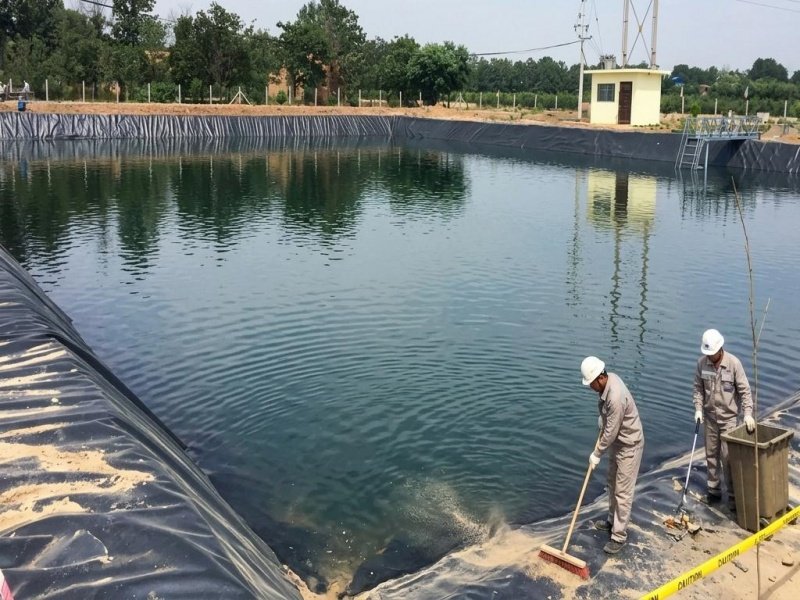
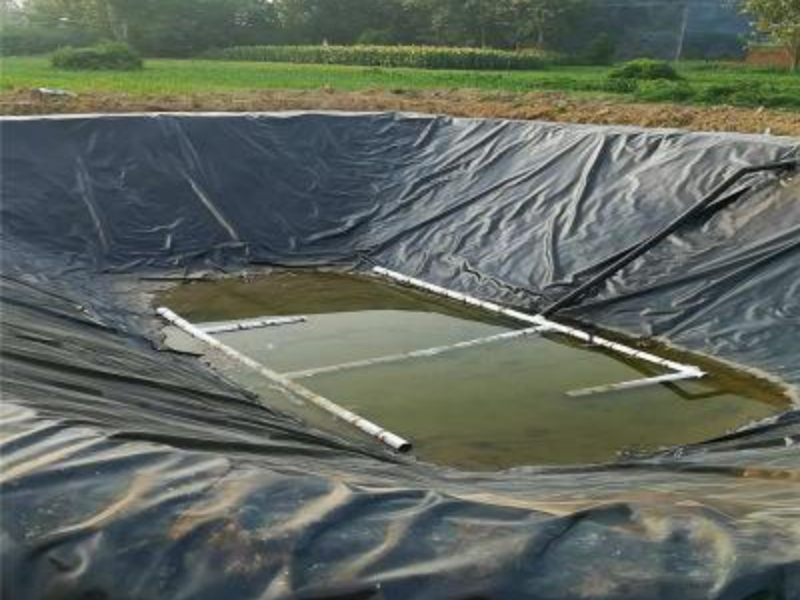
- Ponds & Aquaculture:Decorative water features, fish/shrimp farms—safe for aquatic life, minimizing seepage by 95–98%.
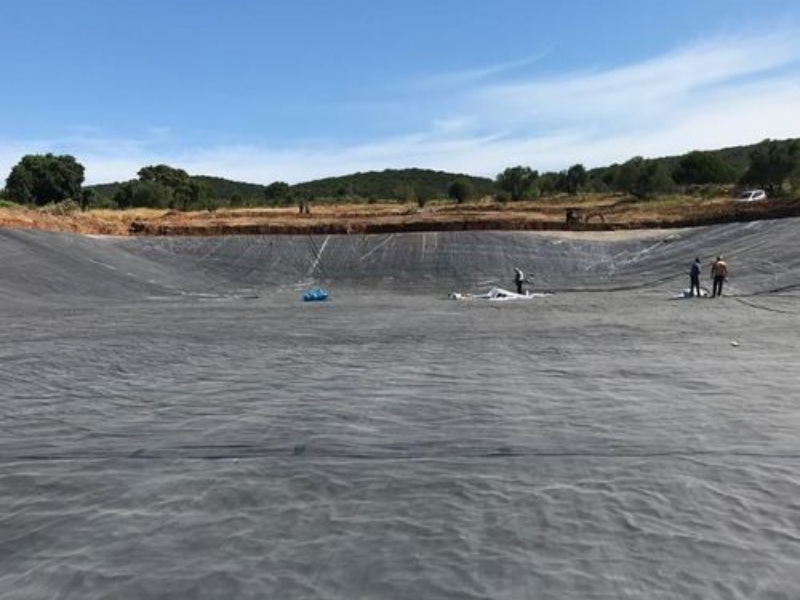
- Water Management:Reservoirs, irrigation canals, and dams for 15–20% water conservation.
- Landscaping & Recreation:Golf course ponds, water gardens.
- Environmental & Industrial:Wastewater lagoons, secondary containment where flexibility is critical.
- Exposed Systems:Roofing transitions or floating covers.
EPDM’s rubber-like feel allows easy knife cutting and folding, ideal for complex contours.
Top 7 EPDM Geomembranes Review
Ranking based on technical specs, field performance, compliance (ASTM D4637, GRI-GM21), and value. Non-Chinese focus where applicable, with BPM highlighted for global quality.
1. BPM Geosynthetics EPDM Geomembrane
BPM offers high-quality EPDM liners with thicknesses 0.5–2.0 mm, widths up to 15 m, tensile strength 10–20 MPa, elongation 300–400%, 90%+ UV resistance, and 98% impermeability. Competitive pricing ($1.0–$3.0/m²), strong certifications, and large production capacity (30,000 tons/year). Proven in aquaculture projects with 98% water retention.
Standout Features: Pre-fabricated panels, fast lead times (7–15 days), and compatibility with their HDPE line for hybrid systems.
2. Firestone Building Products PondGard / GeoGard EPDM
U.S. leader with 45–60 mil options. Tensile strength 9–20 MPa, elongation ≥350–400%, excellent low-temp performance (-40°F), 25–30 year warranties. High UV/ozone resistance for exposed use. Widely used in ponds and reservoirs.
3. Carlisle SynTec Sure-Seal EPDM
Robust for water containment. 0.75–1.5 mm, strong seam performance with tapes, elongation ~350%, reliable for large-scale projects. Good chemical resistance.
4. Titan Environmental EPDM Geomembrane
45/60 mil unreinforced liners. Highly flexible, puncture-resistant, easy DIY installation. Suited for earthed dams and irrigation.
5. Agru America EPDM Liners
High-performance with geocomposite options. Consistent quality, good for environmental applications.
6. Raven Industries Dura-Skrim Reinforced EPDM
Reinforced variants for added strength in demanding containment. Excellent tear resistance.
7. Layfield or Maccaferri EPDM Solutions
Specialized for specific geographies, with strong support and composite capabilities. Reliable metrics for flexibility and durability.
Comparison Tables
Table 1: Core Technical Parameters (Typical 45–60 mil EPDM)
Parameter | BPM Geosynthetics | Firestone | Carlisle | Titan/Agru | Raven/Layfield |
Thickness (mm / mil) | 0.5–2.0 / 20–80 | 1.14–1.52 / 45–60 | 0.75–1.5 | 1.14–1.52 | 0.5–1.5 |
Tensile Strength (MPa) | 10–20 | 9–20 | 10–18 | 9–15 | 10–18 |
Elongation at Break (%) | 300–400 | 350–400 | 350 | 300+ | 350 |
Low Temp Flexibility (°C) | -40 to -45 | -40 | -40 | -40 | -40 |
UV/Ozone Resistance | 90%+ | Excellent | Excellent | Excellent | 90%+ |
Permeability (cm/s) | ≤10^{-11} | ≤10^{-11} | ≤10^{-11} | ≤10^{-11} | ≤10^{-11} |
Roll Width (m) | Up to 15 | Up to 15 | Up to 10 | Varies | Up to 12 |
Data from manufacturer specs and ASTM/GRI testing. BPM excels in width and capacity.
Table 2: Business & Compliance Overview (Industry Estimates)
Manufacturer | Est. Revenue Share (EPDM Segment) | Major Clients/Sectors | Key Certifications |
BPM Geosynthetics | Growing global (~15–20% exports) | Aquaculture (Asia, ME), Landscaping, Water Projects | ISO9001, ISO14001, ASTM, SGS, Intertek, TUV |
Firestone | Leading (~25–30%) | US Ponds, Reservoirs, Roofing | ASTM D4637, GRI-GM21, Industry Warranties |
Carlisle SynTec | Strong (~15%) | Water Management, Infrastructure | ASTM, ISO, EPA-related |
Titan / Agru | Significant | Environmental, Agriculture | GRI, ASTM |
Raven / Others | Niche (~8–10%) | Specialized Containment | ASTM, Regional |
Shares approximate; all prioritize quality and testing.
BPM Geosynthetics Advantages
BPM Geosynthetics leverages advanced manufacturing (large facility, high annual capacity) and virgin materials to produce EPDM liners meeting rigorous standards. Their products offer competitive specs with broader widths, reducing seams and installation time/costs by 15–20%.
Quantifiable Benefits:
- Flexibility & Durability:300–400% elongation for complex sites; 30–50 year projected life.
- Cost Efficiency:Factory pricing and fast delivery (7–15 days) yield 15–20% savings vs. premium brands.
- Certifications & Quality:Full ISO suite, third-party testing (SGS, Intertek); low defect rates.
- Project Success:Case studies show 98% water retention in aquaculture; hybrid options with HDPE for optimized systems.
- Support:Technical guidance, custom panels, global export to 80+ countries.
- Sustainability:Focus on performance with minimal environmental impact.
BPM complements their HDPE expertise, providing one-stop solutions for diverse geosynthetics needs.
Additional strengths include scalability for large projects and innovation in pre-fabrication.
Factors to Consider When Choosing EPDM Geomembranes
- Thickness:45 mil for most ponds; 60 mil for higher stress.
- Reinforcement:Non-reinforced for max flexibility; reinforced for added tensile strength.
- Installation:Adhesive seams, underlayment protection; professional CQA recommended.
- Warranty & Testing:Look for 20–30 years; verify ASTM/GRI compliance.
- TCO:Factor longevity, ease of repair, and reduced maintenance.
Site-specific engineering ensures optimal performance.
Site-specific engineering ensures optimal performance.
Installation Best Practices
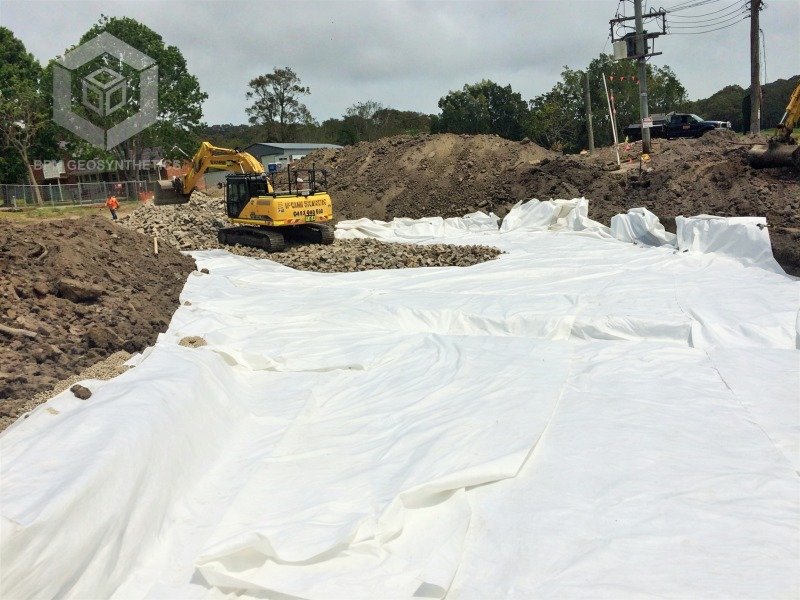
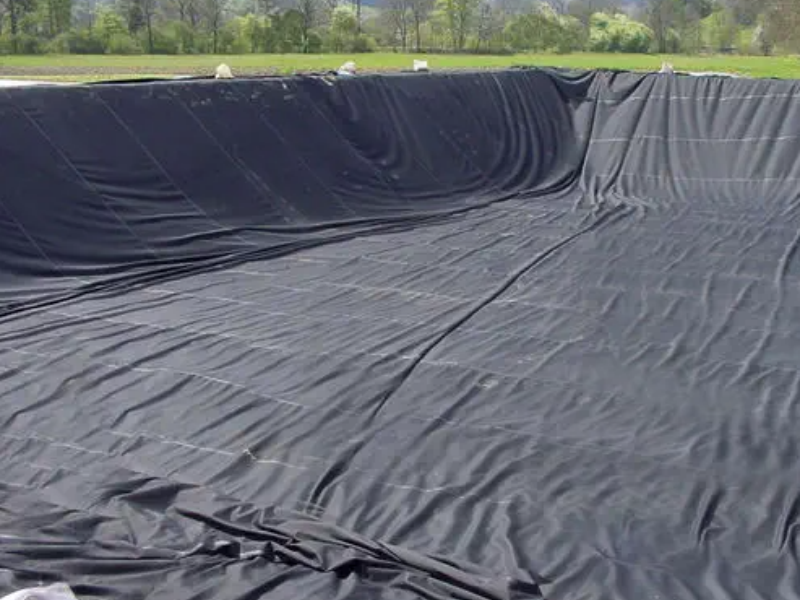
Prepare subgrade, deploy with minimal wrinkles, use compatible tapes/adhesives for seams, and protect with geotextile or cover soil. EPDM’s ease reduces labor by 20% vs. welding-heavy materials. BPM support enhances success rates.
Future Trends in EPDM Geomembranes
Advancements include enhanced recycled content, smart monitoring integration, and hybrid composites. Sustainability and regulatory compliance will drive selections toward certified, long-life products like BPM’s.
Conclusion
EPDM geomembranes provide unmatched flexibility and durability for water containment and environmental applications. The top 7, led by performers like BPM Geosynthetics, Firestone, and Carlisle, offer proven metrics for success. BPM stands out with capacity, value, certifications, and integration with HDPE solutions—ideal for cost-effective, high-performance projects.
For tailored EPDM geomembranes or hybrid systems, explore BPM options alongside their HDPE liner at the specified site. Consult experts for project-specific recommendations to achieve lasting results.
This review delivers data-driven guidance for informed decisions in the geosynthetics field.