Introduction
When construction professionals specify geotextiles for drainage, filtration, or separation applications, they frequently encounter the term “4 oz non-woven geotextile.” It’s about 115g – 120g geotextile. This designation refers to a specific weight grade of needle-punched fabric made from synthetic polymers, typically polypropylene or polyester. The “4 oz” indicates the fabric’s weight per square yard, which translates to approximately 135 grams per square meter. It includes nonwoven needle punched polypropylene geotextiles and polyester geotextiles. Understanding this material’s properties, manufacturing process, and typical applications helps engineers and contractors select the right geotextile for their projects. At BPM Geosynthetics, we manufacture and supply high-quality 4 oz non-woven geotextiles that meet rigorous international standards for civil engineering and environmental applications.
1.Manufacturing Process and Material Composition
1.1 Raw Materials and Polymer Selection
Manufacturers produce 4 oz non-woven geotextiles mainly from polypropylene or polyester, with polypropylene dominating due to its chemical resistance, light weight, and cost-effectiveness. They add UV stabilizers, antioxidants, and carbon black to enhance durability and weather resistance for harsh outdoor conditions.
1.2 Needle-Punching Technology
The process begins with carding or air-laying fibers into a loose web, then passing it through a needle loom. Barbed needles punch the fibers vertically, mechanically entangling them without chemical binders. For a 4 oz product, this yields a fabric about 1.5–2.0 mm thick with balanced strength and permeability.
1.3 Thermal Calendering and Finishing
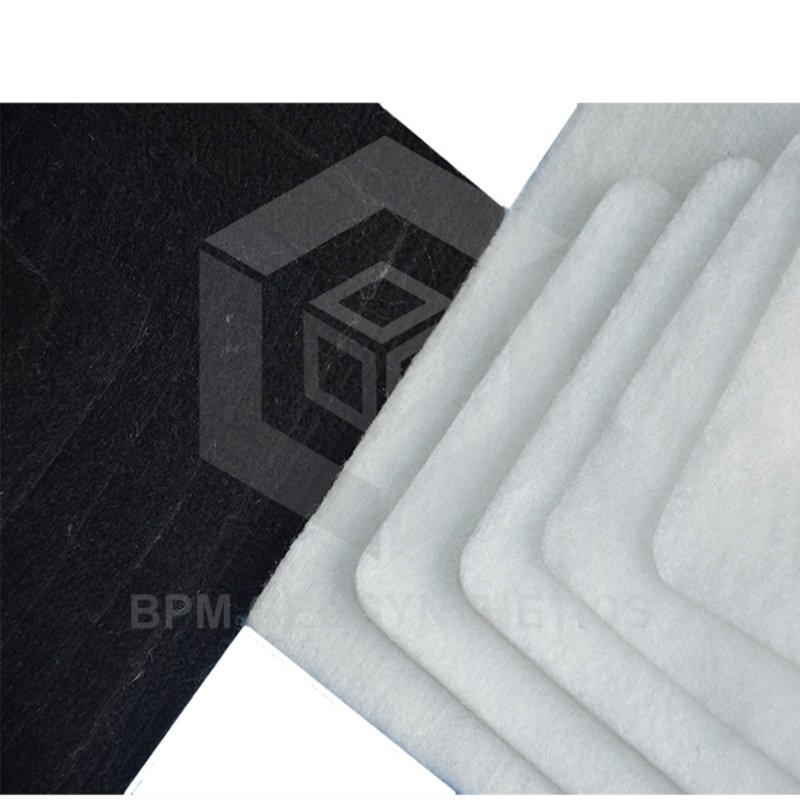
Some manufacturers apply light calendering through heated rollers to smooth the surface and improve dimensional stability. Careful control of temperature and pressure prevents excessive permeability loss. The result is a flexible, felt-like material with a fuzzy surface for good soil friction.
2. Physical and Mechanical Properties of 4 oz Non-Woven Geotextile
2.1 Weight and Thickness Specifications
The 4 oz designation refers strictly to mass per unit area, with industry standards requiring 4.0–4.5 oz/yd² (135–153 g/m²) for this grade. Thickness typically ranges from 1.5 mm to 2.2 mm, depending on manufacturing parameters. This weight class sits between lightweight 3 oz and heavy-duty 6 oz or 8 oz grades, offering versatility across many construction applications.
2.2 Tensile Strength and Elongation
This geotextile delivers grab tensile strengths of 90–120 lbs (400–534 N) in both directions. Its needle-punched structure provides high elongation at break, often exceeding 50%, allowing the fabric to conform to irregular subgrades without tearing. This combination suits applications prone to differential settlement.
2.3 Hydraulic Properties
The random fiber network creates interconnected pores that excel in drainage and filtration. For the 4 oz grade, apparent opening size (AOS) falls between 0.15 mm and 0.30 mm, retaining fine soils while passing water freely. Permittivity often exceeds 1.0 s⁻¹, ensuring effective performance in drainage systems and erosion control.
2.4 Puncture and Tear Resistance
The fabric resists puncturing and tearing well, critical during installation over rough surfaces. Its elongation allows deformation around rocks without failure. Typical puncture resistance reaches 300–400 N, with trapezoidal tear strength of 120–180 N, giving contractors confidence in handling and placement.
3. Key Advantages of 4 oz Non-Woven Geotextile
3.1 Excellent Filtration Performance
The 4 oz non-woven geotextile excels at filtration by retaining soil particles while allowing water to pass through its pore structure. This prevents fines from migrating into drainage aggregates and causing clogging. Its random fiber network provides multiple filtration paths, ensuring continued function even if some pores block. This redundancy gives non-wovens a clear edge over woven products in filtration roles.
3.2 High Permeability for Drainage Applications
Its open structure enables free water movement through and across the fabric. In subsurface drainage, it directs water toward pipes while holding soil in place. High permittivity ensures rapid response to rainfall or rising groundwater, reducing hydrostatic pressure behind walls and beneath pavements.
3.3 Cost-Effectiveness for Moderate Demands
The 4 oz grade offers a sweet spot—adequate strength and hydraulic performance for common projects at an affordable price. For applications not needing extreme tensile strength, it delivers reliable performance without overspending, making it a popular contractor choice.
4. Typical Applications of 4 oz Non-Woven Geotextile
4.1 Subsurface Drainage Systems
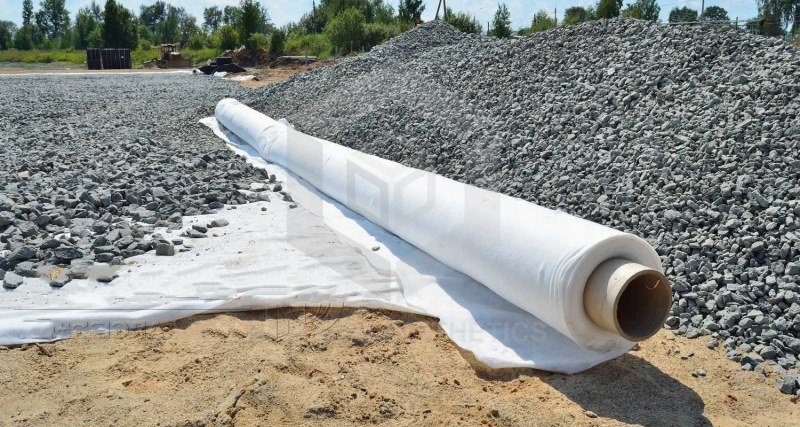
Contractors frequently specify this grade for subsurface drainage, wrapping it around perforated pipes or lining trench walls to keep fine soil from entering and clogging systems. It performs effectively in agricultural drains, highway edge drains, and sports field underdrains, maintaining permeability over many years.
4.2 Retaining Wall and Slope Drainage
Behind retaining walls and on steep slopes, the fabric acts as a drainage and separation layer. It allows groundwater to escape from backfill while preventing fines from migrating into aggregates. This reduces hydrostatic pressure, a leading cause of wall failure, and preserves long-term stability.
4.3 Erosion Control and Shoreline Protection
Along shorelines and drainage channels, this geotextile stabilizes soil while permitting vegetation growth through its layer. Its permeability prevents water pressure buildup beneath surfaces, averting slumping. When used with riprap or concrete blocks, it enhances overall system stability.
4.4 Landfill and Environmental Applications
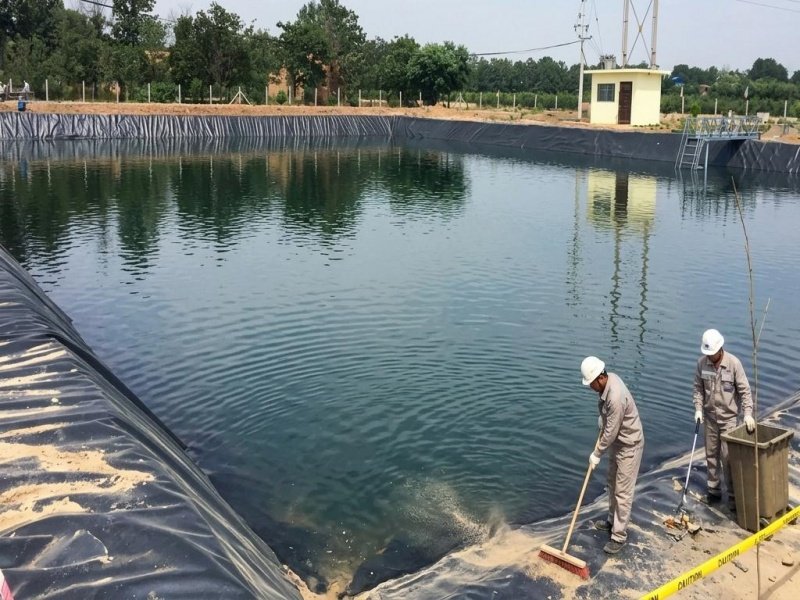
Environmental engineers use it in landfill caps, liner systems, and pond liners for protection and drainage. The fabric shields geomembranes from aggregate puncture, facilitates leachate collection, and resists aggressive chemical environments.
4.5 Pavement Interlayers for Stress Relief
Placed between old and new asphalt layers, the 4 oz non-woven fabric acts as a stress-relief interlayer. It absorbs tensile and shear stresses at the interface, reducing reflective cracking and extending the service life of pavement rehabilitation projects.
5. Installation Guidelines and Best Practices
5.1 Subgrade Preparation
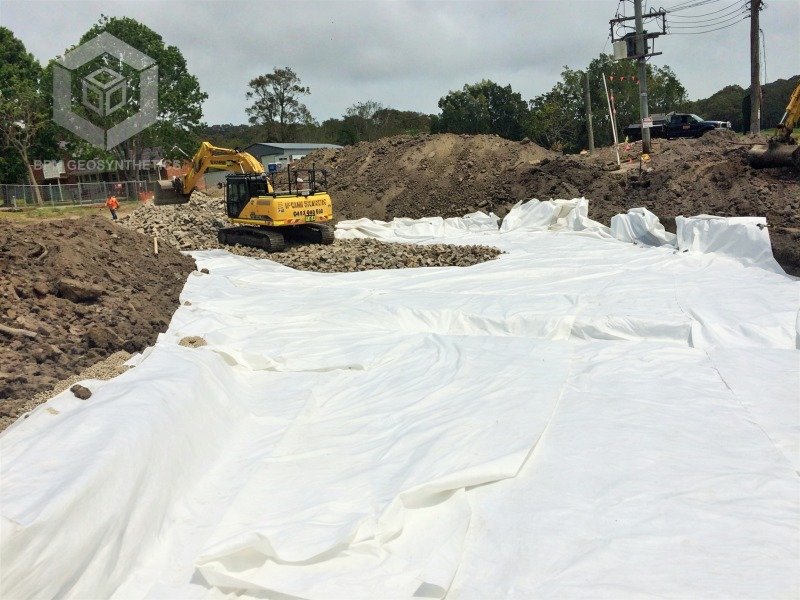
Proper installation begins with thorough subgrade preparation. Remove sharp rocks, vegetation, and debris to avoid puncturing the fabric. Grade the surface to eliminate water-collecting depressions, and roll it with a smooth drum roller to create a stable working platform for the geotextile and subsequent layers.
5.2 Panel Placement and Overlapping
Unroll panels in the construction direction. Overlap adjacent panels by 300 to 450 mm to maintain continuity, though steeper slopes or high-load areas may need larger overlaps or seaming. For drainage, place the upstream panel over the downstream one to ensure smooth water flow.
5.3 Protection During Cover Placement
Promptly cover the geotextile with aggregate or soil to shield it from UV rays and mechanical harm. Place cover material from the working face forward rather than dumping directly onto the fabric. Instead, push aggregate into place with dozer blades, keeping a minimum 150 mm cover before operating heavy equipment.
5.4 Quality Control and Inspection
Inspect the fabric for damage during installation and repair tears immediately by overlapping with fresh material. Verify product specifications against manufacturer test reports. Regular monitoring ensures the geotextile performs as intended.
Summary
The 4 oz non-woven geotextile offers a versatile, cost-effective solution for drainage, filtration, and separation in civil and environmental projects. Its needle-punched structure balances permeability, conformability, and moderate strength, making it ideal for subsurface drainage, erosion control, and retaining walls. While not as strong as woven or heavier non-wovens, it meets most construction requirements effectively.
Proper installation—subgrade preparation, panel placement, and cover protection—ensures optimal performance. Quality control and inspection minimize damage risks.
At BPM Geosynthetics, we supply 4 oz non-woven geotextiles that meet international standards, combining superior materials with precise manufacturing. We invite engineers and contractors to trust our products for their next project.