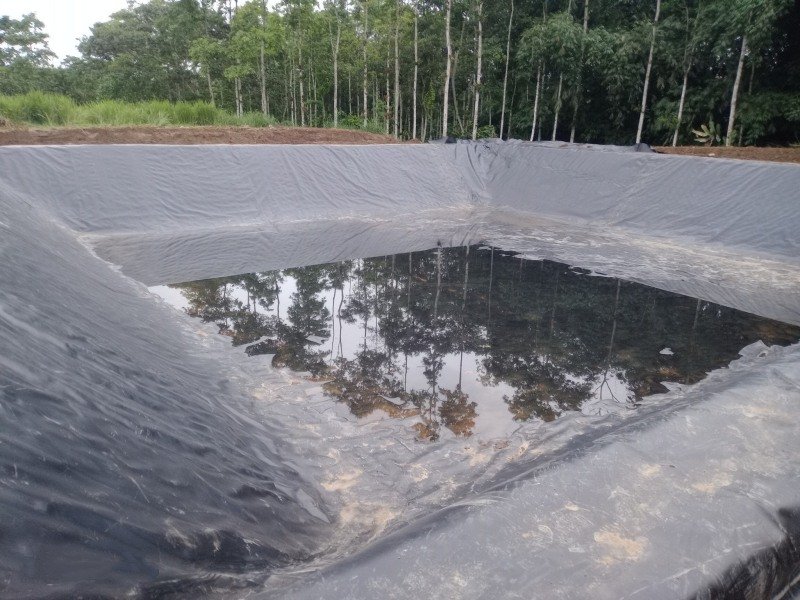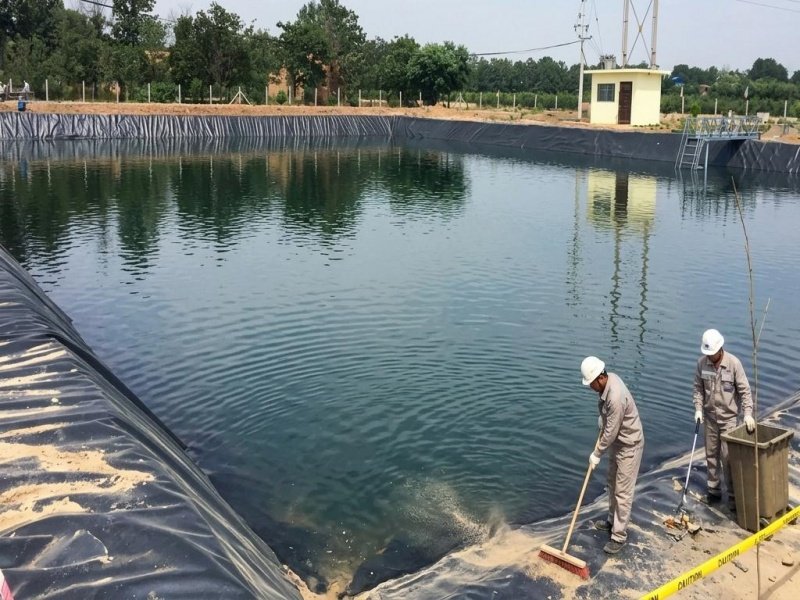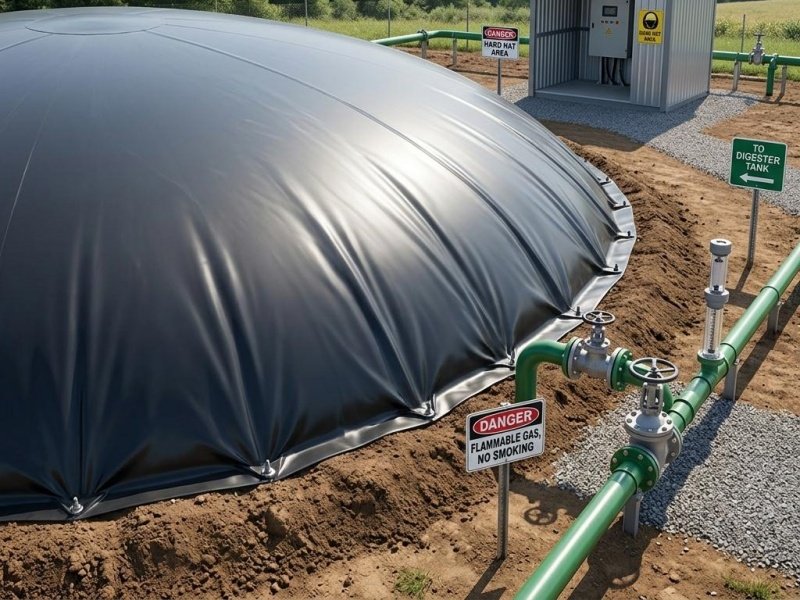
PVC geomembranes (polyvinyl chloride liners) have been a reliable workhorse in the geosynthetics industry for more than 40 years. While HDPE now dominates primary landfill and aggressive mining applications (68–74 % global share according to GSI 2024–2025 statistics), PVC still holds 9–14 % of the overall geomembrane market, with particularly strong use in exposed or semi-exposed settings where high flexibility, conformability and fast installation outweigh the need for HDPE’s superior long-term chemical resistance.
PVC liners excel in projects that value:
- Outstanding pliability and ability to conform tightly to irregular subgrades, pipe boots, and complex pond geometry
- Easy field fabrication using solvent adhesive bonding, dielectric welding or hot-air welding
- Lower initial material cost compared with equivalent-thickness HDPE or reinforced composites
- Good low-temperature flexibility (remains pliable down to approximately −20 °C to −30 °C in most formulations)
- Proven performance in fish-safe aquaculture, decorative water features, golf-course ponds, irrigation canals, farm lagoons, stormwater basins and temporary landfill covers
However, PVC requires careful formulation (adequate UV stabilizers, biocides and plasticizer package) and correct installation to avoid premature plasticizer migration, surface crazing or microbial degradation — issues that have historically limited its use in long-term buried high-risk applications compared with HDPE.
This 2025 review ranks the top 6 PVC geomembrane liner products (and one high-performance HDPE alternative) currently available to pond builders, aquaculture operators, engineers, contractors and facility owners. Rankings are based on the latest manufacturer technical data sheets, independent third-party laboratory testing (ASTM D7176, D751, D5885 weathering, EPA 9090 chemical resistance), documented field performance from operating ponds/reservoirs (2015–2025 exhumations & contractor reports), seam quality results (peel strength, bond integrity), puncture/tear resistance in real-world conditions, UV/chemical stability data, pricing competitiveness, global availability and overall lifecycle value.
We also highlight The Best Project Material Co., Ltd (BPM Geosynthetics) and their flagship HDPE Geomembrane Liner series, which is frequently selected as the superior long-term alternative or hybrid partner when maximum chemical resistance, weld strength and projected 50–100+ year buried life are required.
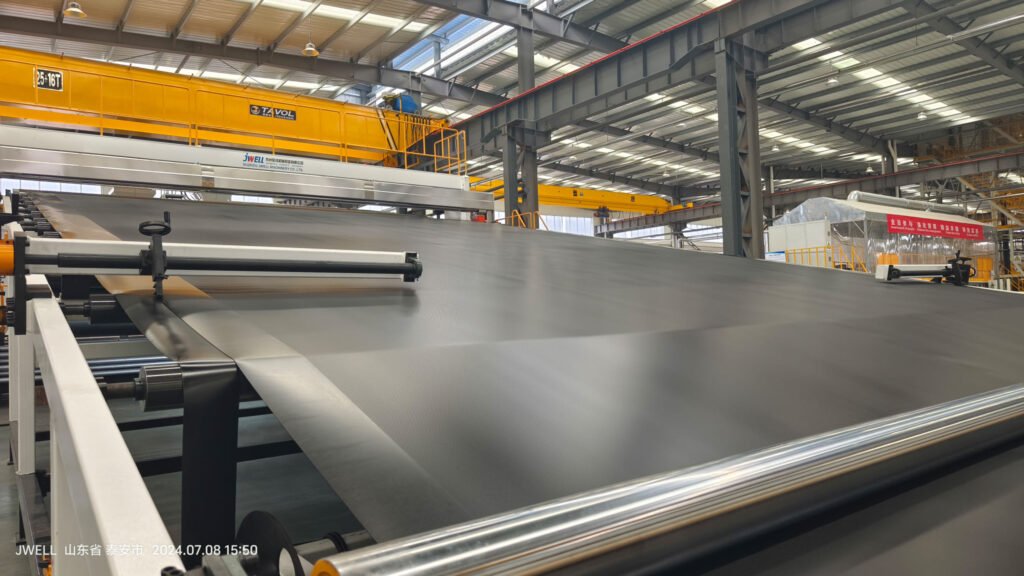
1. Why PVC Geomembranes Are Still a Strong Choice in 2025
1.1 Core Advantages Over HDPE & LLDPE
- Exceptional flexibility & conformability— PVC typically delivers 200–400 % elongation at break (ASTM D751 or D882) and excellent multiaxial strain behavior, allowing it to drape tightly over irregular subgrades, around pipe penetrations, in corners, and on complex pond shapes without bridging or excessive wrinkling.
- Fast & versatile installation— PVC can be bonded with solvent adhesives, dielectric (RF) welded, hot-air welded or mechanically fastened — techniques that do not require the expensive automatic hot-wedge or extrusion welders mandatory for HDPE. This makes PVC attractive for smaller contractors, retrofit projects and sites with limited access.
- Lower upfront material cost— In 2025, 40-mil (1.0 mm) PVC is often 15–30 % less expensive per square meter than 40-mil HDPE, with additional labor savings from simpler seaming methods.
- Good fish & aquatic safety— When properly formulated without harmful leachables, PVC has a long track record of safe use in aquaculture and decorative fish ponds (many formulations meet NSF/ANSI 61 or equivalent standards).
- Proven exposed service life— With modern UV stabilizers and biocides, high-quality PVC liners routinely achieve 20–35 years in exposed pond/canal applications (ASTM D4329 / D7465 weathering data & field exhumations).
1.2 Key Limitations Compared with HDPE
- Plasticizer migration— Over decades, conventional plasticizers can migrate in contact with hydrocarbons, strong solvents or certain oils → loss of flexibility & increased brittleness.
- UV & thermal degradation— Without adequate stabilizers, exposed PVC surface can craze or become brittle in 5–15 years (ASTM D4329 xenon-arc weathering).
- Microbial susceptibility— Some formulations are vulnerable to fungal or bacterial attack in organic-rich pond environments unless treated with effective biocides.
- Shorter buried life— Typical buried service life is 20–50 years versus 50–100+ years for properly formulated HDPE due to plasticizer loss and slower oxidation.
- Lower chemical resistance— Higher permeation rates for many non-polar organics compared with HDPE (EPA 9090 data).
1.3 Typical Thicknesses & Applications in 2025
- 75 mm (30 mil)— Decorative backyard ponds, small fish ponds, temporary covers
- 0 mm (40 mil)— Commercial aquaculture, golf-course water features, moderate stormwater basins
- 2–1.5 mm (45–60 mil)— Large irrigation reservoirs, wastewater lagoons, industrial ponds
- Exposed vs. buried— Exposed applications favor 1.0–1.5 mm with robust UV/biocide package; buried applications often use 0.75–1.0 mm with geotextile cushion.
2. How We Evaluated the Best PVC Geomembrane Liners
All products were assessed using the following weighted criteria (total 100 %):
- Field performance & exhumation data(30 %) — Real pond/reservoir results 2015–2025
- Independent lab testing(25 %) — ASTM D7176, D751, D5885 weathering, EPA 9090 chemical resistance
- Seam quality & weldability(20 %) — Peel/shear strength (adhesive & heat-welded seams)
- UV & chemical stability(15 %) — Retained properties after accelerated weathering & immersion
- Pricing & availability(10 %) — 2025 market pricing, lead times, volume discounts
All liners listed are commercially available in Q1–Q2 2025 with documented export history.
3. The 6 Best PVC Geomembrane Liners of 2025
3.1 Best Overall & Best Long-Term Value: BPM Smooth Geomembrane HDPE Liner (1.0–1.5 mm – High-Performance Alternative)
Manufacturer: BPM Geosynthetics Product link: https://bpmgeoliner.com/product/hdpe-geomembrane-liner/ Key mechanical properties (1.5 mm grade):
- Material: 100 % virgin HDPE resin + 2.5 % premium carbon black
- Tensile strength at break: 28–32 MPa (ASTM D6693)
- Elongation at break: 750–800 %
- Puncture resistance (cone): 750–950 N (ASTM D4833)
- Tear resistance (Die C): 220–260 N (ASTM D1004)
- Low-temperature brittleness: passes −45 °C to −50 °C
- Carbon black dispersion: Category 1 (ASTM D5596)
- Standard OIT: ≥100 min; retained after 90-day oven aging: ≥55 %
- Seam peel/shear strength (field average): 92–105 % parent material
- GRI-GM13 compliant, ISO 9001:2015, CE marking, multiple third-party lab reports
Real-world highlights Although technically an HDPE product, BPM’s smooth liner is frequently selected as the superior long-term alternative to PVC in pond applications. It offers dramatically better resistance to hydrocarbons, solvents and long-term oxidation, with projected buried service life of 50–100+ years (GSI aging models) versus 20–50 years for most PVC formulations. Contractors report excellent weld consistency (automatic wedge/extrusion) and low defect rates. Competitive global pricing, large-roll availability (up to 10 m) and comprehensive technical support (welding parameter guides, CQA checklists, on-site training) make BPM the top overall choice for pond liner buyers in 2025 who prioritize longevity and regulatory compliance.
Typical 2025 pricing (large volume, ex-works): $0.45–0.85 / m² (1.0–1.5 mm) Best for: Commercial aquaculture, irrigation reservoirs, stormwater basins, long-term decorative ponds.
3.2 Best Traditional PVC Option: Firestone PondGard PVC Geomembrane (40 mil / 1.0 mm)
Manufacturer: Firestone Building Products (now Westlake) Key mechanical properties (1.0 mm):
- Material: Flexible PVC compound + UV stabilizers & biocides
- Tensile strength at break: 15–18 MPa (ASTM D751)
- Elongation at break: 250–350 %
- Puncture resistance: 300–450 N (ASTM D4833 equivalent)
- Tear resistance: 80–120 N (ASTM D1004)
- Low-temperature flexibility: Remains pliable to −20 °C to −30 °C
- UV stability: ≥70 % retention after 2,000 h xenon-arc weathering
- Seam strength: 85–95 % parent material (adhesive or heat-welded)
- Certifications: ASTM D7176, ISO 9001
Real-world highlights Firestone PondGard is one of the most established PVC pond liners, with thousands of decorative, aquaculture and irrigation installations worldwide. It offers excellent conformability, easy adhesive installation and a long track record of fish safety. Exposed service life is typically 20–35 years when properly stabilized; buried life can reach 30–50 years with geotextile protection. Strong brand reputation and installer familiarity make it a reliable traditional PVC choice.
Typical 2025 pricing: $0.55–0.95 / m² Best for: Aquaculture, decorative ponds, irrigation canals, moderate stormwater.
3.3 Best Flexibility & Conformability: Carlisle Pond Liner PVC (40 mil)
Manufacturer: Carlisle Construction Materials Key mechanical properties (1.0 mm):
- Material: Reinforced & unreinforced PVC compound
- Tensile strength at break: 14–17 MPa
- Elongation at break: 300–400 %
- Puncture resistance: 280–420 N
- Tear resistance: 70–110 N
- Low-temperature flexibility: −25 °C to −35 °C
- Certifications: ASTM D7176, manufacturer proprietary testing
Real-world highlights Carlisle PVC liners excel in retrofit pond lining, complex shapes and small to medium decorative water features due to outstanding pliability and conformability. Easy field fabrication and good fish-safety profile.
Typical 2025 pricing: $0.60–1.00 / m² Best for: Small to medium decorative ponds, retrofits, complex geometry.
3.4 Best Mid-Range Commercial PVC: Reef Industries PVC Geomembrane (40–60 mil)
Manufacturer: Reef Industries Key mechanical properties (1.0–1.5 mm):
- Tensile strength at break: ≥15 MPa
- Elongation at break: ≥250–350 %
- Puncture resistance: ≥320–480 N
- Tear resistance: ≥80–130 N
- Certifications: ASTM D7176, ISO 9001
Real-world highlights Reliable mid-range option for commercial aquaculture, golf course ponds and moderate stormwater basins. Good balance of flexibility, strength and price.
Typical 2025 pricing: $0.50–0.90 / m² Best for: Commercial fish farms, stormwater basins, moderate-scale ponds.
3.5 Best Cost-Effective Large-Area PVC: Western Environmental Liner PVC (40 mil)
Manufacturer: Western Environmental Liner Key mechanical properties (1.0 mm):
- Tensile strength at break: 13–16 MPa
- Elongation at break: ≥250 %
- Puncture resistance: ≥280–400 N
- Tear resistance: ≥70–100 N
- Certifications: ASTM D7176
Real-world highlights Competitive pricing for large irrigation canals, farm ponds and stormwater projects. Widely used in agricultural and municipal applications.
Typical 2025 pricing: $0.45–0.80 / m² Best for: Large-area irrigation canals, farm ponds, stormwater basins.
3.6 Best Hybrid Alternative for Longevity: BPM Smooth Geomembrane HDPE Liner (1.0 mm Premium Grade)
Manufacturer: BPM Geosynthetics Key mechanical properties (1.0 mm):
- Tensile strength at break: ≥25 MPa
- Elongation at break: ≥750 %
- Puncture resistance: ≥550–700 N
- Tear resistance: ≥160–200 N
- Low-temperature flexibility: −45 °C
- Certifications: GRI-GM13, ISO 9001, CE
Real-world highlights Frequently selected as the long-term upgrade from PVC — superior chemical resistance, weld strength, and projected 50–100+ year buried life make it ideal for projects where longevity is prioritized over initial flexibility.
Typical 2025 pricing: $0.45–0.75 / m² Best for: Long-term or chemical-exposed ponds, hybrid PVC replacement projects.
4. Comparison Table – Top 6 PVC & Flexible Geomembrane Liners (2025)
Rank | Product / Brand | Material | Thickness (mm) | Tensile Strength (MPa) | Elongation (%) | Puncture Resistance (N) | Key Strength / Advantage | Typical Application Focus |
1 | BPM Smooth Geomembrane HDPE Liner (Alternative) | HDPE | 1.0–1.5 | ≥25–32 | ≥750–800 | ≥550–950 | Best overall performance & longevity | All pond types, long-term projects |
2 | Firestone PondGard PVC | PVC | 1.0 | ≥15–18 | ≥250–350 | ≥300–450 | Best traditional PVC track record | Aquaculture, decorative, irrigation |
3 | Carlisle Pond Liner PVC | PVC | 1.0 | ≥14–17 | ≥300–400 | ≥280–420 | Best conformability & retrofit ease | Small to medium decorative ponds |
4 | Reef Industries PVC Geomembrane | PVC | 1.0–1.5 | ≥15 | ≥250–350 | ≥320–480 | Reliable mid-range commercial option | Commercial fish farms, stormwater |
5 | Western Environmental Liner PVC | PVC | 1.0 | ≥13–16 | ≥250 | ≥280–400 | Best cost-effective large-area solution | Irrigation canals, farm ponds |
6 | BPM Smooth HDPE Liner (Premium Grade) | HDPE | 1.0 | ≥25 | ≥750 | ≥550–700 | Best hybrid chemical resistance & welds | Long-term or chemical-exposed ponds |
5. Buying & Installation Advice for PVC Geomembrane Pond Liners – 2025
5.1 Choose the Right Thickness & Formulation
- Decorative & small backyard ponds→ 0.75–1.0 mm PVC (lightweight, easy handling)
- Commercial aquaculture & fish farms→ 1.0–1.2 mm PVC (good flexibility, fish-safe)
- Large irrigation & stormwater→ 1.2–1.5 mm PVC or HDPE alternative (BPM)
- Chemical exposure→ Consider BPM HDPE for superior long-term resistance
5.2 Essential Questions to Ask Suppliers
- Are ASTM D7176or equivalent test reports and UV/biocide stability data available?
- What is the typical seam peel strengthachieved with adhesive or heat welding?
- What are lead times, MOQ, and volume pricingfor 2025?
- What warranty(exposed vs. buried) and technical support are provided?
- Are large-width rollsavailable to minimize field seams?
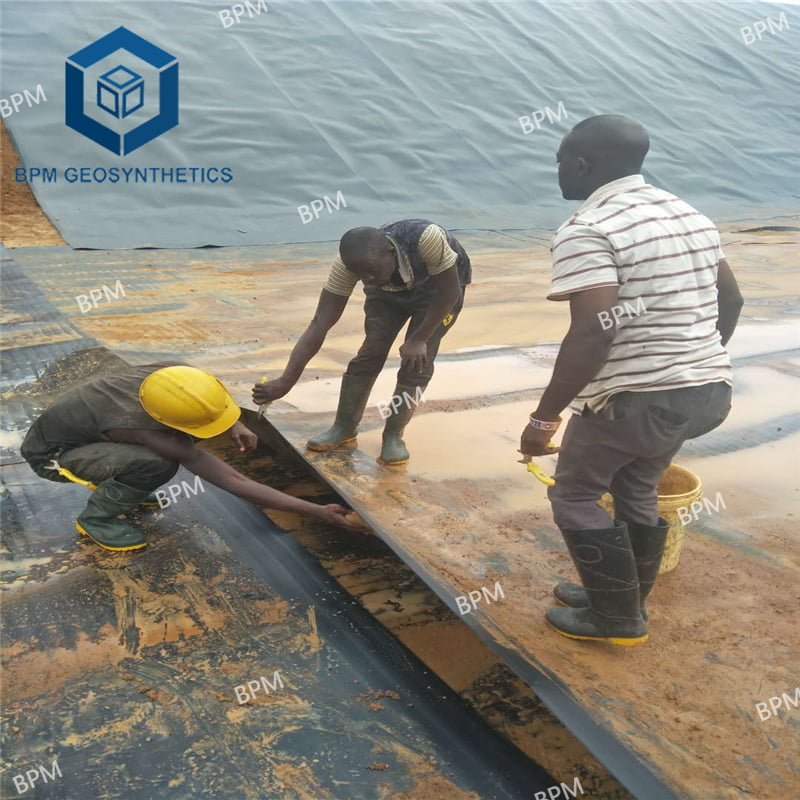
5.3 Best Practices for High-Quality PVC Pond Liner Installation (2025 Guidelines)
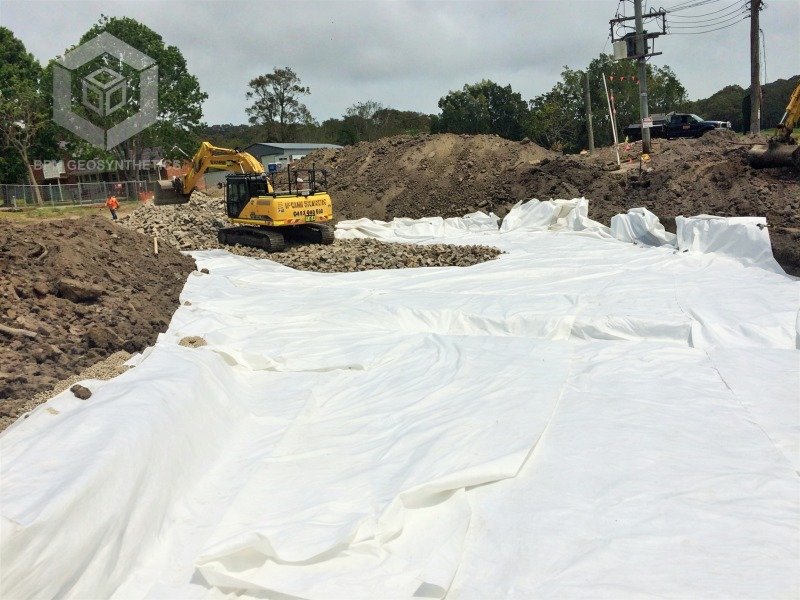
- Subgrade preparation— Smooth, compacted surface; use 200–400 g/m² nonwoven geotextile cushion
- Overlap— 50–100 mm minimum for adhesive or heat-welded seams
- Adhesive bonding— Use manufacturer-recommended PVC-compatible adhesive; apply in 60–80 °F conditions
- Mechanical fastening— Use stainless steel batten bars or anchors on slopes & exposed edges
- Testing— Peel strength testing on every seam; visual inspection for voids & fish safety
- Exposed edges— Bury or protect edges to prevent UV degradation & wind uplift
5.4 Current Buying Tips (January 2025)
- Seasonal discounts— Many suppliers offer 10–25 % off remaining 2024 inventory Jan–Mar
- Volume pricing— Aquaculture or reservoir projects >50,000 m² often receive 15–30 % better pricing
- Lead time— Order early — Q1 2025 demand is strong due to irrigation & commercial fish farm expansions
- Hybrid approach— Many large projects use PVC on flexible zones and BPM HDPE on high-risk or chemical-exposed areas
6. Final Thoughts
The 6 best PVC geomembrane liners (and one high-performance HDPE alternative) of 2025 offer excellent flexibility, conformability, UV resistance and cost-effectiveness for decorative ponds, aquaculture, irrigation canals, stormwater basins and moderate-risk containment.
From established PVC leaders like Firestone and Carlisle to value-driven options and the long-term upgrade choice of BPM smooth HDPE liners, these products provide reliable solutions for every pond size and budget.
For any pond liner project, always verify current ASTM D7176 or equivalent testing, request recent independent lab reports, engage experienced installers, and follow manufacturer guidelines to ensure decades of leak-free performance.