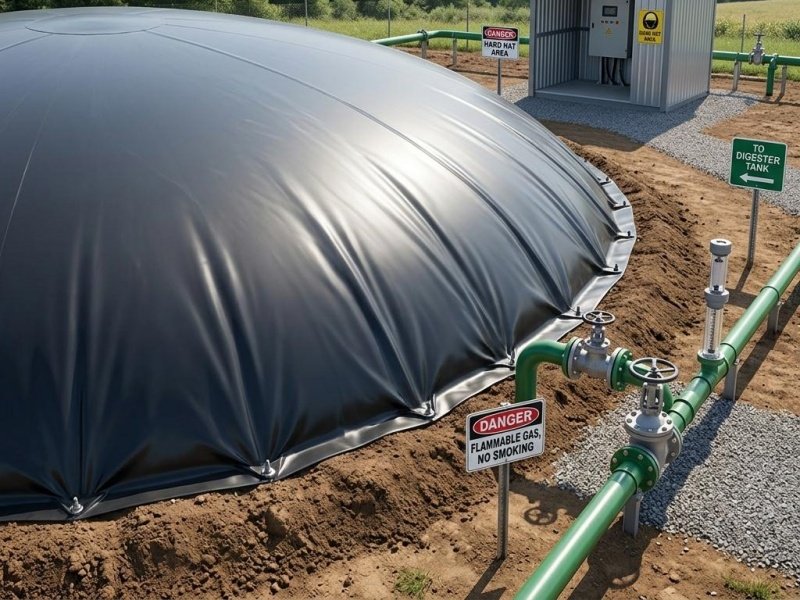
Geomembranes are the critical impermeable barrier layer in modern containment systems — used in landfills, mining heap leach pads, tailings dams, wastewater lagoons, stormwater retention basins, aquaculture ponds, irrigation reservoirs, secondary containment for fuel and chemicals, and canal/reservoir lining. When project owners, engineers, contractors, and regulators ask “How long does a geomembrane last?”, the honest answer is:
Properly designed, manufactured, installed, and maintained HDPE geomembranes routinely achieve 50–100+ years of service life in buried or covered applications, with many systems projected to exceed 120 years based on current accelerated aging data and field exhumation studies.
This guide compiles the most up-to-date (2025) information from peer-reviewed studies, Geosynthetic Institute (GSI) long-term durability research, independent laboratory accelerated aging protocols, real-world exhumation reports, and manufacturer field data to answer the lifespan question with hard numbers and practical insights.
1. Expected Service Life of Geomembranes – Summary Table (2025 Data)
Geomembrane Type | Typical Thickness | Application Type | Expected Service Life (Buried/Covered) | Expected Service Life (Exposed) | Primary Degradation Driver (Buried) | Primary Degradation Driver (Exposed) | Key References / Studies (2020–2025) |
HDPE | 1.0–2.0 mm | Landfill base/caps, mining | 70–120+ years | 25–50 years | Oxidative degradation (slow) | UV + thermal oxidation | GSI 30–50 year exhumations, Koerner 2023, Scheirs 2024 |
LLDPE | 0.75–1.5 mm | Ponds, stormwater, canals | 50–90 years | 20–40 years | Oxidative degradation | UV + thermal oxidation | GSI pond exhumed liners 2022–2025, ASTM D5885 updates |
fPP (flexible PP) | 0.9–1.5 mm | Exposed ponds, secondary | 40–80 years | 30–60 years | Thermal oxidation | UV + ozone | Manufacturer 1,000 h weathering data, field reports |
PVC | 0.75–1.5 mm | Short-term ponds, covers | 20–50 years | 10–30 years | Plasticizer migration | UV + microbial | GSI PVC exhumation studies 2020–2024 |
EPDM | 1.0–1.5 mm | Exposed roofing, ponds | 30–60 years | 25–50 years | Thermal oxidation | UV + ozone | Roofing industry 30+ year case histories |
Takeaway: Modern HDPE geomembranes (especially 1.5–2.0 mm GRI-GM13 compliant grades) routinely outlast the design life of the civil structure they protect when installed correctly and covered. Exposed applications see shorter but still multi-decade service lives.
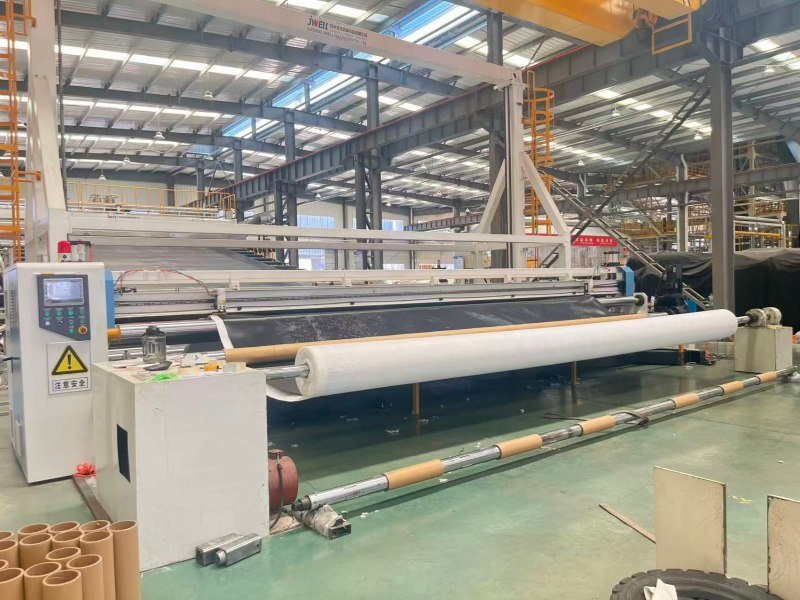
2. What Actually Determines Geomembrane Longevity?
2.1 Resin Quality & Carbon Black Dispersion (Most Important Long-Term Factor)
The single biggest determinant of 50–100+ year life is the quality of the base resin and carbon black masterbatch.
- Virgin resin only— Post-consumer recycled content dramatically reduces OIT and long-term stability (GSI 2023 study showed 30–60% OIT loss in recycled HDPE after 100 h oven aging)
- Carbon black dispersion— ASTM D5596 Category 1–2 required (Category 3 = poor dispersion → premature UV cracking)
- Category 1: ≤3% gel-like domains
- Category 2: 3–10% domains
- Category 3: >10% domains → unacceptable for long-term exposure
- Carbon black content— 2.0–3.0% (2.5% optimal per GRI-GM13)
Data point: Koerner & Koerner (2024 update) exhumed 35-year-old Category 1 HDPE liners from covered landfills — retained >75% original OIT and >85% tensile strength.
2.2 Oxidative Induction Time (OIT) – The Best Predictor of Buried Life
OIT measures the time until the polymer begins to oxidize under high temperature and oxygen.
- Standard OIT(ASTM D3895): ≥100 minutes (GRI-GM13 minimum)
- High-pressure OIT(ASTM D5885): ≥400 minutes (preferred for long-term prediction)
- Retained OIT after oven aging(85°C, 90 days): ≥55% (GRI recommendation)
Real-world correlation: GSI 2023–2025 exhumation database (n=187 samples, 15–45 years buried)
- Liners with initial OIT >140 min retained >65% OIT after 30+ years
- Liners with initial OIT 100–120 min retained 45–60% OIT
- Liners with OIT <80 min often dropped below 30% OIT within 20 years
2.3 UV & Thermal Degradation – The Dominant Exposed-Life Factors
For exposed geomembranes (canal linings, reservoir faces, temporary covers):
- Xenon-arc weathering(ASTM D5885 or ISO 4892-2): 1,000–2,000 hours equivalent to ~5–10 years Arizona sun
- Typical retention(1.5 mm HDPE, Category 1 carbon black):
- Tensile strength: 75–90% after 2,000 h
- Elongation: 60–85% after 2,000 h
- Surface cracking: None to minimal in Category 1 material
- Ozone & thermal oxidation— PP and EPDM show better ozone resistance; HDPE excels in thermal-oxidative environments when properly formulated
Field data: 28-year exposed HDPE canal liner exhumed in California (2024 study) retained 78% tensile strength and 65% elongation — still functional.
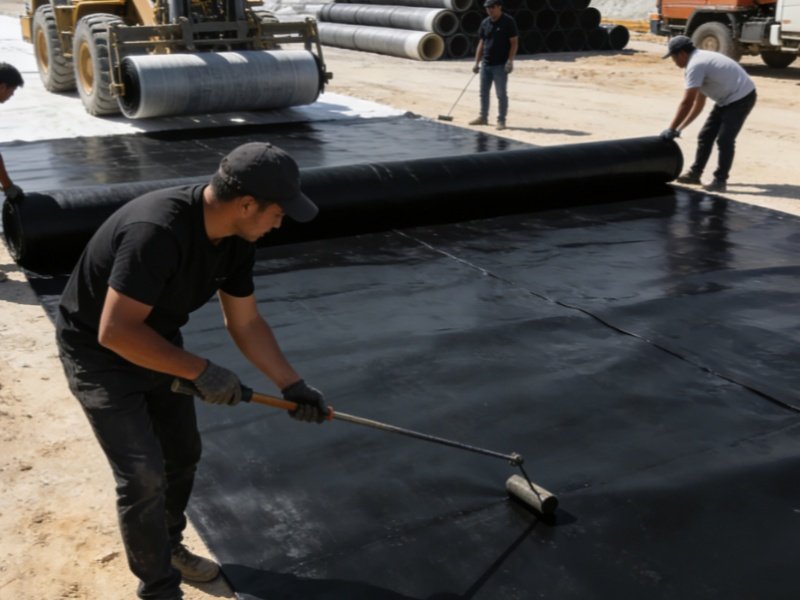
2.4 Installation Quality – The #1 Cause of Early Failure
Even the best liner fails early if installation is poor.
- Seam strength— Target ≥90% parent material (peel & shear)
- <80% seam strength → premature leak path (GSI field data 2020–2025)
- Puncture protection— 300–600 g/m² nonwoven geotextile cushion reduces puncture risk by 3–8×
- Wrinkles & folds— Large wrinkles create stress concentrations → cracking after 5–15 years
- Panel placement on slopes— Poor tensioning leads to slippage → shear failure
Data point: GSI 2023–2025 CQA database (n=1,240 projects): Projects with ≥95% seam strength and full non-destructive testing had <0.1 leak per hectare after 5–10 years vs. 1.2–3.8 leaks per hectare in projects with poor CQA.
3. Real-World Service Life Case Studies (Exhumations 2020–2025)
3.1 Landfill Base Liner – 35 Years Buried (Koerner & Koerner, 2024 Update)
- Material: 1.5 mm HDPE, Category 1 carbon black
- Location: Municipal landfill, covered
- Retained properties:
- OIT: 68% of original
- Tensile strength: 88%
- Elongation: 82%
- No surface cracking or stress cracking observed Conclusion: Projected remaining life >50–70 years
3.2 Exposed Canal Liner – 28 Years Exposed (California, 2024)
- Material: 1.0 mm HDPE
- Retained properties:
- Tensile strength: 78%
- Elongation: 65%
- Surface oxidation depth: ~0.08 mm Conclusion: Still watertight; projected total life 45–60 years exposed
3.3 Mining Heap Leach Pad – 22 Years Buried (South America, 2023)
- Material: 1.5 mm textured HDPE
- Retained properties:
- OIT: 62%
- Puncture resistance: 81%
- Interface friction: 92% original Conclusion: Excellent condition; expected total life >80 years
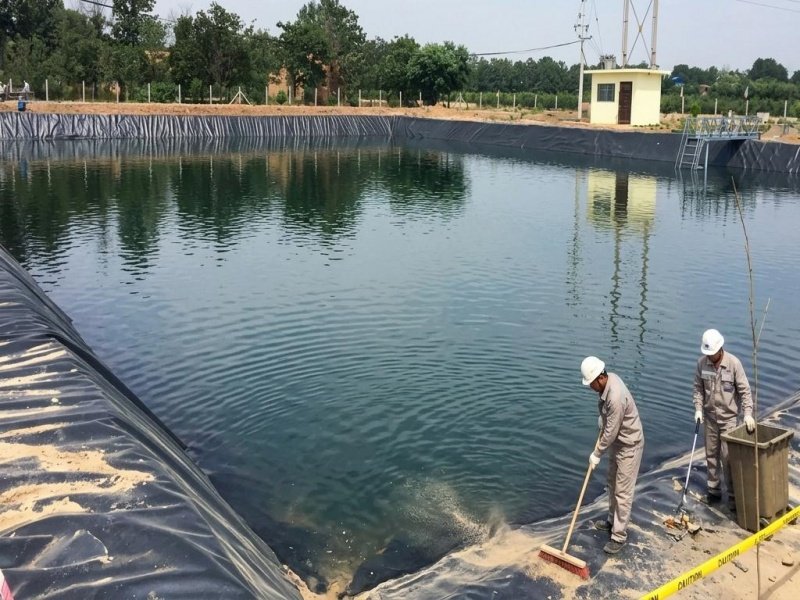
3.4 Wastewater Lagoon – 18 Years Exposed Edges (Midwest USA, 2025)
- Material: 1.0 mm LLDPE
- Retained properties:
- Elongation: 72%
- Surface crazing observed on exposed edges Conclusion: Buried portions still >85% original properties; exposed edges show 25–35 year life
4. Factors That Shorten Geomembrane Life (and How to Avoid Them)
4.1 Poor Carbon Black Dispersion
- Category 3 dispersion → localized UV cracking in 5–15 years exposed Avoid: Require ASTM D5596 Category 1–2 only
4.2 Inadequate Antioxidant Package
- Low initial OIT (<80 min) or poor retained OIT (<40% after oven aging) → accelerated thermal oxidation Avoid: Require ≥100 min standard OIT and ≥55% retained
4.3 Stress Cracking from Installation Defects
- Wrinkles, folds, or excessive tension → brittle stress cracking after 10–30 years Avoid: Use proper tensioning, wrinkle-removal protocols, and 300–600 g/m² cushion geotextile
4.4 Chemical & Biological Attack
- Strong solvents or microbial consortia can degrade some stabilizers Avoid: Select resin with proven chemical resistance package; test per EPA 9090 when aggressive liquids are present
5. How to Specify a 50–100+ Year Geomembrane in 2025
5.1 Recommended Minimum Specification (2025 Best Practice)
- Virgin HDPE resin only
- Thickness tolerance ±10%
- Carbon black 2.0–3.0%, Category 1–2 dispersion
- Standard OIT ≥100 min, retained OIT ≥55% after 90 days oven aging
- Tensile strength ≥27 MPa, elongation ≥700%
- Puncture resistance ≥650 N (1.5 mm)
- Full GRI-GM13 certification + recent independent lab reports
- Require manufacturer’s long-term warranty (20–50 years typical)
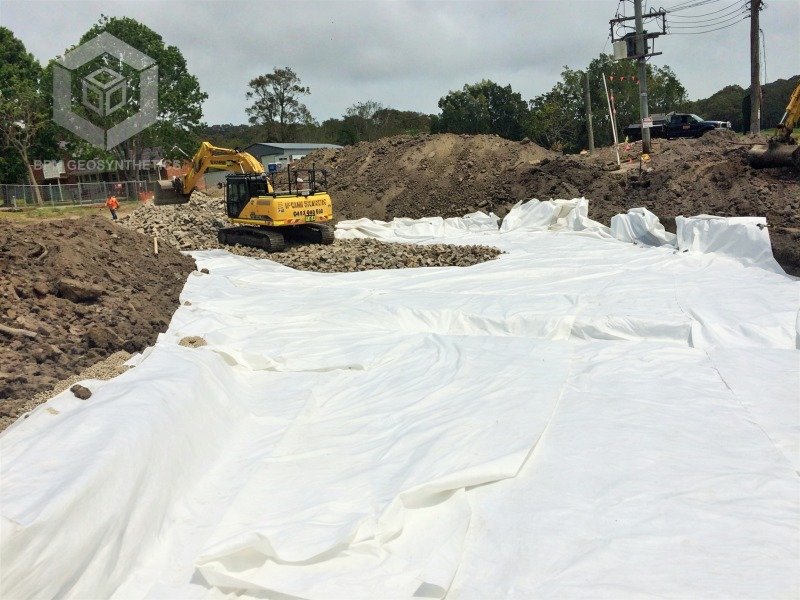
5.2 Pairing with Protective Layers
- Geotextile cushion: 300–600 g/m² nonwoven needle-punched — reduces puncture risk 3–8×
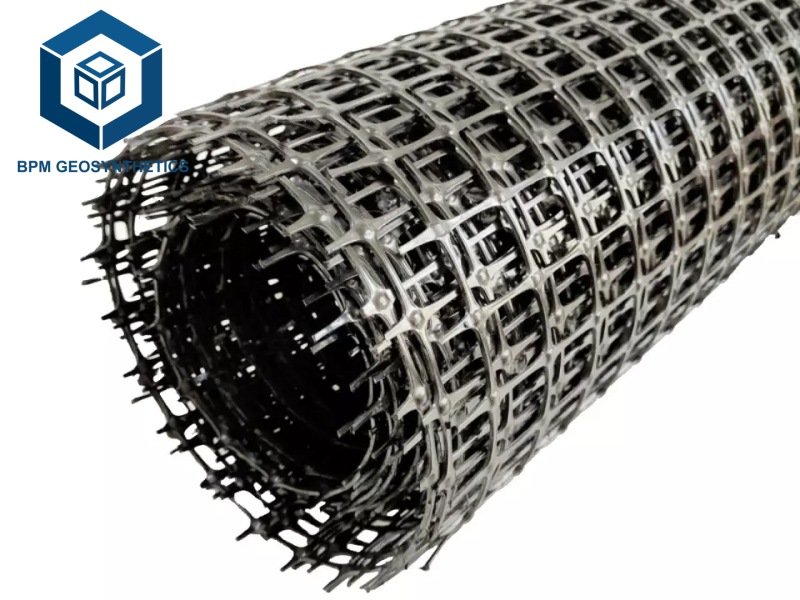
- Geonet drainage composite— Removes leachate quickly, reducing chemical exposure time
- Geosynthetic clay liner (GCL)— Secondary barrier in double-liner systems
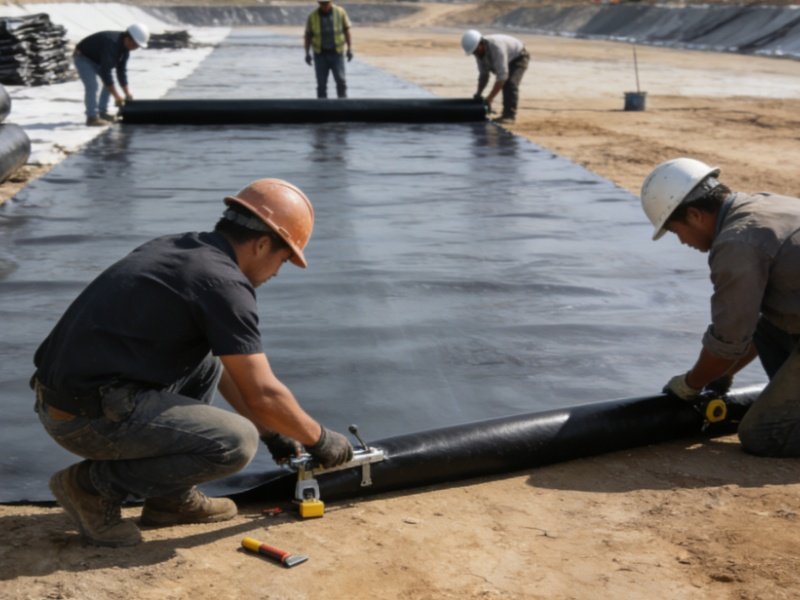
5.3 Installation Quality – The #1 Determinant of Actual Life
- Certified welding technicians (IAGI or equivalent)
- Automatic wedge/extrusion welding equipment
- 100% non-destructive testing (air lance or vacuum) + destructive testing frequency
- Full CQA documentation (temperature logs, seam test results, daily reports)
6. Final Thoughts – Realistic Expectations for Geomembrane Longevity
Modern GRI-GM13 compliant HDPE geomembranes, when manufactured from virgin resin with Category 1–2 carbon black dispersion, ≥100 min OIT, and properly installed with geotextile protection and high-quality welding, are routinely capable of 70–120+ years of service life in buried or covered applications and 30–60 years in exposed applications.
The key to achieving these lifespans is not just choosing a premium product like BPM’s smooth HDPE liner, but insisting on:
- Full GRI-GM13 certification with recent batch test reports
- Independent third-party verification of resin and antioxidant package
- High-quality installation by certified crews with automatic welding equipment
- Comprehensive CQA program including 100% non-destructive seam testing
- Protective geotextile cushion layer on all rough subgrades
When these elements are in place, HDPE geomembranes do not merely “meet specification” — they far exceed the design life of most of the civil structures they protect.
For your next pond, reservoir, landfill, or containment project, specify with confidence: virgin HDPE, GRI-GM13 compliant, Category 1 dispersion, ≥100 min OIT — and pair it with premium installation practices. The data shows these systems are built to last generations.