1.What is Geotextile?
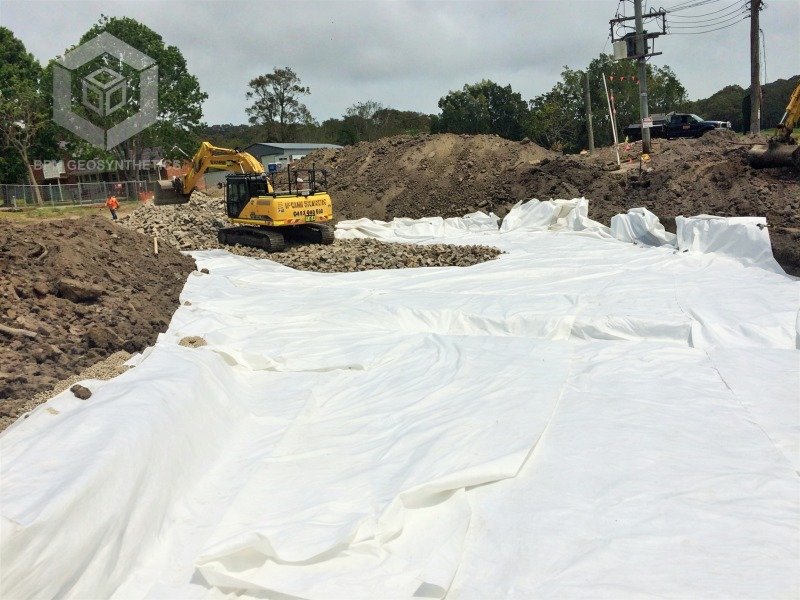
Geotextiles are divided into woven geotextiles and non-woven geotextiles. Geotextiles have excellent filtration, isolation, reinforcement, and protection functions; high tensile strength; good permeability; high temperature resistance; freeze resistance; aging resistance; and corrosion resistance.
Non-woven geotextiles are mainly divided into the following three types according to their production process:
1.1. Short Fiber Needle-Punched Geotextile
1.1. 1 Production Process
PET or PP is first melted, spun, and cut into short fibers. These fibers are then opened, carded into a web, and finally repeatedly punctured with thousands of barbed needles, causing the fibers to entangle and solidify together.
1.1.2 Appearance Characteristics
Relatively rough surface, plush-like appearance, relatively thick, and loose structure.
1.1.3 Performance Characteristics
High porosity and good permeability: Due to its loose structure, it can form good three-dimensional filtration channels.
Strong water conductivity: It can drain water in its planar direction.
Strong anti-clogging ability: Less prone to clogging by fine particles compared to spunbond.
1.1.4 Main applications
Ideal for filtration and drainage projects, such as blind drains, drainage layers, and slope filter layers.
1.2. Filament Geotextile
1.2.1 Production Process
PET or PP granules are melted and extruded directly into continuous long filaments through a spinneret. After drawing, the filaments are laid into a web and then reinforced by needle punching.
1.2.2 Appearance Characteristics
Relatively smooth surface, continuous long filament fibers, and uniform structure.
1.2.3 Performance Characteristics
High tensile strength: Due to the continuous long filaments, its mechanical properties (such as tensile strength, bursting strength, and tear strength) are generally superior to those of short-fiber needle-punched fabrics of the same specifications.
Good durability: Stable structure and superior anti-aging properties.
Excellent uniformity: Uniform fiber web and stable performance.
1.2.4 Main Applications
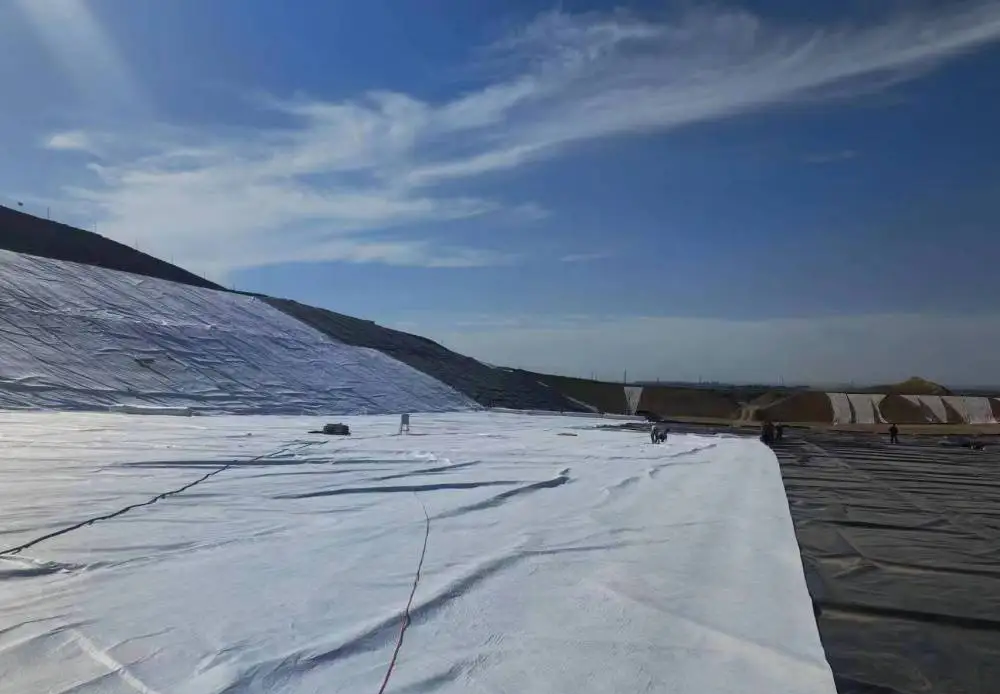
Widely used in applications requiring high strength, such as reinforcement, isolation, and protection, for example, soft soil treatment, roadbed isolation, and landfills.

2.Geotextile Big Demanding the Indonesia
2.1 Infrastructure Gap
National Strategic Projects:The Indonesian government continuously promotes “National Strategic Projects,” including roads, railways, ports, airports, dams, and housing.
Balanced Infrastructure Development:The government is committed to connecting and developing islands beyond Java, involving numerous cross-sea roads, island connections, and infrastructure construction in remote areas, all of which rely heavily on geotextiles.
2.2 Unique Geographical and Geological Conditions
Widely Distributed Soft Soil Foundations:** Indonesia is an archipelago nation with extensive, deep soft clay and peatlands along its coast. Any construction in these areas requires initial soft soil treatment, and geotextiles (especially non-woven fabrics) are a core material for drainage consolidation and reinforcement.
Frequency of Natural Disasters:Indonesia is located in the Ring of Fire, experiencing frequent earthquakes, landslides, and floods. Geotextiles play a crucial role in disaster prevention and mitigation (such as slope reinforcement, riverbank protection, and dam construction). Long coastlines and erosion problems: A large demand for geotextiles and geotextiles is needed for coastal protection, breakwater construction, and mangrove restoration projects.
3.Demand for Geotextiles in Major Application Areas in Indonesia
3.1Road Transportation
The largest application area. Used for roadbed isolation, drainage, and reinforcement, especially in soft soil areas. Significant demand exists for new highways, national roads, and rural roads.
3.2Hydraulic Engineering
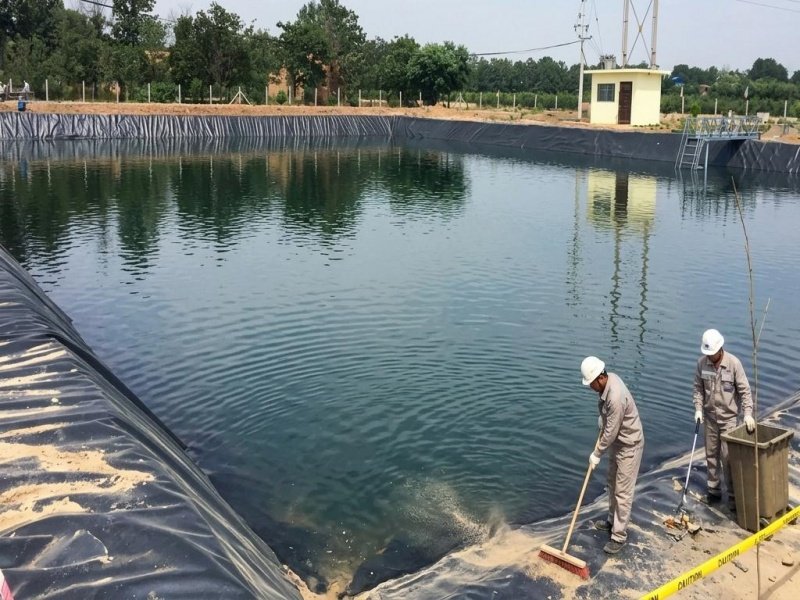
Seepage prevention, filtration, and protection for reservoirs, dams, and irrigation canals; reinforcement of riverbanks and seawalls.
3.3Municipal and Environmental Engineering
Landfills (lining and covering systems), sewage treatment plants, and urban drainage systems.
3.4Mining
Indonesia’s mining industry (such as nickel mining) is highly developed, and the construction and seepage prevention of tailings ponds require high-performance geosynthetics.
3.5Building Engineering
Used for drainage and isolation of building foundations to prevent capillary rise and soil erosion.

4.The 4 Geotextile Suppliers in Indonesia
4.1PT. Polytech Indonesia
As one of the leaders in the Indonesian geosynthetics field, it has a comprehensive product line.
Advantages
Complete Product Line: Offers a complete range of geosynthetic solutions, facilitating one-stop procurement for customers.
Localization Advantage: As a local company, it has a deeper understanding of Indonesia’s geography, climate, and engineering standards, resulting in faster service and support responses.
Cost Competitiveness: Generally offers advantages in price and logistics costs compared to imported products.
High Market Recognition: Widely used in Indonesian infrastructure projects, enjoying a good reputation.
Disadvantages
Technological Limitations: In extremely complex or high-demand material projects, its cutting-edge technology may lag behind top global manufacturers.
International Reputation: Brand awareness in the international market is not as high as established European and American companies.
4.2. PT. Fortuna Buanasandiri (FBS)
FBS is also a significant local geosynthetic materials manufacturer, focusing on providing various engineering solutions.
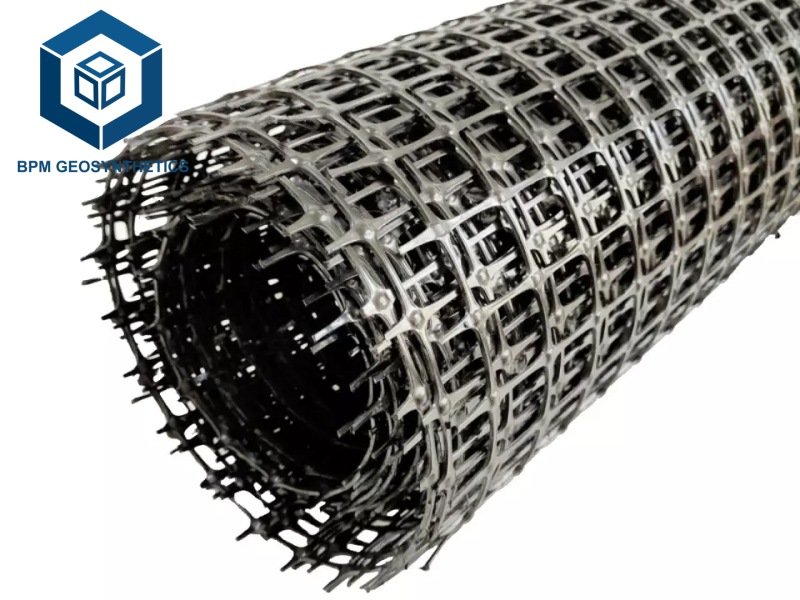
Main Products: Nonwoven geotextiles, geogrids, geocomposite materials, etc.
Advantages
Focus on Engineering Applications: Possesses deep understanding of geotextile application technologies in specific projects (e.g., highways, landfills).
Flexibility and Customization: As a local company, it may be more willing to accept small-batch or customized orders for specific specifications.
Stable Supply Chain: Local production is less affected by international shipping and trade policies.
Disadvantages
Regionalized Brand Influence:Its market influence is mainly concentrated in Indonesia and surrounding areas.
R&D Investment: Continuous R&D capabilities and exploration of new material technologies may be limited by the company’s size.
4.3. PT. Global Prima Karya
Advantages
Extensive Project Experience:** Possesses practical experience participating in numerous local infrastructure projects.
High Cost-Effectiveness:** Its products typically meet the needs of most conventional projects at competitive prices.
Strong Customer Relationships:** Maintains good relationships with local contractors and government departments.
Disadvantages
Product Homogenization:** Its standard products may face homogeneous competition with other local brands.
Quality Control Fluctuations: A few market reports indicate that consistency in product quality across different batches requires continuous monitoring, but this is a common challenge in manufacturing.
4.4 The Best Project Material Co., Ltd.
Advantages
Superior Quality: The company’s geomembranes and geotextiles strictly adhere to national standards (GB/T) and international standards (ASTM, GRI), providing complete third-party authoritative testing reports. Their products demonstrate excellent performance in key indicators such as environmental stress cracking resistance, UV resistance, and chemical corrosion resistance, meeting the stringent environmental requirements and expected service life of projects.
Extensive Experience: The company’s products have been widely applied in numerous national key engineering projects in water conservancy, environmental protection, transportation, and municipal engineering, possessing a large number of successful project cases. This valuable practical experience enables them to anticipate and resolve various potential problems in engineering projects.
Pre-sales Support: The technical team actively cooperates, providing detailed technical data, samples, and targeted solutions, responding quickly and demonstrating high professionalism.
After-sales Guarantee: The company is committed to providing comprehensive after-sales service, including on-site welding technical guidance, construction personnel training, and a timely product quality issue response mechanism, providing strong support for the smooth implementation of projects and long-term safe operation.
5.Conclusion
Selecting suitable geotextile suppliers is crucial to ensuring the success of various industrial and environmental projects. In Indonesia, companies such as BPM Geosynthetics have become leading suppliers of high-quality geotextiles. These suppliers offer a wide range of products, adhere to stringent quality standards, and possess the production capacity to meet the needs of large-scale projects. By selecting one of these reputable manufacturers, customers can have complete confidence in the reliability and performance of their geomembrane solutions, thereby contributing to environmental protection and project success.