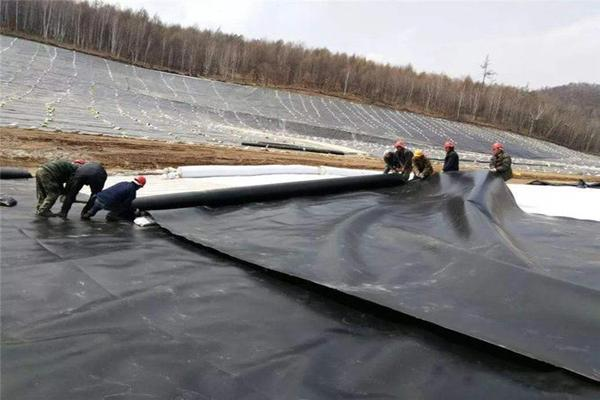
1.What is Pond Liner?
In the Argentine market, the main types of Pond Liner in demand include:
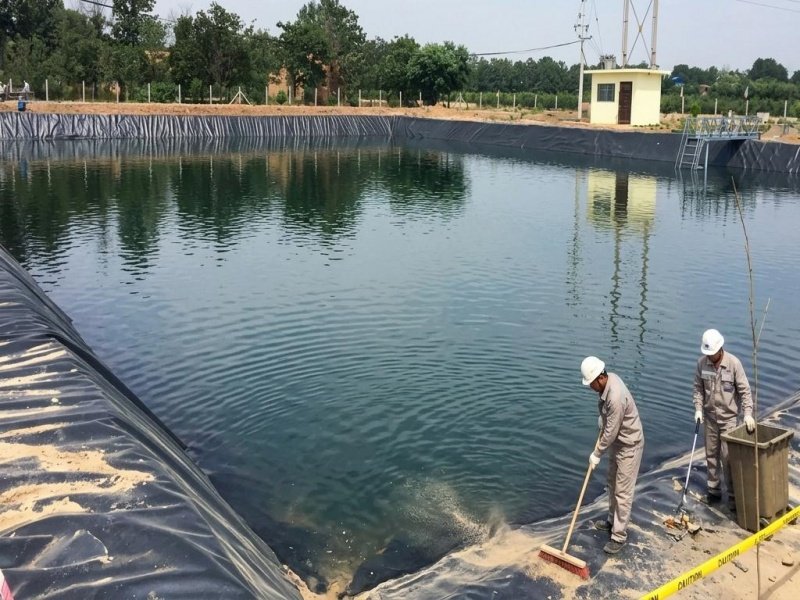
HDPE (High-Density Polyethylene) Pond Liner: This is the most mainstream choice. It has excellent UV resistance, chemical corrosion resistance, puncture resistance, and a long service life (up to 50 years or more). Thickness is typically between 0.75mm and 2.0mm, suitable for large reservoirs and oxidation ponds with environmental requirements.
LLDPE (Linear Low-Density Polyethylene) Pond Liner: More flexible and better suited for uneven substrates, but its puncture resistance and durability are slightly inferior to HDPE. Commonly used in small to medium-sized projects.
PVC (Polyvinyl Chloride) Pond Liner: Very soft and easy to install, but with poor UV resistance and a relatively short service life, its market share in the Argentine agricultural market is gradually decreasing.
2.Pond Liner: Big Demand in Argentina
Argentina is a world-renowned “breadbasket and meat storehouse,” but most of its core agricultural areas (such as the Pampas grasslands) have a semi-arid climate with unstable rainfall and high evaporation rates. These natural conditions create a contradiction with the enormous demands of agricultural production.
The core driving force behind the “large demand for pond liners” comes from two aspects:
2.1 The “Water Crisis” in Soybean Production:
Soybeans are a pillar of the Argentine economy, but their growth is highly dependent on irrigation.
Traditional irrigation methods using ditches are inefficient, with significant water resources lost during transport due to seepage and evaporation.
In recent years, Argentina has frequently experienced severe droughts, leading to lower river levels and insufficient reservoir storage, directly threatening soybean yield and quality.
Solution: Constructing impermeable reservoirs. By digging ponds on farms and lining them with liners, rainwater from the rainy season and water drawn from rivers can be efficiently stored, providing a stable water source for drip or sprinkler irrigation systems during the dry season. This greatly improves water resource utilization efficiency and is crucial for drought resistance and crop survival.
2.2 The Intensive Transformation of Livestock Farming:
Traditional open-grazing methods are greatly affected by pasture carrying capacity and drought.
Modern livestock farming is shifting towards intensive farming models, such as cattle farms, pig farms, and chicken farms.
Solutions:Water Storage: Providing sufficient drinking water for intensive livestock farming requires reliable water storage facilities.
Environmental Treatment: Livestock farms generate large amounts of manure and wastewater. To prevent these highly polluting substances from seeping into the ground and contaminating soil and groundwater, environmental regulations mandate the construction of impermeable oxidation ponds or manure storage tanks. Lining these tanks with mats is an essential environmental protection measure.
3.The 6 Pond Liner Manufacturers in Argentina
3.1. GSE Environmental (now part of Solmax)
GSE was once one of the world’s largest geomembrane manufacturers, later acquired by the Canadian company Solmax. Solmax is now a leading global supplier of geosynthetics, with a strong presence in the Thai and Southeast Asian markets.
3.1.1 Advantages:
Strong R&D Capabilities: Continuously innovating in product formulations and performance.
International Project Experience: Frequently involved in large-scale projects funded by the World Bank, Asian Development Bank, or international engineering firms.
3.1.2 Disadvantages:
Higher Price: Compared to domestic brands, its products are priced higher.
3.2. AGRU
Background: An Austrian family business, renowned for its unique “micro-roughened surface” geomembranes and extrusion die technology. It has offices and warehouses in Thailand.
3.2.1 Advantages:
Focus on High-Performance Projects: Highly competitive in environmentally sensitive, high-standard projects (such as chemical industrial park seepage prevention and large-scale wastewater treatment).
3.2.2 Disadvantages:
Target Market: Primarily targets high-end projects; may not have a price advantage for projects such as ordinary agricultural ponds.
3.3 Geomembranas Argentinas
3.3.1 Advantages:
Good reputation in the market; high product quality; offers a variety of specifications and types of geomembranes.
3.3.2 Disadvantages:
Relatively high price; may not be suitable for budgets of small projects.
3.4 The Best Project Material Co., Ltd.
3.4.1 Advantages:
Superior Quality:The company’s geomembranes (HDPE, LDPE, etc.) strictly adhere to national standards (GB/T) and international standards (ASTM, GRI), providing complete third-party authoritative testing reports. Their products exhibit excellent performance in key indicators such as environmental stress cracking resistance, UV resistance, and chemical corrosion resistance, meeting the stringent environmental requirements and expected service life of projects.
Extensive Experience: The company’s products have been widely applied in numerous national key engineering projects in water conservancy, environmental protection, transportation, and municipal engineering, possessing a large number of successful project cases. This valuable practical experience enables them to anticipate and resolve various potential problems in engineering projects.
Pre-sales Support: The technical team actively cooperates, providing detailed technical data, samples, and targeted solutions, with rapid response and high professionalism.
After-sales Guarantee:The company is committed to providing comprehensive after-sales service, including on-site welding technical guidance, construction personnel training, and a timely product quality issue response mechanism, providing strong support for the smooth implementation and long-term safe operation of projects.
3.4.2 Disadvantages:
Insufficient brand awareness.
3.5 Geosintéticos (French name)
3.5.1 Advantages:
Professional technical team capable of providing customized solutions; excellent after-sales service.
3.5.2 Disadvantages:
Long delivery cycle, which may affect project progress.
3.6 Geosintéticos del Sur (French name)
3.6.1 Advantages:
Committed to the research and development of environmentally friendly materials, meeting international standards; providing comprehensive technical support.
3.6.2 Disadvantages:
Relatively low market awareness; brand influence needs to be improved.

4.Characteristics of the Argentine Market
4.1Huge and continuous demand:
Due to the normalization of drought and the irreversible transformation of agricultural modernization, the demand for pond liners is long-term and rigid.
4.2Price sensitive:
Farmers and investors are very cost-sensitive. Chinese-made HDPE Pond Liners occupy the majority of the market share due to their extremely high cost-effectiveness.
4.3 Increasing quality requirements:
With the popularization of applications, users are shifting from focusing solely on price to focusing on quality, certifications (such as CE, GRI-GM13 standards), and after-sales service. Reliance on Imports: Argentina has virtually no domestic production capacity for HDPE pond liner and relies almost entirely on imports. China is the largest supplier, followed by the US and Europe (but at higher prices).
4.4Local Services are Important:
Buyers need not only products but also installation guidance, technical support, and welding equipment. Suppliers who can provide complete solutions are more competitive.

5.Conclusion
If you are a trading company looking to purchase pond liners and enter the Argentine market, we believe BPM Geosynthetics has the following advantages: Clear Positioning: BPM Geosynthetics focuses on high-performance, cost-effective HDPE pond liners, offering products in various thicknesses and specifications to meet different budgets and project needs.
International Certifications: BPM Geosynthetics holds authoritative third-party quality certifications.
Technical Support Provided: BPM Geosynthetics provides installation manuals and videos in Spanish and can dispatch technicians for on-site guidance when necessary.