High-Density Polyethylene (HDPE) impermeable liner is a geomembrane material widely used for containment applications due to its excellent chemical resistance, durability, and impermeability. It is manufactured from high-density polyethylene resin and is designed to prevent the leakage of liquids, gases, or contaminants in various engineering and environmental projects. BPM Geosynthetics can supply the HDPE impermeable liner.
1. Raw Material & Production Process
1.1 Raw Materials
HDPE liners are primarily made from:
- High-Density Polyethylene (HDPE) Resin – A thermoplastic polymer derived from petroleum with high strength-to-density ratio.
- Carbon Black (2-3%) – Added for UV resistance and durability.
- Additives (e.g., antioxidants, stabilizers) – Enhance flexibility, longevity, and resistance to environmental stress cracking.
1.2 Production Process
HDPE geomembranes are manufactured through extrusion and calendering:
a. Resin Mixing & Melting
- HDPE pellets are blended with carbon black and additives.
- The mixture is melted in an extruder at high temperatures (~200°C).
b. Sheet Formation (Flat Die or Blown Film Extrusion)
- Flat Die Extrusion: Melted polymer is pressed through a flat die to form a continuous sheet.
- Calendering: The sheet is rolled to achieve uniform thickness (typically 0.5mm to 3mm).
c.Cooling & Cutting
- The hot sheet is cooled in water baths or via air cooling.
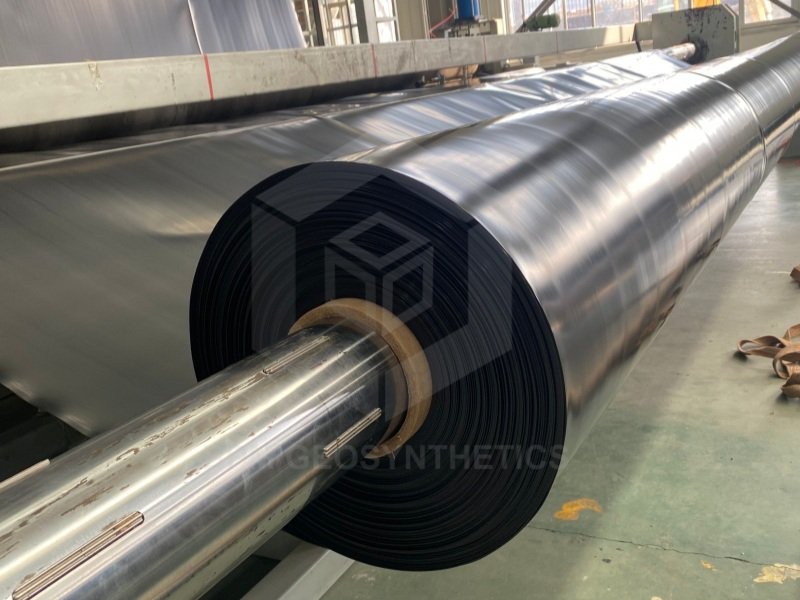
- It is then trimmed to desired widths (2m to 8m) and rolled for transportation.
d.Quality Testing
- Tensile strength, puncture resistance, and permeability tests ensure compliance with standards (e.g., GRI-GM13, ASTM D6392).
2. Advantages, Functions & Applications
2.1 Key Advantages of HDPE Liners
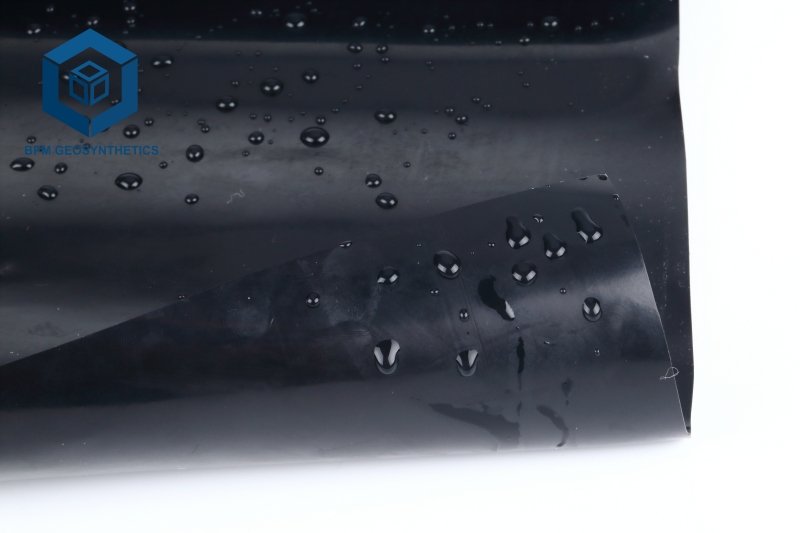
✔ Excellent Chemical Resistance – Resists acids, alkalis, oils, and solvents.
✔ High Impermeability – Extremely low permeability (≤1×10⁻¹³ cm/s) prevents leakage.
✔ UV & Weather Resistance – Carbon black protects against sunlight degradation.
✔ Durability – Long service life (15-45+ years) even in harsh environments.
✔ Puncture & Tear Resistance – High tensile strength (≥20 MPa) prevents damage.
✔ Cost-Effective – Lower long-term maintenance costs compared to alternatives like PVC or clay.
2.2 Primary Functions
High-Density Polyethylene (HDPE) impermeable liners serve three critical functions in environmental and industrial applications: containment, separation, and protection. These geomembranes are engineered to address modern challenges of pollution control, waste management, and infrastructure preservation.
The containment function is fundamental, as HDPE liners create impermeable barriers that prevent harmful pollutants from migrating into soil and groundwater. This is particularly vital in landfills, mining operations, and wastewater treatment, where hazardous substances must be securely confined.
Equally important is the separation role, where liners isolate waste materials from surrounding ecosystems. By acting as a reliable partition, they prevent cross-contamination between different material layers, ensuring environmental compliance and long-term site integrity.
Lastly, HDPE liners provide essential protection for infrastructure. Their chemical resistance and durability shield structures from corrosive substances, extreme weather, and mechanical damage. This protective quality makes them indispensable in industrial settings, including secondary containment systems and agricultural storage.
Together, these three functions make HDPE liners a versatile solution for environmental protection and engineering projects. Their ability to simultaneously contain, separate, and protect demonstrates why they are the material of choice for applications requiring long-term reliability and environmental safety.
2.3 Applications
High-density polyethylene (HDPE) impermeable liners serve critical containment functions across multiple industries due to their exceptional durability and chemical resistance. These versatile geomembranes find extensive application in four primary sectors: environmental protection, water management, mining/industrial operations, and agriculture.
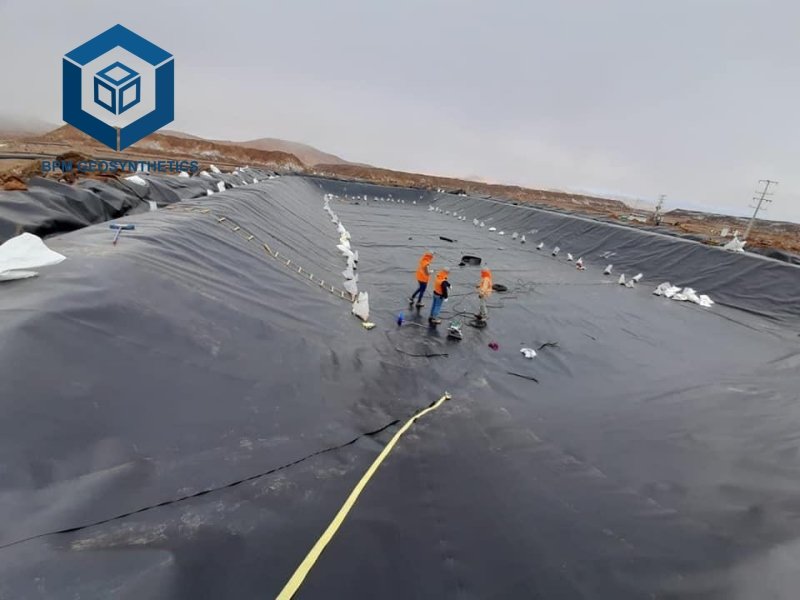
HDPE impermeable liner are extensively used as landfill liners and caps, creating impermeable barriers that prevent leachate from contaminating surrounding soil and groundwater. Wastewater treatment facilities utilize these liners in lagoons to contain potentially harmful effluents, while hazardous waste containment systems rely on HDPE’s chemical resistance to isolate dangerous materials from the environment.
HDPE impermeable liner are commonly installed in reservoirs, ponds, and canals to prevent water loss through seepage. The aquaculture industry benefits from HDPE-lined ponds that maintain water quality and volume, while decorative lakes in parks and residential areas use these liners for both functional and aesthetic purposes.
Heap leach pads in mining operations use these liners to contain chemical solutions during metal extraction processes. In oil and gas operations, HDPE serves as reliable fluid barriers for spill containment. Industrial facilities install them as secondary containment systems beneath storage tanks to prevent environmental contamination in case of leaks or spills.
Agricultural applications of HDPE liners have grown significantly in recent years. Farmers use them to line irrigation ponds, ensuring efficient water conservation and distribution. Biogas digesters, which convert organic waste into renewable energy, incorporate HDPE liners to create gas-tight containment systems that maximize methane capture.
These diverse applications demonstrate HDPE liners’ adaptability to different environmental and operational conditions. Their resistance to ultraviolet radiation, extreme temperatures, and chemical degradation makes them suitable for both exposed and buried installations. The material’s flexibility allows for installation in various terrains, while its long service life (typically 20-50 years) provides cost-effective, sustainable solutions. As environmental regulations become more stringent and water conservation grows in importance, the demand for reliable containment solutions like HDPE liners continues to expand across these key industries.
3. Are HDPE liners recyclable or eco-friendly at the end of their lifespan?
HDPE liners are technically recyclable but face practical challenges in becoming truly eco-friendly. While HDPE (High-Density Polyethylene) is a thermoplastic that can be melted and reprocessed into new products like plastic lumber or recycled geomembranes, contamination from hazardous residues, material degradation, and limited recycling infrastructure often hinder the process.
Despite these challenges, HDPE liners offer significant environmental benefits during their use. They have a long lifespan (20-50+ years), preventing pollutants from leaching into soil and water and reducing the need for frequent replacements. However, improper disposal can lead to microplastic pollution, and their fossil fuel dependency remains a concern.
To enhance sustainability, choosing liners with recycled content, designing for easier recycling, and partnering with specialized recyclers can make a difference. Proper end-of-life management is crucial to minimize environmental impact and maximize the eco-friendliness of HDPE liners
Summary
High-Density Polyethylene (HDPE) impermeable liners are engineered geomembranes designed to provide superior fluid containment and environmental protection. These synthetic barriers are manufactured from high-grade HDPE resin combined with carbon black and stabilizers, creating a durable material with exceptional chemical resistance and longevity (typically 20-50 years). The manufacturing process involves extrusion and calendering to produce sheets with consistent thickness (0.5-3mm) and extremely low permeability (≤1×10⁻¹³ cm/s).
HDPE liners serve three primary functions: containment (preventing pollutant migration), separation (isolating waste materials), and protection (shielding structures from corrosive elements). Their versatility makes them ideal for diverse applications including landfill caps, wastewater treatment lagoons, mining operations, agricultural water storage, and industrial secondary containment. Compared to alternatives like PVC or clay, HDPE offers superior puncture resistance, UV stability, and installation flexibility across varying terrains.
While technically recyclable, practical recycling faces challenges due to potential contamination and material degradation. Nevertheless, their extended service life and pollution prevention capabilities make them an environmentally preferable choice for many containment applications. Proper installation with welded seams and protective layers ensures optimal performance, making HDPE liners a cost-effective solution for long-term environmental protection and industrial containment needs.