Engineers and construction professionals frequently choose fiberglass geogrid for its exceptional tensile strength and high modulus properties, making it a popular solution for pavement reinforcement and crack control. However, like any construction material, fiberglass geogrid comes with inherent limitations that can significantly impact project success. Understanding these disadvantages proves essential for proper material selection and avoiding costly failures. While fiberglass geogrid excels in specific applications such as asphalt overlay reinforcement, its brittle nature, susceptibility to alkaline environments, and installation challenges can create serious problems when applied incorrectly. This comprehensive analysis explores the various disadvantages of fiberglass geogrid across multiple categories, helping engineers, contractors, and procurement professionals make informed decisions about when to use—and when to avoid—this reinforcement material.
1. Material Properties and Vulnerability
1.1 How does fiberglass geogrid react to alkaline environments (like concrete or lime-stabilized soil)?
Fiberglass geogrid demonstrates significant vulnerability when exposed to alkaline environments, representing one of its most critical limitations. The glass fibers that constitute the geogrid’s reinforcing elements undergo chemical degradation when confronted with high-pH conditions commonly found in construction projects. Cement-stabilized bases, lime-treated soils, and Portland cement concrete all create alkaline environments with pH levels typically exceeding 11. In these conditions, the silica network that gives glass fibers their strength begins to dissolve, leading to progressive deterioration of the geogrid’s structural integrity.
This chemical reaction does not occur overnight but progresses steadily over time, potentially compromising the reinforcement function years after installation. Engineers working on projects involving cementitious materials must carefully evaluate this risk, as standard fiberglass geogrid may lose substantial tensile strength within the design life of the structure. The severity of degradation depends on factors including alkali concentration, temperature, moisture availability, and exposure duration.
1.2 What is the level of alkali resistance in standard fiberglass geogrids?
Standard fiberglass geogrids exhibit poor alkali resistance without special protective treatments. Testing demonstrates that uncoated or inadequately coated fiberglass geogrids can lose fifty percent or more of their tensile strength within months when embedded in high-pH environments.
Manufacturers attempt to mitigate this vulnerability through protective coatings, typically applying PVC, acrylic, or bituminous polymer coatings to shield the glass filaments. However, these coatings provide only partial protection. Damage to the coating during installation, incomplete coverage, or coating degradation over time can expose the underlying glass fibers to alkaline attack. Even with premium coatings, fiberglass geogrid remains more susceptible to alkali damage than alternative materials like polyester, which offers superior chemical resistance in alkaline soil conditions.
2. Mechanical and Handling Limitations
2.1 How susceptible is fiberglass geogrid to damage during installation (e.g., construction traffic, aggregate sharpness)?
Fiberglass geogrid is highly susceptible to installation damage due to brittle glass filaments. Sharp aggregates can cut fibers, and construction equipment can crush ribs, reducing load capacity. Even careful crews must maintain thick cover before vehicle access.
This fragility demands stricter quality control and contractor training. Projects with rough aggregate or limited access face a heightened risk of damage compromising long-term performance.
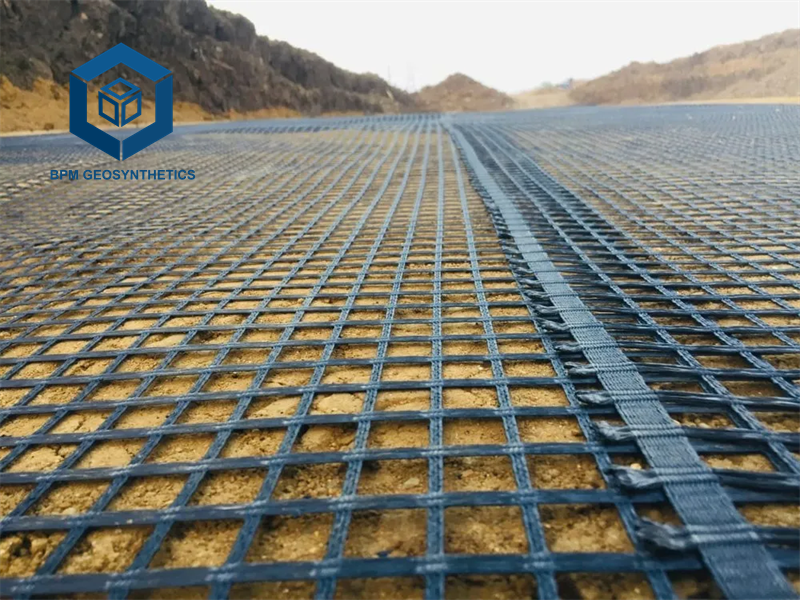
2.2 What is the elongation at break for fiberglass, and why is low elongation a disadvantage in certain soil conditions?
Fiberglass geogrid has extremely low elongation at break (three percent or less). While beneficial for immediate stress transfer in pavements, this creates serious disadvantages in soil reinforcement.
Soft soils typically settle five to ten percent under load, exceeding fiberglass capacity and causing rupture before reinforcement engages. Polyester or polypropylene geogrids with eleven to fifteen percent elongation accommodate settlement while maintaining integrity, making them superior for soft ground improvement.
2.3 How does the shear resistance of fiberglass compare to other reinforcement materials like polypropylene or polyester?
Fiberglass geogrid exhibits lower shear resistance than polymer alternatives, especially at rib intersections. Manufacturing creates junctions held primarily by coating rather than monolithic connections, which may separate under shear loading and compromise load transfer.
Polyester and polypropylene geogrids feature more robust junctions through mechanical interlocking or continuous material connections. For applications requiring multi-directional load transfer, projects must verify junction strength test data rather than assuming rib strength represents system performance.
3. Durability and Long-Term Performance
3.1 How does fiberglass geogrid perform under long-term creep or sustained load conditions?
Fiberglass geogrid offers excellent creep resistance, with glass fibers showing minimal deformation under sustained loads. This makes it suitable for applications requiring dimensional stability.
However, this advantage carries significant caveats. Stress rupture (static fatigue) replaces creep as the failure mechanism—glass fibers can suddenly break under sustained load without warning deformation. Engineers must apply substantial reduction factors to account for this risk, while polyester geogrids offer more predictable long-term behavior for permanent soil reinforcement.
3.2 What are the risks of “stress corrosion” or static fatigue in glass fibers over time?
Stress corrosion, or static fatigue, occurs when sustained tensile stress combines with moisture and chemicals to attack glass fibers. Water molecules cause slow crack growth, leading to sudden, unexpected failure.
Alkaline environments like lime-stabilized soil dramatically accelerate this process. Unlike gradual creep deformation that provides warning, stress corrosion failures happen abruptly when cracks reach critical size.
Quantifying this long-term risk proves challenging, as accelerated lab tests may not represent decades of field exposure. For critical infrastructure with hundred-year design lives, engineers often prefer polyester geogrid with better-understood long-term behavior.
3.3 Is fiberglass geogrid suitable for environments with fluctuating temperatures or freeze-thaw cycles?
Fiberglass fibers offer excellent thermal stability, maintaining properties across wide temperature ranges without softening or becoming brittle like polymers.
However, the complete geogrid system faces temperature-related vulnerabilities. Differential expansion between glass fibers and polymer coatings can cause micro-cracking during temperature cycles, potentially reducing protective effectiveness.
For pavement applications, freeze-thaw cycles may propagate reflective cracks despite reinforcement. Engineers should verify product testing for expected temperature ranges, particularly in northern climates with severe freeze-thaw exposure.
4. Application-Specific Disadvantages
4.1 Why might fiberglass geogrid be a poor choice for soft soil subgrade reinforcement?
Fiberglass geogrid is poorly suited for soft soil reinforcement due to a fundamental mismatch with soil behavior. Soft soils undergo substantial deformation—often five to ten percent settlement—which far exceeds fiberglass’s three percent elongation limit. When the ground settles, the geogrid cannot stretch sufficiently and ruptures before soil movements complete. Additionally, fiberglass stiffness prevents it from conforming to uneven subgrades, creating voids that reduce soil interlock. Polymer alternatives like polyester or polypropylene offer eleven to fifteen percent elongation, accommodating settlement while maintaining integrity, making them vastly superior for soft ground improvement.
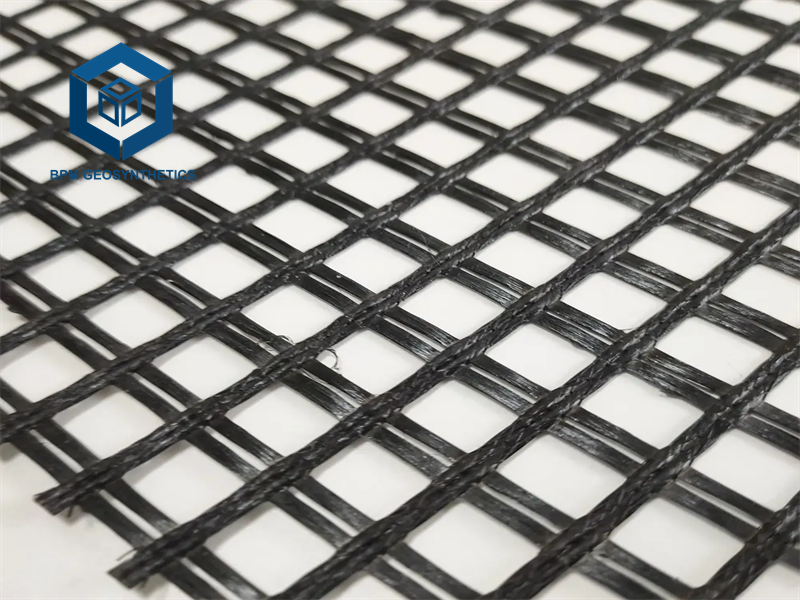
4.2 In what scenarios does the high tensile modulus of fiberglass become a disadvantage rather than a benefit?
Fiberglass geogrid’s high stiffness, beneficial in pavement overlays, becomes a significant disadvantage in other contexts. In base reinforcement over variable subgrades, its inability to elongate concentrates stress at transition zones, potentially causing premature localized failure instead of distributing loads evenly. When placed over irregular foundations, stiff fiberglass tends to bridge across depressions, creating voids that reduce soil-geogrid interlock and compromise load transfer. Furthermore, for structures facing seismic or dynamic stresses, fiberglass performs poorly due to its brittle nature and lack of post-peak strength, absorbing minimal energy during failure. More flexible polymer alternatives provide superior toughness, accommodate differential movement, and maintain ground contact in these challenging conditions.
4.3 Can fiberglass geogrid be effectively used in drainage applications without risk of clogging or degradation?
Fiberglass geogrid performs poorly in drainage applications. Its small apertures, designed for asphalt interlock, cannot provide adequate soil filtration. The close rib spacing can trap particles, causing clogging and reducing water flow. Additionally, exposure to water risks stress corrosion of the glass fibers. For projects requiring both reinforcement and drainage, engineers should specify composite materials that combine geogrid with a geotextile filter layer rather than using fiberglass alone.
5. Cost and Economic Considerations
5.1 Is fiberglass geogrid more expensive than its polymer-based alternatives?
Fiberglass geogrid sits mid-range in pricing (~8.5 CNY/m² for 100 kN/m grade), between cheaper polypropylene (3.6-4.8 CNY/m²) and polyester alternatives (~6.9 CNY/m²). However, unit costs alone mislead—fiberglass justifies its price for asphalt crack control where it excels, but risks premature failure in soil applications. Procurement should prioritize application suitability over initial savings.
5.2 Does the need for specialized coatings or protective layers increase the overall project cost?
Protective coating costs for fiberglass geogrid are embedded in the product price (approximately 8.5 CNY/m²), not listed separately. However, indirect expenses arise when standard coatings prove inadequate for highly alkaline soils or suffer installation damage, necessitating premium coatings, thicker cover layers, or additional protection measures. The critical economic factor remains appropriate application selection—using fiberglass in unsuitable conditions risks replacement costs far exceeding initial savings, making proper material specification more impactful than direct coating expenses.
5.3 Are there hidden costs associated with potential replacement or repair due to installation damage?
Installation damage to fiberglass geogrid creates substantial hidden costs that prudent planners must consider. Unlike forgiving polymer alternatives, damaged fiberglass often requires complete replacement, triggering expenses beyond materials—including fill excavation, project delays, and contractor claims. Field studies confirm its higher vulnerability to construction abuse, necessitating stricter quality controls, extensive inspections, and reduced crew productivity, all translating to real costs absent from material pricing.
Risk severity escalates with project scale, rough aggregates, multiple trades, or tight schedules. Conservative specifications may demand thicker cover layers or additional protection, further increasing costs. Alternatively, selecting polymer geogrids with proven installation robustness eliminates these risks entirely, potentially reducing total project costs despite higher unit prices. This trade-off between initial material expense and long-term risk mitigation warrants careful evaluation during material selection.
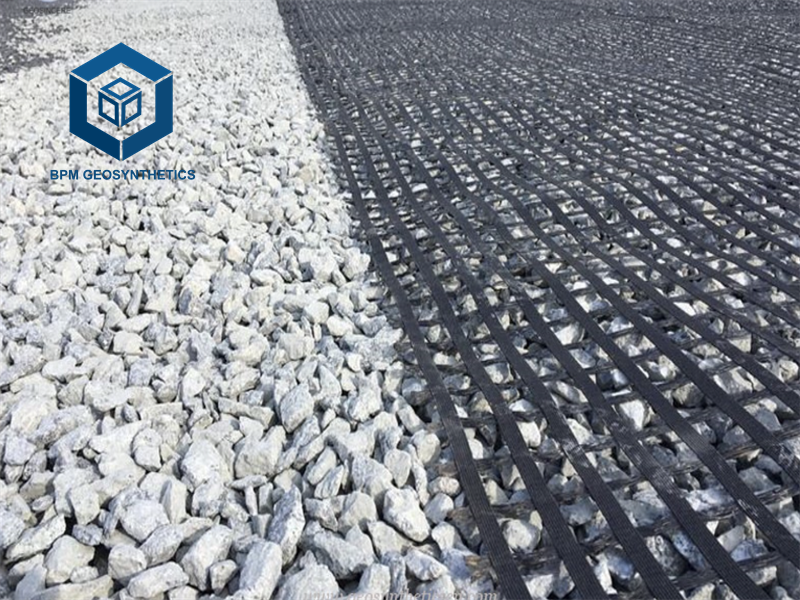
Conclusion
Fiberglass geogrid offers high tensile strength and excellent creep resistance, making it ideal for asphalt pavement reinforcement and crack control, as recognized by BPM Geosynthetics. However, its vulnerability to alkaline environments, brittle nature with only 3% elongation at break, and susceptibility to installation damage limit its use in soft soil or cement-treated applications. Stress corrosion risks further restrict its long-term reliability. Consequently, experienced engineers reserve fiberglass geogrid primarily for pavement projects while preferring polyester alternatives for permanent soil reinforcement requiring 75-120 year design lives. Successful outcomes depend on matching material properties to specific application demands.