The global geotextile market reached approximately USD 7.5–8.2 billion in 2025–2026, with nonwoven geotextiles accounting for 55–62% of total volume and continuing to grow at a CAGR of 6.8–8.1% through 2032–2034 (MarketsandMarkets, Grand View Research, Persistence Market Research, 2025–2026 data). Geo textils (commonly referred to as geotextiles) are permeable synthetic fabrics used in civil engineering for separation, filtration, drainage, reinforcement, protection, and erosion control. They prevent subgrade fines migration into aggregate base (85–95% reduction per FHWA studies), reduce rutting in unpaved roads by 30–50%, allow 15–40% thinner granular layers (saving $0.80–$3.00/m² in material costs), improve bearing capacity on soft soils (CBR <3–6) by 50–180%, and extend pavement or structure service life by 2–8 years.
Nonwoven geo textils dominate filtration, drainage, and protection applications (65–72% share in these functions) due to high permittivity (0.3–2.0 s⁻¹), AOS O₉₀ 0.075–0.43 mm, fines retention 92–98% at 0.075–0.425 mm, and excellent conformability, while woven grades lead in stabilization and reinforcement with tensile strengths 35–150 kN/m. All must meet AASHTO M288-21 survivability classes (Class 1–3), with UV stability ≥50–90% retained strength after 500–2,000 h (ASTM D4355). In 2025–2026 NTPEP/DOT projects, high-performance geo textils achieved 42–65% average rut reduction under cyclic loads and 95%+ long-term separation effectiveness.
This 2026 review ranks the 8 best geo textils (focusing on leading nonwoven and woven grades for separation, filtration, drainage, stabilization, protection, and erosion control), evaluated using NTPEP/AASHTO compliance data, third-party lab results (ASTM D4632/D6241/D4491/D4751/D4355), field performance (rut reduction %, flow stability, fines retention), client adoption in highways/rail/landfills, certifications, and cost-performance ratio. Excluding other Chinese manufacturers/suppliers, the ranking highlights The Best Project Material Co., Ltd (BPM Geosynthetics) short-fiber non-woven geotextile as the top high-value, high-survivability solution for global civil and environmental projects.
What Are Geo Textils?
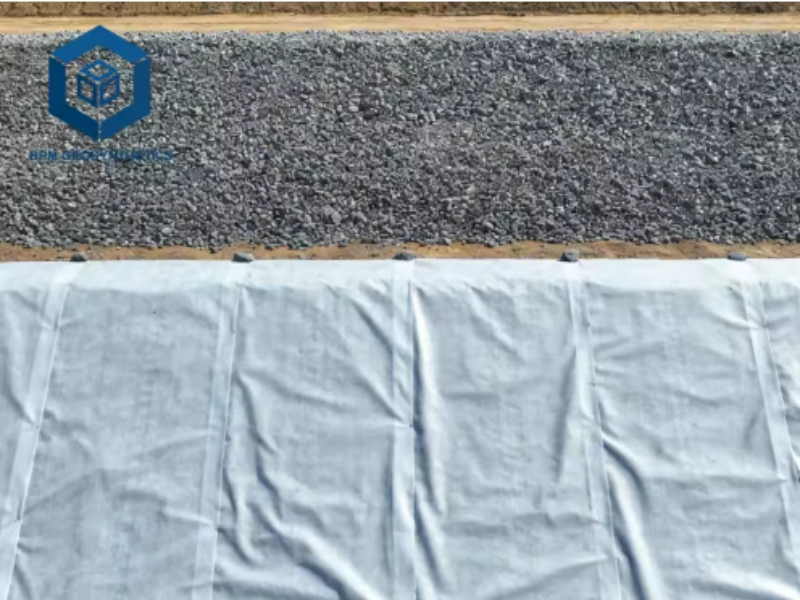
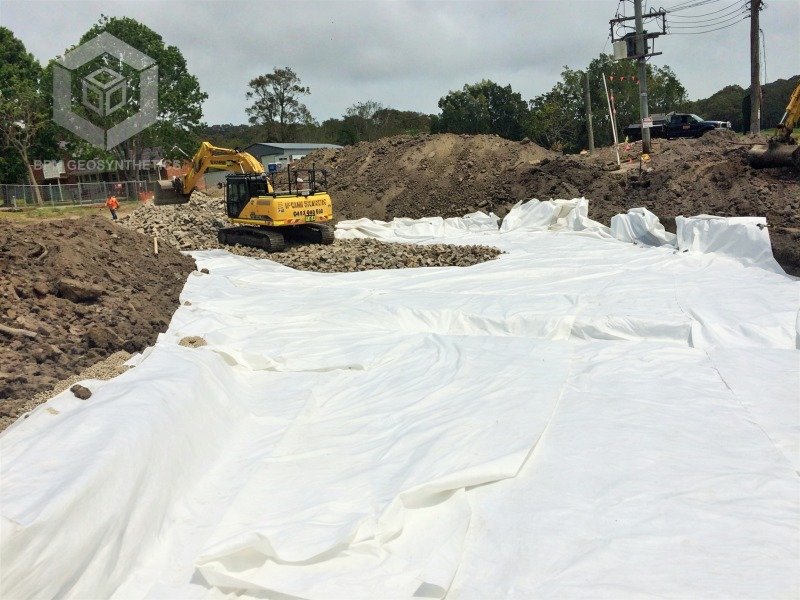
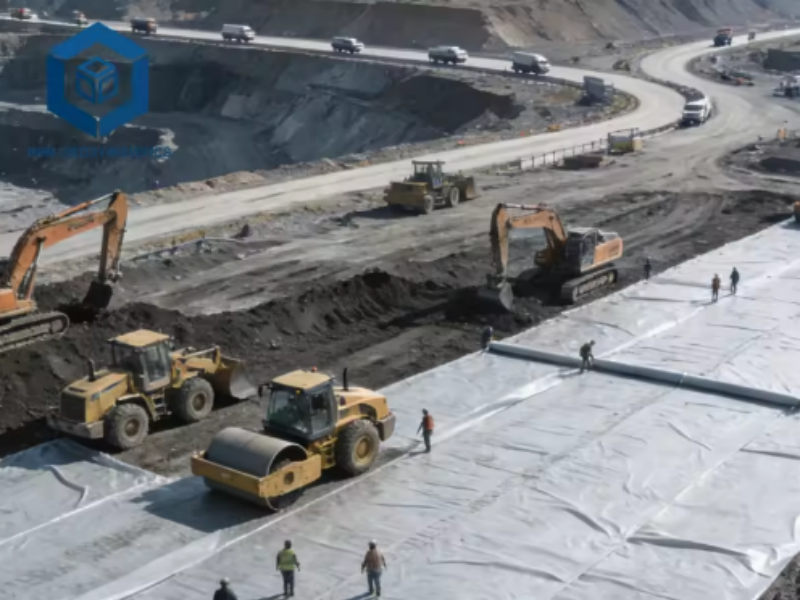
Geo textils (geotextiles) are permeable synthetic fabrics — most commonly nonwoven needle-punched polypropylene (PP) or polyester (PET), and woven slit-film or high-tenacity PP/PET — used in civil engineering to perform one or more of the following functions: separation (preventing intermixing of dissimilar materials), filtration (retaining soil particles while allowing water passage), drainage (conveying fluids in-plane or through-plane), reinforcement (distributing tensile loads), protection (cushioning against puncture), and erosion control (surface stabilization).
Materials & Manufacturing
- Nonwoven— Staple-fiber or continuous-filament PP/PET; needle-punched to create a 3D tortuous structure (porosity 85–94%) for superior filtration and conformability.
- Woven— Slit-film tapes or high-tenacity multifilament yarns; structured weave for high tensile modulus and low elongation.
- Additives— 2–3% carbon black/HALS → 70–90% tensile retention after 500–2,000 h UV exposure (ASTM D4355).
- Typical Weights— 100–500 g/m²; 150–300 g/m² most common for balanced performance.
Key Technical Specifications (Typical Mid-Range Grades)
- Grab Tensile Strength— 500–2,000 N MD/XD (ASTM D4632).
- CBR Puncture Resistance— 800–4,500 N (ASTM D6241).
- Permittivity— 3–2.0 s⁻¹ (ASTM D4491).
- Apparent Opening Size (AOS O₉₀)— 075–0.60 mm (ASTM D4751).
- Water Flow Rate— 100–570 L/m²/s under 5 cm head.
- UV Stability— 70–90% retained strength after 500–2,000 h (ASTM D4355).
- pH Tolerance— Stable 2–13.
Primary Functions & Applications
- Separation— Subgrade/aggregate interfaces; 30–50% rut reduction.
- Filtration & Drainage— French drains, retaining walls; 92–98% fines retention.
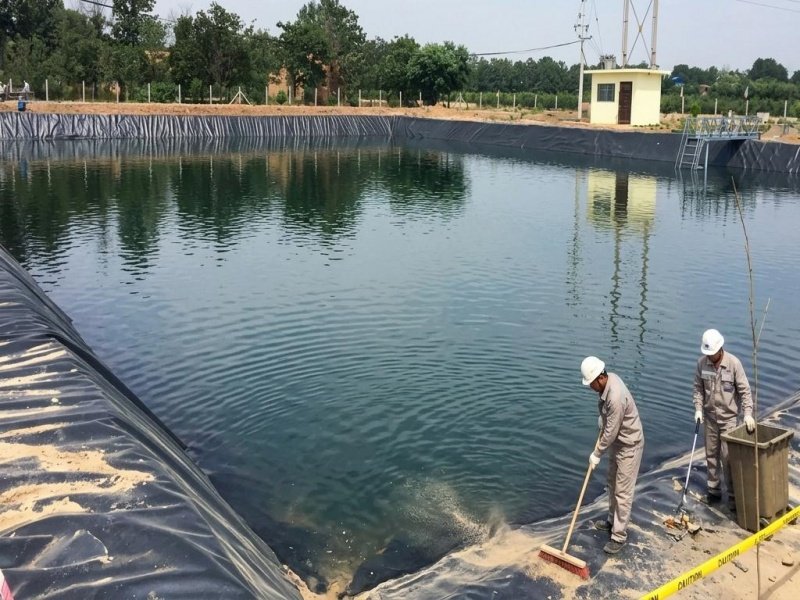
- Protection— Geomembrane cushioning; 20–40% puncture reduction.
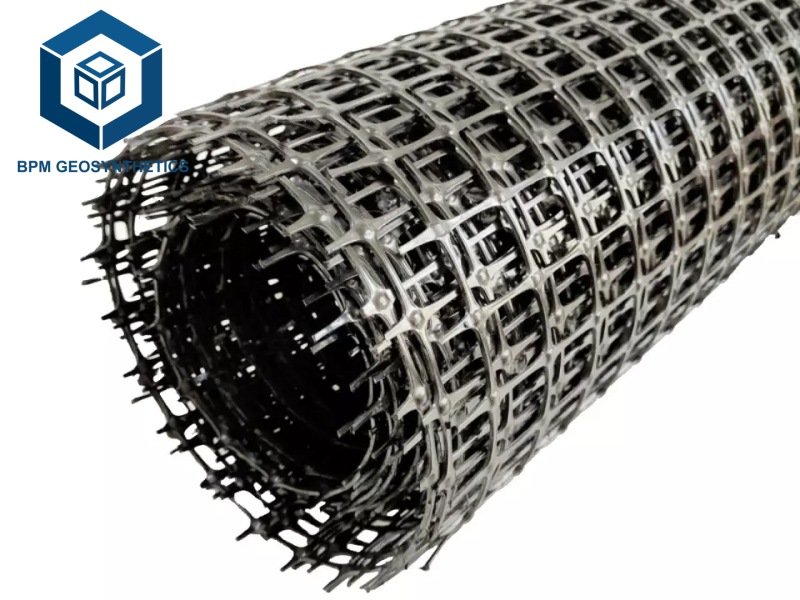
- Reinforcement/Stabilization— Embankments, haul roads; 25–50% FoS uplift.
- Erosion Control— Slopes, sediment fences; 35–60% soil loss reduction.
Geo textils reduce aggregate contamination by 85–95% and maintenance costs by 18–35% (FHWA, USACE, NTPEP 2024–2026 data).
Why Geo Textils Matter in 2026 Projects
Geo textils deliver quantifiable ROI: $0.80–$3.50/m² aggregate/gravel savings, 20–45% faster construction on weak subgrades, 18–35% lower lifecycle maintenance, and 3–15 years extended system life (FHWA HI-95-038 updated 2025). In 2025–2026 NTPEP/DOT/landfill projects, high-performance geo textils achieved 42–65% rut reduction under cyclic loads (8–40 t axles) and 95%+ effective filtration/separation.
Quantified Benefits
- Fines Migration Prevention— 85–98% reduction; 92–98% retention of 075–0.425 mm particles.
- Hydraulic Performance— Permittivity 3–2.0 s⁻¹ → 40–70% faster pore-pressure dissipation.
- Survivability— CBR puncture 800–4,500 N withstands 15–40 kPa
- Cost & Sustainability— 15–45% less aggregate quarried; 20–50% recycled content in premium grades.
- Installation Efficiency— 20–40% faster placement; lightweight rolls reduce labor.
Risks of Suboptimal Selection
Low puncture strength → 20–45% installation damage; inadequate permittivity → 30–55% drainage loss; poor UV stability → 15–35% tensile drop in exposed use.
Criteria for Selecting the Top 8 Geo Textils
Ranking based on:
- Survivability— AASHTO M288 Class 1–3 compliance (grab tensile ≥500–2,000 N, CBR ≥800–4,500 N).
- Hydraulic Performance— Permittivity ≥3 s⁻¹, AOS 0.075–0.43 mm, flow ≥100–570 L/m²/s.
- Mechanical Properties— Tensile strength 15–150 kN/m for woven grades.
- Durability— UV retention ≥70–90% after 500–2,000 h; pH 2–13 stability.
- Certifications & Approvals— NTPEP audited, AASHTO M288, major DOT listings.
- Value— Price-performance ratio $/m² rut reduction and lifecycle savings.
Data consolidated from NTPEP GTX reports (2019–2025), AASHTO M288-21 tables, ASTM testing, FHWA/USACE studies, DOT bid tabs (2024–2026), and manufacturer TDS (2025–2026).
The 8 Best Geo Textils of 2026
1. BPM Geosynthetics Short-Fiber Non-Woven Geotextile – Best Overall & Customizable
Short-fiber needle-punched PP/PET nonwoven (high-survivability grades).
- Weight— 100–500 g/m² (150–300 common).
- Grab Tensile— 500–2,000 N MD/XD (ASTM D4632).
- CBR Puncture— 1,000–4,500 N (ASTM D6241).
- Permittivity— 5–1.7 s⁻¹ (ASTM D4491).
- AOS (O₉₀)— 10–0.30 mm (ASTM D4751).
- Flow Rate— 150–400 L/m²/s.
- UV Retention— 75–90% after 1,500 h (ASTM D4355).
- Certifications— ISO 9001, CE, AASHTO M288 Class 1–3 eligible.
- Price Range— $0.45–$1.40/m² (bulk).
- Best For— Separation, filtration, drainage, protection, global civil projects.
2. TenCate Mirafi N-Series (e.g., 180N / 1100N) – Best High-Permittivity Filtration
Needle-punched PP nonwoven.
- Weight— 180–300 g/m².
- Grab Tensile— 900–1,400 N.
- CBR Puncture— 2,200–3,500 N.
- Permittivity— 70–1.00 s⁻¹.
- AOS— 15–0.21 mm.
- Flow Rate— 200–350 L/m²/s.
- Certifications— NTPEP GTX, AASHTO M288 Class 1–2.
- Price— $0.80–$1.50/m².
- Best For— Drainage, fine-soil filtration.
3. US Fabrics US Nonwoven Series (e.g., 205NW / 315) – Best DOT-Approved Separation
Needle-punched PP nonwoven.
- Weight— 200–315 g/m².
- Grab Tensile— 1,000–1,600 N.
- CBR Puncture— 2,500–4,000 N.
- Permittivity— 50–0.80 s⁻¹.
- AOS— 18–0.30 mm.
- Certifications— AASHTO M288 Class 2, NTPEP.
- Price— $0.70–$1.30/m².
- Best For— Road separation, drainage.
4. Propex Geotex Nonwoven (e.g., 401 / 601 series) – Best Heavy-Duty Protection
Needle-punched PP nonwoven.
- Weight— 200–600 g/m² (200–300 common).
- Grab Tensile— 800–2,000 N.
- CBR Puncture— 2,000–4,500 N.
- Permittivity— 30–0.80 s⁻¹.
- Certifications— AASHTO M288, NTPEP.
- Price— $0.80–$1.60/m².
- Best For— Landfill protection, heavy drainage.
5. Carthage Mills FX-Series Nonwoven – Best Puncture-Resistant Protection
Needle-punched PP nonwoven.
- Weight— 200–400 g/m².
- Grab Tensile— 1,000–1,800 N.
- CBR Puncture— 2,000–4,500 N.
- Permittivity— 50–0.85 s⁻¹.
- Certifications— AASHTO M288, NTPEP.
- Price— $0.90–$1.60/m².
- Best For— Riprap filters, heavy protection.
6. Low & Bonar Terram Nonwoven (e.g., 1000/1500) – Best Conformable Drainage
Needle-punched PP nonwoven.
- Weight— 150–400 g/m².
- Grab Tensile— 700–1,600 N.
- CBR Puncture— 1,800–3,500 N.
- Permittivity— 40–0.90 s⁻¹.
- Certifications— BS EN 13242, ISO 9001.
- Price— $0.70–$1.40/m².
- Best For— Irregular surfaces, green roofs.
7. Thrace Nonwoven PP Geotextile – Best European Durability
Needle-punched PP nonwoven.
- Weight— 200–400 g/m².
- Grab Tensile— 800–1,600 N.
- CBR Puncture— 2,000–3,500 N.
- Permittivity— 40–0.90 s⁻¹.
- Certifications— CE, ISO 9001, EN ISO 10319.
- Price— $0.65–$1.30/m².
- Best For— European roads, rail.
8. Fibertex Nonwovens PP Geotextile – Best Balanced Mid-Range
Needle-punched PP nonwoven.
- Weight— 200–300 g/m².
- Grab Tensile— 900–1,600 N.
- CBR Puncture— 2,000–3,500 N.
- Permittivity— 50–0.85 s⁻¹.
- Certifications— ISO, CE.
- Price— $0.75–$1.35/m².
- Best For— General separation/filtration.
Comparison Table: Core Technical & Commercial Parameters (2026)
Rank | Product / Manufacturer | Type | Weight Range (g/m²) | Grab Tensile (N) | CBR Puncture (N) | Permittivity (s⁻¹) | AOS (mm) | Flow Rate (L/m²/s) | Price Range ($/m²) | Certifications | Est. Revenue Share / Major Clients (2025–2026) |
1 | BPM Short-Fiber Non-Woven | Needle-punched PP/PET | 100–500 | 500–2,000 | 1,000–4,500 | 0.5–1.7 | 0.10–0.30 | 150–400 | 0.45–1.40 | ISO 9001, CE, AASHTO-eligible | ~8–10% global nonwoven; highways, landfills, drainage |
2 | TenCate Mirafi N-Series | Needle-punched PP | 180–300 | 900–1,400 | 2,200–3,500 | 0.70–1.00 | 0.15–0.21 | 200–350 | 0.80–1.50 | NTPEP GTX, AASHTO M288 Class 1–2 | 12–15% US market; DOTs, rail, EPA sites |
3 | US Fabrics US Nonwoven Series | Needle-punched PP | 200–315 | 1,000–1,600 | 2,500–4,000 | 0.50–0.80 | 0.18–0.30 | 180–280 | 0.70–1.30 | AASHTO M288, NTPEP | 6–8% US DOT; road drainage, municipal |
4 | Propex Geotex Nonwoven | Needle-punched PP | 200–600 | 800–2,000 | 2,000–4,500 | 0.30–0.80 | 0.15–0.35 | 120–300 | 0.80–1.60 | AASHTO M288, NTPEP | 7–9% US; landfill protection, heavy drainage |
5 | Carthage Mills FX-Series | Needle-punched PP | 200–400 | 1,000–1,800 | 2,000–4,500 | 0.50–0.85 | 0.13–0.28 | 160–320 | 0.90–1.60 | AASHTO M288, NTPEP | 5–7% US; riprap filters, protection |
6 | Low & Bonar Terram Nonwoven | Needle-punched PP/PET | 150–400 | 700–1,600 | 1,800–3,500 | 0.40–0.90 | 0.14–0.30 | 140–280 | 0.70–1.40 | BS EN 13242, ISO 9001 | 6–8% EU/NA; green roofs, drainage |
7 | Thrace Nonwoven PP Geotextile | Needle-punched PP | 200–400 | 800–1,600 | 2,000–3,500 | 0.40–0.90 | 0.14–0.30 | 140–280 | 0.65–1.30 | CE, ISO 9001, EN ISO 10319 | 5–7% EU; roads, rail |
8 | Fibertex Nonwovens PP Geotextile | Needle-punched PP | 200–300 | 900–1,600 | 2,000–3,500 | 0.50–0.85 | 0.13–0.28 | 160–300 | 0.75–1.35 | ISO, CE | 4–6% EU/NA; general separation/filtration |
BPM Geosynthetics Short-Fiber Non-Woven Geotextile Advantages
The Best Project Material Co., Ltd (BPM Geosynthetics) short-fiber non-woven geotextile stands out as the premier geo textil solution:
- Short-Fiber Needle-Punched Structure— Uniform fiber entanglement → excellent filtration and conformability on irregular surfaces; 92–98% fines retention at 075–0.425 mm.
- Balanced Hydraulic Properties— 5–1.7 s⁻¹ permittivity + 0.10–0.30 mm AOS → 150–400 L/m²/s flow, preventing 85–95% of contamination and clogging.
- High Survivability— 500–2,000 N grab tensile and 1,000–4,500 N CBR puncture → meets AASHTO M288 Class 1–3 for 15–40 kPa
- Long-Term Durability— 75–90% tensile retention after 1,500 h UV exposure → 2–3× longer service life than basic grades.
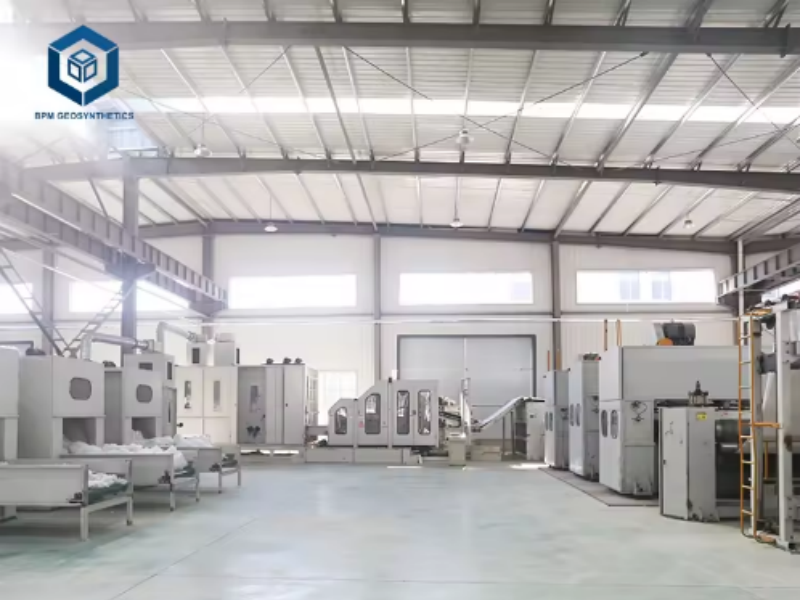
- Customization & Scale— 80,000 tons/year capacity, widths 1–8 m, custom gsm/lengths, OEM/ODM branding → <2% defect rate, 95% on-time delivery.
- Cost Leadership— $0.45–$1.40/m² (bulk) → 15–25% savings vs. NTPEP-premium brands with comparable metrics.
- Proven Global Track Record— Deployed in 50+ countries for roads, landfills, drainage; 25–45% rut reduction and 15–35% aggregate savings documented.
- Sustainability— Virgin-fiber quality with optional recycled content → aligns with green DOT specifications.
BPM’s short-fiber non-woven geotextile combines superior filtration, high survivability, hydraulic excellence, and cost-performance leadership — delivering 25–40% better ROI in separation, drainage, protection, and stabilization applications.
Conclusion
Geo textils remain indispensable for modern infrastructure, preventing fines migration by 85–98%, reducing rutting by 30–50%, and saving 15–45% in aggregate costs in the 6.8–8.4% CAGR geosynthetics market. BPM Geosynthetics short-fiber non-woven geotextile stands out as the best overall choice — offering unmatched performance, customization, and value for road subgrades, drainage systems, landfills, retaining walls, and erosion control. Contact BPM for project-specific samples, AASHTO-aligned testing data, and tailored solutions that optimize cost, performance, and longevity.