Introduction
Geotextile suppliers provide essential materials for civil engineering, construction, and environmental projects worldwide. These versatile fabrics serve critical functions including separation, filtration, drainage, reinforcement, and protection across diverse applications ranging from road construction to pond lining protection. The global geotextile market continues to grow, driven by infrastructure development, environmental regulations, and increasing awareness of sustainable construction practices. Selecting reliable geotextile suppliers ensures your project receives high-quality materials backed by professional support and quality documentation. This comprehensive guide explores how to identify and evaluate quality geotextile suppliers for your specific application.
Understanding Geotextile Types and Their Applications
Woven Geotextiles
Woven geotextiles are manufactured by weaving polypropylene or polyester yarns into stable, high-strength fabrics. The weaving process creates a regular pattern of warp (longitudinal) and weft (transverse) yarns, resulting in a fabric with excellent tensile properties. Woven geotextiles offer tensile strength ranging from 10 to 200+ kN/m depending on construction, low elongation under load of typically 10-15%, excellent dimensional stability, and good UV resistance with appropriate stabilizers.
Primary Applications:
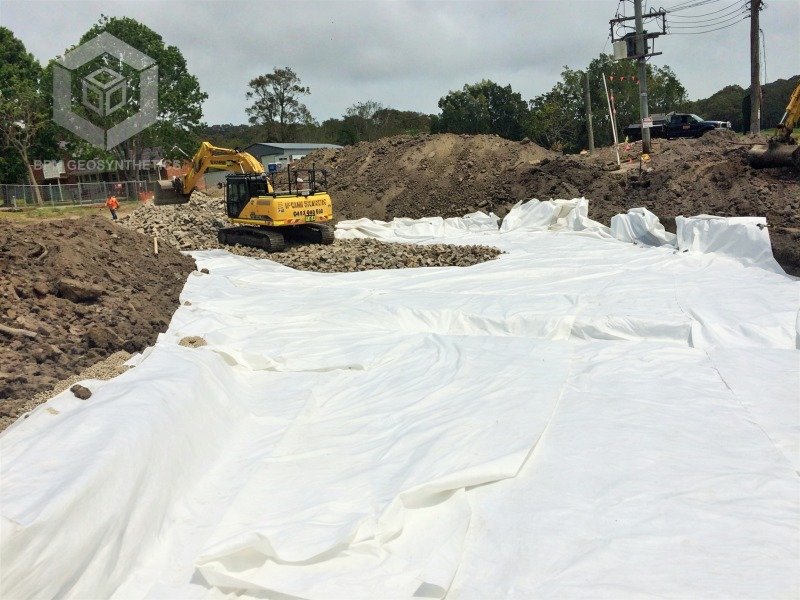
Road and Pavement Base Reinforcement: Woven geotextiles separate aggregate from subgrade, preventing intermixing that can weaken road structures. This extends pavement service life by up to 50% while reducing maintenance costs. The high tensile strength of woven geotextiles distributes loads across weaker subgrades, enabling construction on challenging soil conditions.
Embankment Stabilization: Woven geotextiles reinforce embankments and slopes, improving stability and enabling construction on soft foundations. Their high strength-to-weight ratio makes them efficient reinforcement materials.
Separation Layers: Woven geotextiles prevent intermixing of different soil layers, maintaining the integrity of engineered structures. This separation function is essential in road construction, railway ballast, and foundation applications.
Load Distribution: Woven geotextiles distribute loads across weak subgrades, reducing pressure on underlying soils. This application enables construction on marginal sites and reduces aggregate requirements.
Non-Woven Geotextiles
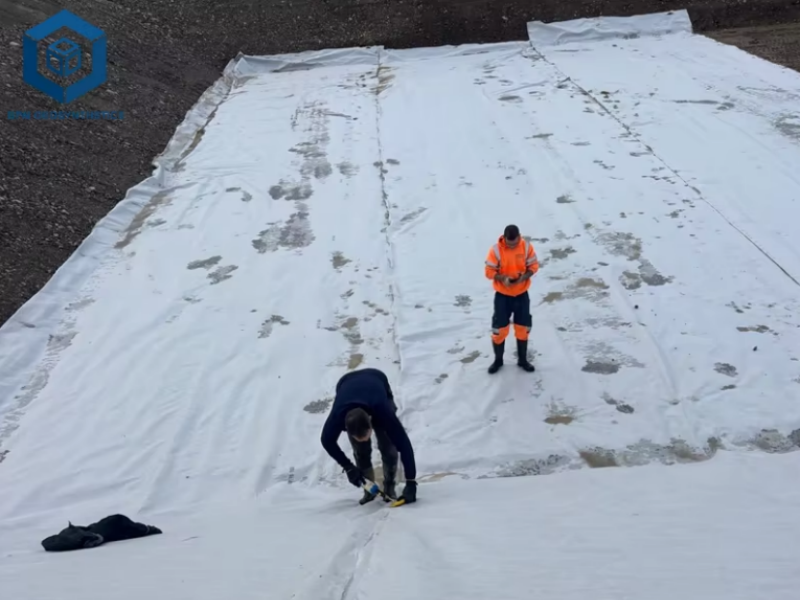
Non-woven geotextiles are manufactured through needle-punching or other bonding processes that create three-dimensional fabrics with excellent filtration and drainage properties. The needle-punching process uses thousands of barbed needles to mechanically entangle fibers into a cohesive fabric with interconnected pore networks. Non-woven geotextiles offer high permittivity and flow rates, excellent filtration performance, good puncture resistance, and a 3D structure for soil particle retention.
Primary Applications:
Drainage Systems: Non-woven geotextile fabrics wrap drainage pipes and line drainage trenches, allowing water flow while preventing soil infiltration. This maintains drainage efficiency over decades. The filtration performance prevents clogging while enabling rapid water transmission.
Erosion Control: On slopes and shorelines, non-woven geotextiles stabilize soil while allowing water drainage, preventing erosion and promoting vegetation. The fabric’s three-dimensional structure provides soil retention while enabling plant root penetration.
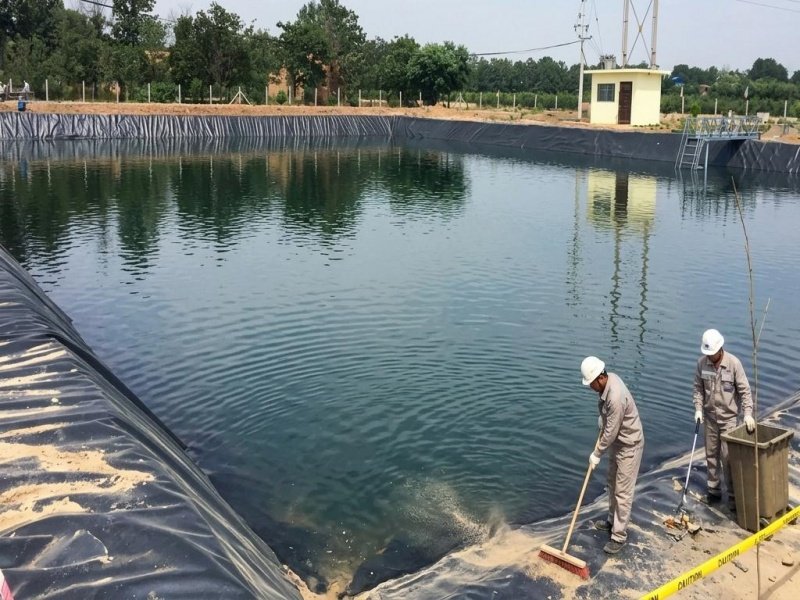
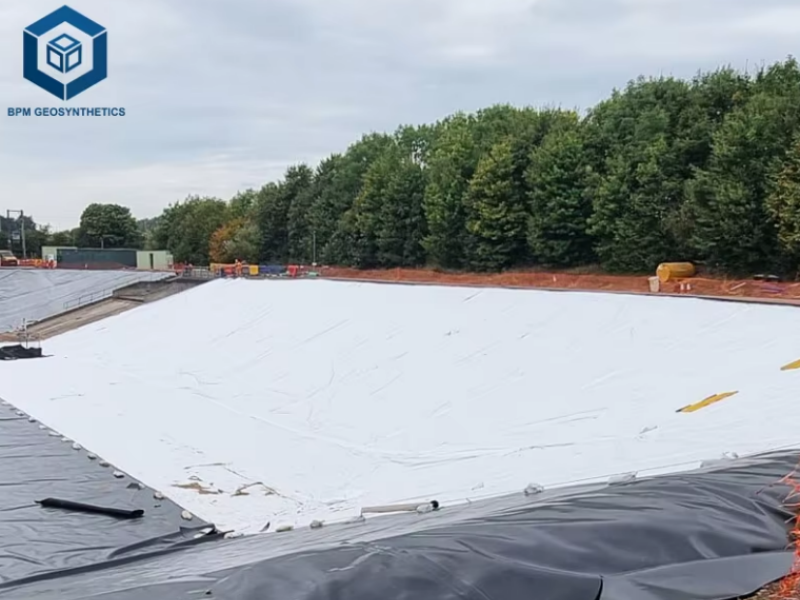
Pond Liner Protection: Non-woven geotextiles serve as underlayment beneath pond liners, protecting against puncture from sharp rocks and roots. The protective layer extends liner service life and prevents costly repairs. The drainage capability also prevents gas pressure buildup beneath the liner.
Retaining Wall Drainage: Non-woven geotextiles provide drainage behind retaining walls, relieving hydrostatic pressure and ensuring wall stability. The filtration performance prevents soil migration while enabling water discharge.
Woven vs. Non-Woven: Selection Guide
Application | Recommended Type | Reason |
Road base reinforcement | Woven | High tensile strength required |
Drainage filtration | Non-woven | Excellent permittivity |
Pond liner protection | Non-woven | Puncture protection and drainage |
Slope stabilization | Woven | Reinforcement capability |
Retaining wall drainage | Non-woven | Filtration and flow capacity |
Parking lot base | Woven | Load distribution |
What to Look for in Geotextile Suppliers
Product Range and Options
Quality geotextile suppliers offer comprehensive product ranges including various weights and thickness options, custom specifications, and specialized products. Products ranging from 100 to 1,000+ g/m² match different application requirements. Lighter fabrics suit filtration and drainage, while heavier fabrics provide reinforcement and protection. Suppliers should offer custom weights, widths, and packaging options to meet specific project requirements. Specialized products like geotextile bags for dewatering and sediment control provide additional application solutions.
Quality Certifications
Reliable geotextile suppliers maintain certifications verifying product quality:
ISO 9001: Quality management system certification ensuring consistent production quality and continuous improvement.
ISO 14001: Environmental management certification demonstrating commitment to environmental sustainability.
CE Marking: European market compliance confirming adherence to health, safety, and environmental protection standards.
ASTM Compliance: Conformance to industry test standards including ASTM D5261 for mass per unit area, ASTM D4491 for permittivity, and ASTM D4632 for grab tensile strength.
Manufacturing and Supply Capabilities
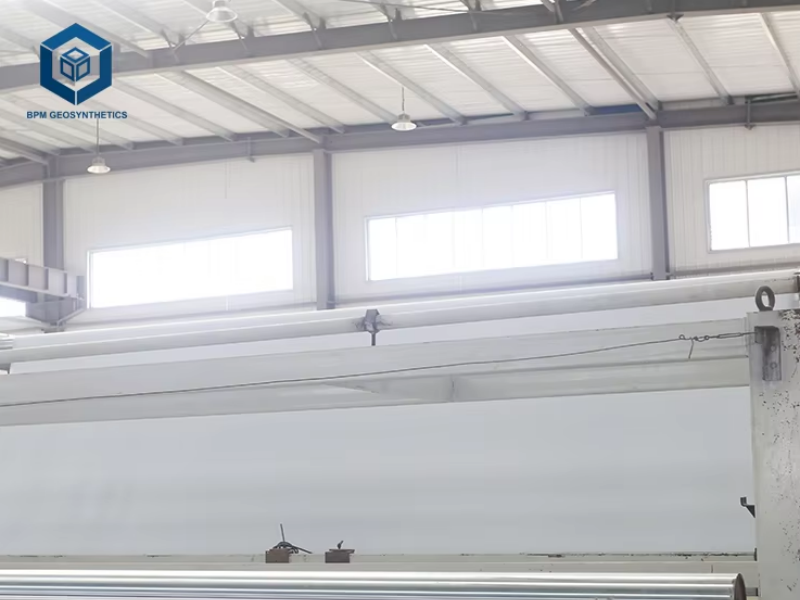
Production Technology: Modern manufacturing equipment ensures consistent product quality across production runs. Advanced needle-punching and weaving technologies produce fabrics with uniform properties. Quality control systems monitor production parameters and product characteristics throughout the manufacturing process.
Supply Chain Reliability: Quality suppliers maintain inventory and production capacity to meet project schedules, even for large-scale orders. Multiple production lines ensure capacity for peak demand periods.
Technical Support and Services
Professional geotextile suppliers provide product selection guidance to help customers choose the right fabric for specific applications, installation recommendations to ensure proper handling and placement, material test reports and documentation for quality verification, and engineering consultation for project challenges.
Manufacturing of Geotextile: Understanding Production Quality
Raw Material Selection
Quality suppliers use virgin polypropylene or polyester resins with appropriate UV stabilizers. Material selection directly affects fabric performance and service life. Polypropylene is most common due to its excellent chemical resistance, UV resistance, and cost-effectiveness. Polyester offers higher tensile strength for heavy-duty applications.
Production Process Control
Consistent production parameters ensure uniform product properties. Quality suppliers monitor temperature, pressure, and processing speeds throughout manufacturing. For non-woven geotextiles, needle-punching density and fiber orientation affect filtration and drainage performance. For woven geotextiles, yarn tension and weave pattern determine tensile properties.
Quality Testing
Finished products undergo testing for tensile strength, puncture resistance, permittivity, apparent opening size (AOS), and other key properties. Comprehensive testing ensures products meet specified performance requirements and industry standards.
Applications Requiring Quality Geotextile Suppliers
Road and Pavement Construction
Geotextiles separate aggregate from subgrade, preventing intermixing that can weaken road structures. This extends pavement service life by up to 50% while reducing maintenance costs. In pavement construction, geotextiles also provide a working platform during construction, enabling construction in wet conditions.
Drainage and Filtration Systems
Geotextile fabrics wrap drainage pipes and line drainage trenches, allowing water flow while preventing soil infiltration. This maintains drainage efficiency over decades. In landfill applications, geotextiles provide drainage and filtration in leachate collection systems.
Pond Liner Protection and Underlayment
Geotextiles serve as underlayment beneath pond liners, protecting against puncture from sharp rocks and roots. The protective layer extends liner service life and prevents costly repairs. Non-woven geotextiles are preferred for this application due to their puncture resistance and drainage capability.
Erosion Control and Slope Stabilization
Geotextiles stabilize slopes and shorelines, preventing soil erosion while allowing vegetation establishment. The fabric provides immediate erosion protection while enabling long-term vegetation stabilization.
Geotextile Bag Applications
Specialized geotextile bags are used for dewatering, sediment control, and shoreline protection. Quality geotextile suppliers provide bags manufactured from durable, UV-resistant fabrics with appropriate filtration properties.
Finding Geotextile Suppliers Near Me
When searching for “geotextile suppliers near me” or “geotextile suppliers near me,” consider both local and national suppliers. Professional suppliers typically maintain distribution networks to serve regional markets while accessing global manufacturing capabilities. Local suppliers offer advantages of faster delivery and familiarity with regional requirements, while global suppliers provide comprehensive product ranges and established quality systems.
Selecting the Right Geotextile Suppliers
Evaluation Checklist
When comparing geotextile suppliers, evaluate:
Product range: Woven and non-woven options
Quality certifications: ISO, CE, ASTM compliance
Manufacturing capabilities: Technology and capacity
Technical support: Installation guidance and engineering consultation
Logistics: Delivery reliability and global reach
Industry reputation: Client references and project experience
Partnering with Professional Geotextile Suppliers
The Project Material Co., Ltd. (BPM Geosynthetics) is a leading geotextile supplier serving customers worldwide. With comprehensive woven and non-woven product ranges, ISO certifications, and proven performance across diverse applications, BPM provides quality geotextile solutions backed by professional support. Their products serve road construction, drainage, erosion control, and pond protection applications in 80+ countries.
Conclusion
Selecting the right geotextile suppliers is essential for project success. Evaluate potential suppliers based on product range, quality certifications, manufacturing capabilities, and technical support. Partner with proven geotextile suppliers like BPM Geosynthetics for quality fabrics, reliable delivery, and professional guidance for your construction and environmental projects. Quality geotextiles from reliable suppliers deliver decades of service, protecting infrastructure, controlling erosion, and ensuring effective drainage for sustainable development.