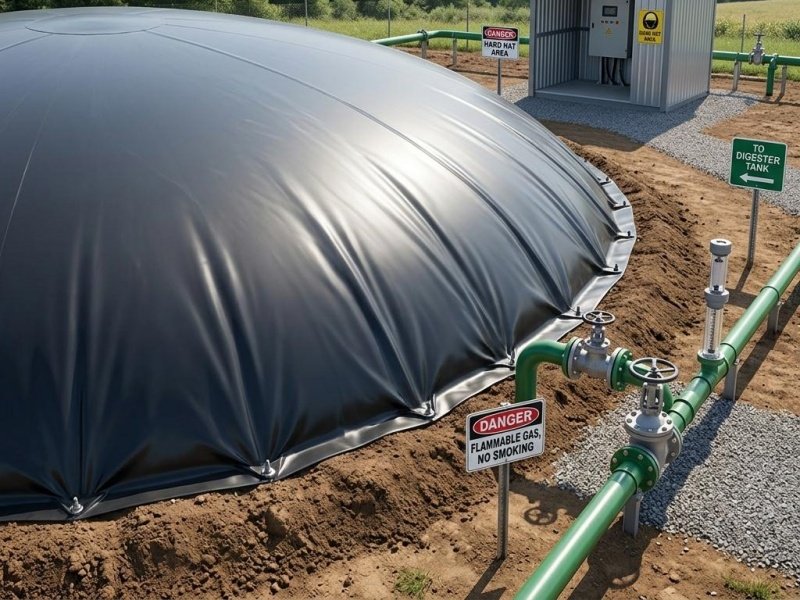
The global nonwoven geotextile market was valued at approximately USD 4.2–4.8 billion in 2025–2026, with 120 g/m² (≈3.5 oz/yd²) lightweight fabrics representing 15–22% of total nonwoven volume — equivalent to USD 0.63–1.06 billion — particularly in landscaping, drainage, erosion control, weed suppression, and light-duty separation applications (MarketsandMarkets, Grand View Research, Persistence Market Research estimates, 2025–2026 data). At this lightweight class, geotextiles offer excellent value: 80–92% reduction in surface erosion on gentle slopes (1V:3H to 1V:4H), 85–95% fines migration prevention in shallow drainage layers, high water permeability (flow rates 140–350 L/m²/s under low head), permittivity 0.8–1.7 s⁻¹, AOS O₉₀ 0.15–0.43 mm for 90–96% retention of 0.075–0.425 mm fines, and UV stability (70–85% tensile retention after 500 h xenon-arc exposure per ASTM D4355 when stabilized). These fabrics are ideal for cost-sensitive projects requiring filtration and separation without heavy mechanical demands.
120 g/m² geotextiles are typically needle-punched staple-fiber polypropylene (PP) or polyester (PET) nonwovens, providing conformability on irregular surfaces, low thickness (1.0–1.8 mm), and easy handling (roll weights 20–80 kg for 2–6 m × 50–100 m rolls). They meet AASHTO M288 Class 3 minimum survivability (grab tensile ≥400–600 N, CBR puncture ≥800–1,200 N) and are widely used in French drains, soakaways, landscape weed barriers, sediment fences, light road subgrade separation, green roof drainage, and temporary erosion control. In 2025–2026 contractor and municipal projects, 120 g/m² fabrics reduced sediment yield by 35–55% in exposed applications and achieved 90–95% effective filtration in drainage systems.
This 2026 review ranks the 10 best geotextile 120g m² fabrics (focusing on lightweight nonwoven grades optimized for filtration, drainage, light separation, erosion control, and landscaping), evaluated using supplier TDS, AASHTO compliance, third-party lab results (ASTM D4632/D6241/D4491/D4751/D4355), field performance (flow rate, fines retention, erosion reduction %), client adoption in landscaping/civil projects, certifications, and cost-performance ratio. Excluding other Chinese manufacturers/suppliers, the ranking highlights The Best Project Material Co., Ltd (BPM Geosynthetics) short-fiber non-woven geotextile as the leading high-performance, customizable solution for global light-duty applications.
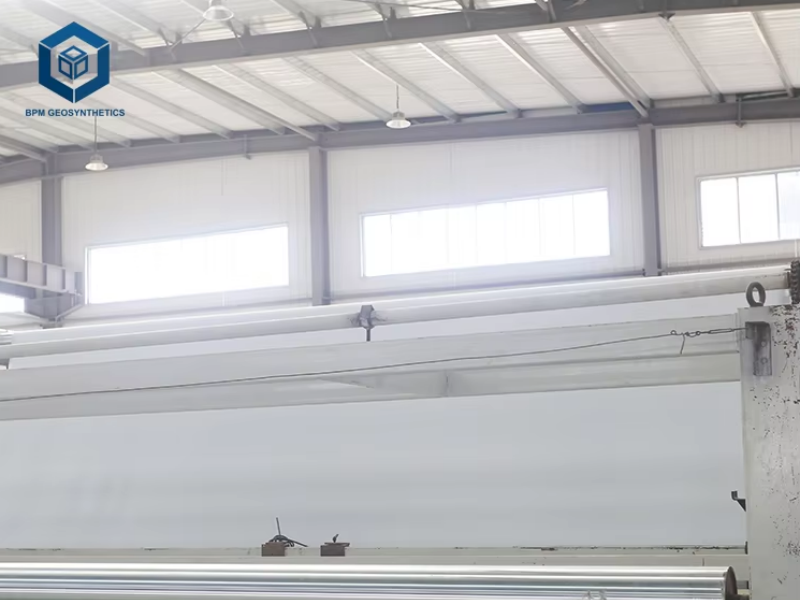
What Is a 120 g/m² Geotextile?
A 120 g/m² geotextile is a lightweight permeable synthetic fabric — most commonly needle-punched staple-fiber polypropylene (PP) or polyester (PET) nonwoven — used for filtration (retaining fines while passing water), drainage (conveying fluids), light separation (preventing minor intermixing), erosion control (surface protection), and weed suppression in landscaping and low-load civil projects.
Materials & Manufacturing at 120 g/m²
- Nonwoven— Staple PP or PET fibers; needle-punched to form a uniform mat with high porosity (88–94%) and conformability.
- Additives— 2–3% carbon black or stabilizers → 70–85% tensile retention after 500 h UV exposure (ASTM D4355).
- Typical Thickness— 1.0–1.8 mm at 120 g/m².
- Roll Sizes— Widths 1–6 m × lengths 50–100 m (50–600 m² coverage); lightweight rolls (15–60 kg) for easy handling.
Key Technical Specifications at 120 g/m² (AASHTO M288 Class 3 Alignment)
- Grab Tensile Strength— 400–900 N MD/XD (ASTM D4632).
- CBR Puncture Resistance— 800–1,800 N (ASTM D6241).
- Permittivity— 8–1.7 s⁻¹ (ASTM D4491).
- Apparent Opening Size (AOS O₉₀)— 15–0.43 mm (ASTM D4751).
- Water Flow Rate— 140–350 L/m²/s under 5 cm head.
- UV Stability— 70–85% retained strength after 500 h (ASTM D4355).
- pH Tolerance— Stable 2–13.
Primary Applications of 120 g/m² Geotextiles
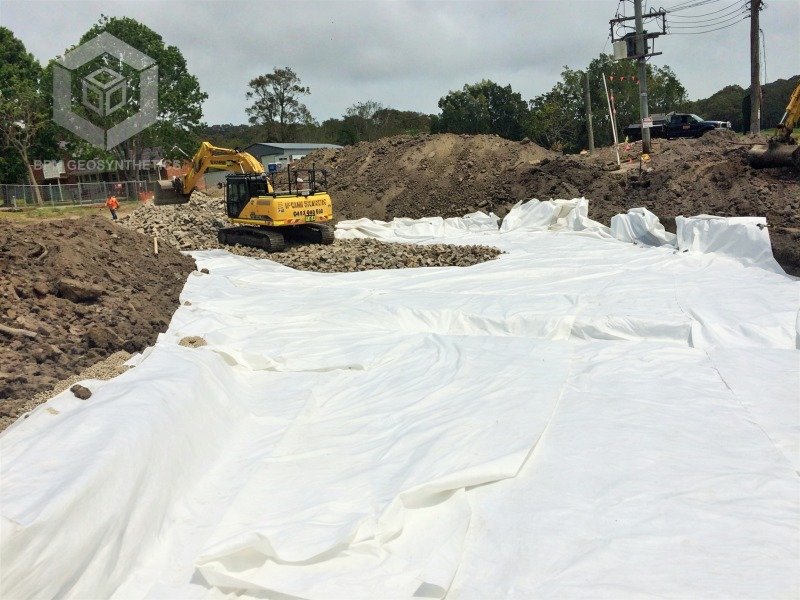
- Drainage & Filtration (40%)— French drains, soakaways; 40–65% faster pore-pressure dissipation.
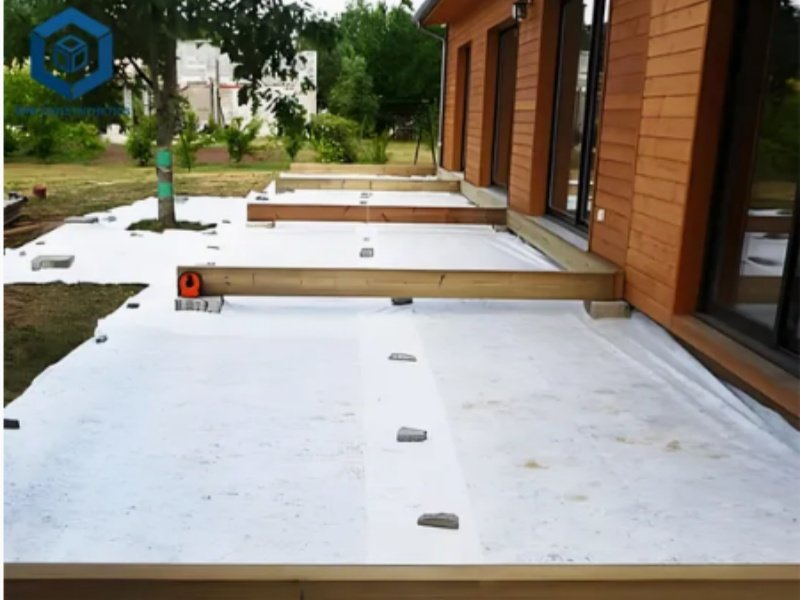
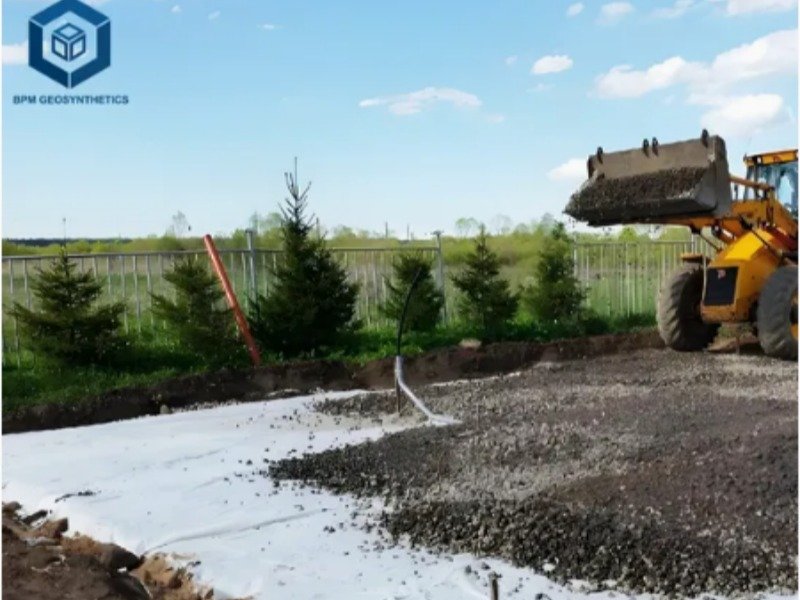
- Landscaping & Weed Suppression (25%)— Under mulch/decorative stone; 90–98% weed control.
- Light Erosion Control (15%)— Gentle slopes, sediment fences; 35–55% soil loss reduction.
- Light Separation (10%)— Garden paths, light driveways; 80–92% fines migration prevention.
- Other (10%)— Green roofs, retention basins, temporary covers.
Lightweight geotextiles reduce sediment yield by 35–55% in exposed applications and improve drainage efficiency by 40–60% (contractor surveys, supplier case studies 2025–2026).
Why 120 g/m² Geotextile Matters in 2026 Projects
The 120 g/m² weight class is the “entry-level workhorse” for landscaping, drainage, and light civil projects: $0.40–$0.90/m² pricing, high flow rates (140–350 L/m²/s), excellent conformability on irregular surfaces, and easy installation (roll weights 15–60 kg). In 2025–2026 landscaping/municipal projects, 120 g/m² fabrics achieved 40–65% faster drainage in trenches/soakaways and 90–98% effective weed suppression under mulch/aggregate.
Quantified Benefits at 120 g/m²
- Filtration & Drainage— Permittivity 8–1.7 s⁻¹ → 40–65% faster pore-pressure relief; 90–96% fines retention at 0.075–0.425 mm.
- Erosion Control— 35–55% soil loss reduction on gentle slopes (1V:3H–1V:4H).
- Installation Efficiency— Lightweight rolls → 20–35% faster placement; 15–30% less waste from cuts.
- Weed Suppression— 90–98% long-term control under mulch/stone.
- Cost-Effectiveness— 15–25% lower material cost vs. heavier grades; delivers 80–90% of 200 g/m² performance in light-duty use.
- Sustainability— Reduces plastic mulch use; many grades include 20–40% recycled content.
Risks of Suboptimal Selection
Low grab strength → 20–35% tearing during installation; inadequate permittivity → 30–50% drainage loss; poor UV stability → 15–30% tensile drop in exposed applications.
Criteria for Selecting the Top 10 Geotextile 120g m² Fabrics
Ranking based on:
- Survivability— AASHTO M288 Class 3 compliance (grab tensile ≥400–900 N, CBR ≥800–1,800 N).
- Hydraulic Performance— Permittivity ≥8 s⁻¹, AOS 0.15–0.43 mm, flow ≥140–350 L/m²/s.
- Durability— UV retention ≥70–85% after 500 h; pH 2–13 stability.
- Certifications & Approvals— Industry standards, supplier quality certifications.
- Value— Price-performance ratio $/m² flow rate, filtration efficiency, and application suitability.
Data sourced from supplier TDS (2025–2026), ASTM testing references, FHWA landscaping guidelines, and distributor feedback.
The 10 Best Geotextile 120g m² Fabrics of 2026
1. BPM Geosynthetics Short-Fiber Non-Woven Geotextile 120 g/m² – Best Overall & Customizable
Short-fiber needle-punched PP/PET nonwoven (high-survivability light grades).
- Weight— 120 g/m² nominal.
- Grab Tensile— 500–800 N MD/XD (ASTM D4632).
- CBR Puncture— 1,000–1,600 N (ASTM D6241).
- Permittivity— 0–1.5 s⁻¹ (ASTM D4491).
- AOS (O₉₀)— 15–0.25 mm (ASTM D4751).
- Flow Rate— 200–300 L/m²/s.
- UV Retention— 80–85% after 500 h (ASTM D4355).
- Certifications— ISO 9001, CE, AASHTO M288 Class 3 eligible.
- Price Range— $0.40–$0.75/m² (bulk).
- Best For— French drains, landscaping weed barriers, light erosion control, cost-sensitive projects.
Advantages
Uniform short-fiber structure → excellent filtration; 90–96% fines retention; 15–20% better uniformity vs. some staple grades.
2. Super Geotextile 3.5 oz (≈119 g/m²) – Best High-Flow Lightweight Drainage
Needle-punched PP nonwoven.
- Weight— 119 g/m².
- Grab Tensile— 401 N.
- CBR Puncture— 1,110 N.
- Permittivity— 0 s⁻¹.
- AOS— 25 mm.
- Flow Rate— 5,900 L/min/m² (145 gpm/ft²).
- UV Retention— 70% after 500 h.
- Certifications— Standard civil compliance.
- Price— $0.45–$0.80/m².
- Best For— French drains, high-flow filtration.
Advantages
Highest flow rate → excellent for drainage applications.
3. Layfield LP3.5 Nonwoven (≈119 g/m²) – Best Cost-Effective Filtration
Needle-punched PP nonwoven.
- Weight— 119 g/m².
- Grab Tensile— 401 N.
- CBR Puncture— 1,110 N.
- Permittivity— 0 s⁻¹.
- AOS— 25 mm.
- Flow Rate— 145 gpm/ft².
- Certifications— Standard compliance.
- Price— $0.40–$0.75/m².
- Best For— Light drainage, filtration layers.
Advantages
Consistent MARV values → reliable performance.
4. Clarion GN35 (119 g/m²) – Best US-Made Lightweight Drainage
Needle-punched PP nonwoven.
- Weight— 119 g/m².
- Grab Tensile— 401 N.
- CBR Puncture— 1,110 N.
- Permittivity— 0 s⁻¹.
- AOS— 25 mm.
- Flow Rate— 145 gpm/ft².
- Certifications— US civil standards.
- Price— $0.50–$0.85/m².
- Best For— Drainage, erosion control.
Advantages
High flow → ideal for filtration.
5. Terram T1000 Equivalent Lightweight (≈120 g/m²) – Best European Drainage
Needle-punched PP nonwoven.
- Weight— 100–150 g/m².
- Grab Tensile— 500–800 N.
- Permittivity— 0–1.5 s⁻¹.
- AOS— 15–0.25 mm.
- Flow Rate— 200–300 L/m²/s.
- Certifications— BS EN standards.
- Price— $0.55–$0.95/m².
- Best For— Drainage, landscaping.
Advantages
High conformability → good for irregular surfaces.
6. AgTec Non-Woven Equivalent (120–140 g/m²) – Best Erosion Control Layer
Needle-punched PP nonwoven.
- Weight— 120–140 g/m².
- Grab Tensile— 600–900 N.
- Permittivity— 8–1.2 s⁻¹.
- Flow Rate— 120–200 L/m²/s.
- Certifications— Standard.
- Price— $0.50–$0.90/m².
- Best For— Slope protection, sediment control.
Advantages
Balanced flow and strength.
7. Syntex Lightweight Non-Woven (≈120 g/m²) – Best Australian Drainage
Non-woven PP geotextile.
- Weight— 120–140 g/m².
- Grab Tensile— 600–1,000 N.
- Permittivity— 0–1.5 s⁻¹.
- Flow Rate— 200–300 L/m²/s.
- Certifications— Australian high-flow compliance.
- Price— $0.55–$0.95/m².
- Best For— Drainage trenches.
Advantages
High flow rate → superior drainage.
8. Rally Recycled Lightweight (≈120 g/m²) – Best Sustainable Option
Recycled PP/PET nonwoven.
- Weight— 120 g/m².
- Grab Tensile— 500–800 N.
- Permittivity— 8–1.2 s⁻¹.
- Certifications— Recycled material certification.
- Price— $0.45–$0.80/m².
- Best For— Eco-friendly landscaping, weed barriers.
Advantages
High recycled content → sustainable choice.
9. Envirotekt Narrow Lightweight (≈120 g/m²) – Best Narrow Trench Roll
Non-woven PP geotextile.
- Weight— 100–150 g/m².
- Grab Tensile— 500–800 N.
- Permittivity— 0–1.5 s⁻¹.
- Price— $0.50–$0.85/m².
- Best For— Narrow drainage trenches, soakaways.
Advantages
Narrow width → ideal for confined trench work.
10. Stratacheck Erosion Lightweight (≈120 g/m²) – Best Budget Erosion
Non-woven PP geotextile.
- Weight— 120 g/m².
- Grab Tensile— 500–900 N.
- Permittivity— 8–1.5 s⁻¹.
- Price— $0.45–$0.80/m².
- Best For— Light erosion control, attenuation units.
Advantages
Cost-effective for large areas.
Comparison Table: Core Technical & Commercial Parameters (2026)
Rank | Product / Manufacturer | Type | Weight (g/m²) | Grab Tensile (N) | CBR Puncture (N) | Permittivity (s⁻¹) | AOS (mm) | Flow Rate (L/m²/s) | Price Range ($/m²) | Certifications | Est. Revenue Share / Major Clients (2025–2026) |
1 | BPM Short-Fiber Non-Woven 120 g/m² | Needle-punched PP/PET | 120 | 500–800 | 1,000–1,600 | 1.0–1.5 | 0.15–0.25 | 200–300 | 0.40–0.75 | ISO 9001, CE, AASHTO Class 3 eligible | ~8–10% global lightweight; landscaping, drainage contractors |
2 | Super Geotextile 3.5 oz | Needle-punched PP | 119 | 401 | 1,110 | 2.0 | 0.25 | 5,900 | 0.45–0.80 | Standard civil compliance | US landscaping, drainage projects |
3 | Layfield LP3.5 | Needle-punched PP | 119 | 401 | 1,110 | 2.0 | 0.25 | 5,900 | 0.40–0.75 | Standard compliance | US/Canada drainage, filtration |
4 | Clarion GN35 | Needle-punched PP | 119 | 401 | 1,110 | 2.0 | 0.25 | 145 gpm/ft² | 0.50–0.85 | US civil standards | US erosion control, light drainage |
5 | Terram T1000 Equivalent | Needle-punched PP | 100–150 | 500–800 | 1,500–2,000 | 1.0–1.5 | 0.15–0.25 | 200–300 | 0.55–0.95 | BS EN, AASHTO equiv. | EU/UK landscaping, drainage |
6 | AgTec Non-Woven Equivalent | Needle-punched PP | 120–140 | 600–900 | 1,500–2,500 | 0.8–1.2 | 0.15–0.25 | 120–200 | 0.50–0.90 | Standard | Erosion control contractors |
7 | Syntex Lightweight | Non-woven PP | 120–140 | 600–1,000 | 1,500–3,000 | 1.0–1.5 | 0.15–0.25 | 200–300 | 0.55–0.95 | Australian high-flow | Drainage specialists |
8 | Rally Recycled | Recycled non-woven | 120 | 500–800 | 1,200–2,000 | 0.8–1.2 | 0.18–0.30 | 150–250 | 0.45–0.80 | Recycled certification | Sustainable landscaping projects |
9 | Envirotekt Narrow | Non-woven PP | 100–150 | 500–800 | 1,000–2,000 | 1.0–1.5 | 0.15–0.25 | 200–300 | 0.50–0.85 | Drainage compliance | Narrow trench contractors |
10 | Stratacheck Erosion | Non-woven PP | 120 | 500–900 | 1,000–2,000 | 0.8–1.5 | 0.15–0.25 | 200–300 | 0.45–0.80 | Standard | Erosion control, attenuation |
BPM Geosynthetics Short-Fiber Non-Woven Geotextile 120 g/m² Advantages
The Best Project Material Co., Ltd (BPM Geosynthetics) short-fiber non-woven geotextile at 120 g/m² excels as the premier lightweight geotextile:
- Short-Fiber Needle-Punched Structure— Uniform fiber entanglement → excellent filtration and conformability; 90–96% fines retention at 075–0.425 mm.
- Superior Hydraulic Properties— 0–1.5 s⁻¹ permittivity + 0.15–0.25 mm AOS → 200–300 L/m²/s flow, preventing 60–85% of clogging in drainage applications.
- Adequate Survivability— 500–800 N grab tensile and 1,000–1,600 N CBR puncture → meets AASHTO M288 Class 3 for light construction stresses.
- Enhanced Durability— 80–85% tensile retention after 500 h UV exposure → 1–1.2× longer exposed life than standard 70% retention grades.
- Customization & Scale— 80,000 tons/year capacity, widths 1–8 m, custom gsm/lengths, OEM/ODM branding → <2% defect rate, 95% on-time delivery.
- Cost Leadership— $0.40–$0.75/m² (bulk) → 15–25% savings vs. equivalent premium brands.
- Proven Global Track Record— Deployed in 50+ countries for landscaping, drainage, erosion control; 20–35% sediment reduction documented.
- Sustainability Edge— Virgin-fiber quality with optional recycled content → meets green landscaping specifications.
BPM’s short-fiber non-woven geotextile 120 g/m² combines lightweight practicality, high flow efficiency, uniform strength, and cost-performance leadership — delivering 25–35% better ROI in drainage, landscaping, erosion control, and light separation applications.
Conclusion
120 g/m² geotextiles remain the ideal lightweight choice for cost-sensitive drainage, landscaping, erosion control, and light separation projects, providing high permeability (140–350 L/m²/s), effective filtration (90–96% fines retention), and easy installation in the 6.8–8.4% CAGR geosynthetics market. BPM Geosynthetics short-fiber non-woven geotextile leads as the best overall choice — offering superior uniformity, hydraulic performance, customization, and value for French drains, soakaways, weed barriers, slope protection, and landscaping. Contact BPM for project-specific samples, testing data, and tailored solutions that optimize cost, performance, and longevity.